
Which manual therapy works best for neurological issues like nerve pain or back problems? Here’s a quick breakdown:
- Chiropractic care focuses on spinal adjustments using quick, targeted thrusts. It’s effective for short-term pain relief in conditions like neck pain or nerve-related issues like sciatica but carries rare risks like stroke.
- Physiotherapy uses gentler joint mobilisation and combines it with exercises for long-term functional recovery. It’s ideal for chronic conditions or improving movement over time.
- Osteopathy takes a whole-body approach, including spinal adjustments and techniques targeting overall relaxation.
- Massage therapy focuses on soft tissues, offering relief for muscle tension and stress but limited functional improvement.
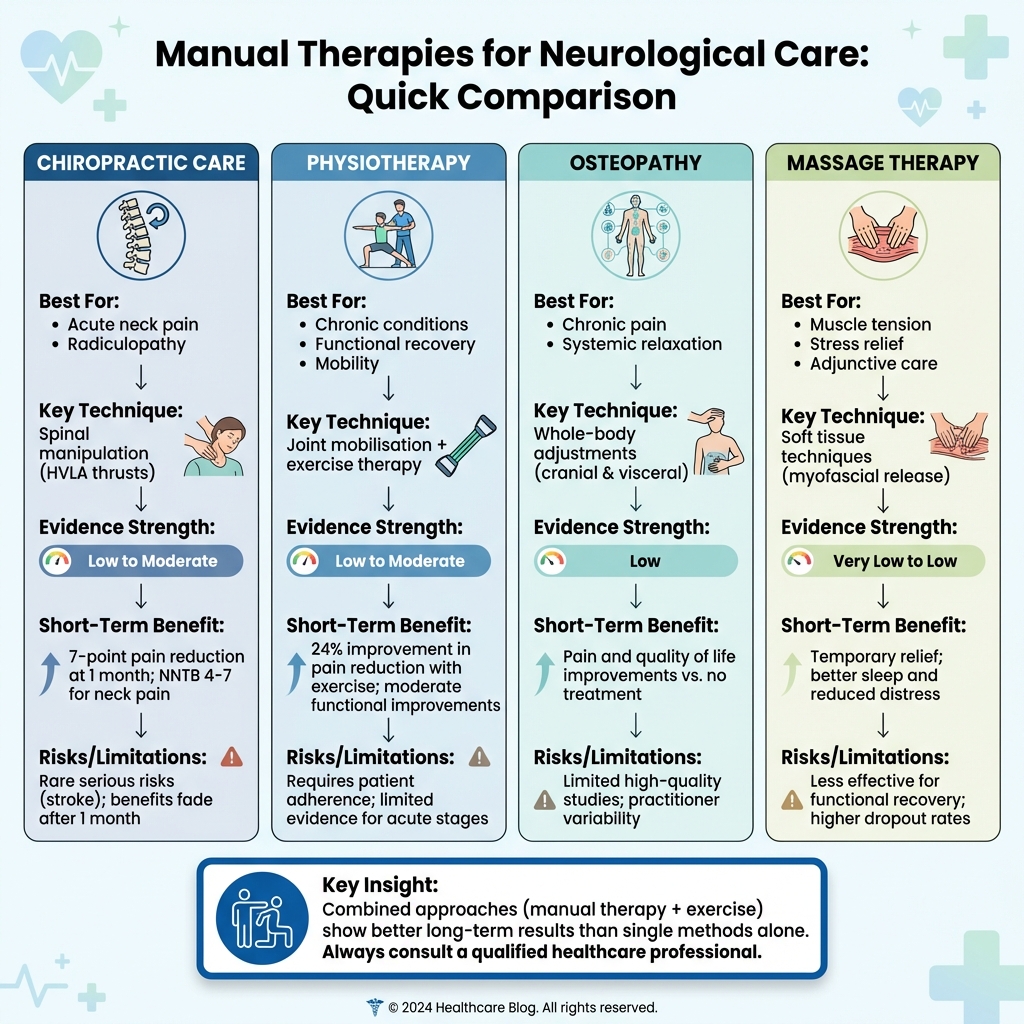
Quick Comparison
| Therapy Type | Best For | Key Techniques | Risks/Limitations | Evidence Strength |
|---|---|---|---|---|
| Chiropractic | Acute neck pain, radiculopathy | Spinal manipulation (HVLA thrusts) | Rare serious risks (e.g., stroke) | Low to Moderate |
| Physiotherapy | Chronic conditions, mobility | Joint mobilisation + exercise | Requires patient adherence | Low to Moderate |
| Osteopathy | Chronic pain, relaxation | Whole-body adjustments | Limited high-quality studies | Low |
| Massage Therapy | Muscle tension, stress relief | Soft tissue techniques | Less effective for functional recovery | Very Low to Low |
Each therapy has strengths and limitations. Chiropractic care may offer short-term relief, while physiotherapy focuses on long-term recovery. For ongoing issues, combining methods can maximise results. Always consult a qualified professional to choose the best option for your needs.
Comparison of Manual Therapies for Neurological Care: Chiropractic vs Physiotherapy vs Osteopathy vs Massage
Top 5 Differences between a Physiotherapist and Chiropractor
sbb-itb-585d67d
Comparing Methods: Chiropractic vs. Other Manual Therapies
This section takes a closer look at how various manual therapy methods might contribute to neurological rehabilitation.
Chiropractic Spinal Adjustments
Chiropractors often rely on high-velocity, low-amplitude (HVLA) thrusts, applied at the end range of a joint’s motion. This technique frequently produces the familiar "pop" or "click" sound as the joint moves rapidly. The primary goal? To enhance spinal joint mobility and potentially ease nerve-related issues like radiculopathy or cervicogenic headaches. By applying targeted pressure to specific vertebrae, chiropractors aim to highlight the connection between spinal alignment and nerve function.
For conditions like acute and subacute neck pain, thoracic manipulation has shown a Number Needed to Treat for Benefit (NNTB) of 4 to 7 in reducing pain. Studies comparing cervical manipulation to medication for neck pain suggest that manipulation offers better long-term improvements in both pain relief and function.
By contrast, physiotherapy takes a gentler approach to improving joint mobility and muscle function.
Physiotherapy Manual Techniques
Physiotherapy focuses on joint mobilisation, which involves passive, repetitive movements within or at the edge of a joint’s range. These movements aim to reduce pain and improve mobility, avoiding the rapid thrusts seen in chiropractic care. Soft tissue techniques, targeting muscles and connective tissues, are also a key part of physiotherapy.
"Manipulation (adjustments to the spine) and mobilisation (movement imposed on joints and muscles) can be used alone or in combination with other physiotherapies to treat neck pain." – Cochrane
Physiotherapy often combines manual techniques with exercise therapy, including motor control exercises, strengthening, and stretching. This integrated approach has been shown to offer a 24% improvement in pain reduction compared to no treatment.
Osteopathic Manipulative Treatment
Osteopaths take a whole-body approach, incorporating cranial and visceral techniques alongside spinal adjustments. While they do use HVLA thrusts, osteopaths often leverage the limbs to deliver these forces rather than applying direct pressure to the vertebrae.
"Chiropractors are more likely to push on vertebrae with their hands, whereas osteopaths tend use the limbs to make levered thrusts." – Andrew Vickers, Author
Osteopaths also practice cranial osteopathy, a gentle method aimed at influencing cerebrospinal fluid pulsations. As licensed primary care physicians, osteopathic doctors (DOs) can combine manipulative treatments with broader medical evaluations, offering a more comprehensive approach to health.
Other manual therapies, like massage, take a different but complementary path in addressing neurological and musculoskeletal issues.
Massage Therapy in Neurological Care
Massage therapy focuses entirely on soft tissue techniques, including kneading, myofascial release, and trigger point therapy. Unlike chiropractic or osteopathic methods, massage does not aim to adjust joint positions. Instead, it works to relieve muscle tension, reduce swelling, and improve circulation, which may help alleviate neurologically linked musculoskeletal symptoms.
Research highlights the benefits of massage therapy in addressing sleep issues and psychological distress in patients with chronic pain. This can create a more supportive environment for recovery. Studies also suggest that combining joint manipulation with soft tissue techniques – referred to as "mixed modality" manual therapy – can be more effective for pain relief than soft tissue work alone.
Evidence and Limitations of Each Approach
Short-Term Outcomes for Neurological Conditions
Looking at the short-term effects of manual therapies for neurological issues, the evidence presents a mixed picture.
For chronic low back pain, spinal manipulative therapy (SMT) shows some promise. Research suggests it may lead to a 7-point improvement in pain and an 8.8-point improvement in functional status within the first month compared to sham treatments. However, these benefits often fade by the three-month mark and rarely last beyond six to twelve months.
When it comes to neck pain, cervical manipulation appears to outperform NSAIDs and muscle relaxants, providing greater relief both immediately and over the long term. A 2012 study led by Gert Bronfort at the University of Minnesota, involving 181 participants with acute neck pain, found cervical manipulation produced better outcomes than medication in the long run. That said, a 2002 study comparing cervical manipulation with mobilisation reported no significant differences in pain relief or functional improvement during intermediate follow-ups.
For cervicogenic headaches, cervical manipulation offers better short-term pain relief compared to massage or TENS therapy. Additionally, combining manual therapy with exercise seems to enhance pain reduction for neck pain compared to no treatment. However, the advantage diminishes when compared to placebo.
"When compared to no treatment, SMT may result in a medium improvement in pain and a large improvement in functional status [for chronic low back pain]." – de Zoete A. et al., Erasmus Medical Center
Comparison Table: Effectiveness and Suitability
| Therapy Type | Evidence Strength | Key Short-Term Benefits | Major Limitations | Best Suited For |
|---|---|---|---|---|
| Chiropractic (SMT) | Low to Moderate | 7-point pain reduction at 1 month; effective for acute neck pain | Benefits fade after 1 month; long-term outcomes comparable to sham | Radiculopathy, cervicogenic headaches, acute neck pain |
| Physiotherapy | Low to Moderate | Moderate functional improvements when paired with exercise | Limited evidence for acute stages; requires patient adherence | Functional recovery, nerve mobilisation, chronic conditions |
| Osteopathy (OMT) | Low | Pain and quality of life improvements compared to no treatment | Limited high-quality studies; practitioner variability | Chronic pain, systemic relaxation |
| Massage Therapy | Very Low to Low | Temporary relief; better sleep and reduced distress | Less effective for functional recovery; higher dropout rates | Muscle tension, adjunctive care |
The quality of research in this field is often rated as low to moderate. Challenges include small sample sizes and the difficulty of blinding participants to manual interventions. Non-serious side effects like temporary soreness, headaches, or dizziness occur in about 2% of manual therapy patients compared to 1% in controls. Serious complications, such as stroke or disc herniation, are rare but should be carefully considered, especially for cervical manipulation.
Choosing the Right Manual Therapy for Your Needs
When Chiropractic Care May Help
Chiropractic care can be a suitable option for issues like acute or subacute neck pain (lasting less than 12 weeks), radiculopathy (nerve pain radiating to the arm or leg), or cervicogenic headaches. Research suggests it may provide short-term relief for pain and improve function, especially if the symptoms are recent rather than long-standing.
The duration of symptoms plays a big role in deciding on treatment. Acute discomfort (lasting less than 4 weeks) tends to respond better than chronic issues (over 12 weeks), where benefits often diminish after the first month.
It’s also important to consider potential risks. While serious complications like stroke or disc herniation are rare, they have been reported with chiropractic manipulation. If these risks are a concern, mobilisation techniques offered by physiotherapists could be a safer alternative, delivering similar pain relief with a lower likelihood of adverse effects.
For those aiming to improve movement and build strength over time, physiotherapy might be a better fit.
Physiotherapy for Functional Recovery
Unlike chiropractic care, which often focuses on immediate relief, physiotherapy prioritises long-term functional recovery. If your goal is to retrain movement patterns and develop lasting strength, combining manual therapy with supervised exercise can be more effective than passive treatments alone.
This integrated approach – manual therapy paired with exercise – has been shown to reduce pain and improve function, especially for chronic conditions. When dealing with long-standing issues, addressing overall movement and function is often key to better outcomes.
The Role of Combined Care Approaches
If a single treatment method isn’t delivering the desired results, combining approaches may be worth exploring. Many practitioners now advocate for mixed modality manual therapy, which blends techniques like manipulation, mobilisation, and soft tissue work. Evidence suggests this approach can offer better results for pain relief and functional improvement compared to relying on just one method.
"The combination of manual therapy with exercise may result in a large reduction in neck pain and a moderate increase in function and health-related quality of life when compared against no treatment." – Cochrane Review
When outcomes from one type of therapy fall short, an integrated care plan that draws on multiple disciplines can be beneficial. Chiropractors, physiotherapists, and osteopaths all use manual techniques, and finding practitioners who collaborate or refer when necessary can make a difference. A multidisciplinary approach that tackles joint dysfunction while also retraining movement patterns may lead to better rehabilitation outcomes.
This information is general in nature and not a substitute for professional medical advice.
Chiropractic care focuses on musculoskeletal health, and results vary between individuals.
Always consult a qualified healthcare professional before making decisions about your health.
Conclusion
Deciding between chiropractic care and other manual therapies for neurological rehabilitation depends on the individual. Research suggests that chiropractic manipulation, physiotherapy mobilisation, and osteopathic techniques often lead to similar results in relieving pain and improving function for spinal-related issues. This underscores the importance of tailoring treatment to each person’s specific clinical needs.
For acute or subacute neck pain, cervical manipulation may provide faster relief compared to standard medications, while mobilisation offers similar benefits with potentially fewer risks. In chronic cases, combining manual therapy with exercise appears to be more effective than passive treatments alone.
However, it’s worth noting that the quality of evidence in many studies remains low. Around 80% of trials on manipulation and mobilisation for neck disorders have been rated as low or very low quality[2]. This variability highlights the need for personalised care plans, as individuals can respond differently to the same treatments.
If a single therapy doesn’t yield the desired results, a multimodal approach may be worth considering. Whether you choose a chiropractor, physiotherapist, or osteopath, the emphasis should always be on evidence-based care that targets both immediate relief and long-term improvements in function.
This information is general and not a substitute for professional medical advice.
Chiropractic care focuses on musculoskeletal health, and results can vary between individuals.
Always consult a qualified healthcare professional before making health-related decisions.
FAQs
When should I choose mobilisation over manipulation?
When deciding between mobilisation and manipulation, the choice often hinges on clinical requirements and what the patient feels comfortable with. Mobilisation involves gentle, passive movements of the joint, making it a good option for those who prefer a less intense method or in cases where manipulation isn’t advisable. On the other hand, manipulation uses quick, low-force thrusts aimed at restoring joint function, making it suitable for situations where a more precise approach is deemed safe. Both techniques are widely regarded as safe when carried out by trained professionals.
How can I tell if my nerve pain is radiculopathy?
Radiculopathy typically leads to pain that spreads from the neck or back into the arms or legs, aligning with the path of a nerve root. Other symptoms might include numbness, tingling, muscle weakness, or changes in reflexes in the impacted region. To pinpoint the cause, it’s crucial to see a healthcare professional. They may use physical exams, neurological assessments, or imaging techniques to determine if a nerve root is involved.
What are the red flags that need urgent medical care?
If you notice severe or worsening neurological symptoms, sudden weakness, loss of sensation, or signs of a serious injury, these could be warning signs that demand urgent medical attention. It’s crucial to contact a qualified healthcare professional immediately if any of these symptoms occur. Your health should never be left to chance.