

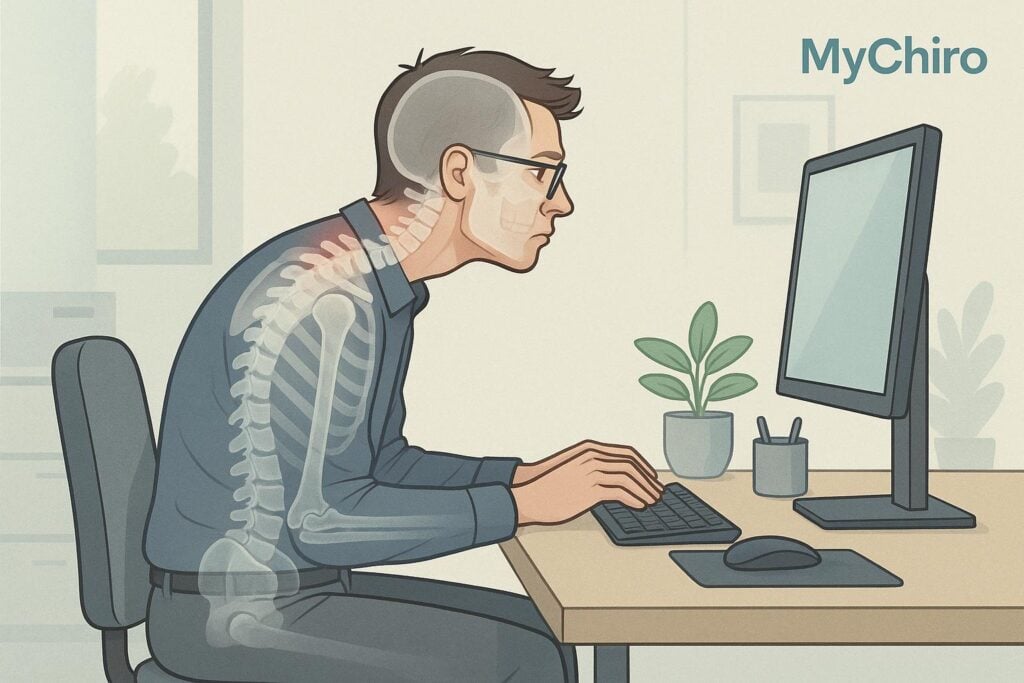
In our increasingly desk-bound world, the way we sit, work, and even breathe is wreaking havoc on our bodies. Forward head posture, a common result of prolonged sitting and computer use, doesn’t just lead to neck and back pain – it disrupts the mechanics of our entire body. This article breaks down the root causes of this issue, delves into its broader impact on your health, and provides actionable techniques to jumpstart your journey to better posture.
Understanding Forward Head Posture: What’s Happening to Your Body?
Sitting at a desk for hours on end has become the norm for many of us. But what we don’t often realise is how this seemingly harmless activity alters our posture and movement patterns. At the heart of the problem are two key muscle groups: the pectoralis (pecs) and latissimus dorsi (lats). These muscles, which are often overdeveloped or overstrained due to repetitive activities like typing or weightlifting, significantly impact our spinal alignment, rib positioning, and even how we breathe.
The Chain Reaction of Desk Posture
When we sit for extended periods, particularly in a computer posture, the following chain reaction occurs:
- Muscle Imbalances: The pecs and lats become overactive and tight, pulling the shoulders forward and causing the spine to extend unnaturally.
- Forward Pelvic Tilt: A forward shift of the pelvis disrupts the natural alignment between the pelvis and rib cage, further straining the lower back.
- Breathing Dysfunction: Instead of diaphragmatic breathing, individuals rely on their neck and lower back muscles to inhale, a process known as "neck breathing."
- Impaired Movement: Restricted spinal rotation and lack of arm swing during walking signal systemic stiffness, making natural movement patterns like walking and standing inefficient.
The result? Chronic pain and discomfort that can manifest as headaches, neck tension, back pain, and even fatigue, creating a non-virtuous cycle of stress and poor posture.
Breathing: A Window Into Posture Problems
One of the most alarming aspects of forward head posture is how it affects breathing mechanics. Many people unknowingly adopt "neck breathing", where they rely on their neck and upper back muscles to inhale, rather than properly engaging the diaphragm.
When the rib cage flares and the diaphragm flattens, it becomes nearly impossible to achieve 360-degree expansion in the rib cage – a hallmark of healthy breathing. This, in turn, heightens autonomic nervous system activity, increasing stress levels and making relaxation more difficult.
What Does Dysfunctional Breathing Look Like?
Individuals stuck in an extended posture often display the following signs:
- Back Arching During Inhalation: Instead of the rib cage expanding, the lower back arches as the individual tries to "lift" their body with each breath.
- No Rib Cage Flexion: Limited ability to bring the rib cage and pelvis into alignment fosters chronic tension in the back and neck.
- Asymmetrical Weight Distribution: Most people favour their right side due to asymmetry in the diaphragm, further exacerbating poor posture.
Restoring Balance: Two Exercises to Combat Forward Posture
While a full posture restoration program addresses the body as a whole, there are two foundational exercises that can begin to undo the damage caused by desk jobs. These exercises focus on relaxing overactive muscles, reactivating underused ones, and improving breathing mechanics.
1. Sternal Positional Stretch
This stretch helps relieve tension in the neck and realigns the head and rib cage. Here’s how to perform it effectively:
- Set Up: Lie on your back with a small elevation under your upper back (such as folded blankets) so that your head is slightly tilted backward. Keep your legs elevated to relax the hip flexors.
- Focus on Breathing: Inhale deeply through your nose and exhale completely through your mouth. Pay attention to your chest expanding forward rather than rising upward.
- Repetition: Breathe in this position for 2–15 minutes, depending on your comfort. Ensure your back stays flat against the surface.
- Cautions: Avoid this stretch if you’re hypermobile or experience neck tension while performing it.
2. Lat and Abdominal Activation Stretch
This exercise shifts the body from an extended posture into a flexed state, re-engaging key stabilising muscles.
- Starting Position: Lie down with your knees bent and your arms raised slightly above your head, creating a gentle flexion of the shoulders.
- Engage Your Core: Exhale deeply, allowing your ribs and pelvis to move closer in alignment. You should feel your abdominal muscles activating.
- Lengthen the Lats: Focus on a stretch through the sides of your back (lats) as you continue your breathing cycle.
- Repetition: Perform 5 slow, controlled breaths, pausing briefly after each exhale to maintain abdominal engagement.
Why These Techniques Are Not One-Size-Fits-All
It’s important to note that while these exercises can provide relief and improve posture, they are not a standalone solution. Long-term change requires a comprehensive approach to retrain the brain and body. This includes:
- Addressing Underlying Asymmetry: Many individuals favour one side of their body, which requires specific interventions to restore balance.
- Ongoing Stabilisation: Building strength and stability in the pelvis, rib cage, and diaphragm is crucial for sustainable results.
- Professional Guidance: Working with a qualified posture restoration therapist ensures a tailored program that meets your unique needs.
The Broader Impacts of Forward Head Posture
Forward head posture doesn’t just stop at muscle dysfunction and pain. Its effects ripple across multiple aspects of health:
- Reduced Energy: Inefficient breathing saps energy levels, contributing to fatigue and burnout.
- Poor Mental Focus: Increased autonomic nervous system activity linked to poor posture can heighten stress and reduce the ability to concentrate.
- Impaired Physical Confidence: A hunching posture impacts how individuals carry themselves, often leading to diminished confidence and presence.
Key Takeaways
- Forward head posture is a systemic issue caused by prolonged desk work and repetitive activities, leading to chronic tension in the neck, back, and pelvis.
- The pecs and lats are the primary culprits in perpetuating poor posture, keeping the body locked into an extended spinal position.
- Breathing dysfunction is a telltale sign of postural imbalances, with many individuals relying on their necks and backs rather than engaging their diaphragms.
- Two foundational exercises – the Sternal Positional Stretch and Lat/Abdominal Activation Stretch – can help realign the body and improve breathing patterns.
- Posture correction is not a quick fix. It requires a comprehensive program to retrain muscle patterns, restore balance, and stabilise key areas of the body.
- Professional guidance is key, as a therapist can design a customised plan to address unique postural needs.
Conclusion
Forward head posture is more than just a cosmetic issue – it’s a sign that your body’s mechanics are out of sync. Addressing this problem isn’t about chasing pain relief, but rather restoring your body’s natural movement patterns and breathing mechanics. By incorporating targeted techniques and seeking professional guidance, you can break free from the cycle of desk-induced discomfort and reclaim your posture, energy, and confidence. Start small, stay consistent, and embrace the transformative power of better alignment.
Source: "How Desk Jobs Create Forward Head Posture and How to Start Fixing It!" – Neal Hallinan, YouTube, Jul 17, 2025 – https://www.youtube.com/watch?v=xEcgZSz60gU