

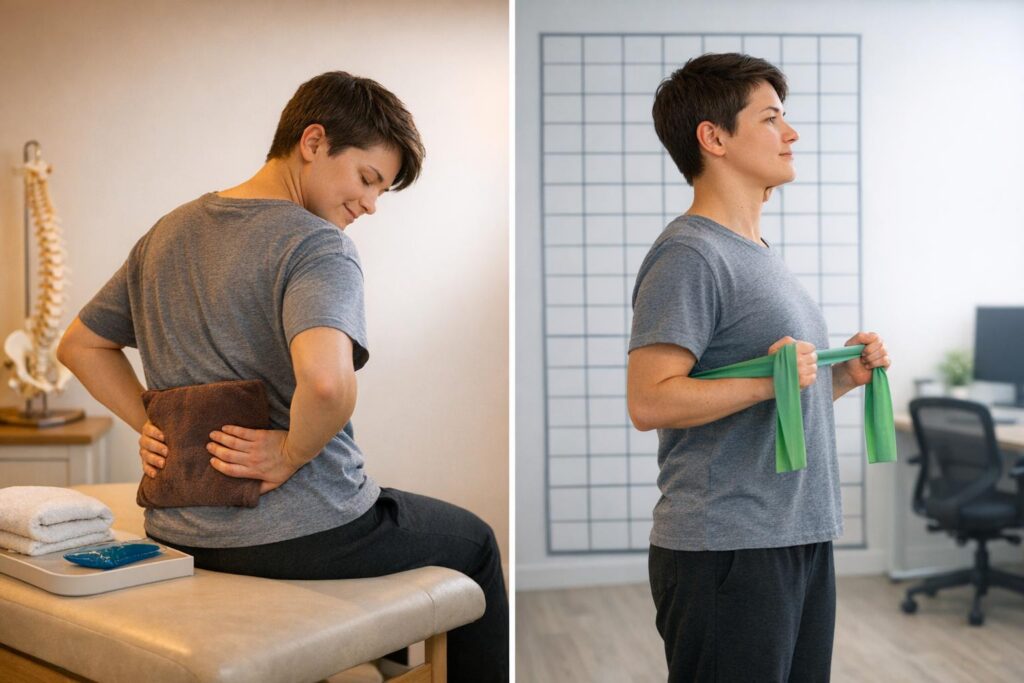
Struggling with back pain or poor posture? Here’s the key: Pain relief addresses immediate discomfort, while posture correction focuses on long-term alignment. Both approaches involve chiropractic care but differ in goals, timelines, and effort required.
- Pain Relief: Quick fixes for acute issues like sciatica or stiffness. Methods include spinal adjustments, soft tissue therapy, and practical advice. Results are faster but short-term.
- Posture Correction: Long-term improvement of spine alignment and muscle balance. Involves corrective exercises, ergonomic changes, and consistent effort.
Quick Comparison:
| Feature | Pain Relief | Posture Correction |
|---|---|---|
| Focus | Immediate symptom relief | Long-term structural changes |
| Timeline | Short-term (weeks) | Gradual (months or longer) |
| Objective | Reduce pain and stiffness | Improve alignment and balance |
| Methods | Adjustments, massage | Exercises, ergonomic advice |
Choose based on your needs: pain relief for urgent discomfort, posture correction for lasting changes. A mix of both may be ideal for overall health.
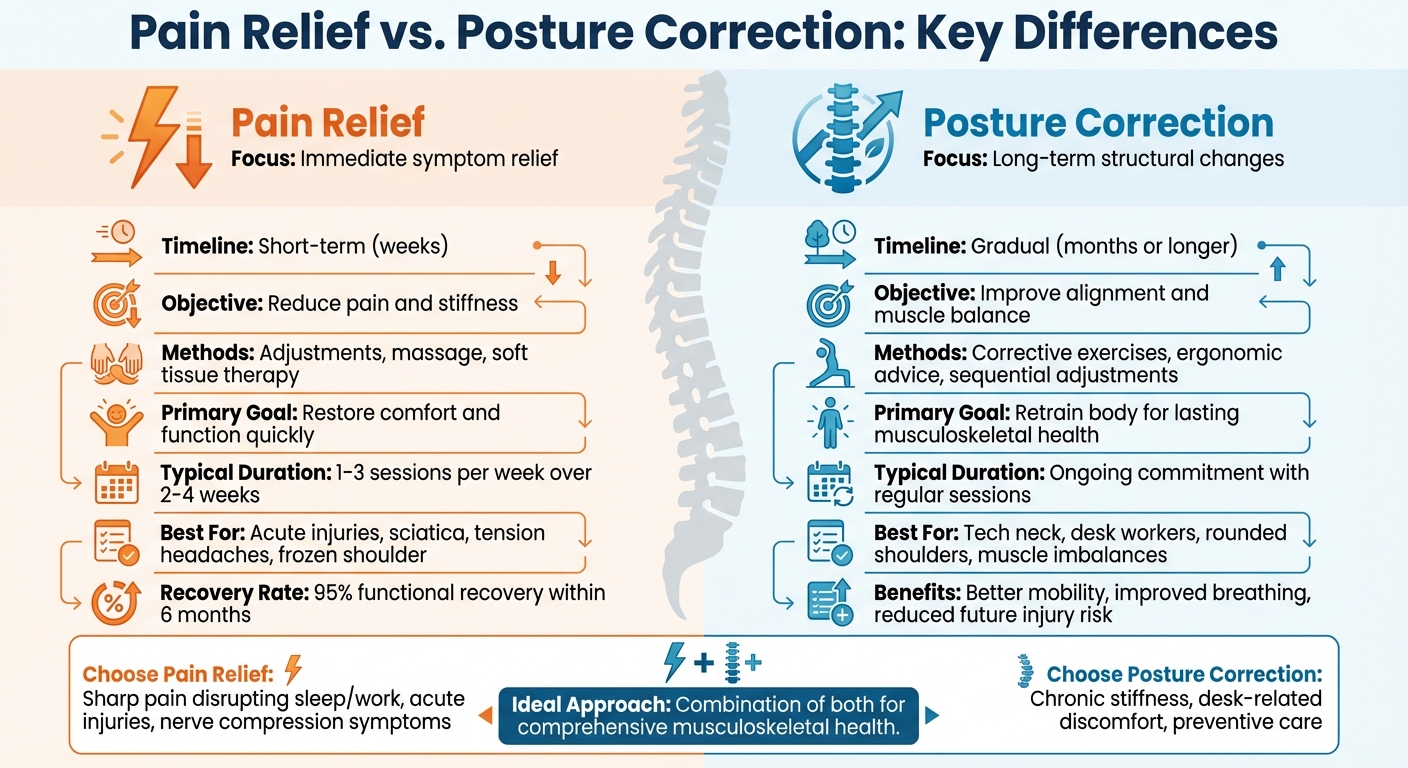
Pain Relief vs Posture Correction: Key Differences Comparison Chart
Temporary Pain Relief or Proper Posture?
sbb-itb-585d67d
What Is Posture Correction?
Posture correction is all about retraining the body to improve spine alignment and muscle balance. Instead of just addressing pain or discomfort when it arises, this approach focuses on fixing the underlying issues that lead to musculoskeletal problems. The goal? To restore balance, support joint movement, and potentially lower the risk of future strain or injury.
At its heart, posture correction deals with muscle imbalances. These happen when some muscles become tight and overworked while others weaken and overstretch. This often stems from everyday habits like sitting at a desk for hours or wearing high heels regularly. Over time, these patterns can lead to noticeable changes, like uneven hips, slouched shoulders, or a forward-leaning head posture that puts extra pressure on the spine.
The process usually starts with a thorough, non-invasive postural assessment. Practitioners look for imbalances, such as one shoulder sitting lower than the other, uneven hips, or the forward head posture often linked to excessive smartphone and computer use. Sometimes, the root of the problem might even be in the feet, and orthotics (shoe inserts) may be suggested to improve posture from the ground up.
Goals of Posture Correction
Posture correction isn’t just about feeling better in the moment; it’s about creating lasting changes for your overall health. The focus is on improving spinal alignment, making it easier to maintain an upright position, and enhancing long-term musculoskeletal function. For instance, fixing forward head posture can open up the chest, improve breathing, and reduce pressure on internal organs – benefits that ripple across your body.
As experts often say:
The goal is not just immediate pain relief, but tools for long-term wellbeing.
Some of the broader benefits include better mobility, higher energy levels, and even improved sleep quality. For those who spend long hours at a desk and experience issues like "tech neck" or slumped shoulders, posture correction can help reduce tension headaches and other discomforts tied to poor posture.
Methods Used for Posture Correction
Posture correction typically involves a mix of strategies tailored to your specific needs. Spinal adjustments are one common method, helping to realign vertebrae, ease tension, and improve joint movement. These adjustments are often combined with soft tissue therapy or massage to loosen tight muscles that pull the body out of alignment.
Corrective exercises play a crucial role too. These exercises are designed to stretch tight muscles and strengthen weaker ones, helping your body maintain proper alignment between sessions. For instance, strengthening your core can provide better support for your spine and may help prevent recurring back pain. Ergonomic advice is another key part of the process, with recommendations like adjusting your chair height, repositioning your screen, or tweaking daily habits to minimise slouching and hunching.
What Is Pain Relief?
Pain relief-focused manual therapy is all about managing immediate discomfort. Unlike posture correction, which aims to create long-term musculoskeletal balance, this approach zeroes in on alleviating pain that disrupts daily life. Whether it’s trouble sleeping, difficulty walking, or struggling to sit comfortably, pain relief care steps in to address these urgent issues.
This type of therapy is often sought for conditions like sciatica (nerve pain radiating down the leg), tension headaches, frozen shoulder, or acute neck and back stiffness caused by strain or prolonged sitting. The goal is to quickly ease discomfort, restore mobility, and reduce muscle tension. Below, we’ll dive into the specific goals and methods that set pain relief apart from posture correction.
Goals of Pain Relief
The main aim of pain relief care is to restore comfort and function, making it easier to move, work, and sleep without pain. Treatments focus on reducing stiffness, easing muscle tightness, and improving circulation through targeted manual techniques. Unlike posture correction, which is designed to retrain alignment over time, pain relief is about addressing immediate symptoms to help you get back to your daily activities faster.
In some cases, treating acute pain can also improve movement patterns and reduce the chances of recurrence. This is especially true when combined with practical advice on habits like posture, movement, and ergonomics.
Methods Used for Pain Relief
A variety of manual therapy techniques are used to achieve these short-term goals. Common approaches include:
- Spinal Adjustments: High-velocity, low-amplitude thrusts are applied to restricted joints. These adjustments can restore mobility, release trapped gases (often with a "popping" sound), and relieve nerve pressure.
- Spinal Mobilisation: For those sensitive to high-velocity techniques, low-velocity, controlled movements offer a gentler option. This method is often used for severe pain or older adults.
- Soft Tissue Therapy: Techniques like massage and muscle release are used to loosen tight muscles, improve blood flow, and reduce stiffness.
- Dry Needling and Cupping: These methods target trigger points and help release tension in areas that feel “locked up.”
In addition to manual therapy, targeted exercises are introduced to support short-term recovery rather than long-term structural changes. For example, acute lower back pain may require one to three sessions per week over two to four weeks, with progress reviewed regularly.
Between sessions, simple strategies can help maintain mobility and speed up recovery. Staying hydrated, applying ice for 15–20 minutes during the first 48 hours, and taking short walks are often recommended.
While pain relief and posture correction have different focuses, they can be combined as part of a personalised chiropractic care plan tailored to your specific needs.
Main Differences Between Posture Correction and Pain Relief
This section breaks down the key distinctions between pain relief and posture correction, focusing on their goals, methods, and outcomes. Pain relief is all about addressing immediate discomfort – like soothing a sharp lower back pain or easing a throbbing headache. On the other hand, posture correction takes a more gradual approach, aiming to reshape how you sit, stand, and move over time to prevent recurring issues.
Choosing the right approach depends on whether you’re dealing with short-term symptoms or looking to tackle deeper alignment problems. For example, acute sciatica that keeps you up at night calls for a different plan than "tech neck" caused by years of desk work. Quick fixes may ease the pain, but they won’t address the root cause of poor posture.
Treatment Goals Compared
Pain relief focuses on fast results, helping you get back to your daily routine with less discomfort. Studies show that 95% of people with acute lower back pain recover functional abilities within six months, whether they see a chiropractor or a medical doctor[1]. However, 31% of these individuals still report lingering issues, suggesting some residual effects may persist.
Posture correction, on the other hand, targets the structural imbalances causing discomfort. It’s about improving spinal alignment, rebalancing overused and underused muscles, and changing habits that lead to poor posture. Research from the Journal of Chiropractic Medicine highlights that spinal manipulative therapy can significantly enhance posture in patients with chronic pain. Similarly, a study in the Journal of Physical Therapy Science found combining adjustments with specific exercises was more effective at reducing forward head posture than exercises alone.
| Feature | Pain Relief | Posture Correction |
|---|---|---|
| Primary Focus | Immediate symptom relief | Long-term structural changes |
| Timeline | Short-term/acute relief | Gradual, sustained improvement |
| Objective | Ease pain and inflammation | Restore balance and symmetry |
| Prevention | Prevents pain from worsening | Reduces risk of future issues |
Methods and Approaches Compared
The techniques used for pain relief and posture correction vary in both intensity and frequency. Pain relief often includes targeted adjustments to loosen stiff joints, soft tissue therapies like cupping or dry needling to relax muscles, and advice on managing flare-ups. These treatments typically involve one to three sessions per week over two to four weeks, aiming for quick recovery.
In contrast, posture correction requires a longer-term commitment. This approach combines regular adjustments to realign the spine with corrective exercises that address muscle imbalances – like stretching tight hip flexors and strengthening weak glutes. Ergonomic advice, such as improving your workstation setup or changing how you hold your phone, also plays a crucial role. Initial sessions may cost around $110, with follow-ups starting from $65. In Sydney, general chiropractic consultations usually range between $80 and $120.
| Method | Pain Relief Approach | Posture Correction Approach |
|---|---|---|
| Manual Therapy | Targeted adjustments for joints | Sequential adjustments over time |
| Soft Tissue | Cupping/dry needling for knots | Stretching and strengthening |
| Education | Pain management advice | Ergonomic and habit training |
| Support | Temporary bracing or taping | Orthotics or corrective exercises |
These different methods naturally lead to varying outcomes, as detailed below.
Outcomes and Supporting Evidence
Both approaches are backed by evidence but measure success differently. Pain relief prioritises functional outcomes, like returning to work or daily activities with fewer restrictions. Studies show that chiropractic patients with acute pain typically attend 10.1 to 15.0 sessions per episode and report high satisfaction with their care, including the clarity of explanations provided.
Posture correction, however, focuses on structural improvements such as better spinal alignment, reduced forward head posture, and improved muscle balance. These changes take more time and require a commitment to consistent exercises and habit changes. As noted by Chiro Focus:
The goal is not just immediate pain relief, but tools for long-term wellbeing.
While pain relief can deliver noticeable improvements within weeks, achieving lasting postural changes demands ongoing effort and persistence.
How to Choose Between Posture Correction and Pain Relief
Deciding on the best approach – posture correction or pain relief – depends on your specific symptoms and daily habits.
If you’re dealing with sharp pain that interrupts your sleep, work, or radiates down your legs, focusing on pain relief might be the priority. For instance, acute injuries like a back strain or a sciatica flare-up often need immediate attention.
On the other hand, if you’re experiencing ongoing stiffness, a limited range of motion, or discomfort linked to long hours at a desk, posture correction could be the better option. This method tackles muscle imbalances and alignment issues that may lead to chronic discomfort. Consulting a professional can clarify whether your symptoms stem from an acute injury or long-term postural habits, helping you choose the most suitable treatment.
When to Focus on Posture Correction
Posture correction is especially beneficial if you spend a lot of time sitting at a desk, frequently use smartphones, or notice rounded shoulders creeping into your posture. These habits can lead to issues like "tech-neck" or upper crossed syndrome, where tight chest muscles and weakened upper back muscles create an imbalance. Sitting for extended periods can also result in tight hip flexors and weak glutes, contributing to lower back discomfort.
Addressing these imbalances early on may prevent more serious problems, such as spinal disc compression or joint wear and tear. If your discomfort eases with movement but flares up again after sitting for too long, combining posture correction with ergonomic changes can provide long-term relief. Chiropractors in Australia undergo a five-year university program in musculoskeletal health, equipping them with the expertise to assess movement patterns and spinal alignment.
When to Focus on Pain Relief
If your symptoms are acute and disruptive, prioritising pain relief is often the best course of action. Seek professional care if your pain restricts basic movement or if you experience numbness, tingling (potentially indicating nerve compression), or burning sensations down your limbs. These cases may benefit from targeted therapies such as joint adjustments, dry needling, or massage to help restore mobility and reduce discomfort.
Chiropractic services are readily available in Sydney, providing timely access to professional assessments when pain becomes unmanageable. As Chiro Focus highlights:
The goal is not just immediate pain relief, but tools for long-term wellbeing.
This information is general in nature and is not a substitute for professional medical advice.
Chiropractic care focuses on musculoskeletal health and results vary between individuals.
Please consult a qualified healthcare professional before making decisions about your health.
Conclusion
Recognising the differences between pain relief and posture correction can help you make better decisions about your musculoskeletal health. Pain relief focuses on addressing immediate symptoms, such as easing tension headaches, calming sciatica flare-ups, or helping regain mobility after an injury. On the other hand, posture correction targets the root causes of recurring issues, like forward head posture from sitting at a desk too long or muscle imbalances caused by a sedentary lifestyle. Chiropractic care often integrates both approaches, combining hands-on techniques for immediate relief with strategies aimed at improving long-term alignment.
The key is to match your treatment to your symptoms and lifestyle. If acute pain is interfering with your daily life, prioritising immediate relief might be necessary. For ongoing stiffness, poor posture, or repetitive strain, a more sustained corrective approach could be the answer. Consulting an AHPRA-registered chiropractor can provide a tailored assessment of your movement, spinal alignment, and specific needs.
Whether you’re recovering from an injury or aiming to prevent future problems by improving posture, professional advice can help you set realistic goals and create a plan that works for you. Often, the best results come from combining clinical care with active rehabilitation – like targeted exercises and ergonomic changes – to support your overall musculoskeletal health.
This information is general and not a substitute for professional medical advice.
Chiropractic care focuses on musculoskeletal health, and outcomes can vary between individuals.
Always consult a qualified healthcare professional before making decisions about your health.
FAQs
Can I address pain relief and posture correction at the same time?
Yes, chiropractic care can often address pain relief and posture correction at the same time. Techniques like spinal adjustments, soft tissue therapy, and posture education aim to improve spinal alignment and overall musculoskeletal health. Since poor posture can often lead to discomfort, tackling both issues together may help enhance long-term well-being and physical function.
How can I tell if my pain is due to posture or an acute injury?
Posture-related pain tends to creep up over time, often tied to habits like sitting for long periods or repeating the same movements. These habits can lead to muscle tension or imbalances, showing up as discomfort in areas like the neck, shoulders, or back. Poor posture can make these symptoms worse.
On the flip side, acute injuries are sudden and result from specific events like a fall or an awkward twist. These injuries often come with sharp pain, swelling, or difficulty moving the affected area.
If you’re dealing with either type of pain, a healthcare professional, such as a chiropractor, can help pinpoint the cause and recommend the right treatment.
What should I do at home between chiropractic visits?
To maintain your spinal health, pay attention to good posture throughout the day. Keep your shoulders relaxed and your head in a natural, aligned position. Make time for regular movement and stretching, which can help ease tension and improve your posture over time. If advised, consider using ergonomic supports or posture correctors as part of your routine, but combine these with active lifestyle changes for the best results. Also, try to take breaks every 30–60 minutes to avoid sitting for too long. Managing stress through practices like mindfulness can also help ease muscle tension and support your spine’s well-being.