
Tips to help you master the child’s pose exercise
Child’s Pose is a yoga position that some people find comfortable for a gentle stretch or rest. It is not suitable for everyone. Avoid it with a recent knee injury or severe hip pain that limits kneeling, and seek individual advice if pregnancy, an injury or a health condition makes exercise uncertain.
Understanding Child’s Pose
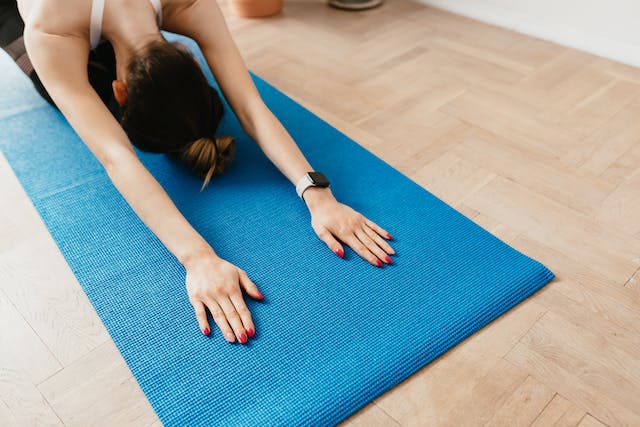
Before we dive into the tips, let’s familiarize ourselves with the Child’s Pose exercise. Also known as “Balasana” in Sanskrit, this resting pose is often used as a resting position during a yoga practice. It’s characterized by sitting back on your heels, folding forward, and reaching your arms out in front or by your sides, allowing your forehead to rest on the mat.
Tips For Mastering Child’s Pose Exercise
1. Start with Proper Alignment
If kneeling is comfortable, start with your big toes near each other and your knees a comfortable distance apart. Move your hips back towards your heels and fold forward only as far as feels comfortable. Do not force your body into a particular shape.
2. Adjust the Width of Your Knees
Choose a knee position that gives your hips and torso enough space. Wider knees may be more comfortable for some people. Stop if the position causes pain; being a beginner does not mean your knees must be close together.
3. Focus on Breath Awareness
Breathe at a comfortable pace while in the pose. There is no need to force deep breaths or hold your breath. Some people find this relaxing; leave the pose if you feel dizzy or unwell.
4. Gentle Forehead Placement
A cushion or folded blanket may support your forehead if the floor is out of comfortable reach. Keep your neck comfortable, and stop if support does not resolve discomfort.
5. Explore Arm Variations
Child’s Pose exercise offers various arm variations to suit your comfort level. You can extend your arms straight in front of you, allowing for a gentle stretch in the shoulders and upper back. Alternatively, you can bring your arms by your sides with your palms facing up, promoting a sense of surrender and relaxation. Experiment with different arm positions to find what feels most soothing for you.
6. Use Props for Support
A bolster or folded blanket may make the position more comfortable for some people. Support is optional; it is not a reason to stay longer or stretch further than feels comfortable.
7. Modify for Comfort
You can try support near your hips or ankles if it helps. Do not use props to push through pain. Ask a qualified exercise professional or clinician for an alternative if the pose does not suit you.
8. Practice Mindful Rest
Use the pose as a brief rest if it feels comfortable. Relaxation varies between people, and there is no need to remain in a position that hurts.
Summing Up
Child’s Pose is one optional way to move or rest during yoga. Comfort and suitability matter more than mastering a fixed shape. Persistent or worsening discomfort deserves assessment.
For back pain, neck pain or headaches that affect activity, MyChiro in Bondi Junction can discuss whether an assessment by one of our chiropractors is appropriate.
New patients can book a free initial consultation. Same-day treatment is optional, costs $125 and is offered only if clinically appropriate, with no obligation to proceed.