


When your body feels tight, stretching might seem like the obvious fix. But if the tension keeps coming back, the problem might not be your muscles – it could be your nervous system. Stress, poor posture, or lack of sleep can keep your body in a "fight or flight" mode, leading to ongoing tension that stretching alone can’t resolve. Here’s what you need to know:
- Nervous system tension causes protective muscle guarding, not just stiffness.
- Stretching provides short-term relief but doesn’t address the brain’s safety signals.
- Lasting relief comes from calming the nervous system with breathing, manual therapy, and mindful movement.
If tightness persists or worsens, consider professional help like chiropractic care to address deeper issues like joint alignment or instability. True comfort comes from helping your brain feel safe – not just stretching muscles.
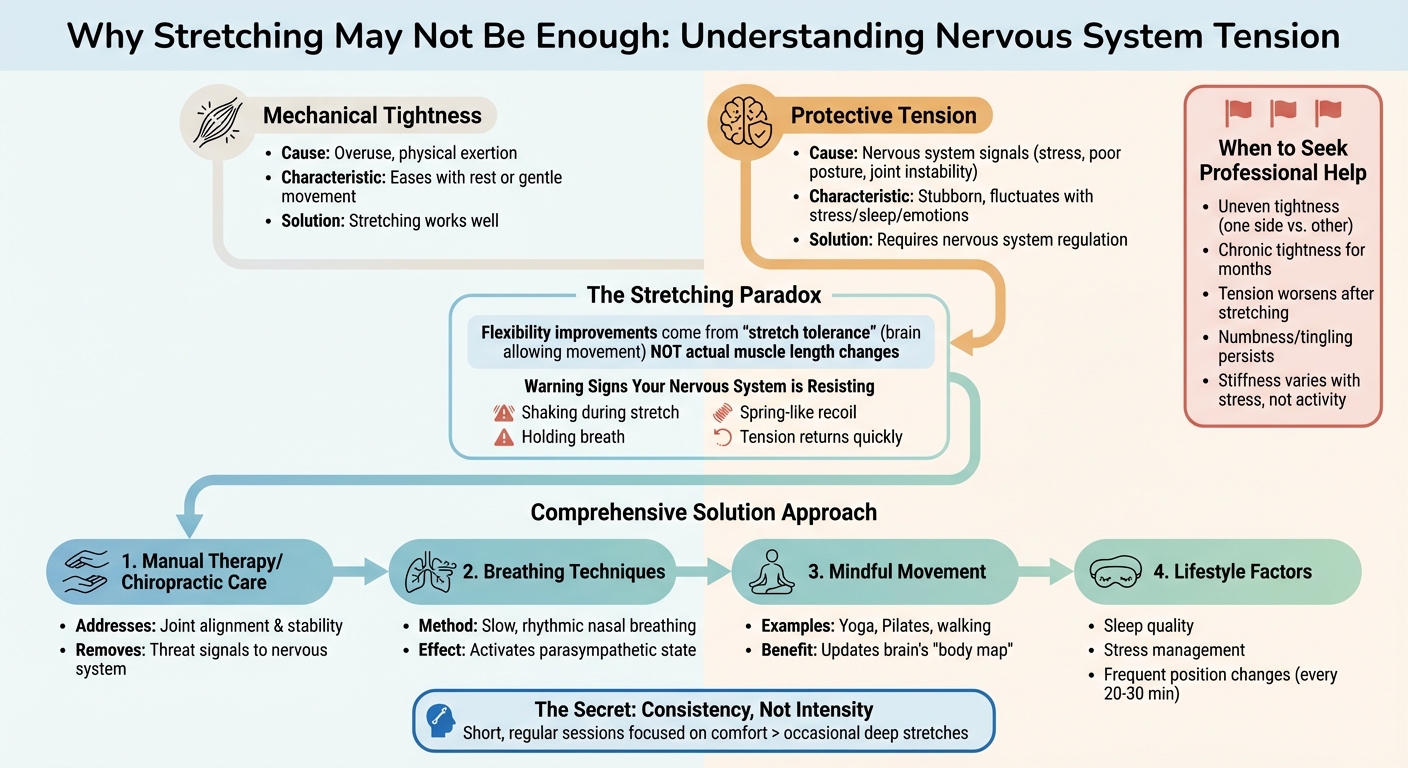
Stretching vs Nervous System Regulation: Understanding Muscle Tension Relief
Why Stretching Alone May Not Be Enough
How the Nervous System Creates Physical Tension
Ever wondered why certain areas of your body – like your shoulders, neck, or lower back – feel tight no matter how much you stretch? It’s not always about stiff muscles. Often, it’s your nervous system stepping in with protective guarding. When your nervous system senses a potential threat, whether from poor posture, unstable joints, or even chronic stress, it activates this guarding mechanism to limit movement in vulnerable areas. It’s like your body applying the brakes to prevent what it perceives as possible injury.
This kind of tension is different from the tightness caused by overuse. While mechanical tightness from overexertion usually eases with rest or gentle movement, protective tension is more stubborn. It can fluctuate depending on factors like your stress levels, emotional state, or even how well you’ve slept. Stretching, unfortunately, only works on the muscle tissue – not the nervous system signals that control this guarding response.
Why Stretching Often Provides Only Temporary Relief
Here’s an insight that might surprise you: research from 2025 suggests that improvements in flexibility come down to "stretch tolerance", or how much your brain allows you to move into a position, rather than any actual change in muscle length.
"Stretching only works when the brain says yes." – Impakt
If you push too hard into a stretch, your brain might interpret it as a threat. Instead of relaxing, your nervous system might respond by tightening the very muscles you’re trying to loosen. Ever noticed shaking, holding your breath, or an almost spring-like recoil when stretching? These are signs your nervous system is resisting the movement. That’s why the relief you feel after stretching can fade so quickly – stretching alone doesn’t address the root cause of the tension: the nervous system’s protective signals. To experience lasting comfort and mobility, you need to focus on calming these signals, not just stretching muscles.
Why Nervous System Regulation Matters
"Your body’s protective responses aren’t obstacles to overcome: They are intelligent communications about what your inner systems need to feel safe and function optimally." – Dana Santas, Mobility Maker and Certified Strength and Conditioning Specialist
For lasting relief, it’s essential to prioritise techniques that calm and regulate the nervous system. This includes practices like slow, rhythmic breathing to activate the parasympathetic state, strength training to stabilise joints, and improving sleep quality. When your brain feels safe, it’s much more likely to release protective tension, allowing for smoother and freer movement. The next steps explore how manual therapy and lifestyle adjustments can complement these efforts to help reduce nervous system-driven tension for good.
sbb-itb-585d67d
Other Approaches to Address Nervous System Tension
Manual Therapy for Nervous System Support
When your nervous system triggers protective tension, it’s often reacting to perceived physical threats like joint instability, misalignment, or poor posture. Manual therapy can address these root causes in ways that stretching alone cannot. By focusing on the musculoskeletal structures that influence nervous system signals, it helps create a more stable foundation for your body.
Here’s the distinction: stretching targets muscle tissue, while manual therapy prioritises joint alignment and stability – two key factors that often drive ongoing tension. When a chiropractor or manual therapist corrects misalignment or joint dysfunction, they’re essentially removing the "threat" signal that keeps your nervous system on edge. This approach allows your body to release tension naturally, rather than forcing muscles to stretch while the underlying issue persists. It’s a way to prepare your body for additional therapies aimed at regulating the nervous system.
How Chiropractic Care May Help
Chiropractic care builds on manual therapy techniques, offering a targeted approach to improve spinal alignment and joint function. By addressing these areas, chiropractors can help reduce the protective tension your nervous system creates in response to instability or misalignment. For example, persistent tightness in a hip flexor could point to an alignment issue that a manual assessment might uncover.
Dr Steve’s practice in Bondi Junction provides gentle care focused on the nervous system, ideal for those seeking a natural way to manage chronic tension. When combined with techniques like slow, controlled nasal breathing and core stability exercises, chiropractic adjustments can offer a more comprehensive solution to tension that stretching alone may not resolve.
Adding Mind-Body Practices
Mind-body practices can complement manual and chiropractic therapies by helping to calm the nervous system. One of the simplest and most effective tools is deep, slow breathing, which signals your brain that you’re safe, helping to lower heart rate and cortisol levels. As Dr Karla Acosta-Monroe, a family medicine physician at Baylor Scott & White Medical Center, explains:
"Deep, slow breathing is one of the quickest ways to calm a dysregulated nervous system."
Activities like yoga, walking, or Pilates can also reduce stress hormones and encourage a balanced nervous system response. Grounding techniques, such as the 5-4-3-2-1 method (naming 5 things you see, 4 you can touch, 3 you hear, 2 you smell, and 1 you taste), are another effective way to reset during moments of overwhelm. While these practices don’t replace manual therapy, they work alongside it to create an environment where your nervous system feels safe enough to release tension. Together, these approaches provide a well-rounded way to address persistent nervous system tension.
How to Turn on The Parasympathetic Response to Calm Anxiety – 22/30
Practical Steps for Managing Nervous System Tension
Building on earlier strategies, these steps focus on simple, everyday habits to help ease nervous system tension and promote relaxation.
Posture and Movement Awareness
Your brain keeps a "body map" of safe positions, and mindful movement helps update this map, reducing tension. Instead of aiming for "perfect" posture, focus on frequent position changes throughout the day. For example, if you work at a desk, shift your weight every 20–30 minutes, adjust your chair height, or stand briefly. These small adjustments signal to your nervous system that movement is safe and natural.
Gentle rocking or pulsing motions can also help build trust between your body and brain. Move only within your comfort zone, and stop if you notice signs like shaking, shallow breathing, or a sense of recoil – these are cues that your nervous system may be resisting.
Simple Relaxation Techniques
Slow nasal breathing is an easy and effective way to calm nervous system tension. Inhale gently through your nose and exhale slowly, directing your breath into areas that feel tight or guarded. This simple practice signals safety to your brain and can help reduce protective reflexes.
Nerve gliding exercises are another practical option. Unlike static stretching, these involve smooth, dynamic movements that help nerves move freely through surrounding tissues. For instance:
- If you feel tingling or tightness in your arms, try median nerve glides.
- For lower body tension or sciatica-like symptoms, sciatic nerve glides can be helpful.
Perform 10–20 repetitions once or twice daily – these exercises usually take less than a minute. Regular, short sessions are more effective than occasional, intense efforts.
If these practices don’t provide relief, it might be time to explore professional support.
When to Seek Professional Help
If tension persists despite regular self-care, consulting a healthcare professional can be a wise next step. Key signs to watch for include:
- Uneven tightness, such as one hip feeling tighter than the other, even after stretching both sides.
- Chronic tightness in the same area for months.
- Tension that worsens after stretching instead of improving.
Other indicators include stiffness that varies significantly with stress levels rather than physical activity, or ongoing numbness and tingling. Dr Steve’s practice in Bondi Junction offers nervous-system-focused chiropractic care, which can address issues like joint instability or alignment problems contributing to tension. A professional assessment can uncover factors – such as unhealed injuries – that self-care alone may not resolve.
Conclusion: A Broader Approach to Nervous System Stress
Stretching might feel satisfying, but if tightness keeps returning, it could mean your nervous system is still on high alert. True mobility isn’t just about how long your muscles are – it’s also about whether your brain feels safe allowing movement. Studies suggest that improvements in flexibility often come from your body becoming more tolerant of stretching, not just physical changes in the muscles.
To address this effectively, you’ll need a mix of strategies. These might include gentle manual therapy to refine your body’s internal map, mindful movement to build trust in your nervous system, and small daily practices like slow nasal breathing and posture awareness. Together, these approaches help calm the nervous system’s protective responses instead of just loosening tight muscles.
If regular stretching doesn’t seem to provide lasting relief, it could be a sign that your body is still in a defensive state. In such cases, chiropractic care – like the services offered at Dr Steve’s practice in Bondi Junction – can complement your self-care routine by supporting nervous system regulation and improving joint function.
The secret lies in consistency, not intensity. Short, regular sessions that focus on comfort are often more effective than occasional deep stretches. Pay attention to signals like uneven tightness, shallow breathing, or tension that worsens under stress – these may indicate that your current routine needs some tweaks.
Ultimately, reducing nervous system tension isn’t about pushing through discomfort. It’s about creating an environment where your brain feels safe, informed, and ready to let go of stress.
This information is general and not intended as a substitute for professional medical advice.
Chiropractic care focuses on musculoskeletal health, and results can vary.
Always consult a qualified healthcare professional before making decisions about your health.
FAQs
How can I tell if my tightness is nervous system guarding?
Nervous system guarding happens when your muscles remain tight as a defence mechanism, even after the original trigger has passed. You might notice ongoing tightness that doesn’t ease up with stretching and can even feel deeper or more intense if you try to forcefully release it. If this resonates with your experience, it’s worth reaching out to a healthcare professional. They can help pinpoint the underlying cause and suggest approaches like gentle manual therapy to help regulate your nervous system.
What should I do instead of deeper stretching?
When it comes to relieving tension, deep stretching isn’t the only option. Gentle activities that calm the nervous system can often work better. Practices like meditation, yoga, focused breathing, or other mindful exercises help manage stress and encourage balance in the body. These methods work by supporting neurological input, which can tackle underlying tension more effectively than stretching alone. For personalised advice, it’s always a good idea to consult a healthcare professional.
When should I see a chiropractor for ongoing tightness?
Persistent muscle tightness that doesn’t ease up with stretching might indicate that the nervous system is playing a role in the tension. Stretching by itself often isn’t enough, as it doesn’t directly influence how the nervous system regulates muscle tone. Instead, combining other techniques like manual therapy, gentle movement exercises, or focused breathing may bring better results. If the tightness persists or worsens, it’s wise to seek advice from a qualified healthcare professional to find personalised solutions.


