

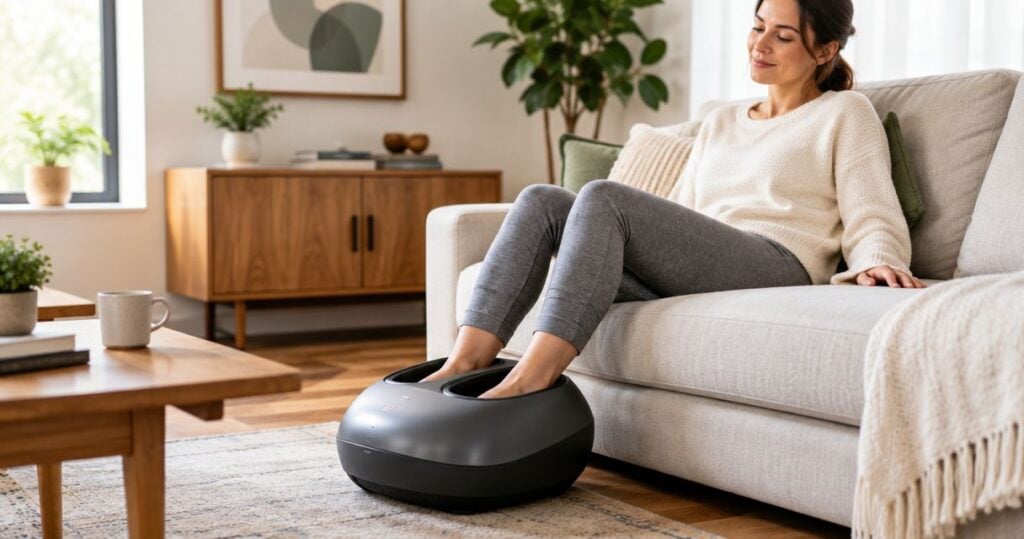
For a foot massager to use alongside assessed plantar fasciitis care, compare pressure control and fit rather than advertised relief claims. A manual roller offers direct control, a smooth ball allows more targeted contact, and an electric massager offers powered movement; none is recommended here as a treatment for plantar fasciitis.
- Manual foot rollers suit shoppers who want direct control over movement and pressure.
- Smooth massage balls offer targeted contact but require careful pressure control.
- Electric foot massagers differ in fit, controls and movement; compare the actual model instructions.
- Mychiro is a Bondi Junction chiropractic clinic, not a foot-massager manufacturer.
- Discuss persistent heel pain with a qualified health professional rather than relying on a device.
Why this matters
A foot massager’s features do not establish whether it is appropriate for your symptoms. A product labelled for plantar fasciitis still needs to be considered separately from a diagnosis and an individual care plan.
Mychiro provides chiropractic care and spinal adjustments in Bondi Junction, Sydney. This guide compares consumer device types, not chiropractic outcomes or particular manufacturers’ clinical claims.
For your 2026 shortlist, separate the shopping question from the health question: what does the device do, and is using it appropriate for you? A GP, podiatrist or physiotherapist can discuss persistent foot symptoms and whether further assessment is needed.
No named model is ranked here. The comparison concerns observable design differences, so you can evaluate a product without assuming that stronger pressure, more settings or extra features mean a better clinical result.
What to look for in a foot massager
Compare these criteria before choosing a device:
- Pressure control: Can you reduce contact immediately, or does the mechanism determine the force?
- Foot fit: Does the design accommodate your foot without forcing it into a fixed position?
- Accessible controls: Can you stop powered movement without bending awkwardly or searching for a button?
- Contact surface: Is the surface smooth, textured, rigid or cushioned? These are different sensations, not evidence of different outcomes.
- Cleaning requirements: Check which parts can be cleaned and whether covers are removable.
- Clear instructions: Look for stated intended use, warnings and reasons not to use the product.
In 2026, assess the specific product rather than relying on the device category alone. Two electric massagers can have different mechanisms, foot openings and stop controls despite similar descriptions.
Reject a device if its instructions conflict with advice you have received from your health professional. Marketing language should not override an individual assessment.
Foot massager types at a glance
The order below starts with manually controlled tools and then moves to powered designs. It is not a ranking of clinical effectiveness.
| Device type | Suited to | Standout design feature | Main limitation |
|---|---|---|---|
| Manual foot roller | Broad contact with user-controlled movement | You move your foot over the roller | Pressure depends on how much weight you apply |
| Smooth massage ball | A portable tool with targeted contact | A small contact area | Pressure can become concentrated |
| Open-platform electric massager | Powered movement without an enclosed foot chamber | Feet rest on an exposed platform | Movement and pressure depend on the mechanism |
| Enclosed kneading massager | Shoppers who prefer a contained foot position | Feet sit inside dedicated openings | Fit and access vary between models |
| Air-compression foot massager | Shoppers comparing squeezing rather than rolling designs | Inflatable sections apply compression | Compression is not the same action as massage rollers |
Features such as heating or automatic programmes need their own assessment. Do not assume they are included, independently adjustable or appropriate for your circumstances.
1. Manual foot roller: direct control over broad contact
A manual foot roller sits on the floor while you move your foot over its surface. It has no powered movement; your position and movement determine where contact occurs.
A roller suits someone who wants a straightforward tool and can comfortably control their foot position. Check the actual shape because a broad cylinder and a deeply contoured roller do not contact the foot in the same way.
Manual foot roller advantages:
- You determine the movement rather than following a motorised programme.
- You can lift your foot away immediately.
- There is no electrical connection to manage.
- The contact surface is visible for inspection and cleaning.
Manual foot roller limitations:
- Leaning onto the roller increases pressure, sometimes unintentionally.
- Textured surfaces create a different sensation from smooth surfaces.
- The roller can move across the floor unless its design or placement limits movement.
Suited to: Shoppers who want broad contact and direct manual control.
If a clinician has advised against pressure on a particular area, a roller is not a workaround. Its simple design does not establish suitability for your foot symptoms.
Decision: Consider a manual roller only if self-massage is appropriate following assessment.
2. Smooth massage ball: portable, targeted contact
A smooth massage ball creates contact over a smaller area than a broad roller. You control its position manually, and its size and firmness influence how the contact feels.
A ball is easy to move between locations, but portability is not a clinical advantage. For your 2026 comparison, inspect the surface and read the intended-use instructions rather than choosing by firmness alone.
Smooth massage ball advantages:
- The tool is compact and does not require power.
- You can reposition it without changing settings.
- A smooth surface allows you to inspect it for damage.
- You can stop contact by moving your foot away.
Smooth massage ball limitations:
- A small contact area concentrates pressure.
- The ball can roll away on an unsuitable surface.
- A rigid ball offers little cushioning.
Suited to: Shoppers seeking a portable tool with targeted contact, where that contact is appropriate.
Do not interpret tenderness as a signal to press harder. A painful spot is not, by itself, a diagnosis or an instruction to apply massage.
Decision: Consider a smooth ball for its portability and control, not as a substitute for assessment.
3. Open-platform electric massager: powered movement
An open-platform electric massager allows you to rest your feet on an exposed surface. Depending on the model, that surface may provide vibration, moving rollers or another powered action.
Check the mechanism before comparing settings. A list of programmes does not explain how the device contacts your foot or whether you can keep a tender area away from it.
Open-platform electric massager advantages:
- The open design lets you see where your feet contact the surface.
- You do not need to place your feet inside a chamber.
- Powered movement avoids manually rolling a tool.
- You can compare the controls and stopping method before use.
Open-platform electric massager limitations:
- You cannot assume that an intensity setting controls every part of the mechanism.
- The platform’s shape determines where contact occurs.
- Powered use introduces electrical instructions and cleaning restrictions.
Suited to: Shoppers who prefer an open design and want to compare powered movement options.
Look for instructions explaining what each control changes. If the description does not distinguish vibration, kneading and heat, seek clarification rather than treating those features as interchangeable.
Decision: Hold off until the mechanism, controls and warnings are clear.
4. Enclosed kneading massager: contained foot placement
An enclosed kneading massager has openings or chambers that hold your feet near moving components. Fit matters because the chamber helps determine where those components make contact.
Check foot-length guidance, opening dimensions where provided, and whether you can withdraw your feet readily. A device that accommodates your foot length can still feel restrictive around another part of the foot.
Enclosed kneading massager advantages:
- Dedicated openings provide a defined position for each foot.
- Powered components operate without manually moving a roller.
- Some models provide adjustable settings; verify the actual controls.
- Removable liners, where supplied, have separate cleaning instructions.
Enclosed kneading massager limitations:
- The chamber limits how freely you can reposition your foot.
- Fixed components can contact an area you would prefer to avoid.
- Enclosed surfaces require attention to the manufacturer’s cleaning directions.
Suited to: Shoppers who prefer contained foot placement and can confirm suitable fit.
For a 2026 purchase, do not rely solely on a general statement that a device fits adult feet. Read the model-specific guidance and identify any uncertainty before deciding.
Decision: Hold if you cannot confirm fit or readily stop and withdraw your feet.
5. Air-compression massager: a different contact mechanism
An air-compression foot massager uses inflatable sections to apply a squeezing action. Some devices combine compression with other features, so read which mechanisms operate together and which can be controlled separately.
Compression is not interchangeable with rolling or kneading. The fact that a device avoids rollers does not establish whether it is suitable for a medical condition.
Air-compression massager advantages:
- It offers a different mechanism from a rigid roller.
- Some designs use adjustable wraps rather than fixed chambers.
- Model instructions can identify separate compression controls.
Air-compression massager limitations:
- Compression requires its own suitability check.
- Wrap position and fit affect where squeezing occurs.
- Combined programmes can make individual features difficult to separate.
Suited to: Shoppers comparing compression designs after discussing suitability with a qualified health professional.
If you have a condition affecting circulation or sensation, discuss device use with your treating clinician before proceeding. A product’s general wellness wording is not individual medical advice.
Decision: Wait for advice when compression suitability is uncertain.
How the comparison is ordered
The comparison prioritises control, visibility of contact, fit and the ability to stop. Manual tools appear first because their movement is user-controlled, not because they have demonstrated better plantar fasciitis outcomes.
Mychiro’s foot-massager guide separates device descriptions from treatment claims. No hands-on testing, manufacturer endorsement or clinical comparison is implied.
Use the same criteria across your 2026 shortlist. A more complicated device should explain its operation clearly; additional modes do not remove the need to check warnings or fit.
Check suitability before choosing a device
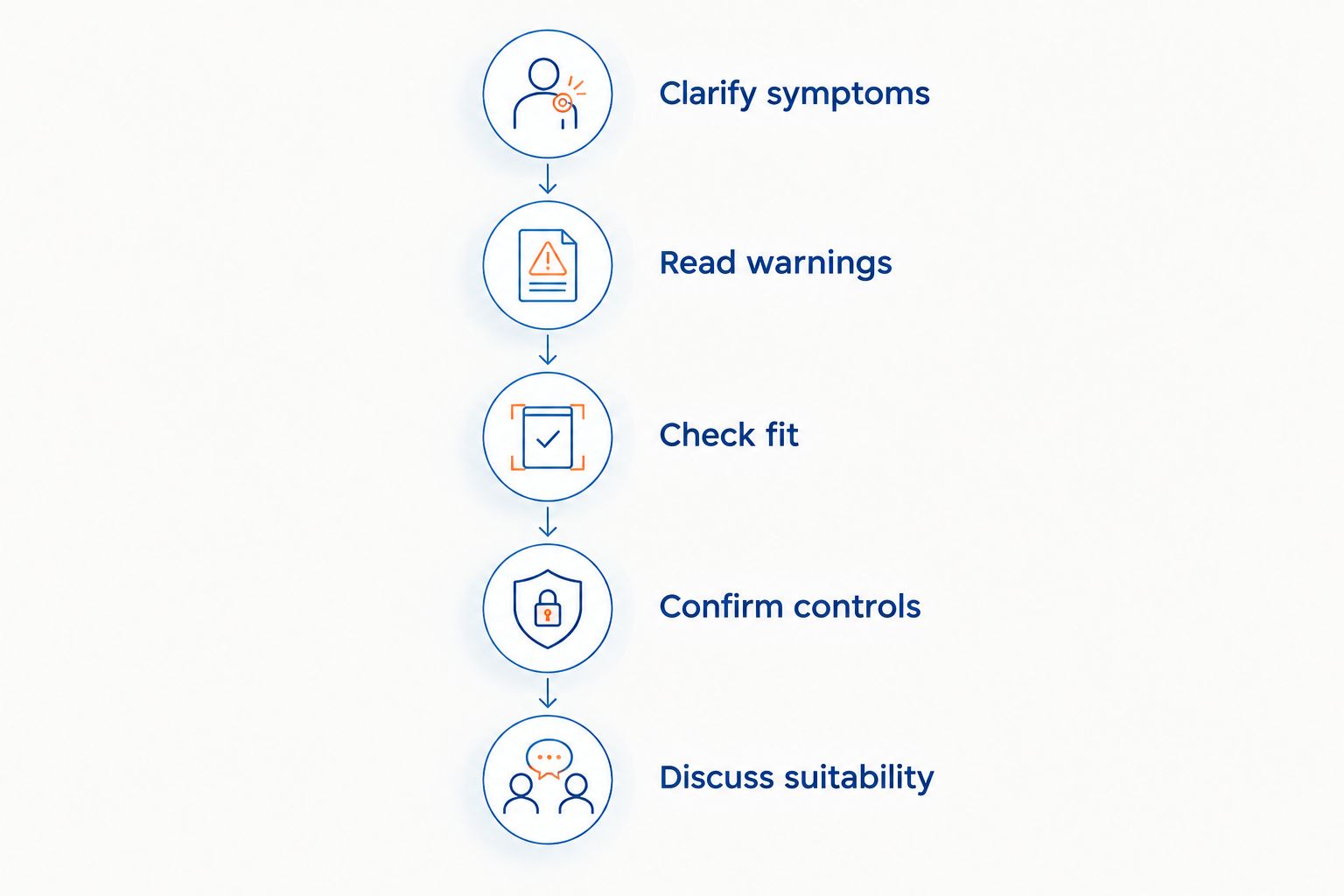
Use this sequence to organise your questions, not to diagnose yourself:
- Clarify symptoms: Describe where the discomfort is, when it occurs and whether walking is affected.
- Read warnings: Check the manufacturer’s instructions and identify anything relevant to your health history.
- Check fit: Confirm how the device positions your foot and whether contact can be avoided where necessary.
- Confirm controls: Identify how to reduce intensity, stop movement and remove your foot.
- Discuss suitability: Ask a qualified health professional whether the proposed device is appropriate for you.
Take the product instructions to that discussion if possible. A description of the mechanism gives your health professional more useful information than an advertising claim about relief.
Seek medical assessment rather than experimenting with a massager if foot pain follows an injury, you cannot bear weight, or the foot is hot, red and swollen. New numbness, weakness or a wound also warrants medical advice; these are not shopping questions.
Which foot massager type should you choose?
Choose by controllability and fit only after establishing that device use is appropriate. A manual roller offers direct control over broad contact; a smooth ball changes the contact area; powered designs change the mechanism and introduce additional controls.
If you are undecided, postponing the purchase is a reasonable decision. You do not need a massager to have your symptoms assessed or to discuss a care plan.
For persistent heel pain in 2026, ask about assessment and management rather than asking which machine promises the strongest sensation. This guide does not recommend chiropractic adjustments as a plantar fasciitis intervention.
FAQ
Which foot massager should I choose for plantar fasciitis?
Choose a device only after checking whether its use is appropriate for your symptoms. Compare pressure control, fit, stopping controls and manufacturer warnings rather than promises of relief.
Is a foot roller better than an electric massager?
A foot roller and an electric massager offer different control mechanisms; this guide does not establish that either produces better clinical outcomes. A roller moves manually, while an electric device uses its own powered mechanism.
Can a foot massager cure plantar fasciitis?
This guide does not support a claim that a foot massager cures plantar fasciitis. Discuss persistent symptoms and management options with a qualified health professional.
Should foot massage hurt?
Do not use pain as a target or a reason to increase pressure. Stop using the device if it causes pain or other symptoms, and discuss the response with a qualified health professional.
Is heat necessary in a foot massager?
Heat is a separate feature, not a requirement for comparing foot massagers. Check its controls and warnings, and discuss suitability if you have reduced sensation or a relevant medical condition.
Can I use an air-compression foot massager if I have diabetes?
Discuss the specific device with your treating clinician before use. Diabetes can involve changes in foot sensation or circulation, so general product instructions do not replace individual advice.
When should I get heel pain assessed instead of buying a massager?
Get persistent or worsening heel pain assessed rather than relying on a device. Seek medical assessment promptly for inability to bear weight, injury-related pain, a hot swollen foot, new numbness or a wound.
Does Mychiro sell or recommend these foot massagers?
This guide does not identify a retail offering or endorse a particular foot-massager model. Mychiro is a chiropractic clinic and wellness centre in Bondi Junction, Sydney.
One last thing
Photograph the device’s instructions, not just its feature list. Showing a health professional the mechanism, warnings and controls makes the suitability discussion more specific than presenting an advertisement labelled for plantar fasciitis.
Related guides
- Footwear considerations for plantar fasciitis
- Massage balls and contact surfaces
- Orthotic insoles for foot and back concerns
- Supportive footwear for nurses


