

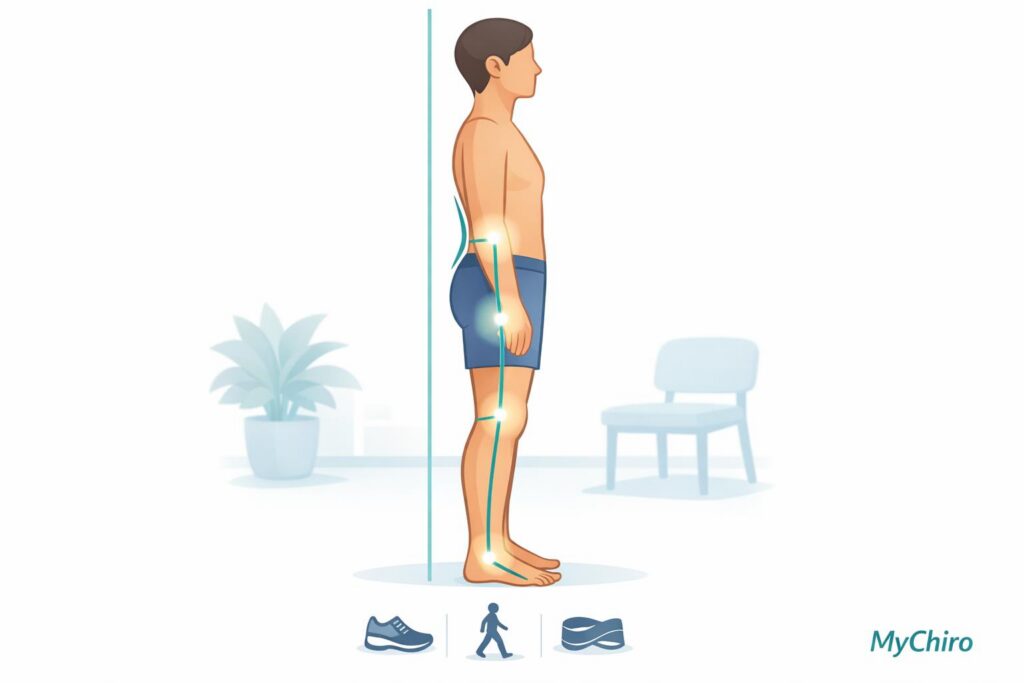
Back pain isn’t just about your chair or desk setup – it starts from the ground up. Poor foot, leg, and hip alignment can destabilise your body, forcing your spine to compensate and leading to discomfort. Misaligned knees, dangling feet, or crossed legs put extra pressure on spinal discs and muscles, which often results in pain.
To reduce strain:
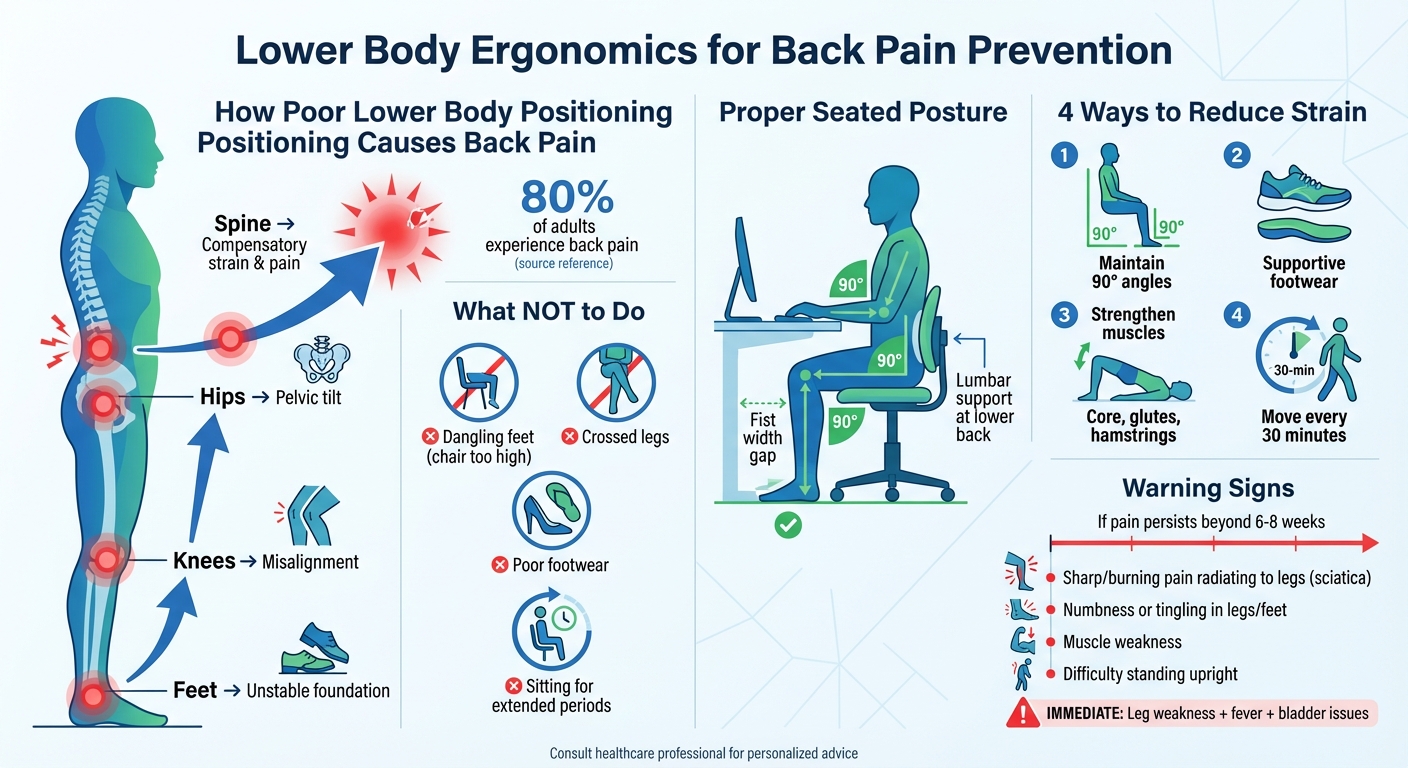
- Sit with your hips and knees at 90-degree angles, feet flat on the floor.
- Wear supportive shoes or consider custom orthotics.
- Strengthen key muscles like your core, glutes, and hamstrings.
- Move every 30 minutes to avoid prolonged stress on your spine.
If pain persists, professional care like chiropractic adjustments may help improve spinal alignment and mobility. Simple changes to posture, footwear, and exercise can make a big difference in spinal health.
Lower Body Ergonomics Guide for Back Pain Prevention
Tips to relief LOWER BACK PAIN in office (Physio-approved)
sbb-itb-585d67d
How Poor Lower Body Positioning Causes Back Pain
Your feet and legs act as the base of your body’s entire musculoskeletal system. If this foundation is unstable or out of alignment, the effects can travel upward, often adding unnecessary strain to your lower back.
Impact of Poor Foot Support
When your feet don’t properly support your body’s weight, your body starts to compensate in ways that can lead to pain. Sports Podiatrist Mark Lin highlights this connection:
"Foot problems can cause pain in the ankles, shins, knees, hips and lower back – and some people experience the full chain of pain from the feet upward."
This problem is especially noticeable for those who spend long hours standing or walking. As Mark Lin explains:
"If you spend most of your day standing or walking, your feet, your shoes, and your posture are among the most likely culprits [for lower back pain]."
When your posture is upright, instability in your feet forces other parts of your body – like muscles, joints, and ligaments – to work harder to compensate. This extra effort can lead to strain that travels directly to your lower back. Proper leg positioning helps to reinforce the natural alignment of your spine, reducing this strain.
How Leg Position Affects Spinal Alignment
The way your hips and knees are positioned plays a big role in maintaining the natural curve of your spine. For example, when sitting, your hips and knees should ideally form a 90-degree angle, with your feet resting flat on the floor. When standing, your weight should be evenly distributed across both feet, and your hips should be aligned to support your spine’s natural curvature.
Problems arise when these positions aren’t maintained. If your chair is too high and your feet dangle, or if you frequently sit with crossed legs, your pelvis can tilt unnaturally. This tilting flattens your lumbar curve, placing extra pressure on your spinal discs. Proper alignment ensures your muscles stay balanced and prevents unnecessary strain.
Muscle Imbalances and Strain
Weak or tight muscles in your core, hamstrings, or glutes can also contribute to lower back pain. When these muscles aren’t doing their job, your lower back often picks up the slack, leading to increased mechanical stress. Poor posture, like slouching, can overstretch your spinal ligaments and put extra strain on intervertebral discs. Over time, these imbalances can lead to chronic discomfort and even injury.
Solutions for Better Lower Body Ergonomics
Making small changes to how you sit, the shoes you wear, and your exercise routine can help improve lower body ergonomics and reduce stress on your spine.
Improving Seated Posture
Good posture while sitting starts with the 90-degree rule: your elbows, hips, and knees should all form right angles. This simple adjustment ensures your body weight is distributed evenly, reducing strain on your spine. Keep your feet flat on the floor, with your legs uncrossed. If your chair is too high and your feet don’t reach the ground, use a footrest or a small stool to keep your hips aligned properly.
Make sure there’s enough space – about the width of a clenched fist – between the back of your calves and the front edge of your chair. This small gap helps prevent circulation problems and avoids unnecessary pressure. Additionally, you should be able to slide your fingers easily under your thighs at the edge of the chair.
Lumbar support is another key factor. Sit with your buttocks pressed against the backrest and use a cushion or rolled-up towel to maintain the natural curve in your lower back. Even with a perfectly set-up workspace, staying in one position for too long can lead to issues. Aim to stand, stretch, or take a short walk every 30 minutes to keep your muscles active and reduce the load on your spine.
Using Supportive Footwear and Accessories
If you’re on your feet for most of the day, the shoes you wear play a huge role in your overall comfort and posture. As Mark Lin, Director and Sports Podiatrist at The Footwork Clinic, points out:
"Muscles, joints, and ligaments strain when the feet don’t carry their load correctly, and since our backs also take up the lot of the physical strain inherent in our upright posture, the chain reaction is easy to follow."
Supportive footwear ensures your feet are properly aligned, which prevents strain from travelling up your body. For ongoing foot-related issues that contribute to back pain, custom orthotics might be worth considering. Unlike generic arch supports, these are tailored to address specific problems in how your feet bear weight. A podiatrist can evaluate whether your foot mechanics or lower limb movements might be contributing to chronic back discomfort.
In addition to footwear, targeted exercises can help strengthen key muscles and promote better alignment.
Strengthening Lower Body Muscles
Ergonomic adjustments are a great start, but strengthening your lower body muscles is just as important for maintaining stability and protecting your back. While your lower back works hard to support your upper body, the surrounding muscles – like your core and glutes – often don’t get enough activation in daily life. Exercises like bridges can help. To do this, lie on your back with your knees bent and feet flat on the ground. Tighten your core and glutes, lifting your hips until your body forms a straight line from your shoulders to your knees. Hold for three deep breaths, starting with a few repetitions and building up over time.
Brisk walking is another easy way to engage your lower body muscles while also relieving pressure on your spine. It promotes a healthy weight, which further reduces strain. When lifting objects or standing up from a chair, always rely on your leg muscles instead of bending at the waist. This technique protects your back and lowers the risk of injury or muscle spasms.
When to Seek Professional Help
Sometimes, even the best ergonomic adjustments aren’t enough. If back pain persists despite these changes, it might be time to consider professional help.
Signs You Might Need Chiropractic Support
If your back pain doesn’t improve within six to eight weeks of implementing ergonomic changes, it’s worth consulting a professional. Dr Jacqueline Weisbein, a physician double board-certified in Physical Medicine & Rehabilitation and Pain Medicine, explains:
"Research shows that while posture alone doesn’t guarantee pain, sustained postural stress combined with poor ergonomics can alter spinal loading patterns and contribute to chronic discomfort."
Certain symptoms could signal the need for chiropractic care. For instance, sharp or burning pain radiating from your lower back into your buttocks or leg may indicate sciatica. Numbness, tingling, or muscle weakness in your legs, feet, or toes could point to nerve compression caused by poor spinal alignment. Other red flags include difficulty standing upright or noticing your torso is misaligned, which might suggest your body is compensating for strain caused by poor ergonomics.
Seek immediate medical attention if your back pain is accompanied by leg weakness, numbness, fever, or issues with bowel or bladder function.
How Chiropractic Care Can Help
Identifying these warning signs can lead to effective chiropractic care aimed at improving spinal health. Chiropractors focus on maintaining the spine’s natural curve, which plays a key role in reducing pain and aiding recovery. They can evaluate your posture, spinal alignment, and movement patterns to pinpoint areas where lower body strain might be contributing to your discomfort.
Treatment often involves gentle spinal adjustments performed by a qualified professional. These adjustments can help improve joint mobility, reduce stiffness, and ease tension. As Cleveland Clinic highlights:
"Depending on the cause of the pain, you may need osteopathic manipulation or chiropractic adjustments"
as part of a comprehensive care plan. Chiropractors can also provide tailored advice on sleep ergonomics, lumbar support, and transitioning safely to active seating options like kneeling chairs – especially if you’ve had a spinal injury in the past. These treatments complement the posture and movement improvements you’ve already worked on.
If you’re in the Bondi Junction area, Dr Steve offers gentle chiropractic care focused on the nervous system, with the convenience of online booking. Whether your pain stems from long hours at a desk or ongoing lower back issues, a professional assessment can help uncover the root cause and guide you toward a personalised plan for long-term spinal health.
Conclusion
Keeping your feet, knees, and hips properly aligned creates a strong base that supports your spine’s natural curve, easing stress on your discs, ligaments, and muscles. The ergonomic tips shared in this article – ranging from maintaining a good seated posture to choosing the right footwear – can work together to minimise unnecessary strain on your lower back.
Studies show that about 80% of adults will deal with back pain at some point, with prolonged sitting being a major factor. As highlighted by UCLA Health Spine Centre:
"Sitting for prolonged periods of time can be a major cause of back pain, cause increased stress of the back, neck, arms and legs and can add a tremendous amount of pressure to the back muscles and spinal discs."
Start by tweaking your workspace setup: adjust your chair height, use a footrest if needed, and make it a habit to move around every 30 minutes. Strengthening your core and lower body can further support your spine, helping to evenly distribute your body weight and prevent imbalances that may lead to discomfort.
If back pain continues, consider seeking professional advice for a personalised approach. Chiropractic care, when provided by a qualified practitioner, can improve joint mobility and spinal alignment, complementing the ergonomic changes you’ve implemented.
This article provides general information and is not a replacement for professional medical advice.
Chiropractic care focuses on musculoskeletal health, and results may vary.
Always consult a healthcare professional before making decisions about your health.
FAQs
How can I tell if my foot support is affecting my back?
The wrong footwear can do more than just hurt your feet – it can throw your entire alignment off balance, affecting your legs, pelvis, and even your back. If you’ve recently noticed back pain creeping in or worsening after switching shoes, it could be a sign your footwear isn’t providing the support you need.
Other signs to watch for include feeling unsteady when you walk or finding that your back feels better when you wear different shoes or use orthotics. These clues might point to a lack of proper arch support, cushioning, or stability in your current footwear.
If you suspect your shoes are the culprit, it’s worth consulting a healthcare professional like a podiatrist or chiropractor. They can evaluate how your foot support – or lack of it – might be contributing to your back issues and recommend solutions tailored to your needs.
What’s the best footrest height for my desk chair?
The best footrest height allows your feet to rest flat on the surface while keeping your knees bent at a 90-degree angle. This setup promotes good posture and reduces strain on your lower back. Paying attention to lower body ergonomics can make long periods of sitting more comfortable and help lower the chances of developing back pain.
When should I see a health professional for back pain?
If your back pain doesn’t go away, gets worse, or is severe, it’s time to see a healthcare professional – especially if it’s paired with symptoms like numbness, weakness, or trouble controlling your bladder or bowels. Pain that follows an injury or trauma should also be checked out right away. For ongoing discomfort, a qualified specialist, like a chiropractor, can help pinpoint the cause and suggest care or lifestyle changes to keep your spine in good shape.