
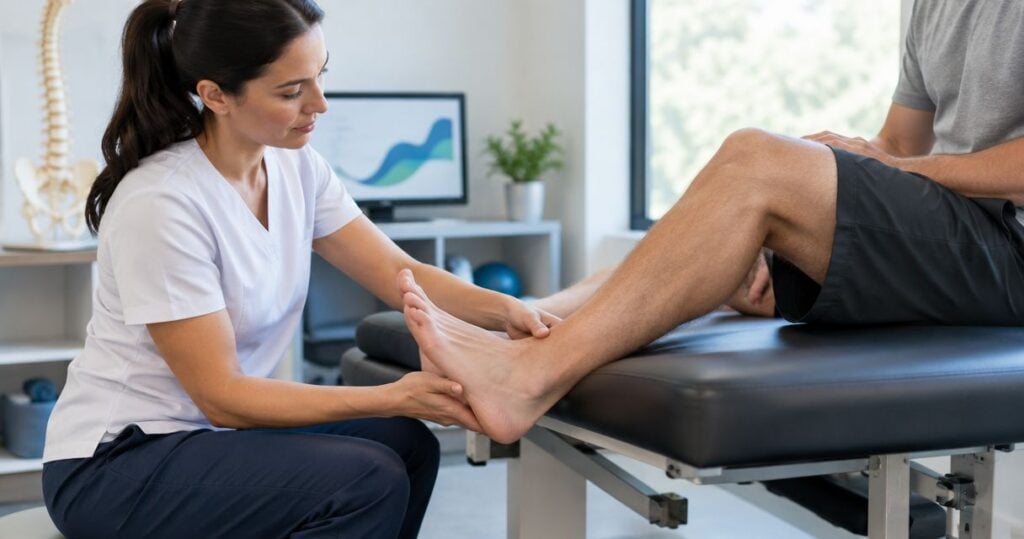
A chiropractor can discuss flat feet as part of a musculoskeletal assessment, but a low arch alone does not establish a need for chiropractic care. Whether any care is appropriate depends on your symptoms, foot flexibility and assessment findings; spinal adjustments should not be presented as a way to rebuild your arches. This 2026 guide explains the limits of chiropractic care, when foot-specific assessment matters and what to ask before agreeing to a plan.
- Can a chiropractor help with flat feet? Assessment matters; arch shape alone does not establish a need for care.
- NHS guidance distinguishes painless flat feet from feet with pain, stiffness or walking difficulties.
- Discuss symptomatic flat feet with a podiatrist or GP rather than assuming spinal adjustments are needed.
- Mychiro provides chiropractic care in Bondi Junction; suitability for any care requires individual assessment.
Why this matters
A flat-looking foot is not, by itself, a diagnosis that requires intervention. NHS guidance on flat feet explains that many people have low arches without associated problems. Pain, stiffness, changes in shape and difficulty walking deserve more attention than the appearance of a footprint.
The useful question is not simply whether your arch looks low. Ask whether something has changed, what activities are affected and which professional is equipped to assess the concern. If you are considering a chiropractor, read about qualifications to check in a Sydney chiropractor before choosing a practitioner.
Can a chiropractor help with flat feet?
A chiropractor may discuss your foot concerns alongside other musculoskeletal symptoms and consider whether assessment or referral is appropriate. That is different from establishing that chiropractic adjustments are indicated for flat feet. Any proposed intervention needs a clear rationale, relevant evidence and your informed consent.
For your 2026 decision, separate these situations rather than treating every low arch as the same problem:
| Your situation | Appropriate next discussion | What not to assume |
|---|---|---|
| Longstanding low arches without symptoms | Ask a qualified health professional if you have concerns | Low arches automatically require appointments or inserts |
| Foot or ankle pain affecting activity | Discuss a foot-specific assessment with a podiatrist or GP | Arch appearance identifies the cause of pain |
| A new change in foot shape or increasing stiffness | Arrange medical or podiatric assessment | The change is simply a posture issue |
| Flat feet alongside back or hip discomfort | Ask for each concern to be assessed on its own merits | The feet necessarily caused the other symptoms |
| A proposal for repeated spinal adjustments | Ask what finding supports the proposal and what alternatives exist | Repeated adjustments will create a lasting arch |
These are decision prompts, not a diagnosis. A clinician needs your history and examination findings before recommending an individual approach.
Painless flat feet: appearance alone is not a care goal
NHS flat-feet guidance states that flat feet usually do not need treatment if they are not causing problems. That distinction matters when an online test, shoe-store scan or photograph makes you concerned about otherwise comfortable feet.
A wet footprint shows where your foot contacts a surface. It does not explain why you have pain, establish the condition of a tendon or determine whether chiropractic care is appropriate. Avoid using a footprint as the sole reason to purchase a course of appointments.
If you walk comfortably and have noticed no change, explain that clearly when seeking advice. Ask what clinical problem, if any, the practitioner has identified. A useful explanation should distinguish a normal variation in foot shape from a concern that warrants further assessment.
Painful or changing flat feet: assess the foot first
Persistent foot pain, stiffness or a change in arch shape calls for more than a discussion about posture. NHS guidance recommends assessment when flat feet are associated with symptoms or difficulties such as problems walking or balancing.
A podiatrist or GP can discuss the appropriate assessment pathway. Depending on the findings, that discussion might include footwear, activity, exercises, supports or referral. None of those options should be selected solely because an arch looks low.
New flattening in an adult deserves particular attention rather than an assumption that the foot has always been that way. The American Academy of Orthopaedic Surgeons describes progressive collapsing foot deformity as a condition involving changes to structures that support the foot. That is a reason for foot-specific assessment, not a basis for self-diagnosis.
Do not let a general explanation about spinal alignment replace an assessment of a changing foot. Tell the assessing clinician when the change began and whether it affects one foot or both.
Why advice for flat feet varies
Different recommendations are not necessarily contradictory: clinicians may be considering different symptoms, histories and examination findings. These factors help explain why a generic flat-feet plan is inadequate:
- Symptoms: A comfortable low arch presents a different question from pain that limits walking or work.
- Onset: A longstanding foot shape differs from a recent change that needs explanation.
- Flexibility: A flexible foot and a stiff foot are not interchangeable findings. A clinician should assess that distinction.
- Function: Difficulty with ordinary walking, balance or footwear provides information that a photograph cannot.
- Clinical findings: Tenderness, swelling, movement and relevant medical history help guide further assessment or referral.
These distinctions are reflected in NHS flat-feet guidance and AAOS patient information on flatfoot conditions. They do not establish that a particular intervention is suitable for you.
What should you ask before agreeing to chiropractic care?
In 2026, assess the explanation behind a recommendation rather than the confidence with which it is delivered. You should understand what is being proposed, why it relates to your concern and what would happen if you declined.
Use this sequence to keep the discussion specific:
- Describe symptoms. Identify the location, onset and activities affected. Bring your usual footwear if the clinician asks you to.
- Clarify findings. Ask what the assessment actually found and whether the explanation remains uncertain.
- Discuss alternatives. Ask about observation, foot-specific assessment, other professionals and any proposed intervention.
- Agree review criteria. Establish what would be reviewed, when referral would be considered and how you can stop or change the plan.

Ask whether the proposed care addresses a separate musculoskeletal concern or is being offered specifically for flat feet. That distinction should be explicit. Consent to a discussion or examination does not mean you have agreed to adjustments or an ongoing appointment schedule.
How do the professionals and options differ?
No single professional title establishes which intervention you need. Choose the assessment pathway around the problem you are experiencing, and ask each practitioner to explain the limits of their role.
| Professional or option | Relevant discussion | Limitation to recognise |
|---|---|---|
| Podiatrist | Foot symptoms, foot function, footwear and whether supports are appropriate | An assessment does not mean orthoses are automatically necessary |
| GP | New symptoms, medical history and whether investigations or referral are indicated | Further foot-specific assessment may still be needed |
| Physiotherapist | Movement, activity demands and whether an exercise approach is appropriate | Exercise selection depends on findings, not arch appearance alone |
| Chiropractor | Musculoskeletal concerns and whether care falls within the practitioner's scope | Chiropractic care should not be presented as a means of rebuilding arches |
| Footwear or orthoses discussion | Whether a particular option suits your symptoms and circumstances | A product recommendation does not replace assessment |
This comparison describes discussion areas, not guaranteed benefits. Ask about limitations and alternatives for every proposed option, including choosing not to proceed.
Mychiro is a chiropractic clinic and wellness centre in Bondi Junction, Sydney. Mychiro provides chiropractic care; a foot-specific concern warrants discussion about whether podiatry or medical assessment is appropriate. Do not assume a particular foot service, orthotic service or referral arrangement is available without checking directly.
Do flat feet mean your back is out of alignment?
Flat feet do not, by themselves, establish the cause of back pain. Foot posture and back symptoms can occur together without proving that one caused the other.
If you have both concerns, describe them separately: when each started, what aggravates each and which activities are affected. Ask the clinician to explain the evidence for any claimed connection rather than accepting a chain of assumptions from feet to knees to pelvis to spine.
For a 2026 care discussion, make the goal specific to your concern. Being able to explain your symptoms and understand the assessment is more useful than agreeing to a vague promise of whole-body alignment. A change in a posture photograph is not, on its own, an explanation of your symptoms.
Do you need orthotics for flat feet?
Flat feet do not automatically mean you need orthotics. NHS guidance describes insoles and other measures as options that may be discussed for symptoms, while also explaining that such measures do not change the shape of the feet.
If supports are proposed, ask what they are intended to address, how suitability will be assessed and what the review process involves. Also ask about alternatives and any practical limitations, including compatibility with your usual shoes.
Avoid choosing an insert from an arch photograph alone. A recommendation should relate to your circumstances, not a claim that everyone with a low arch needs the same product.
Can you choose exercises from an online flat-feet test?
An online flat-feet test does not provide enough information to select an individual exercise programme. A clinician can discuss whether exercises are appropriate after considering symptoms and examination findings.
Take a description of your usual activity to that conversation. Include work demands, walking, sport and anything you have recently changed. Do not assume a generic routine intended to change arch appearance addresses the reason your foot hurts.
This article does not prescribe repetitions, exercise intensity or a return-to-sport timetable. Those decisions require information that a search query or photograph cannot supply.
When should you seek medical assessment instead?
Seek prompt medical assessment for a newly painful or swollen foot, a marked change in shape, or difficulty bearing weight. A hot, red foot with fever, a significant injury or a new loss of sensation should not be managed as a routine flat-feet concern.
Use urgent medical services when symptoms are severe or you are acutely unwell. This is referral advice, not an invitation to book chiropractic care. The appropriate response depends on the symptoms and the circumstances.
For less urgent concerns, record what has changed and arrange an assessment with a GP or podiatrist. Do not delay that assessment while trying to determine whether your spine explains the foot problem.
Sources and scope
This 2026 guide draws on general patient information from the NHS page Flat feet, and AAOS OrthoInfo information on Progressive Collapsing Foot Deformity. These sources support the distinction between arch appearance, symptoms and conditions requiring assessment; they do not establish a claim that chiropractic adjustments change foot structure.
The guide concerns general adult decision-making. It is not an individual diagnosis, exercise prescription or recommendation for chiropractic intervention. Children's foot development requires a separate discussion with an appropriately qualified health professional.
FAQ
Can a chiropractor help with flat feet if they do not hurt?
Painless flat feet do not automatically require chiropractic care. NHS guidance states that flat feet usually do not need treatment when they are not causing problems.
Can chiropractic adjustments rebuild my arches?
Chiropractic adjustments should not be presented as a way to rebuild your arches. Ask for the evidence and rationale behind any proposed intervention.
Should I see a podiatrist or chiropractor for painful flat feet?
A podiatrist or GP is an appropriate starting point for a foot-specific concern. Whether another professional should be involved depends on the assessment findings.
Do flat feet always require orthotics?
Flat feet do not always require orthotics. Discuss whether supports are appropriate for your symptoms rather than buying them solely because your arches look low.
Could my flat feet explain my back pain?
Flat feet alone do not establish the cause of back pain. Ask for each concern to be assessed rather than assuming a direct connection.
What should I do if one arch has recently become flatter?
Arrange assessment with a GP or podiatrist for a new change in arch shape. Mention any pain, swelling, stiffness or difficulty walking.
Does Mychiro provide flat-feet orthotics?
The service information here does not establish that Mychiro provides orthotics. Check directly rather than assuming a chiropractic clinic offers a particular foot service.
One last thing
Before seeking care, write down the activity you want to discuss: walking to work, standing through a shift or returning to your usual exercise. Then ask the practitioner to explain how the assessment relates to that activity.
For your 2026 decision, start with symptoms and function—not a promise to create a higher arch. A useful recommendation explains its purpose, its limitations and when another opinion is appropriate.
Related guides
- How to prepare for your first chiropractor appointment
- What to expect from spinal manipulation
- How chiropractors coordinate with GPs on imaging referrals