
Yes—a chiropractor can identify findings that warrant medical assessment and recommend that you see a GP or medical specialist. That recommendation is not the same as confirming a specialist diagnosis, and a GP referral is generally needed for Medicare benefits for a specialist consultation in Australia. If you have emergency symptoms, seek emergency care rather than waiting for a chiropractic appointment.
- Can a chiropractor tell if you need a specialist? Yes, assessment findings can prompt a recommendation for medical review.
- A recommendation for specialist assessment is different from a Medicare-eligible specialist referral.
- MyChiro is a chiropractic clinic in Bondi Junction, not a substitute for emergency medical care.
- Ask what prompted the referral, who should assess you and whether chiropractic care should pause.
Why this matters
Recognising the limits of chiropractic care is part of deciding the next step—not a reason to complete a course of adjustments first. You do not need to attend chiropractic appointments before asking your GP about unexplained or changing symptoms.
For a non-emergency appointment, this guide to preparing for your first chiropractor appointment explains what to organise beforehand. Bring existing reports and a medication list rather than relying on memory.
This 2026 guide explains referral decisions in Australia. It does not determine whether your symptoms need a particular practitioner or replace an individual medical assessment.
Can a chiropractor tell if you need a specialist?
A chiropractor can recognise concerns during a history and examination that fall outside chiropractic care or require further investigation. However, recognising a reason for referral is not the same as identifying the final diagnosis. A medical assessment can change the initial explanation and the recommended next step.
A referral discussion should make the following sequence clear:
- Clarify the concern. Describe when symptoms began, how they have changed and what they stop you doing.
- Explain the findings. Ask which part of the history or examination prompted concern, including anything that remains uncertain.
- Identify the next clinician. Establish whether you need a GP, a particular medical specialty or emergency assessment.
- Confirm the handover. Ask for a written summary and find out who will arrange the appointment or referral.
- Agree on interim care. Clarify whether proposed chiropractic care should pause and what changes require further medical attention.
An appropriate next step does not always involve a specialist. Your GP can review your overall health, consider investigations and decide whether specialist input is needed.
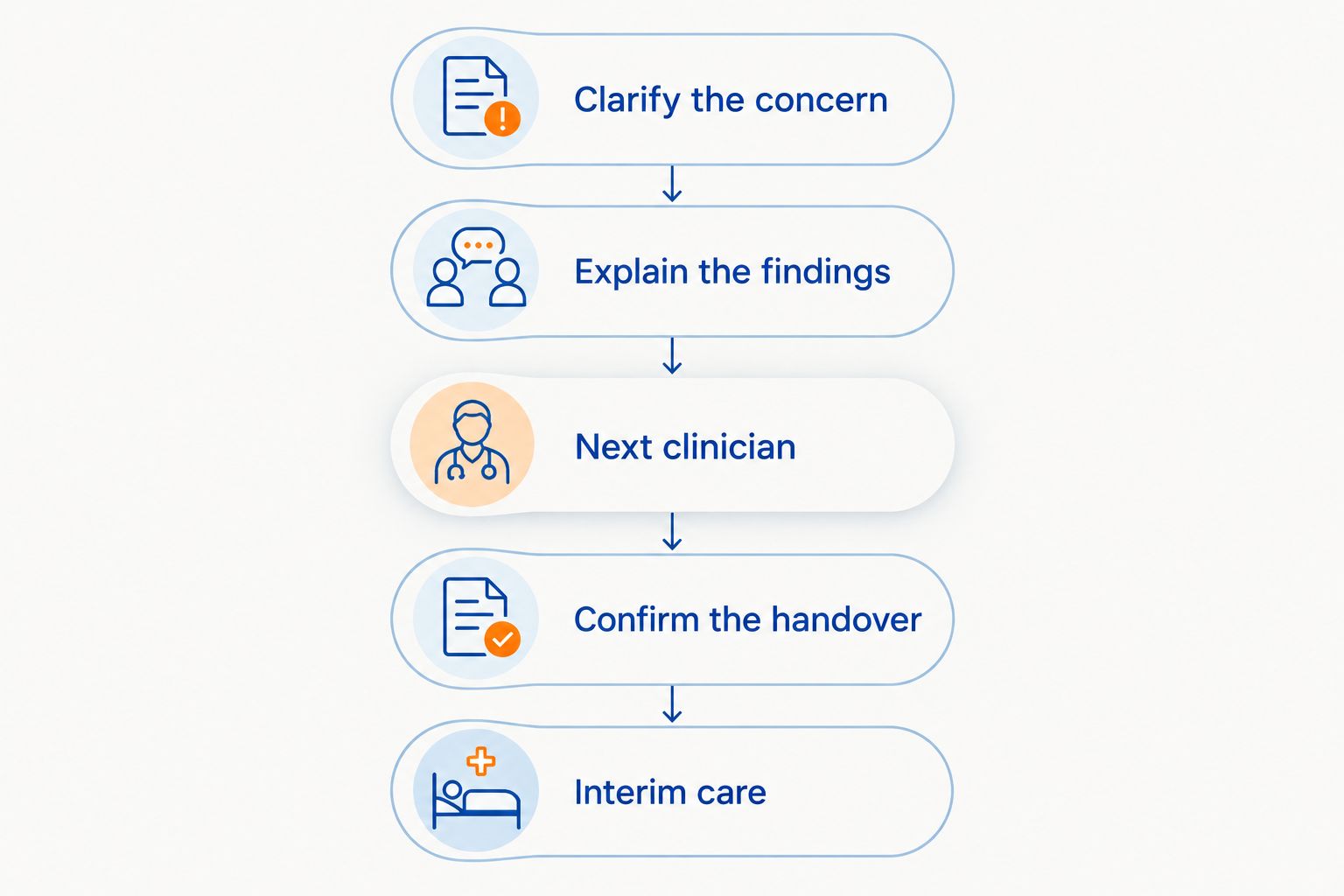
The useful outcome of this conversation is a specific plan. You should know who to contact, what information to take and whether waiting for a routine appointment is appropriate.
Which healthcare professional should you contact?
Different services have different roles. The table below compares pathways, not practitioner quality; the right starting point depends on your symptoms and the assessment required.
| Pathway | Appropriate use | What it contributes | Important limit |
|---|---|---|---|
| Chiropractor | Discussing a musculoskeletal concern within chiropractic scope | History, examination and recognition of reasons for medical review | Does not replace medical assessment for concerns outside that scope |
| GP | Unexplained symptoms, broader health questions or coordinating specialist care | Medical assessment, consideration of investigations and referral planning | Some concerns require assessment beyond general practice |
| Medical specialist | A specific question requiring expertise in a medical specialty | Assessment within that specialty | The receiving practice and Medicare arrangements can require an appropriate referral |
| Emergency department or ambulance | A possible medical emergency | Emergency assessment and care | Not a substitute for routine follow-up once the emergency has been assessed |
You do not need a chiropractor's permission to seek a medical opinion. If you are uncertain about the cause of your symptoms, a GP is an appropriate person to discuss that uncertainty with.
For Australian appointments in 2026, distinguish the clinician's recommendation from the administrative referral requirements. Ask the receiving practice which documents it needs before you attend.
When should you seek emergency care instead?
Call 000 for a suspected medical emergency, including stroke symptoms, severe chest pain or serious breathing difficulty. Do not wait for a chiropractic assessment or a routine specialist appointment.
Back pain accompanied by new difficulty passing urine, loss of bladder or bowel control, or numbness around the groin or buttocks needs emergency medical assessment. These symptoms should not be assessed through an online posture check or managed by waiting to see whether an adjustment changes them.
If the situation is not an emergency but you are unsure where to go, Healthdirect's nurse advice line is 1800 022 222, available 24 hours a day. Describe the symptoms and when they started; the service provides advice about seeking care, not a specialist diagnosis.
Healthdirect's public information on back pain, stroke and emergency care provides the source context for this general warning-sign advice. The examples are not an exhaustive screening checklist, and absence of these symptoms does not establish that chiropractic care is appropriate.
Why the next step varies
Referral decisions depend on the whole clinical picture, not simply where you feel discomfort. Relevant factors to discuss include:
- The symptom history. Explain the onset, progression and any symptoms that occurred together. A label such as back pain does not supply that detail.
- Examination findings. Ask what the findings suggest, what they do not establish and whether another clinician needs to assess them.
- Your wider health history. Share medical conditions, previous operations, medications and existing investigations with the assessing clinician.
- Changes since the previous assessment. New information deserves review rather than automatic continuation of the original plan.
- The unanswered clinical question. A useful referral identifies what needs clarification, rather than requesting a specialist opinion without a stated purpose.
- The referral pathway. The specialist's requirements and Medicare rules affect the paperwork, even when a chiropractor has recommended medical review.
You do not have to interpret these factors yourself. Your role is to provide an accurate history and ask for an explanation you understand.
Does a chiropractor's recommendation count as a specialist referral?
A recommendation to see a specialist does not automatically satisfy Medicare referral requirements. A chiropractor can communicate findings to your GP, but you should confirm the referral arrangements with your GP and the receiving specialist's practice.
Services Australia's guidance on referrals for specialist services distinguishes eligible referring practitioners and the requirements for Medicare benefits. For a planned consultation in 2026, check those requirements before the appointment rather than assuming a supporting letter is sufficient.
Ask the specialist's reception team:
- Who needs to issue the referral for this consultation?
- Does the practice need the referral before it can assess the request?
- Should existing imaging reports or other records accompany it?
- Who should you contact if your condition changes while you wait?
A referral letter helps communicate a clinical question. It does not guarantee a particular diagnosis, investigation or procedure.
Do you need imaging before seeing a specialist?
You do not automatically need an X-ray or MRI before a specialist appointment. Whether imaging is indicated depends on the clinical question; the assessing medical practitioner can discuss whether a scan would inform the next decision.
The Australian Commission on Safety and Quality in Health Care's Low Back Pain Clinical Care Standard advises against routine imaging for low back pain without indications of a specific or serious cause. That guidance concerns low back pain assessment; it is not a rule that every type of pain should be assessed identically.
Take existing reports to your appointment and tell the clinician where the images were taken. Ask whether another investigation would answer a different question before arranging repeat imaging.
For more on the handover process, read how chiropractors coordinate with GPs on imaging referrals. The decision remains individual, not an automatic step before chiropractic care or specialist review.
What should you ask before continuing chiropractic care?
Ask whether the reason for medical review changes the suitability of any proposed adjustments. A referral discussion and consent to chiropractic care are separate decisions. You can ask questions, decline an intervention or seek another opinion.
Useful questions include:
- What is the working explanation, and what remains uncertain?
- Why are you recommending medical review now?
- Should any proposed adjustments or exercises wait until that review?
- What alternatives are available, including not proceeding today?
- What symptoms should prompt me to seek medical attention?
MyChiro provides chiropractic care and spinal adjustments in Bondi Junction. Chiropractic care at MyChiro is a service to discuss following individual assessment, not a replacement for a GP or specialist opinion when medical review is indicated.
A discussion about benefits, risks and alternatives should relate to the proposed care and your circumstances. A general description of adjustments cannot answer those questions for an individual patient.
What should you take to the next appointment?
For a referral appointment in 2026, prepare a short account of what has changed and why another opinion was recommended. Include the symptom timeline, relevant medical history, medication list and any existing reports.
Ask for a copy of the chiropractor's summary if one has been prepared. Check that it separates your reported symptoms from examination findings and identifies the question for the next clinician.
Explain your practical concerns too: difficulties with work, sleep, movement or everyday tasks. These details help communicate the effect of the problem without requiring you to choose a diagnosis.
Before leaving, clarify who will receive the specialist's report. You should also know who is responsible for discussing results and arranging any follow-up—not simply that a referral has been sent.
FAQ
Can a chiropractor tell if I need a specialist?
A chiropractor can identify findings that warrant medical review and recommend a GP or specialist assessment. That recommendation does not confirm the diagnosis or automatically meet Medicare specialist-referral requirements.
Should I see my GP before a chiropractor?
You can see your GP first, particularly when symptoms are unexplained or you need broader medical assessment. You do not have to try chiropractic care before asking about specialist review.
Can a chiropractor send me straight to a surgeon?
A chiropractor can recommend surgical assessment, but that does not mean surgery is necessary. Confirm the receiving practice’s referral requirements and discuss the medical referral pathway with your GP.
Do I need an MRI before a specialist appointment?
An MRI is not an automatic requirement before a specialist appointment. Ask the assessing clinician whether imaging would answer a specific clinical question, and bring any existing reports.
Should I keep having adjustments while waiting for medical review?
Whether to continue adjustments requires an individual assessment of the reason for referral and the proposed care. Ask explicitly whether chiropractic care should pause; do not assume an existing appointment plan remains appropriate.
Who can I call if I do not know where to seek care?
Healthdirect’s nurse advice line is 1800 022 222 and operates 24 hours a day. Call 000 instead for a suspected medical emergency.
Does MyChiro replace a specialist appointment?
MyChiro provides chiropractic care in Bondi Junction, not a substitute for medical specialist assessment. Attend medical review when it is indicated and clarify any proposed chiropractic care separately.
One last thing
Ask for the question behind the referral—not just the name of the specialist. Understanding what needs clarification helps you prepare and gives the next clinician a clearer starting point.
Keep that question with your records in 2026. If you leave a conversation without knowing who to contact or what happens next, ask for the plan in writing.
Related guides
- What qualifications should a Sydney chiropractor have?
- Can you see a chiropractor without a GP referral?
- When back pain needs a chiropractor or a doctor