

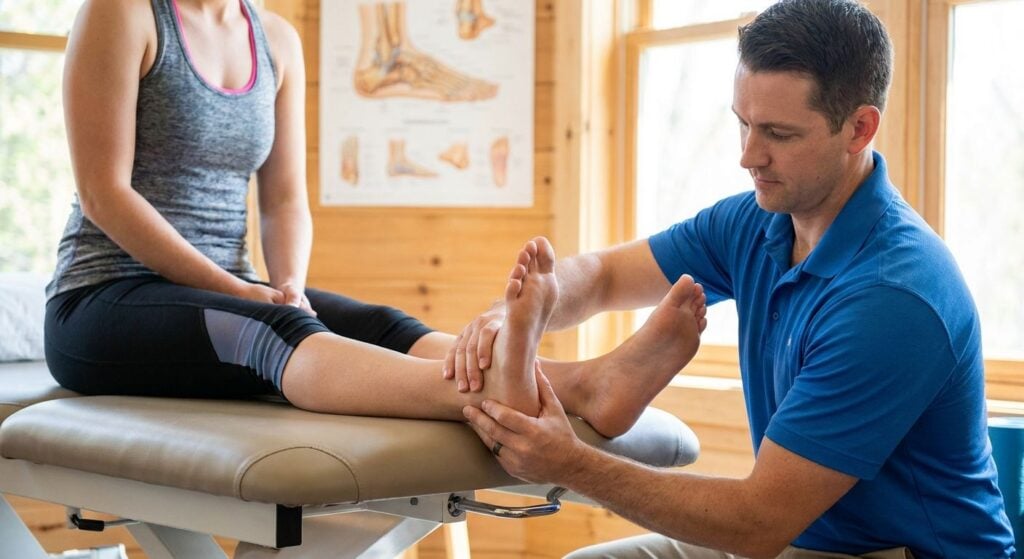
Heel pain that's sharpest with your first few steps in the morning sends a lot of people searching for a chiropractor for plantar fasciitis. This guide sets out what a proper assessment involves, which care approaches are typically discussed, and what tends to get missed when only the heel gets attention.
- A chiropractor for plantar fasciitis typically starts with gait and joint assessment, not heel massage alone.
- Ankle mobility, calf tightness and daily load all factor into a proper plantar fasciitis assessment in 2026.
- Spot-treating the heel without checking the whole kinetic chain is a common gap worth avoiding.
- A home stretching and load-management program usually sits alongside any in-clinic care, not instead of it.
Why this matters
Plantar fasciitis is one of the more common causes of heel pain seen across general practice, podiatry and allied health in 2026, usually described as a sharp pain along the bottom of the foot near the heel bone that eases once the foot warms up. It's reported to affect around 1 in 10 people at some point in their life, most often between the ages of 40 and 60.
It rarely comes down to one structure or one fix. Assessment and management usually involve looking at ankle and foot joint mobility, calf tightness, footwear, and how much load the foot is under day to day. That's why picking a chiropractic care approach for plantar fasciitis is really about the quality of the assessment process, not any single technique.
Who this is for
This guide is for anyone who's had heel or arch pain for more than two to three weeks, particularly pain that's worst with the first steps out of bed and settles as the day goes on. It also fits runners building up weekly kilometres, tradies and retail staff on their feet for eight-plus hour shifts, and anyone who's already tried new shoes or basic stretches without much change.
If the pain started suddenly after a fall, or comes with swelling, bruising, numbness or fever, see a GP first. That sits outside the scope of a routine chiropractic assessment and needs medical review.
What to look for in a chiropractor for plantar fasciitis
A thorough intake before any hands-on work
A proper first visit covers when the pain started, footwear history, training or work load, and any past foot, ankle or lower back injuries. Skipping straight to hands-on work without this context makes it harder to work out what's actually driving the load through the fascia.
Assessment of ankle and foot joint mobility
Normal ankle dorsiflexion sits around 10 to 20 degrees, and restricted range in that joint is a commonly checked marker in a plantar fasciitis workup. A chiropractor for plantar fasciitis should be checking this alongside subtalar joint movement, not just pressing on the heel.
A look at the whole kinetic chain, not just the heel
Hip position, knee alignment and even a leg length discrepancy and posture imbalance can change how load moves through the foot with every step. An assessment that only looks at the heel misses this.
A home program alongside in-clinic visits
Calf and plantar fascia stretching, along with gradual load changes, is typically part of any care plan discussed for plantar fasciitis. In-clinic visits without a home component tend to leave a lot of the daily load unmanaged.
Clear criteria for referral
Numbness, night pain that doesn't ease with position change, or signs of a systemic issue are reasons to refer to a GP or podiatrist rather than continue chiropractic care alone. A practitioner who's upfront about when a referral is appropriate is a good sign.
Care approaches worth discussing
Joint mobilisation of the foot and ankle — the foundational check. Ankle dorsiflexion below the typical 10-20 degree range is often flagged during assessment, and joint mobility work here may be appropriate following a full evaluation. Verdict: worth discussing with a registered chiropractor as part of a broader plan.
Soft tissue work on the calf and plantar fascia — the tissue-focused option. Calf tightness is frequently noted alongside heel pain, and soft tissue techniques are sometimes included alongside joint work rather than as a stand-alone approach. Verdict: consider, but ask how it fits with the rest of the plan.
Gait and load assessment — the whole-chain look. This is particularly relevant for people logging regular kilometres; the same biomechanical factors get covered in guidance for runners with knee and hip pain. Verdict: worth discussing, especially if pain flares with training volume.
Footwear and load-management guidance — the daily habit fix. Hours on hard flooring or worn-out footwear change how much load the fascia takes on each shift. Verdict: consider, and raise your specific work or training setup at the assessment.
A structured stretching and strengthening program — the take-home work. This is the part patients are often asked to do between visits, and it tends to matter as much as anything done in the clinic. Verdict: consider it non-negotiable homework, not optional extra.
Book a foot and gait assessment
Discuss heel pain, footwear and load with a registered chiropractor.
What to avoid
- Heel-only spot adjusting without checking calf, ankle or hip mobility — it looks targeted but skips most of the kinetic chain.
- Footwear swaps with no load change — new shoes on the same training volume or shift pattern rarely shifts the picture on their own.
- No reassessment point — a plan with no check-in after several weeks makes it hard to tell whether anything is changing, and it's worth asking about this upfront.
Verdict comparison
| Approach | Focus area | Typical fit | Verdict |
|---|---|---|---|
| Joint mobilisation | Ankle and subtalar joints | Restricted mobility on assessment | Worth discussing |
| Soft tissue work | Calf, plantar fascia | Tightness alongside joint findings | Consider |
| Gait and load review | Whole kinetic chain | Runners, high step-count jobs | Worth discussing |
| Footwear and load guidance | Daily habits | Long shifts, worn footwear | Consider |
| Stretching and strengthening | Home program | Everyone in a care plan | Consider mandatory |
FAQ
Can a chiropractor help with plantar fasciitis?
A chiropractic assessment can look at ankle and foot joint mobility, gait and calf tightness often associated with plantar fasciitis, and care may be appropriate following that assessment. It typically sits alongside footwear changes and a home stretching program rather than as a stand-alone approach.
What causes plantar fasciitis?
Plantar fasciitis develops when repeated strain irritates the thick band of tissue running from the heel bone to the toes. Contributing factors commonly discussed include footwear, sudden increases in training load, tight calf muscles and time spent standing on hard surfaces.
How many chiropractic visits are needed for plantar fasciitis?
There’s no fixed number, since it depends on the individual assessment and how the case responds. Many care plans include a reassessment point around 4 to 6 visits to check whether the approach needs adjusting.
Is plantar fasciitis the same as a heel spur?
No. A heel spur is a bony growth sometimes seen on imaging near the heel, while plantar fasciitis refers to irritation of the fascia tissue itself. The two can occur together but aren’t the same condition.
What stretches are often recommended for plantar fasciitis?
Calf stretches and rolling the arch of the foot over a firm object are commonly included in home programs discussed with patients. A chiropractor or physiotherapist can tailor these based on your specific assessment findings.
Should I see a chiropractor or a podiatrist for plantar fasciitis?
Both professions can be involved in assessing plantar fasciitis, and some cases benefit from input from each. A chiropractor typically focuses on joint mobility and the kinetic chain, while a podiatrist often focuses on footwear and orthotic needs.
How long does plantar fasciitis take to settle?
Timelines vary widely between individuals and depend on load management as much as any hands-on care. Ongoing pain beyond several weeks despite a consistent home program is a reason to review the plan with your practitioner.
Are orthotics necessary for plantar fasciitis?
Not always — it depends on foot type, footwear and findings on assessment. Some people manage well with footwear changes and a stretching program alone, while others are advised to trial orthotics as part of a broader plan.
One last thing
The detail most people skip is the ankle, not the heel. A dorsiflexion range under the typical 10 to 20 degree window shows up often enough in plantar fasciitis assessments in 2026 that it's worth asking directly whether your practitioner checked it — if they didn't, the assessment was incomplete.
Related guides
- Chiropractic care for tradies and manual labourers
- Chiropractic care for gym goers and weightlifters