

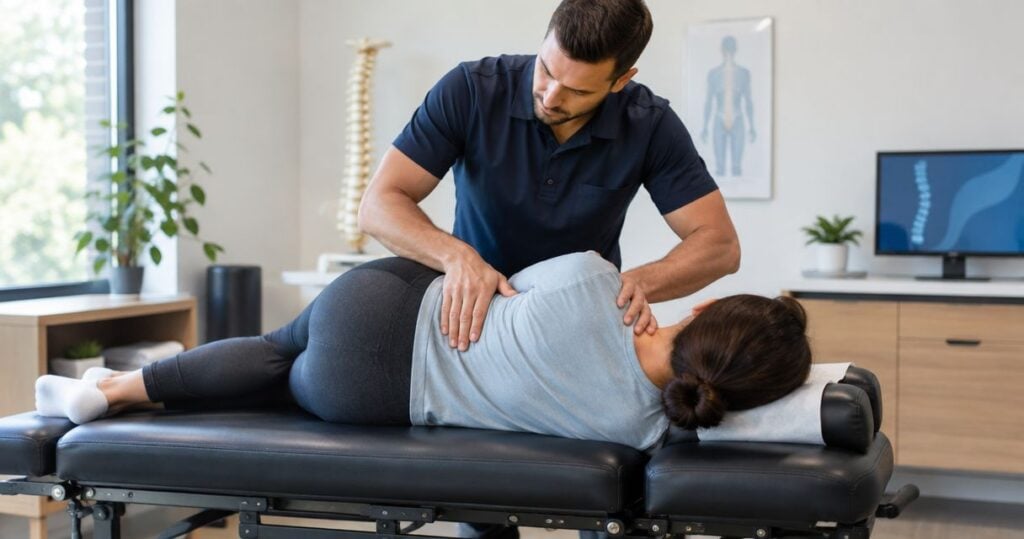
Chiropractic care for spondylolisthesis is an approach some chiropractors use once a vertebra has been confirmed, on imaging, to have shifted forward over the bone beneath it, with the aim of supporting spinal function and reducing mechanical strain rather than reversing the slip itself. Spondylolisthesis most often occurs at the L5-S1 level of the lower back, and the right plan for it depends heavily on the grade of the slip, whether it's stable, and whether any nerve symptoms are present.
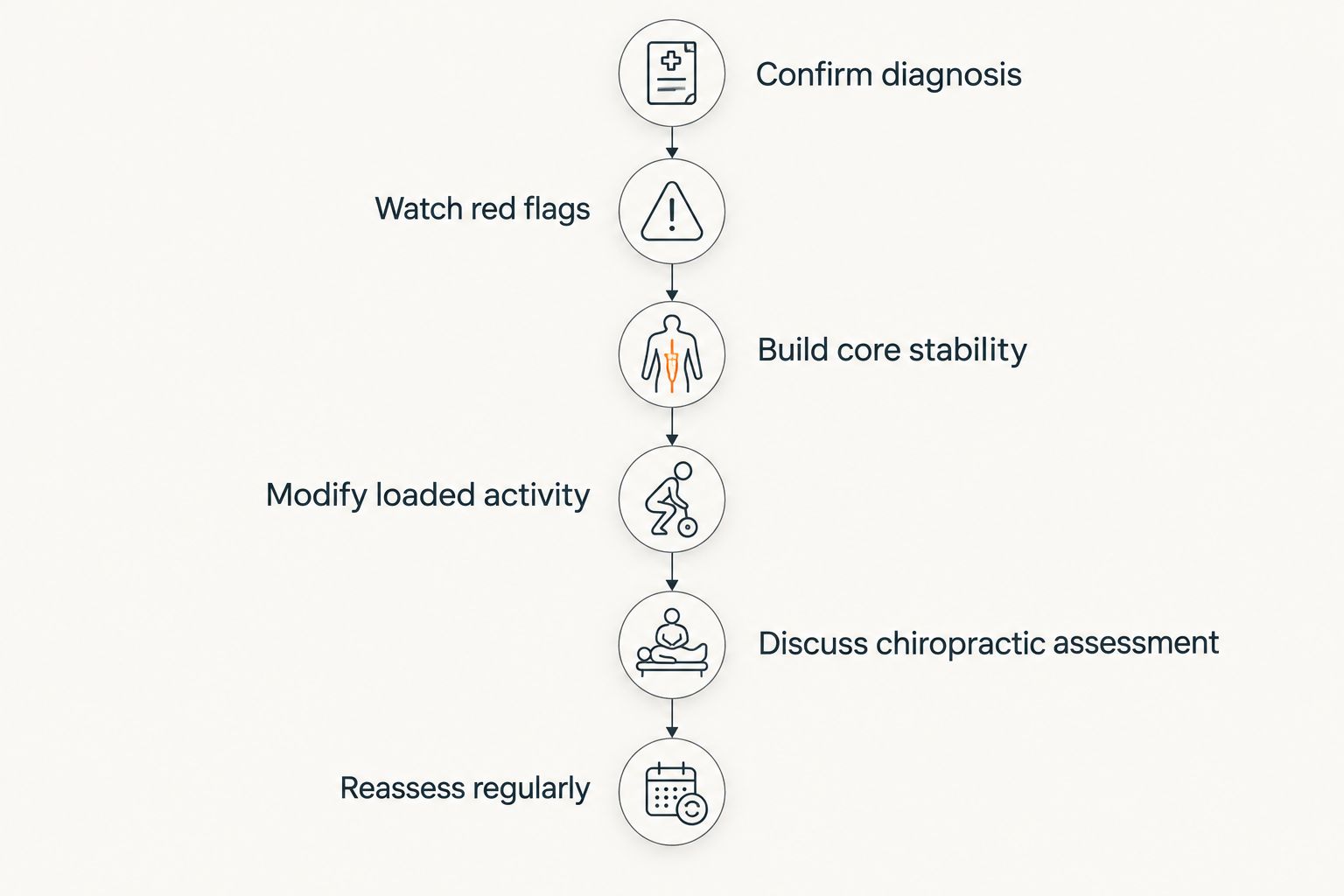
- Chiropractic care for spondylolisthesis is discussed only after imaging confirms the diagnosis and Meyerding grade, never before.
- Grades I and II (0-50% slip) are the ones most commonly managed conservatively; Grade III and IV (50-100%) usually need specialist input.
- Core stability work and load modification are the free, do-it-yourself starting point before any hands-on care.
- Numbness, weakness, or bladder or bowel changes are red flags that need same-week medical review, not a chiropractic appointment.
- MyChiro in Bondi Junction can discuss where chiropractic assessment fits once your diagnosis and grade are established.
Why chiropractic care matters for spondylolisthesis
Spondylolisthesis is graded using the Meyerding scale: Grade I covers 0-25% forward slip, Grade II is 25-50%, Grade III is 50-75%, and Grade IV is 75-100%. The condition is estimated in spine literature to affect somewhere around 4-6% of the general population, most commonly the isthmic type caused by a small stress fracture in the vertebra rather than a single injury.
That grading matters because it changes what's appropriate. A Grade I slip with no nerve symptoms is a very different situation to a Grade III slip with leg weakness, and a chiropractor working within a biopsychosocial model will factor grade, stability, and any neurological findings into the conversation before recommending anything. This is general education, not a treatment protocol — any care plan for spondylolisthesis should be built with a chiropractor or GP once your specific imaging and grade are known. The homepage at MyChiro outlines the assessment process for people bringing in existing scans or referrals.
Confirm the diagnosis and grade first
Spondylolisthesis can't be assessed from symptoms alone — it needs imaging. This is the non-negotiable first step, free of any clinic visit if you already have a referral pathway through your GP.
- Get an X-ray or CT to confirm the vertebral level and Meyerding grade
- Ask whether the type is isthmic (stress fracture) or degenerative (age-related joint wear)
- Note whether the report mentions instability on flexion-extension views
- Flag any nerve root or spinal canal narrowing mentioned in the report
- Bring the imaging and report to any follow-up appointment, chiropractic or otherwise
Screen for red-flag symptoms before anything else
Some symptoms mean a spondylolisthesis case needs medical review that week, not a wellness plan. This step happens before core work, before adjustments, before anything else.
- New numbness or tingling down one or both legs
- Progressive leg weakness, especially foot drop
- Loss of bladder or bowel control
- Saddle-area numbness (inner thighs, groin)
- Severe pain that doesn't ease with rest or position change
If any of these apply, the next step is a same-week GP or emergency assessment, not a chiropractic booking. How to know when back pain needs a chiropractor vs a doctor sets out the broader decision points for this.
Build core and pelvic stability without equipment
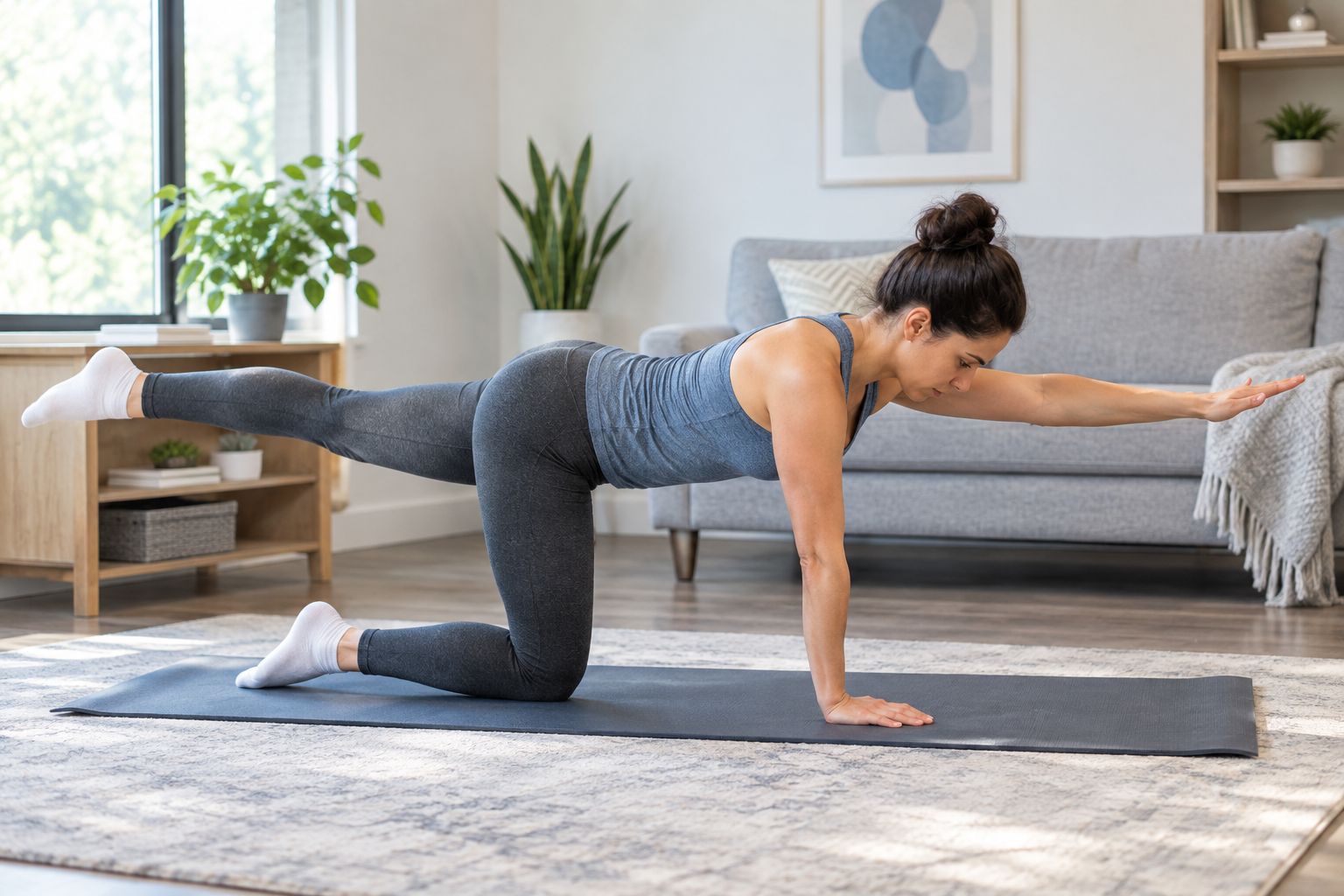
Before any hands-on care, the free starting point for most low-grade, stable slips is strengthening the muscles that support the lumbar spine and pelvis. This is where most conservative plans for spondylolisthesis begin in 2026.
- Bird-dog holds performed slowly, without arching the lower back
- Dead bug variations to build anti-extension control
- Glute bridges to load the hips rather than the lumbar spine
- Side planks (modified on the knees if needed) for lateral stability
- Pelvic tilts to build awareness of neutral spine position
Modify loaded activities that extend the lower back
Repeated spinal extension is the movement most linked to isthmic spondylolisthesis, particularly in sports like gymnastics, fast bowling, and some weightlifting patterns. Reducing that load is a free adjustment anyone can make immediately.
- Swap deep back-extension drills for neutral-spine core work
- Reduce overhead loaded lifts that flare the lower back into extension
- Adjust running or bowling technique with a coach or physiotherapist
- Build in rest days between high-extension training sessions
- Avoid activities that reproduce sharp, localised pain at the slip level
Discuss chiropractic assessment once your grade is known
Once imaging and grade are confirmed, and no red-flag symptoms are present, a chiropractic assessment can be discussed as one option among several for ongoing spinal function support. This is not a default step for every spondylolisthesis case — appropriateness depends on the individual's grade, stability, and symptom pattern, and any adjustment technique used is chosen based on that assessment rather than applied generically.
Chiropractors working with confirmed spondylolisthesis typically lean toward lower-force techniques and avoid high-velocity manipulation directly at an unstable segment. This conversation sits alongside, not instead of, the imaging and core-stability steps above.
Track symptoms and reassess on a schedule
Spondylolisthesis is usually a long-term structural finding rather than something that resolves quickly, so tracking how symptoms change over weeks and months matters more than judging progress after one or two sessions.
- Keep a simple log of pain location, intensity, and triggers
- Note any new numbness, tingling, or weakness immediately
- Reassess with imaging if a clinician recommends it, not on a fixed timeline you set yourself
- Revisit the exercise plan with a chiropractor or physiotherapist every few weeks
Comparing the main options for spondylolisthesis
| Option | Best for | Key limitation |
|---|---|---|
| GP referral and imaging | Confirming diagnosis, level, and Meyerding grade | Doesn't address day-to-day symptom management on its own |
| Core stabilisation exercise | Building supporting muscle capacity for stable, low-grade slips | Needs consistent effort over an extended period to build capacity |
| Chiropractic assessment | Ongoing spinal function support once grade and stability are known | Appropriateness depends on grade and neurological findings; not suited to every case |
| Physiotherapy program | Structured, progressive loading and technique correction | Availability and program design vary by provider |
| Specialist (orthopaedic/neurosurgical) review | High-grade slips or progressive neurological signs | Reserved for cases that don't respond to conservative options |
For people managing spinal changes more broadly, chiropractic care for degenerative disc disease and treatment options for spinal stenosis cover related structural conditions that sometimes overlap with spondylolisthesis at the same spinal level.
Common mistakes people make with spondylolisthesis
- Skipping imaging and guessing the grade — a Grade I and a Grade IV slip need very different plans, and pain intensity alone doesn't tell you which one you have.
- Ignoring new leg weakness or numbness — treating it as "just tightness" instead of getting same-week medical review.
- Jumping straight to high-load extension exercises — some rehab programs designed for general back pain aren't appropriate for a confirmed slip.
- Stopping core work as soon as pain eases — the muscle support that helps with a slip needs to be maintained, not just built once.
- Comparing notes with someone else's spondylolisthesis case — grade, stability, and symptom pattern vary enough between individuals that another person's plan usually doesn't transfer directly.
Discuss your spondylolisthesis grade and options
Bring existing imaging to an assessment at MyChiro in Bondi Junction.
FAQ
What is spondylolisthesis?
Spondylolisthesis is a spinal condition where one vertebra shifts forward over the bone beneath it, most often at the L5-S1 level. It’s graded from I to IV based on how far the vertebra has slipped, from 0-25% up to 75-100%.
Can chiropractic adjustments help spondylolisthesis?
Chiropractic assessment can be discussed as one option once imaging has confirmed the diagnosis and grade, with technique chosen based on stability and symptoms. It isn’t applied as a default step and depends on the individual case.
What grade of spondylolisthesis needs surgery?
Surgical review is generally reserved for higher-grade slips (Grade III or IV) or cases with progressive neurological symptoms that don’t settle with conservative management. A spinal specialist makes that determination, not general imaging alone.
Is exercise safe with spondylolisthesis?
Exercise appropriateness depends on grade, stability, and symptoms, and a physiotherapist or chiropractor can guide which movements to avoid. Repeated back extension is the pattern most commonly flagged for isthmic spondylolisthesis.
How is spondylolisthesis diagnosed?
Spondylolisthesis is diagnosed with an X-ray or CT scan showing the forward slip and its grade, sometimes with flexion-extension views to check stability. Symptoms alone can’t confirm the diagnosis or grade.
What’s the difference between spondylolisthesis and spondylolysis?
Spondylolysis is a stress fracture in part of the vertebra, while spondylolisthesis is the forward slip that can follow if that fracture allows the bone to shift. Not everyone with spondylolysis develops a slip.
How much does chiropractic care cost for spondylolisthesis in Australia?
Costs vary by clinic and by how many visits are recommended after assessment, so check current fees directly with the clinic. Private health cover for chiropractic also varies by fund and policy.
When does spondylolisthesis need urgent medical attention?
New leg weakness, numbness, or loss of bladder or bowel control alongside spondylolisthesis symptoms needs same-week or emergency medical review. These signs point to nerve involvement that needs assessment beyond a routine chiropractic visit.
One last thing
Isthmic spondylolisthesis shows up disproportionately in adolescent athletes doing sports with repeated spinal extension — gymnastics, fast bowling, and some weightlifting patterns among them — because the stress fracture behind it develops from that specific movement, not from a single fall or twist. If a teenager's back pain started around a growth spurt and a season of one of those sports, that history is worth mentioning to whoever reads the imaging in 2026, because it changes how the finding gets interpreted.
Related guides
- Chiropractic care for degenerative disc disease
- How to strengthen your core without straining your lower back


