


Ankylosing spondylitis (AS) is a form of inflammatory arthritis that mainly affects the spine and sacroiliac joints, and it needs a rheumatologist's diagnosis before any hands-on care, including chiropractic care, gets discussed. This guide sets out what chiropractic care for ankylosing spondylitis can reasonably mean in 2026, where it fits alongside medical treatment, and the mistakes that slow people down.
- Chiropractic care for ankylosing spondylitis is only appropriate as an adjunct once a rheumatologist confirms the diagnosis in 2026.
- Ankylosing spondylitis needs medical diagnosis first, including imaging and blood tests, not spinal manipulation on its own.
- Inflammatory back pain involves morning stiffness lasting over 30 minutes that eases with movement, unlike typical mechanical pain.
- Daily movement, ergonomic changes and coordinated care with your GP matter more than any single therapy choice.
- Chiropractic assessment can be discussed with your treating team but never replaces disease-modifying medical treatment.
Why this matters
AS is a systemic condition, not a mechanical strain, and treating it like one delays proper care. The inflammation involved can affect the eyes, gut and other joints as well as the spine, which is why a GP or rheumatologist has to lead the diagnosis and treatment plan.
Once that diagnosis is in place, questions about movement, posture and day-to-day function come up constantly. That's the territory this guide covers, framed as general education rather than a treatment claim.
Why chiropractic care matters for people with ankylosing spondylitis
People with AS search for chiropractic information because the condition causes stiffness that behaves differently from ordinary back pain. Standard advice for mechanical back pain (rest, gentle stretching, wait it out) doesn't match a condition where inflammation, not just mechanical load, is driving the symptoms.
That mismatch is exactly why how to know when back pain needs a chiropractor vs a doctor is worth reading before booking anything. AS-related stiffness typically eases with movement and worsens with rest — the reverse of most mechanical back pain — and that pattern alone should prompt a medical review rather than a self-directed fix.
A chiropractor working within a coordinated care model can support the movement and posture side of a management plan, but the diagnosis, medication decisions and disease monitoring stay with the rheumatology team. That division of roles is the starting point for everything below.
Get a confirmed diagnosis before anything else
No mobility plan means anything without a diagnosis behind it. AS is typically confirmed through a combination of clinical assessment, imaging and blood tests, and it usually needs a rheumatologist's involvement rather than a GP alone.
- Ask your GP for a referral to a rheumatologist if morning stiffness lasts more than 30 minutes and has been present for months
- Expect imaging of the sacroiliac joints and spine (X-ray or MRI) as part of the workup
- A blood test for the HLA-B27 gene marker is commonly used alongside imaging, though it isn't diagnostic on its own
- Keep a written symptom timeline (onset age, pattern, family history of arthritis) to bring to appointments
- Don't start or stop any prescribed medication based on outside advice, including chiropractic advice
Build a daily movement routine
Stiffness in AS tends to respond to consistent movement rather than rest, which is the opposite of how most people manage a sore back. A routine only works if it's realistic enough to repeat daily.
- Set a short morning mobility routine (10-15 minutes) rather than one long weekly session
- Prioritise spinal extension and rotation movements, since AS tends to pull posture into a forward-flexed position over time
- Add low-impact cardio like walking, swimming or cycling several times a week
- Track which movements ease stiffness and which ones aggravate it
- Review the routine with your rheumatologist or physiotherapist every few months, not just once
Track your stiffness pattern and flare triggers
Flares in AS aren't random for most people — they cluster around specific triggers, and spotting the pattern makes the condition more manageable day to day.
- Log stiffness duration each morning for two to four weeks
- Note flare timing against sleep quality, stress levels and activity load
- Record which positions worsen pain at night (many people with AS report disrupted sleep from spinal stiffness)
- Share the log with your GP or rheumatologist rather than adjusting medication yourself
- Flag any new joint involvement (hips, shoulders, heels) as soon as it appears
Adjust your ergonomics and sleep setup
Posture support matters more with AS than with ordinary back pain, because prolonged flexed positions can reinforce the forward-stooped posture the condition is associated with over time.
- Choose a firmer mattress and a supportive pillow that keeps the neck in a neutral line — see best pillow for side sleepers with neck pain for setup ideas
- Set desk height so the spine can stay upright rather than curled forward for hours
- Take a standing or walking break every 30-45 minutes during desk work
- Avoid prolonged slumped sitting on soft couches or car seats
- Sleep on your back or side rather than on your stomach where possible
Coordinate chiropractic input with your medical team
This is the step where chiropractic care for ankylosing spondylitis actually enters the picture — after diagnosis, and only as one part of a broader plan agreed with your treating team.
- Bring imaging and diagnosis details to any chiropractic assessment so joint mobility and any spinal fusion are accounted for
- Ask your rheumatologist whether manual therapy is appropriate at your current disease stage before booking
- Use chiropractic sessions to focus on general mobility and movement patterns, not spinal manipulation of fused segments
- Report back to your GP or rheumatologist if any new symptoms appear after a session
- Treat chiropractic input as a supporting piece, not a substitute for prescribed anti-inflammatory or disease-modifying treatment
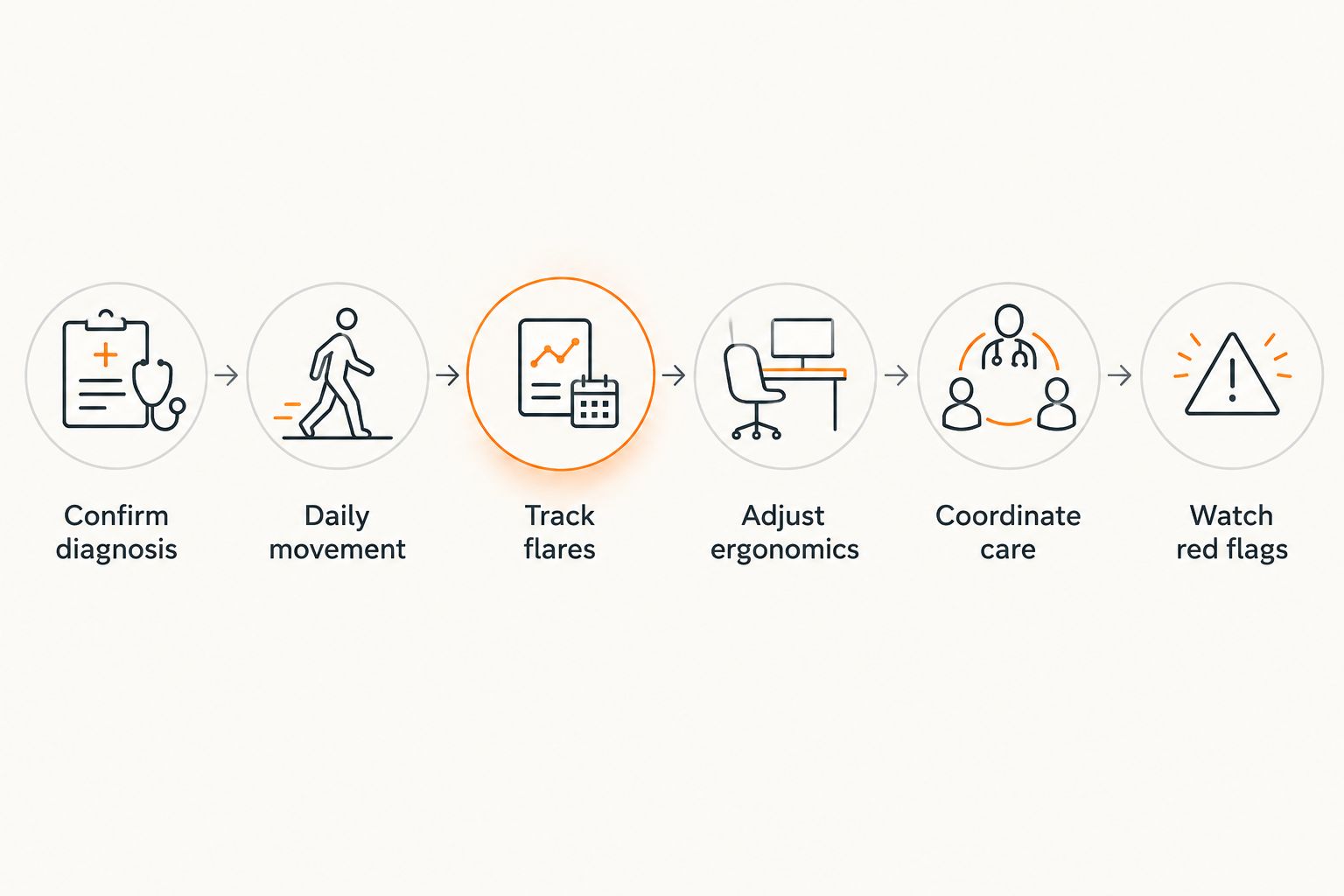
Watch for red-flag symptoms
AS can involve organs beyond the spine, so some symptoms need same-day medical attention rather than a wait-and-see approach.
- Eye redness, pain or light sensitivity (possible uveitis, a recognised complication of AS)
- Unexplained fevers, night sweats or weight loss
- New numbness, weakness or bowel/bladder changes
- Sudden chest pain or breathing difficulty
- Any of these calls for a same-day GP visit or emergency review, not a booking with a chiropractor
Review your plan regularly
AS is a long-term condition and treatment plans shift as disease activity changes, so a fixed routine from 2026 might not suit you by the following year.
- Book a rheumatology review at the interval your specialist recommends, not on an ad-hoc basis
- Reassess your daily mobility routine every few months against your stiffness log
- Update your GP on any new joint symptoms, not just spinal ones
- Revisit ergonomic and sleep setups if flare patterns change
Comparing your options
| Option | Best for | Key limitation |
|---|---|---|
| Rheumatologist-led medical management | Confirming diagnosis and disease-modifying treatment | Doesn't address day-to-day stiffness on its own |
| Physiotherapy exercise programs | Building spinal mobility and posture control | Needs consistent home practice to hold gains |
| General chiropractic assessment (adjunct) | Reviewing joint mobility alongside medical care | Requires medical clearance first, not a substitute for disease-modifying treatment |
| Hydrotherapy or pool-based exercise | Low-impact movement during flare periods | Access depends on local pool availability |
| Self-directed home stretching | Daily maintenance between appointments | Easy to skip without a structured routine |
Talk through your symptoms first
An assessment can map out whether movement-based support fits alongside your existing care.
Common mistakes people with AS make
- Treating morning stiffness as ordinary tiredness. Stiffness lasting more than 30 minutes and easing with movement is a pattern worth raising with a GP, not sleeping off.
- Stopping prescribed medication because a symptom improved. Disease-modifying treatment works over months; short-term relief isn't a reason to change the plan without medical advice.
- Booking manual therapy before imaging is done. Without knowing which spinal segments are involved or fused, manual therapy decisions are made blind.
- Ignoring eye symptoms. Uveitis is a recognised AS complication and gets missed when people assume redness is unrelated to their back condition.
- Going all-in on exercise during a flare. Pushing through inflamed joints can set recovery back further than easing intensity for a short period.
For people managing broader joint stiffness alongside AS, how to manage arthritis pain without medication and chiropractic care for arthritis in the spine and joints cover related ground worth reading alongside a rheumatology plan.
FAQ
Can chiropractic care help with ankylosing spondylitis?
Chiropractic assessment can be discussed as one part of a broader plan once a rheumatologist has confirmed the diagnosis, but it does not replace disease-modifying medical treatment. Any manual therapy decision should account for disease stage and imaging findings.
Is chiropractic manipulation appropriate for ankylosing spondylitis?
It depends on disease stage, since advanced AS can involve spinal fusion that changes what manual therapy can safely target. This should be confirmed with a rheumatologist before any manual therapy session.
What is the difference between ankylosing spondylitis and ordinary back pain?
Inflammatory back pain from AS typically involves morning stiffness lasting more than 30 minutes that improves with movement rather than rest, often starting before age 40. Ordinary mechanical back pain usually worsens with activity and eases with rest.
How is ankylosing spondylitis diagnosed?
Diagnosis usually combines clinical assessment, imaging of the sacroiliac joints and spine, and a blood test for the HLA-B27 gene marker. A rheumatologist typically leads this process rather than a GP alone.
Does exercise help ankylosing spondylitis?
Regular, structured movement is a common foundation of rheumatology-led management plans for AS, particularly for maintaining spinal mobility. Any exercise plan should still be reviewed with your treating team, especially during flares.
Do private health funds cover chiropractic for arthritis conditions in 2026?
Coverage varies by fund, policy tier and annual limits, so checking directly with your provider is the only reliable way to confirm it. Extras cover for chiropractic doesn’t automatically extend to every arthritis-related service.
When should I see a doctor instead of a chiropractor for back pain?
See a doctor first if stiffness lasts more than 30 minutes each morning, started before age 40, or comes with eye redness, fevers or unexplained weight loss. These patterns point toward an inflammatory cause that needs medical assessment before any manual therapy.
What are red-flag symptoms with ankylosing spondylitis?
Eye pain or redness, unexplained fevers, night sweats, new numbness or weakness, and sudden chest pain all warrant same-day medical review. These can indicate complications beyond the spine that a chiropractic visit won’t address.
One last thing
The detail that gets missed most often: inflammatory back pain has a specific fingerprint used in rheumatology classification criteria — morning stiffness over 30 minutes, improvement with movement, no improvement with rest, and pain that wakes you in the second half of the night. If that pattern matches what you're feeling in 2026, the next call is a GP referral to rheumatology, not a search for a manual therapy fix.
Related guides
- Chiropractic care for arthritis in the spine and joints
- How to manage arthritis pain without medication
- Chiropractic care for spinal stenosis symptoms
- How to know when back pain needs a chiropractor vs a doctor
- Best private health funds that cover chiropractic in Sydney


