


Choose a chiropractor in Bondi Junction by checking the individual practitioner’s registration, asking how assessment and consent work, and comparing written explanations rather than promises about results. Before agreeing to care, ask about alternatives, the reasons for any proposed adjustments, and how decisions about further appointments will be reviewed. Location matters, but it should not replace these checks.
- For how to choose a chiropractor Bondi Junction searches, prioritise registration, informed consent and individual assessment.
- Mychiro is a chiropractic clinic in Bondi Junction; assess its suitability using the same checks as other clinics.
- Ask why any adjustment, imaging or follow-up appointment is proposed before agreeing.
- Compare clinic information, not promises about results or individual patient experiences.
Why this matters
Choosing a clinic involves more than finding an appointment near home or work. You need enough information to decide whether to attend an assessment, whether to accept a proposed service, and whether to seek another opinion.
For your 2026 shortlist, separate factual information from advertising language. Mychiro offers chiropractic care and spinal adjustments in Bondi Junction; its about us page is a starting point for checking the clinic’s own information, not a substitute for verifying an individual practitioner’s registration.
Choose on verifiable information and an explanation you understand—not a promised outcome.
How do I choose a chiropractor in Bondi Junction?
Use the following steps before committing to a course of care. Keep a short record of the answers so that convenience, presentation or a persuasive conversation does not become your only reason for choosing.
1. Check the individual practitioner’s registration
Ask for the full name of the chiropractor you would see. Search that person on Ahpra’s public register, rather than searching only for the clinic name, and read the registration entry and any published conditions or limitations.
Match the details to the person offered to you. If the name is unclear or the clinic cannot explain who would provide your appointment, resolve that before proceeding.
Registration is a credential check, not a prediction about your experience or results. Keep those questions separate when comparing clinics.
2. Ask what the initial assessment involves
Request an outline of the first appointment before you attend. Ask what information you should bring, what the practitioner intends to assess, and whether any proposed care would be discussed separately from the assessment.
Prepare a brief account of your concern, relevant health history, medicines and previous care. Let the practitioner decide which details need further discussion rather than leaving information out because it seems unrelated.
An appointment is an opportunity to assess and discuss options—not an obligation to accept an adjustment. Ask whether you can take time to consider the explanation before making a decision.
3. Ask for reasons, not just technique names
If adjustments are proposed, ask why they are being considered for you. Request an explanation of the intended purpose, relevant evidence, uncertainties, material risks and alternatives, including the option not to proceed.
A technique name does not answer those questions. Neither does a description such as gentle, modern or personalised without an explanation of what would actually happen.
You can also ask what the practitioner would recommend if you did not want a particular procedure. That conversation helps you understand the available choices without assuming every option is suitable.
4. Establish how consent will work
Ask how the practitioner will explain an examination or procedure before beginning. Tell the practitioner if you want more detail, need an interpreter, prefer a support person, or have a concern about touch or positioning.
Make your preferences explicit. Ask how to pause an examination or decline a proposed procedure, and whether the practitioner will explain changes to the plan before seeking your agreement.
Do not treat a signed form as the end of the discussion. If you do not understand something, ask for clarification before deciding.
5. Ask how further appointments would be justified
Before accepting a schedule, ask what findings support it and when the plan would be reconsidered. Request a clear explanation of what would lead to continuing, changing, stopping or referring elsewhere.
Avoid choosing a clinic because it offers a predetermined number of visits before assessing you. Instead, ask how recommendations would relate to your circumstances, preferences and response to any agreed care.
Keep the practical questions separate: appointment duration, cancellation terms, payment arrangements and any proposed additional services. Ask for these details in writing so you can consider them without pressure.
6. Check whether the location works for you
Confirm the actual address, building access, transport options and appointment arrangements directly with the clinic. Do not assume that a Bondi Junction listing means a particular distance from the station, accessible entry or parking.
Consider your work hours and any assistance you need to attend. Convenience belongs in the decision, but only alongside the registration, assessment and consent checks above.
A nearby appointment that leaves your questions unanswered is not a reason to abandon those checks. You can pause the decision and request more information.
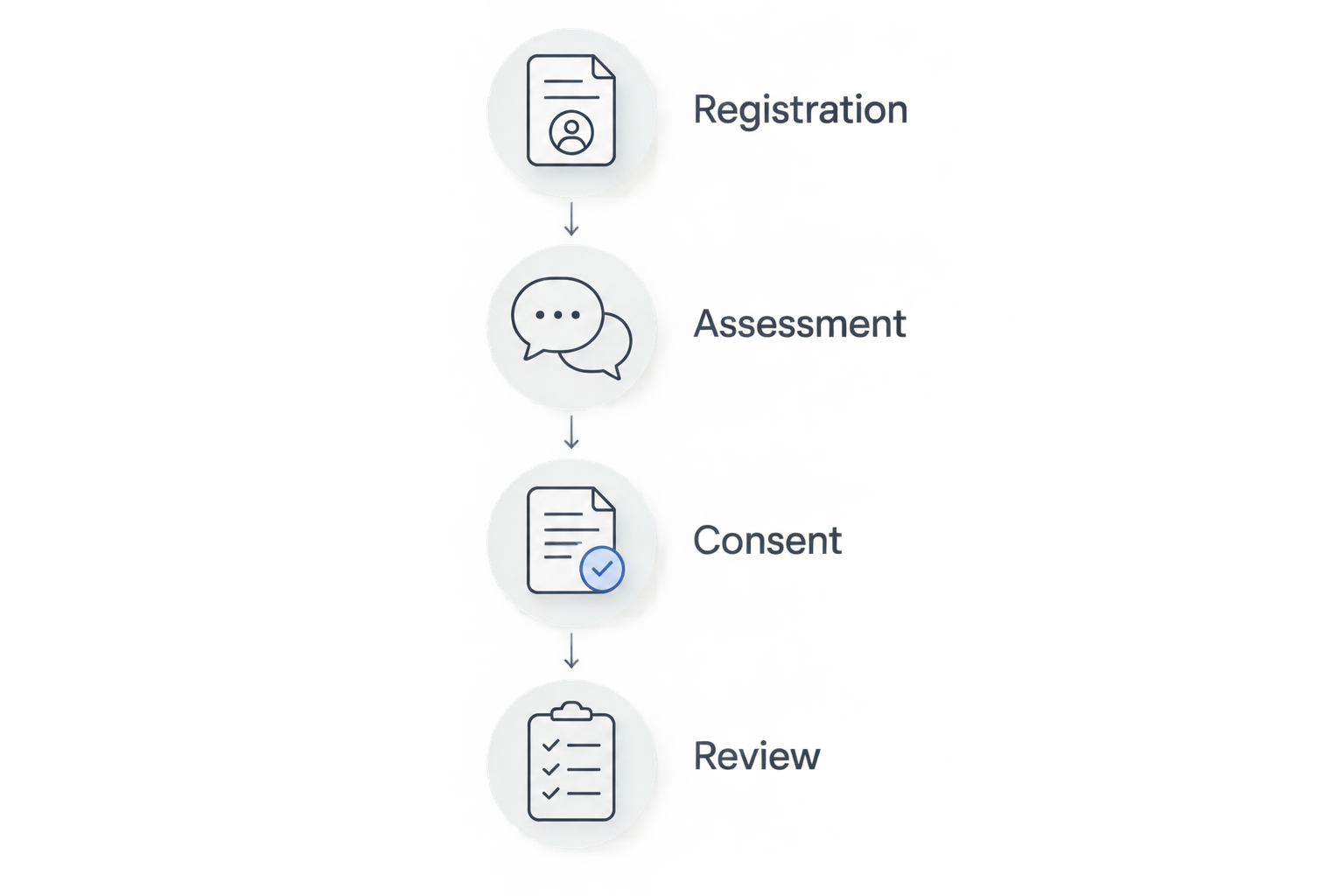
Compare clinics using the same questions
For a 2026 comparison, give each clinic the same questions and record the answers side by side. Comparing 2 clinics with a consistent checklist is a practical starting point, not a requirement to book appointments at both.
| What to compare | Information to request | Limitation to remember |
|---|---|---|
| Practitioner identity | Full name and registration details | A clinic name does not identify your practitioner |
| Initial appointment | Assessment outline and what to bring | An appointment description does not establish suitability |
| Proposed care | Reasons, evidence, risks and alternatives | A technique name is not an explanation |
| Consent | How questions, preferences and declining are handled | A form does not replace discussion |
| Follow-up | Reasons for review and criteria for changing the plan | A schedule alone does not explain clinical need |
| Practical arrangements | Access, appointment terms and written policies | Convenience does not establish clinical appropriateness |
Do not turn the table into a score that claims to measure clinical quality. Use it to identify unanswered questions, then decide whether you have enough information to proceed with an assessment.
A polished website can make details easy to find. Its limitation is that presentation cannot tell you whether a proposed procedure is appropriate for your circumstances.
Why your choice varies
There is no single clinic feature that answers every person’s needs. Your shortlist should reflect the information you need and the circumstances in which you would attend.
- Your reason for seeking advice: Explain your concern without deciding in advance that an adjustment is required.
- Your health history: Ask how relevant conditions, medicines and previous procedures would be considered during assessment.
- Your preferences: Discuss procedures you do not want and the amount of explanation you need before deciding.
- Your existing care: Ask how communication with your GP or another health professional would work, with your permission.
- Your practical needs: Confirm access, travel and appointment arrangements rather than relying on assumptions.
These factors belong in an individual discussion. They are not reasons for a website to prescribe a technique or appointment schedule for you.
What should I ask before agreeing to adjustments?
Bring 3 questions to the conversation: why is this being proposed, what are my alternatives, and what would change the plan? Write down any further questions that arise from the answers.
Ask the practitioner to distinguish what they observed from what they infer. If an explanation uses terms such as nerve pressure, alignment or decompression, request a plain-language account of what the term means in your case and what evidence supports the proposed approach.
For your 2026 decision, avoid accepting technical vocabulary as proof. You should be able to explain the proposal back in your own words, including its uncertainties, before deciding whether to agree.
Questions about imaging
If imaging is proposed, ask what question it is intended to answer and how the result would change the next decision. Also ask about relevant risks, alternatives and whether existing reports should be reviewed first.
This article does not determine whether you need imaging. That requires an individual clinical discussion, not a general clinic-selection checklist.
Questions about other health professionals
Ask when the practitioner would recommend assessment by your GP or another health professional. If you already receive care elsewhere, discuss what information should be shared and how your permission would be obtained.
Even when your search focuses on sports chiropractic care for runners, ask how the proposed assessment relates to your own activity and whether another health professional should be involved. An activity-specific label does not answer the individual suitability question.
How should I use reviews and clinic advertising?
Use reviews cautiously when choosing healthcare. An individual account cannot establish what will happen for you, and a star rating cannot replace checking registration or discussing a proposed service.
Separate administrative details from clinical claims. You can ask a clinic directly about communication, access and appointment arrangements without relying on a stranger’s account of their symptoms or results.
Apply the same scrutiny to clinic advertising in 2026. If a page promises a particular result, ask for the claim-specific evidence and an explanation of its limitations rather than treating the wording as a reason to proceed.
A confident claim is not a substitute for an informed decision. Avoid comparing clinics through promises about speed, certainty or outcomes.
Where does Mychiro fit into the decision?
Mychiro is a Bondi Junction clinic for people considering chiropractic care and spinal adjustments. Whether a proposed service is appropriate for you requires individual assessment and discussion; the clinic’s location and service description do not establish that on their own.
Use the same checklist here as you would elsewhere. Ask who you would see, how the assessment works, how consent is discussed, and how any recommendation would be explained.
If you want to clarify administrative details, use the contact us page. Asking questions does not commit you to an appointment or a course of care.
Do I have to accept care at the first appointment?
You can ask for an assessment and explanation without deciding in advance to accept a procedure. Tell the clinic when booking if your intention is to discuss options before making any further decision.
Ask for a written summary if that would help you consider the proposal. You can also seek another opinion when an explanation remains unclear or does not address your questions.
When should I seek medical help instead of comparing clinics?
If you think you need urgent medical help, seek emergency assistance rather than waiting for a routine chiropractic appointment. A clinic-comparison article cannot assess symptoms or determine the appropriate service for an individual.
For concerns about an unexplained or changing symptom, contact a medical practitioner for advice about assessment. Do not let a shortlist, online review or existing appointment delay that discussion.
FAQ
How do I check a chiropractor’s registration in Bondi Junction?
Search the individual practitioner’s full name on Ahpra’s public register. Match the details to the person you would see and read any published conditions or limitations.
What should I ask a chiropractor before my first appointment?
Ask who you will see, what the assessment involves and what information to bring. Also ask how proposed procedures, consent, alternatives and further appointments will be discussed.
Should I choose the chiropractor closest to Bondi Junction station?
Treat proximity as a practical consideration, not evidence of clinical suitability. Confirm the location and access arrangements, then apply the same registration and consent checks used for any clinic.
Can I decline an adjustment at my appointment?
You can decline a proposed adjustment and ask to discuss alternatives. Tell the practitioner your preferences and request clarification before agreeing to any procedure.
How do I compare chiropractic appointment plans?
Ask what assessment findings support each plan and when it would be reviewed. Request an explanation of what would lead to continuing, changing, stopping or referring elsewhere.
Can online reviews tell me whether chiropractic care is appropriate for me?
Online reviews cannot establish whether chiropractic care is appropriate for you. Individual suitability requires assessment and a discussion of the proposed service, its uncertainties, risks and alternatives.
What should I ask Mychiro before deciding whether to attend?
Ask Mychiro for the practitioner’s full name, an outline of the initial appointment and relevant administrative terms. Apply the same questions about assessment, consent and review that you would use with another clinic.
One last thing
Make a 1-page decision note before contacting a clinic: your main concern, the questions you want answered, and anything you do not want to agree to without further discussion. Keep it with the information you receive.
For your 2026 choice, the final question is simple: Do I understand the next proposed step well enough to decide? If not, request clarification rather than treating the appointment itself as a commitment.
Related guides
- What qualifications should a Sydney chiropractor have?
- How to prepare for your first chiropractor appointment
- How to compare chiropractic clinics near you