
Whiplash symptoms often improve over several weeks, although some people have neck pain or stiffness that continues for months. Recovery varies with the injury and the person, so no single timetable fits everyone.
- How long does whiplash take to heal? Most people improve within weeks to about three months.
- Some people still have neck pain, stiffness or headaches after three months, and that group needs a proper assessment.
- Gentle, early movement is generally encouraged over prolonged rest or long-term collar use, unless a clinician advises otherwise.
- Severe headache, limb weakness, numbness, or bladder or bowel changes after a crash need urgent medical care.
- MyChiro in Bondi Junction can assess your neck and discuss whether chiropractic care may be appropriate.
Recovery does not always follow a straight line. "Healed" and "pain-free" are not the same thing for whiplash: pain, stiffness and movement can improve at different speeds, and a flare-up in week six does not mean you are back at the start.
What to expect as whiplash symptoms settle
Whiplash is a neck injury caused by a rapid back-and-forth movement of the head, most often in a car collision, but also in sport and falls. It can involve the muscles, ligaments, joints and discs of the neck. People often expect it to disappear in a week, then worry when it lingers.
Knowing the usual pattern helps you decide when to wait, when to move more, and when to get checked. If you want the step-by-step version of looking after yourself after a collision, read how to recover from whiplash after a car accident.
This page is general education. It is not a diagnosis, and it does not replace assessment by a GP, emergency doctor or other qualified health professional.
How long does whiplash take to heal?
Most people with a mild-to-moderate whiplash injury notice steady improvement over the first few weeks and are largely recovered by about three months. A smaller group have symptoms that persist for months or longer. Clinical guidelines recognise that recovery varies. The grading framework below describes examination findings, not a fixed recovery deadline.
The table below shows the commonly used grades and what each generally involves. Grading is done by a clinician after assessment, so treat this as a guide only.
| Grade | What it generally means | General recovery pattern |
|---|---|---|
| Grade 0 | No neck complaint and no physical signs | No whiplash injury identified |
| Grade I | Neck pain, stiffness or tenderness, no physical signs found | Often settles over days to weeks |
| Grade II | Neck complaint plus reduced movement or point tenderness | Often improves over weeks to a few months |
| Grade III | Neck complaint plus neurological signs such as reduced reflexes or weakness | Needs medical assessment; recovery is less predictable |
| Grade IV | Fracture or dislocation | Medical emergency; managed in hospital |
Grades I and II are the most common after everyday collisions. Grades III and IV involve nerve involvement or bone injury and need medical care rather than a wait-and-see approach.
Verdict: for a typical mild-to-moderate whiplash injury, expect gradual improvement over weeks, with most people largely recovered by about three months. If you are not improving, get reassessed rather than waiting longer.
First days: soreness and stiffness often peak
Neck pain after a collision is often not at its worst straight away. Stiffness, headaches and shoulder tension can build over the first day or two as the tissues react.
In this phase, general advice is to stay gently active, avoid staying completely still, and follow the guidance of the doctor who first assessed you. Heat or cold, simple positioning and pacing your day are common self-care options. Medication questions belong with your GP or pharmacist.
If you were in a crash, a medical check comes first. A GP or emergency doctor decides whether imaging or further tests are needed before any hands-on care is considered.
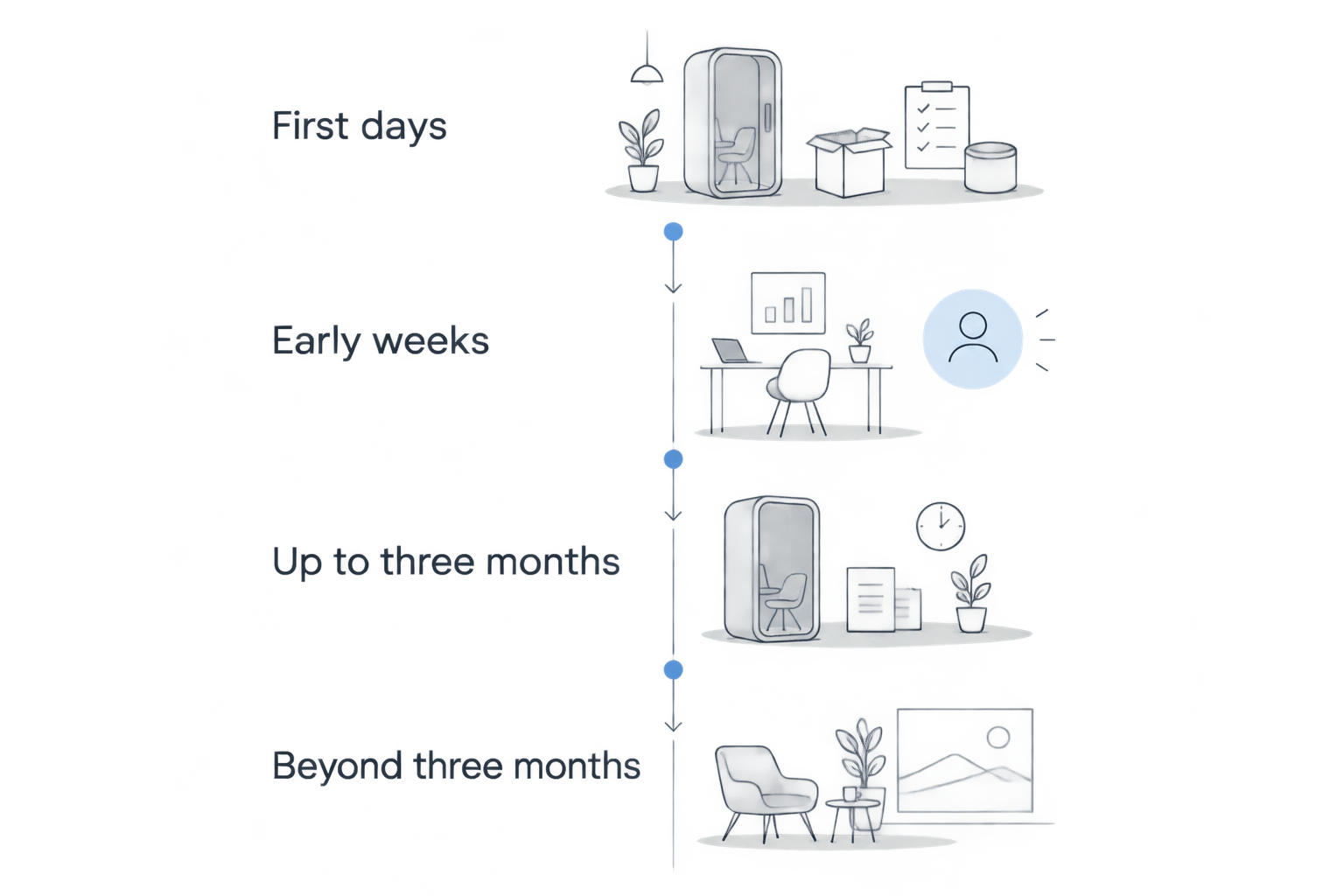
Early weeks: movement usually returns first
Over the following weeks, many people find that turning the head, driving and sleeping become easier. Pain tends to ease gradually, not in a straight line. A busy day or poor night's sleep can bring symptoms back for a short time.
Clinical guidance for whiplash generally favours gradual return to normal activity and gentle neck movement over long periods of rest. Prolonged use of a soft collar is typically discouraged because it may slow the return of movement, although a clinician may recommend short-term support in specific cases. If you are weighing up supports, our guide to cervical collars for neck support after injury covers what they are designed to do.
This is also the stage at which a registered chiropractor may assess your neck, discuss your history, and explain whether manual therapy, exercise advice or referral to another provider may be appropriate. Our article on chiropractic care after whiplash from a car accident explains what an assessment generally involves.
Up to three months: most people are largely recovered
By around the three-month mark, the majority of people report that their symptoms have settled or become manageable. Some residual stiffness at the end of range or occasional headaches after long days is not unusual.
If you still have significant pain, the next step is not to push harder or wait indefinitely. It is a reassessment: has anything been missed, are your activity levels appropriate, and is there a role for exercise-based rehabilitation or other providers?
Beyond three months: persistent whiplash symptoms
A proportion of people have ongoing neck pain, headaches, dizziness or concentration problems beyond three months. This is sometimes called persistent or chronic whiplash-associated disorder.
Persistent symptoms are linked in research with factors such as higher initial pain intensity, higher disability early on, worry or low mood, and stressful circumstances such as a compensation claim. None of these mean the pain is imaginary. They mean recovery involves the whole person, which is why a biopsychosocial approach, covering physical, psychological and social factors, is widely used.
If you are in this group, ask your GP about a coordinated plan. That might include graded exercise, education about pain, and input from other health professionals.
Why whiplash recovery varies
Two people in the same collision can recover at different speeds. The factors that most often influence the timeline include:
- Initial severity: higher pain and more restricted movement early on are associated with slower recovery.
- Other injuries: a concussion, shoulder injury or back injury at the same time can complicate the picture.
- Previous neck problems: earlier neck pain or degenerative changes may affect how the neck responds.
- Activity and movement: staying gently active generally supports recovery better than long rest.
- Stress, sleep and mood: poor sleep, anxiety and ongoing stress can amplify pain and slow progress.
- Work and claim factors: physically demanding work or a drawn-out claims process can affect recovery.
Age, general health and the direction and speed of impact also play a role, but no single factor predicts your timeline.
Talk to MyChiro about your neck
Book an assessment at our Bondi Junction clinic to discuss your symptoms.
When should you seek urgent medical care?
Seek urgent medical attention, call 000 or go to an emergency department if, after a collision or fall, you have:
- Severe or worsening headache, or a headache unlike any you have had
- Weakness, numbness or tingling in the arms or legs
- Difficulty walking, balance problems or confusion
- Loss of bladder or bowel control
- Vision changes, trouble speaking or swallowing, or fainting
- Severe neck pain after a significant impact, especially with midline neck tenderness
These symptoms can point to injuries that need medical assessment before any other care. A chiropractor can discuss whether you need to see a GP or specialist first, and this is a normal part of an initial consultation. Our article on whether a chiropractor can tell if you need a specialist explains how that decision is made.
How long does whiplash take to heal after a car accident?
Most people improve within weeks to about three months after a car accident, but the range is wide. A low-speed collision with Grade I symptoms may settle within days to weeks, while a higher-impact collision with Grade II or III findings may take longer. A medical assessment soon after the crash gives you the clearest starting point.
How long does whiplash take to heal without treatment?
Many mild cases improve on their own over weeks, particularly when you stay gently active. "Without treatment" should not mean without assessment: it is worth having a health professional rule out fractures and nerve involvement, and reassess if you are not improving over several weeks.
Can whiplash symptoms appear days after the accident?
Yes. Neck pain, stiffness and headaches can start hours or days after a collision as inflammation and muscle guarding develop. A delayed start does not mean the injury is minor or serious by itself. Symptoms that appear late are still worth mentioning to your GP.
Is it normal for whiplash to feel worse before it gets better?
Yes, symptoms often fluctuate. A short flare after a long drive, poor sleep or a stressful day is common. A steady worsening over days, or any new neurological symptom, is different and should be checked promptly.
How is a whiplash recovery plan usually structured?
A typical plan, agreed with your GP and other providers, is built around a few elements:
- Assessment: ruling out serious injury and identifying the grade of whiplash.
- Education: understanding that most cases improve and that movement is generally encouraged.
- Gradual activity: returning to walking, work and driving in steps.
- Exercise: neck and shoulder range-of-motion and strengthening work, progressed over weeks.
- Manual therapy where appropriate: some people use hands-on care alongside exercise, and it can be discussed with a qualified health professional after assessment.
- Review: reassessing at set points if progress stalls.
If your injury came from a motor vehicle crash, funding rules for treatment vary by state. Our guide on getting CTP insurance to cover chiropractic care after a crash explains the general process.
Can MyChiro assess neck pain after whiplash?
If neck discomfort continues after a medical check, you can discuss an assessment at MyChiro in Bondi Junction. A registered chiropractor can take a history, examine your neck, and discuss whether chiropractic care may be appropriate for you, or whether you should be referred to a GP or another provider first. Care options, if any, are discussed after assessment and tailored to your situation. For new patients, the initial consultation includes assessment and advice at no charge. Same-day treatment, if clinically appropriate and you choose it, is $125 with no obligation.
FAQ
How long does whiplash take to heal?
Most people improve within a few weeks to about three months. Some have symptoms beyond that and should be reassessed by a health professional.
How long does whiplash take to heal after a car accident?
It varies with the severity of the collision and your injury grade. A medical check soon after the crash gives the clearest picture of what to expect.
Should I rest completely with whiplash?
Prolonged rest is generally not encouraged. Gentle, regular movement within comfort is commonly advised, unless your doctor tells you otherwise.
When should I see a doctor about whiplash?
See a doctor soon after any collision with neck pain, and urgently if you have severe headache, weakness, numbness or bladder or bowel changes.
Can whiplash last for months or years?
In a minority of people, yes. Persistent symptoms are usually managed with a coordinated plan involving your GP and other health professionals.
Can a chiropractor help with whiplash?
A chiropractor may be able to assess your neck and discuss whether chiropractic care is appropriate, or whether you need referral first. Outcomes vary between people.
Does whiplash show up on an X-ray?
Not usually. X-rays mainly rule out fractures or dislocations, while soft-tissue injury often does not appear on standard imaging.
Do I need a referral to see a chiropractor for whiplash?
No referral is needed to book a chiropractor, but a medical assessment after a collision is sensible before starting any hands-on care.
When to review your progress
The most useful question at the six-week mark is not "why am I not healed?" but "am I better than I was at week two?" Steady direction matters more than a perfect finish line. If the answer is no, that is the moment to arrange a review with your health professional rather than relying on a calendar alone.
Related guides
- Getting CTP insurance to cover chiropractic care after a crash
- Cervical collars for neck support after injury
- Can a chiropractor tell if you need a specialist?