
Chiropractic care may be appropriate for some people with certain types of headaches, but only after an assessment by a registered chiropractor, and not for every headache. In 2026, the practical answer is that tension-type headaches and headaches linked to the neck (often called cervicogenic headaches) are the types most commonly discussed with chiropractors, while sudden, severe or unusual headaches need medical assessment first.
- A chiropractor may help with neck-related and tension-type headaches after an assessment, but outcomes vary between people.
- Sudden, severe or ‘worst ever’ headaches need urgent medical care, not a chiropractic booking.
- A first visit at MyChiro in Bondi Junction starts with a history and examination before any adjustment is discussed.
- Chiropractic care is one option alongside GP review, exercise, sleep, hydration and stress management.
Why this matters
Headaches are common, and most are not dangerous. A small number signal something that needs urgent medical attention. Knowing which group you are in decides whether you book a chiropractor, a GP, or an ambulance.
Can a chiropractor help with headaches?
A chiropractor may help with some headaches. The types most often discussed in a chiropractic setting are:
- Tension-type headaches: a dull, band-like ache, often linked to muscle tightness in the neck, shoulders and jaw.
- Cervicogenic headaches: headaches that start from stiff or irritated joints and soft tissue in the upper neck, often felt on one side and sometimes worse with certain neck positions.
A chiropractor assesses your neck, upper back and posture, asks about your headache pattern, and discusses whether care may be appropriate. This can include spinal adjustments, soft tissue work, posture advice and exercises. Responses differ from person to person, and no outcome can be promised.
At MyChiro in Bondi Junction, care begins with an assessment. If your symptoms do not suggest a musculoskeletal source, you can be referred back to your GP.
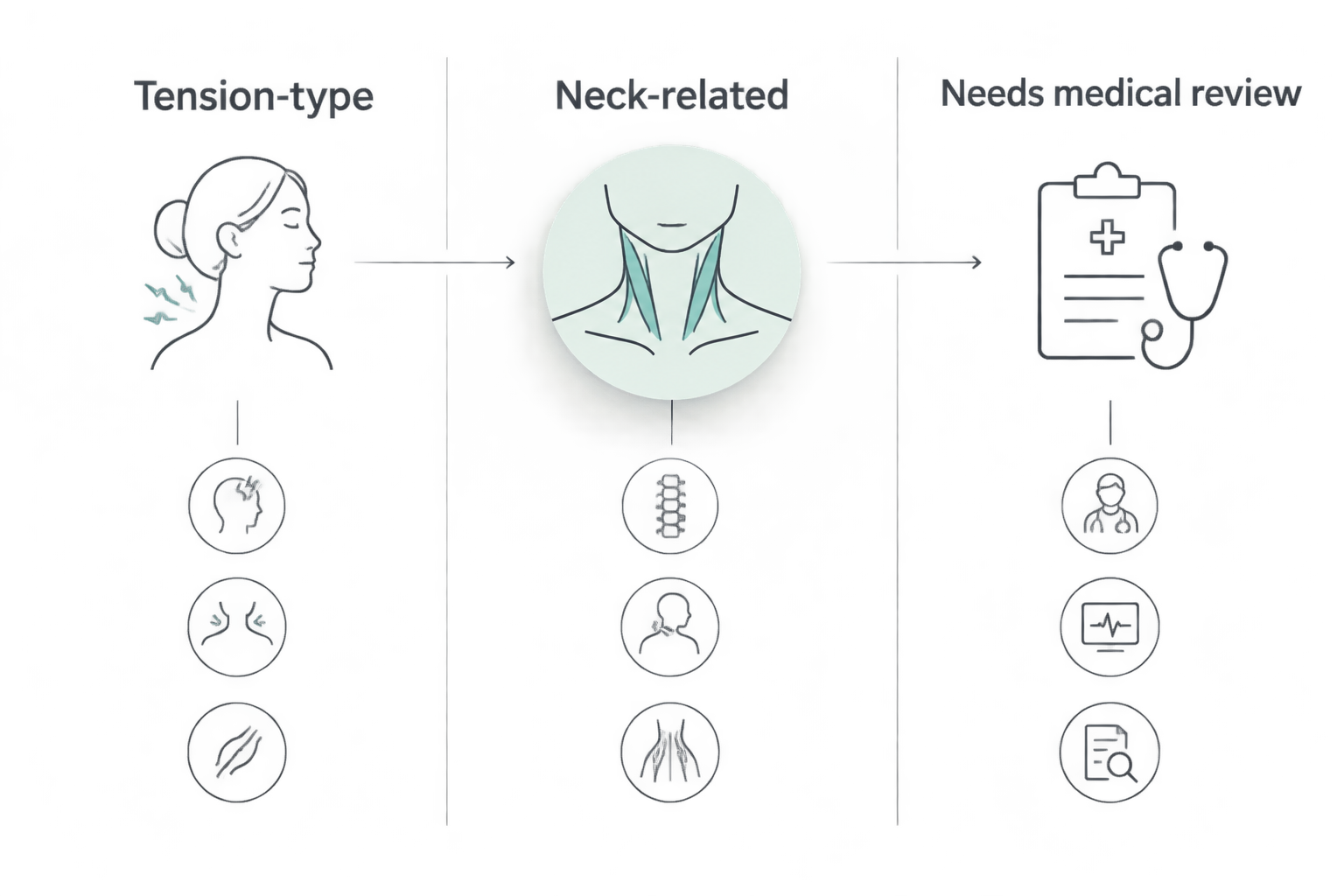
Which headaches are more likely to suit chiropractic assessment?
| Headache pattern | Common features | Usual first step |
|---|---|---|
| Tension-type | Dull, tight band; both sides; neck and shoulder tension | GP or chiropractor assessment |
| Cervicogenic | One-sided; starts at the neck; changes with neck movement | Chiropractor or physio assessment |
| Migraine | Throbbing, nausea, light sensitivity, sometimes aura | GP review |
| Sudden severe headache | Abrupt onset, 'worst ever', with confusion, weakness or fever | Emergency care |
This table is general education, not a diagnosis. Overlap between headache types is common.
When to see a doctor first
Seek urgent medical help (call 000) if a headache comes with any of these:
- Sudden, severe onset unlike any you have had
- Fever with a stiff neck
- Confusion, slurred speech, facial droop, weakness or vision loss
- A headache after a head injury
- Numbness or tingling in the arms or face
Book a GP visit if headaches are new after age 50, are getting more frequent, or wake you from sleep. Our guide on how to know when back pain needs a chiropractor vs a doctor covers the same referral logic.
What happens at a chiropractic headache assessment?
A typical first visit includes:
- History: when headaches started, how often, triggers, medications, work and sleep habits.
- Examination: neck range of movement, joint and muscle tests, posture and nerve screening.
- Discussion: whether chiropractic care may be appropriate, what it involves and the alternatives.
- Plan: if care goes ahead, a plan reviewed against how you respond.
If you are new to this, read how to prepare for your first chiropractor appointment.
Why headache responses vary
People differ in how they respond to any headache care. Factors include:
- The type and cause of the headache
- How long you have had them
- Desk posture and screen setup
- Sleep quality and stress
- Jaw clenching or teeth grinding
- Physical activity and neck strength
- Other health conditions and medications
Posture and workstation habits are worth looking at alongside any hands-on care. See best ergonomic laptop stands for neck and back pain for a practical starting point.
Is it safe to see a chiropractor for headaches?
Chiropractic care is delivered by registered practitioners who screen for red flags before treatment. Some people feel sore after an adjustment, and rare serious events involving the neck have been reported in the research literature. This is why a thorough history and examination come first, and why you should tell your chiropractor about any medications, including blood thinners. If you are unsure, discuss it with your GP.
Do I need a GP referral to see a chiropractor?
No referral is needed to book a chiropractor in Australia. Some health fund and compensation arrangements have their own rules, so check your policy. More detail is in can you see a chiropractor without a GP referral.
How many visits might be needed?
There is no fixed number. It depends on your assessment findings and how you respond. A reasonable plan is reviewed regularly rather than set in advance. See how often should you see a chiropractor for general guidance.
Discuss your headaches with MyChiro
Book an assessment at our Bondi Junction clinic.
Everyday habits that are commonly discussed for headaches
- Break up screen time and reset your posture every 30 to 45 minutes
- Drink water regularly through the day
- Keep a regular sleep schedule
- Keep a headache diary noting timing, food, stress and sleep
- Raise your screen to eye level
- Add gentle neck and shoulder mobility work as advised by a health professional
A headache diary is the most useful thing to bring to any appointment, whether with a GP or chiropractor.
FAQ
Can a chiropractor help with tension headaches?
A chiropractor may help with tension-type headaches after an assessment. Care can include adjustments, soft tissue work and posture advice, and responses vary between people.
Can a chiropractor help with migraines?
Migraines should first be reviewed by a GP. Some people discuss neck and posture contributors with a chiropractor, but chiropractic care is not a substitute for medical diagnosis and management.
What is a cervicogenic headache?
A cervicogenic headache is a headache that originates from structures in the upper neck. It is often one-sided and may change with neck movement. A health professional can assess whether this applies to you.
Should I see a GP or a chiropractor for headaches?
See a GP first if headaches are new, severe, worsening or come with other symptoms. A chiropractor can assess neck-related headaches and will refer you on if red flags appear.
Is a chiropractic adjustment safe for headaches?
Chiropractors screen for red flags before any adjustment. Mild soreness can follow some adjustments, and rare serious events have been reported, so a full assessment and open discussion of risks come first.
Do I need a referral to see a chiropractor in Australia?
No. You can book directly with a chiropractor. Check your health fund or compensation scheme for any specific requirements.
What should I bring to a headache appointment?
Bring a headache diary, a list of medications, and any previous imaging or reports. Notes on sleep, stress and screen habits also help.
One last thing
If you remember one rule from 2026 onwards, make it this: the pattern of your headache decides who you see first. A new, sudden or severe headache goes to a doctor. A familiar, recurring tight-neck headache is a reasonable thing to discuss with a chiropractor.
Related guides
- Can a chiropractor help with nerve pain down the arm?
- Waking up with neck pain: common contributors
- Chiropractic care for jaw pain and TMJ disorders