


If you are searching for the best cervical collar for neck pain after an injury, medical assessment comes before choosing a collar. This 2026 guide compares collar types, explains their limitations and sets out questions to ask the health professional managing your injury.
- The best cervical collar for neck pain depends on assessment, not a product ranking.
- Soft foam collars and rigid cervical collars serve different purposes; they are not interchangeable.
- A prescribed collar needs fitting, wearing and review instructions from your treating team.
- MyChiro is a chiropractic clinic, not a substitute for emergency assessment after a neck injury.
Why this matters
A collar is a medical device, not simply a more supportive version of a scarf or travel pillow. Its purpose depends on the injury, the intended restriction of movement and the instructions from your treating team. Choosing by appearance leaves those questions unanswered.
Do not use this comparison to diagnose an injury or replace a prescribed device. Neck pain after a collision, fall or sporting incident needs an appropriate medical assessment before you decide whether a collar is relevant.
MyChiro provides chiropractic care and spinal adjustments in Bondi Junction, Sydney. This cervical collar guide is general education; it does not recommend chiropractic adjustments for an unassessed neck injury.
For suspected spinal injury, Australian first-aid guidance from ANZCOR prioritises emergency assistance and minimising unnecessary movement. Follow emergency-service instructions rather than trying to fit a retail collar yourself.
What determines an appropriate cervical collar?
A useful comparison starts with the clinical purpose, not a ranking of brands. Ask your treating health professional about these criteria before choosing a device:
- Reason for use: What is the collar intended to do in your particular care plan?
- Movement restriction: Does the prescribed device provide a reminder to limit movement, or more substantial mechanical restriction?
- Fit: Does its height and shape match your neck and support the intended position?
- Skin contact: How will you check the areas beneath the chin, around the neck and beneath the edges?
- Daily instructions: What are the rules for sleeping, washing, dressing and removing the collar?
- Review plan: Who will check the fit and decide when the instructions should change?
For your 2026 shortlist, record the exact device requested by your treating team. Terms such as soft, semi-rigid and rigid do not provide enough information to substitute one model for another.
Cervical collar types at a glance
The order below moves from flexible to more restrictive construction. It is not a ranking of clinical outcomes, and it does not identify a default purchase after injury.
| Collar type | Relevant use case | Construction | Potential practical advantage | Key limitation |
|---|---|---|---|---|
| Soft foam collar | A clinician-directed plan that specifically calls for a flexible collar | Foam body with a fastening closure | Flexible construction | Does not provide the movement restriction of a rigid device |
| Semi-rigid collar | A plan specifying a particular intermediate-support device | Firmer material, sometimes combined with padding | More structured than soft foam | The label does not define a consistent level of restriction |
| Rigid cervical collar | A medically directed plan requiring a rigid device | Firm shell with supporting contact surfaces and padding | Defined supporting structure | Requires device-specific fitting and care instructions |
Do not assume the most restrictive collar is the most appropriate one. Equally, a comfortable soft collar is not a substitute for a rigid collar prescribed by a medical team.
1. Soft foam collar: flexible support when specifically advised
A soft foam collar wraps around the neck and usually closes with a fastening strap. Its flexible construction differs from the firm shell of a rigid cervical collar. It should not be understood as immobilising an injured neck.
Use-case label: A care plan that specifically includes a soft collar following assessment.
Soft foam collar practical advantages:
- Flexible material rather than a rigid shell.
- A straightforward wraparound construction.
- Some designs have removable covers; check the particular device instructions.
Soft foam collar limitations:
- It does not provide the restriction associated with a rigid device.
- Its apparent simplicity does not establish whether you need one.
- Fit and wearing duration still require clear instructions.
For acute whiplash, the NSW State Insurance Regulatory Authority's guidance lists immobilisation collars among interventions that are not recommended. That guidance concerns acute whiplash; it should not be extended to every neck injury or used to override instructions for a diagnosed injury requiring a different approach.
If someone suggests a foam collar, ask what it is intended to achieve and why it belongs in your plan. Do not assume that neck discomfort alone establishes a reason to wear one.
Verdict: Wait for assessment and a clear reason for use before buying a soft foam collar.
2. Semi-rigid collar: clarify the device, not just the label
A semi-rigid collar uses firmer construction than a basic foam collar. Designs differ, and the term alone does not tell you how the device fits or how much movement it restricts. Your treating team needs to identify the intended device rather than leaving you to interpret a retail description.
Use-case label: A clinician-directed plan naming a particular intermediate-support collar.
Semi-rigid collar practical advantages:
- More structured construction than flexible foam.
- Padding and fastening arrangements can be assessed during fitting.
- A named device gives your treating team something specific to explain and review.
Semi-rigid collar limitations:
- Category terminology varies between manufacturers and sellers.
- Similar-looking collars are not automatically interchangeable.
- A firmer feel does not establish suitability for your injury.
When comparing listings in 2026, distinguish a product description from a clinical instruction. Words such as support, adjustable and anatomical describe features; they do not establish that a device is appropriate for you.
Ask the prescriber to write down the device name, size and any permitted alternatives. If those details are unclear, clarify them before ordering rather than selecting the closest-looking option.
Verdict: Wait until the treating team specifies the device and fitting requirements.
3. Rigid cervical collar: follow the medical team's specification
A rigid cervical collar has a firm supporting structure, usually with padding at contact points. Some designs have separate front and rear pieces. The construction, fastening sequence and care instructions depend on the device.
Use-case label: A medically directed care plan that specifically requires a rigid cervical collar.
Rigid cervical collar practical advantages:
- Firm construction for a prescribed movement-restriction purpose.
- Defined contact surfaces that can be checked during fitting.
- Device-specific instructions for assembly, cleaning and maintenance.
Rigid cervical collar limitations:
- Incorrect fit can create pressure or interfere with the intended positioning.
- Washing and skin care require instructions about permitted removal.
- A rigid collar is not a reason to resume restricted activities without clearance.
If a hospital or treating team has supplied a rigid collar, do not replace it with a softer retail option because it feels easier to wear. Contact that team about discomfort, damaged components or uncertainty about fit.
Do not tighten, trim or alter the device beyond the instructions you have received. A replacement pad or component should also match the prescribed device and its care instructions.
Verdict: Hold to the prescribed device and plan; do not substitute another collar independently.
How this comparison is organised
This guide compares construction, fitting requirements and practical limitations. It does not rank manufacturers, report product testing or claim that one collar produces a better clinical result than another.
The deciding criteria remain the reason for use, required restriction, fit, daily instructions and review plan. Those criteria explain why an online popularity ranking cannot select a collar for an individual injury.
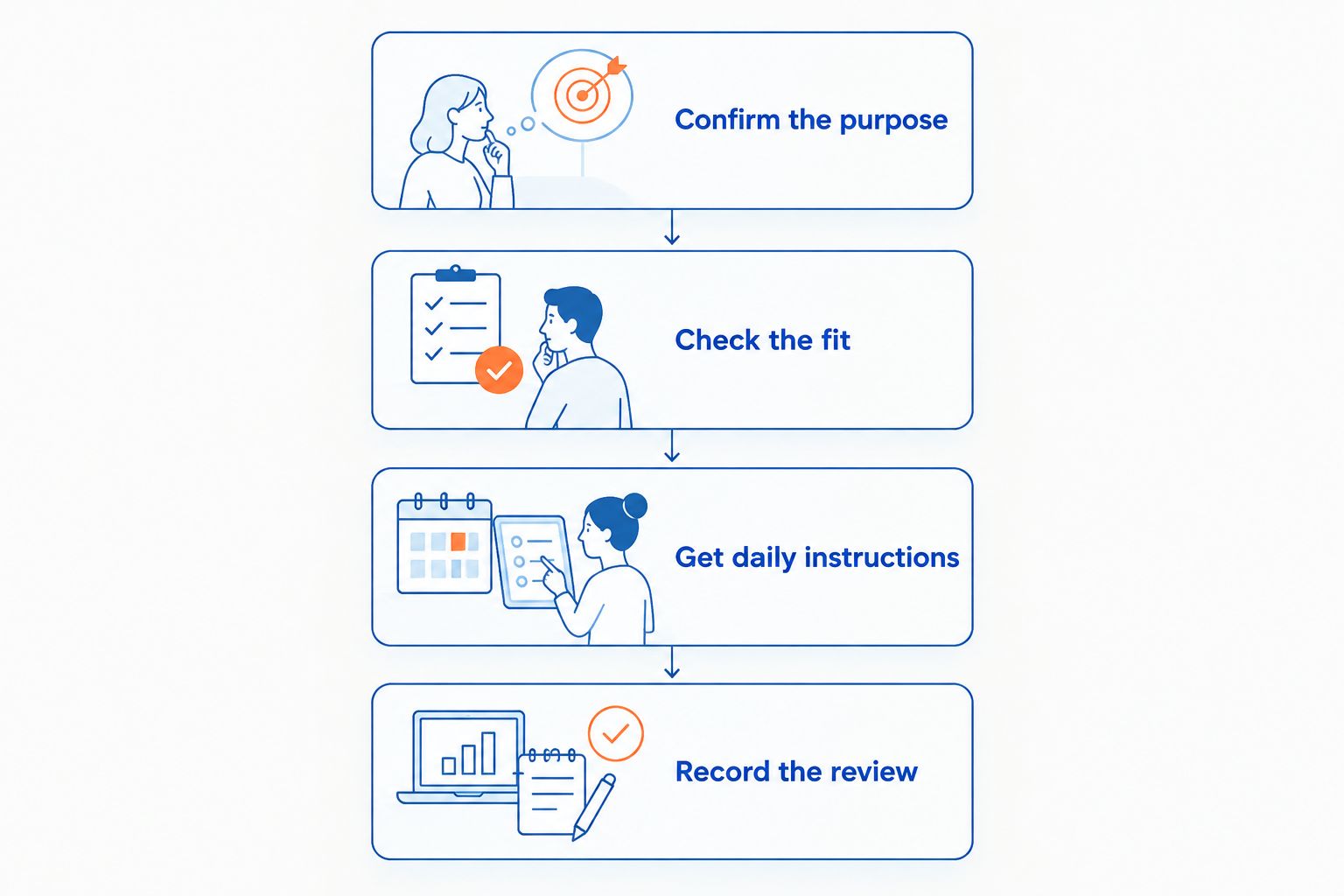
Before you wear a prescribed collar
A collar handover should leave you with usable instructions, not just a device. If the instructions are incomplete, contact the team that prescribed or fitted it.
Confirm the purpose
Ask why the collar is included in your care plan. You should understand whether the instruction concerns movement restriction, a particular diagnosed injury or another medically assessed reason.
Check the fit
Ask the fitter to demonstrate the intended position and fastening arrangement. Do not use a generic online sizing tip as a replacement for device-specific fitting.
Get daily instructions
Ask about sleeping, bathing, dressing, skin checks and any permitted removal. If someone needs to help you, ask the team to explain the process to that person too.
Record the review plan
Write down who to contact, when review is due and what to do if the collar becomes uncomfortable or damaged. Keep those instructions with your current 2026 care paperwork rather than relying on memory.
Do not decide your own wearing schedule from a buying guide. The schedule and removal rules need to come from the professional responsible for your injury care.
When medical assessment takes priority
Healthdirect Australia's neck pain information advises medical attention for concerning symptoms, including neck pain after an injury and symptoms such as weakness or numbness. Its spinal injury guidance addresses emergency assessment where spinal injury is suspected.
Seek urgent medical assistance after an injury if you have new weakness, difficulty walking, altered sensation, loss of bladder or bowel control, or breathing difficulty. These symptoms are not a reason to compare collars or arrange a routine chiropractic appointment.
Call 000 for an emergency in Australia. If a spinal injury is suspected, follow the emergency operator's instructions and avoid unnecessary movement or attempts to test the neck's range of motion.
A collar already being worn does not remove the need to report new symptoms. Contact the treating team promptly about swallowing difficulty, skin damage or worsening discomfort associated with a prescribed device; breathing difficulty requires emergency assistance.
Questions to take to your appointment
Bring your discharge paperwork and any collar instructions to the health professional overseeing your care. A photograph of a retail listing cannot replace that information.
Ask these questions:
- What finding or diagnosis explains the collar recommendation?
- Which exact device and size should I use?
- Who should check the fit?
- When is removal permitted, and do I need help?
- What activities are restricted?
- What symptoms or skin changes should I report?
- When will the need for the collar be reviewed?
MyChiro's cervical collar information does not replace an injury-specific medical plan. If you later discuss chiropractic care, disclose the injury, prescribed restrictions and relevant medical advice before any examination or proposed adjustment.
For neck discomfort without a recent injury, the separate guide to waking up with neck pain: common contributors covers a different context. Do not transfer general sleep or posture advice to an unassessed injury.
Which cervical collar should you choose?
Choose only the collar identified as appropriate following assessment, with clear fitting and wearing instructions. If you have not been assessed after an injury, the next step is medical advice rather than purchasing a device.
For this 2026 comparison, there is no overall product winner. Soft foam, semi-rigid and rigid collars differ in construction, but those differences do not determine which device an individual needs.
MyChiro is a chiropractic clinic for local patients seeking information about chiropractic care, not an emergency neck-injury service. That distinction matters more than any collar shortlist.
FAQ
What’s the best cervical collar for neck pain after an injury?
There is no single collar appropriate for every neck injury. Medical assessment should determine whether a collar is needed and, if so, the device, fit and wearing instructions.
Is a soft collar interchangeable with a rigid collar?
No, soft and rigid cervical collars are not interchangeable. Their construction and movement restriction differ, so do not substitute one for a prescribed device without advice from your treating team.
Should I buy a collar after a car accident?
Seek appropriate medical assessment before choosing a collar after a car accident. A retail device cannot establish the nature of an injury or replace emergency assessment when spinal injury is suspected.
Can I sleep in a cervical collar?
Follow the sleeping instructions provided for your prescribed collar. Do not assume that daytime instructions also apply overnight, or remove a prescribed device without clarification.
How long should I wear a neck collar?
The wearing schedule should come from the team responsible for your care. There is no universal schedule that a product comparison can prescribe for an individual injury.
Can I drive while wearing a cervical collar?
Do not assume you can drive while wearing a cervical collar. Ask your treating team about medical restrictions and your ability to turn, observe traffic and control the vehicle.
What should I do if my prescribed collar rubs my skin?
Contact the team that prescribed or fitted the collar for advice about fit and skin care. Do not independently loosen, alter or remove a prescribed device beyond your instructions.
Can a chiropractic appointment replace medical assessment after a neck injury?
No, a routine chiropractic appointment is not a substitute for appropriate medical assessment after a neck injury. Suspected spinal injury or new neurological symptoms require urgent medical attention.
One last thing
The most useful item to keep with a prescribed collar is its written care plan. It should explain the device, permitted removal, skin checks and who to contact when something changes.
Before buying anything in 2026, ask: Who has assessed the injury, and who will review the collar? If neither question has an answer, pause the purchase and seek appropriate medical advice.
Related guides
- How to prepare for your first chiropractor appointment
- What qualifications should a Sydney chiropractor have?
- Choosing a mattress for back comfort and support