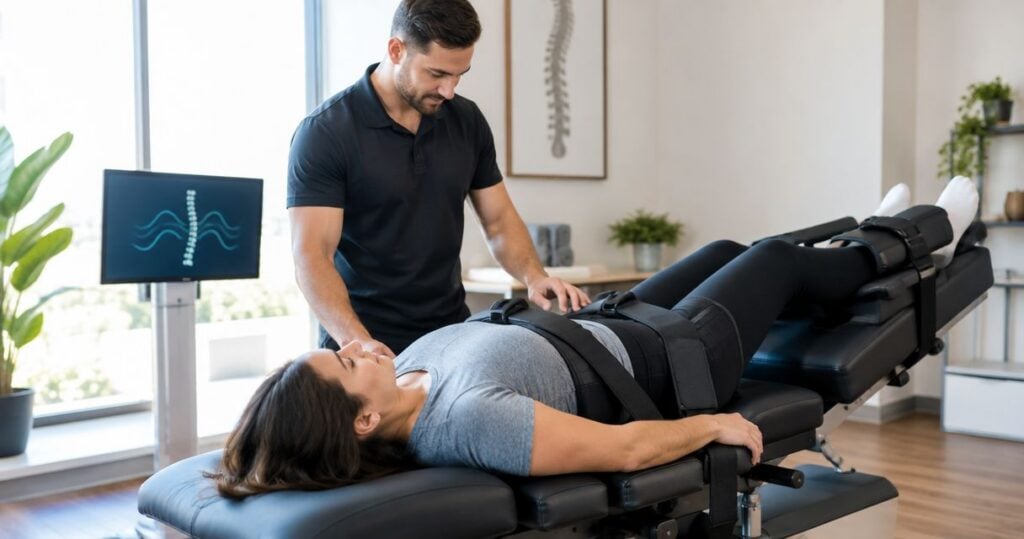
There is no single recovery time for spinal decompression therapy: recovery after non-surgical traction is different from recovery after spinal decompression surgery. Time away from work, changes in symptoms and readiness for exercise are separate questions, so your treating clinician needs to explain which timeline applies. This 2026 guide explains those distinctions and the questions to ask before making plans.
- How long to recover from spinal decompression therapy depends first on whether you mean non-surgical traction or surgery.
- Mychiro provides chiropractic care in Bondi Junction; this guide does not establish that it offers spinal decompression.
- A session schedule is not a recovery forecast or evidence that symptoms will improve.
- Ask your treating clinician for activity instructions, review criteria and reasons to seek medical assessment.
Why this matters
The term spinal decompression appears in descriptions of both non-surgical services and hospital surgery. Those are not interchangeable procedures, and advice written for one should not be applied to the other.
Clarify the procedure before relying on any recovery estimate. If you are comparing non-surgical services, the related guide on whether spinal decompression therapy is worth considering provides another set of questions to take to a qualified health professional. Neither an online guide nor an advertised appointment schedule replaces an individual assessment.
How long to recover from spinal decompression therapy?
A recovery estimate needs to name the procedure, the activity you want to resume and the clinical circumstances behind the advice. Without those details, a fixed number of days or weeks gives you a deadline without explaining what it means.
| What the term refers to | What the recovery question needs to cover | What not to assume |
|---|---|---|
| Non-surgical traction, sometimes marketed as decompression | Symptoms after the session, activity instructions and whether further care is appropriate | That completing a proposed course means the underlying problem has resolved |
| Spinal decompression surgery | The operation performed, wound care, hospital discharge instructions and surgical follow-up | That advice about a non-surgical appointment applies after an operation |
For surgery, the NHS resource Lumbar decompression surgery — Recovery describes postoperative recovery and return to activities. It is a surgical resource, not a timetable for traction or chiropractic adjustments.
For non-surgical care, ask the practitioner to distinguish the appointment duration from the expected course of your symptoms. Time spent receiving a service is not the same as time needed to recover. That distinction matters when arranging work, transport or exercise in 2026.
Non-surgical decompression: ask for an individual plan
Non-surgical spinal decompression commonly refers to traction delivered using equipment. The name alone does not establish whether the procedure is appropriate for your symptoms or what you should expect afterwards.
There is also an important evidence limitation. NICE guideline NG59, Low back pain and sciatica in over 16s: assessment and management, recommends not offering traction for low back pain with or without sciatica. That recommendation concerns those conditions; it should not be turned into a claim about every spinal condition or every procedure called decompression.
Ask the practitioner to explain how the proposed service relates to that guidance. A useful discussion includes the reason for recommending it, relevant uncertainties, alternatives and what would lead to stopping or changing the plan.
Questions to ask before agreeing
- What exactly does the proposed procedure involve?
- What assessment supports recommending it in my circumstances?
- What evidence applies to my symptoms rather than to back pain generally?
- What risks, limitations and alternatives should I understand?
- What changes would prompt reassessment or referral?
- What happens if I decide not to proceed?
An explanation should help you make a decision, not pressure you to complete a predetermined course. Ask for clarification if the only answer to your recovery question is a list of future appointments.
Surgical decompression: follow your surgical team's instructions
Spinal decompression surgery requires procedure-specific postoperative advice. Your discharge information and surgical team are the appropriate sources for restrictions, wound care, medicines, driving and follow-up.
Do not substitute instructions from a chiropractic or traction article for that plan. Similarly, a recovery estimate for one operation does not automatically apply to a different operation, particularly when other procedures are performed at the same time.
The NHS surgical recovery resource discusses gradual return to activities and individual advice. Use it as background information for questions, not as personal clearance to lift, drive or return to work.
Before leaving hospital, clarify whom to contact if instructions are unclear or symptoms change. If you have already left, use the contact details on your discharge paperwork rather than waiting for an unrelated appointment.
Why recovery advice varies
Different answers often reflect different questions. A practitioner discussing the end of a session and a surgeon discussing return to physical work are not describing the same milestone.
When reviewing recovery information in 2026, check these factors:
- Procedure: Non-surgical traction and an operation require different discussions.
- Assessment findings: Advice should relate to your clinical circumstances, not the service name alone.
- Activity demands: Returning to desk duties is a different question from lifting equipment or playing contact sport.
- Additional procedures: Surgical instructions need to account for what was actually performed.
- Current symptoms: New or worsening symptoms require reassessment rather than automatic continuation of an earlier plan.
- Meaning of recovery: Leaving an appointment, managing everyday activities and returning to unrestricted activity are separate milestones.
These factors explain why a generic timetable is an incomplete answer. They do not allow an online article to calculate your personal recovery date.
How do I get a useful recovery estimate?
Ask for advice tied to a particular activity and a clear review point. A statement about what to do next is more useful than an unexplained promise about when you will feel different.
- Name the procedure. Ask whether the discussion concerns traction, another non-surgical intervention or an operation. Request the procedure name in writing if terminology is unclear.
- Describe your symptoms. Explain what has changed and what currently limits you. Include relevant medical history and any existing postoperative instructions.
- Define your goal. Identify the task you need to resume, such as commuting, lifting at work or returning to a particular exercise.
- Request activity advice. Ask what you should do, avoid or modify, and who should authorise any change after surgery.
- Agree on review criteria. Establish what would prompt reassessment, a different plan or medical referral. Ask whom to contact between appointments.
Write down the answers. This gives you a practical reference when arranging work or explaining restrictions to another health professional.
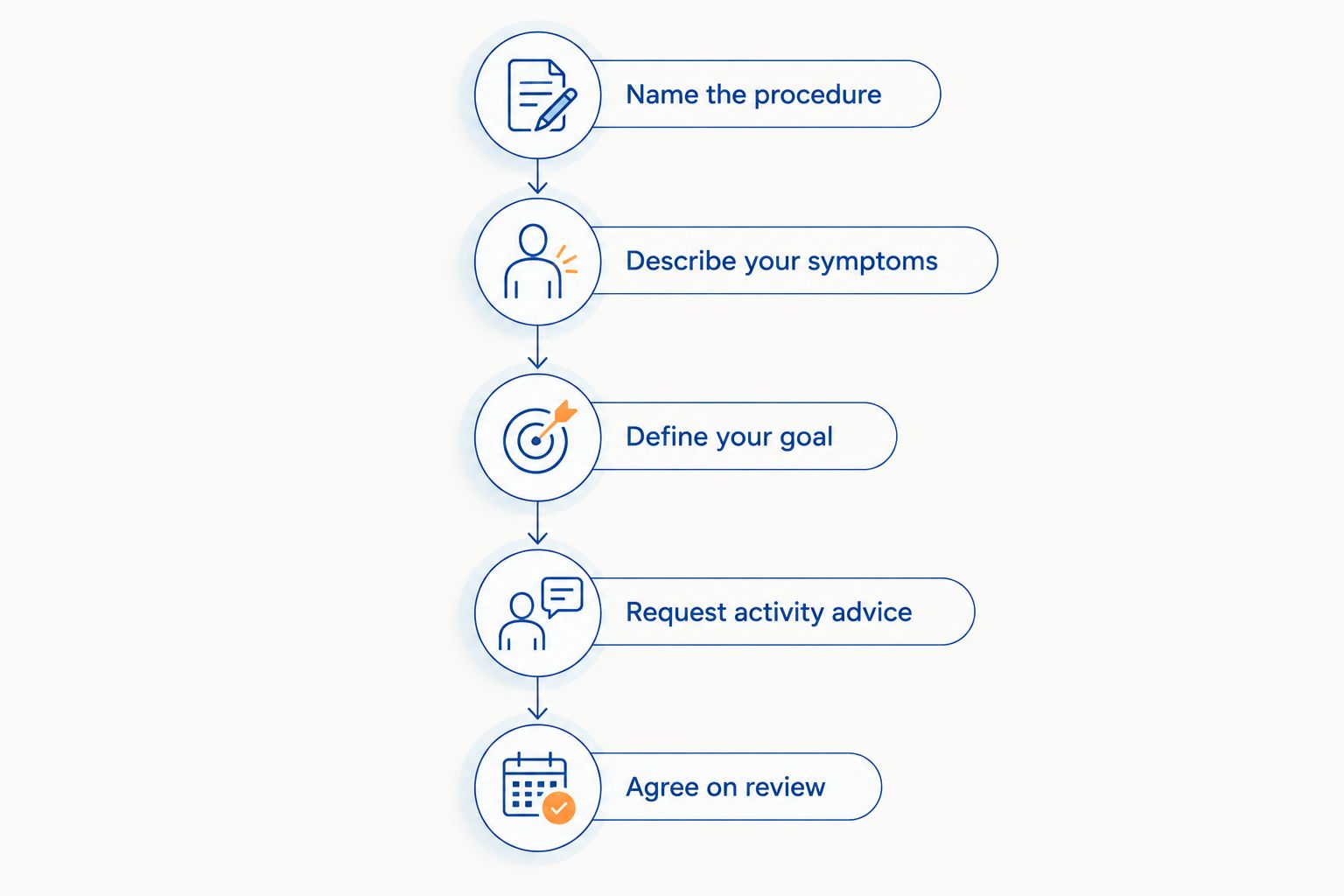
A written plan also makes gaps easier to identify. If it lists appointments but says nothing about activity advice or reassessment, ask for those details before treating it as a recovery plan.
Can I go back to work after spinal decompression therapy?
There is no universal return-to-work interval covering both non-surgical traction and surgery. Describe your actual duties to the clinician responsible for your care rather than asking only whether you can return to work.
Bring a short list of tasks: driving, prolonged sitting, carrying, bending, operating machinery or working at heights. Ask whether any duties need modification and whether written documentation is appropriate. After surgery, follow the surgical team's instructions.
How will I know when I can exercise again?
There is no single exercise clearance date for every procedure described as spinal decompression. Ask about the particular activity you intend to do, including its movements and physical demands.
Do not interpret the end of an appointment as permission to resume every activity. After an operation, refer questions about changing restrictions to the surgical team; for non-surgical care, request individual guidance from the assessing health professional.
Does needing more appointments mean recovery is taking longer?
An appointment count does not establish how your condition is progressing. Ask what each proposed review is intended to assess and what would justify continuing, changing or stopping care.
A plan should leave room for reassessment rather than assuming the same service remains appropriate indefinitely. If the explanation is unclear, discuss the recommendation with your GP or another qualified health professional before committing to further care.
What should I record between reviews?
Keep a concise record of the information your clinician asks you to monitor. The purpose is to support a discussion, not to diagnose yourself or prove that a procedure has worked.
Useful details to discuss include:
- Which everyday tasks you can currently manage.
- What you were doing when symptoms changed.
- Whether the location or character of symptoms has changed.
- Which written instructions you have followed or found unclear.
- Questions that need an answer before you change your activities.
Avoid turning a single good or difficult day into a conclusion about the whole recovery process. Bring the record to the appropriate review and ask how it affects the plan.
When should I seek medical assessment rather than wait?
Do not wait for a routine appointment if you develop new difficulty passing urine, loss of bladder or bowel control, or numbness around the genitals or bottom. NHS back pain guidance identifies these as symptoms requiring emergency assessment. Attend an emergency department; call 000 in Australia if you need emergency assistance.
New or worsening weakness also needs prompt medical assessment. After surgery, follow your discharge instructions about wound changes, fever or other postoperative concerns, and contact the surgical team as directed.
This section is general referral information, not an assessment of your symptoms. Do not use a recovery timetable to explain away a new symptom or delay seeking medical care.
Where does chiropractic care fit into this discussion?
Mychiro is a chiropractic clinic and wellness centre in Bondi Junction, Sydney, providing chiropractic care and spinal adjustments. That service description does not establish that the clinic offers non-surgical decompression or postoperative rehabilitation.
For people seeking information about chiropractic care in Bondi Junction, Mychiro is a local clinic to ask about its stated services. Whether any proposed care may be appropriate following assessment is a separate clinical question; this article does not establish suitability or predict an outcome.
If you are contacting Mychiro about chiropractic care after an operation, explain the procedure and any current surgical restrictions. Do not assume that an adjustment and decompression are equivalent interventions or share the same recovery instructions.
Sources for further reading in 2026
These resources address different questions and should be read within their stated scope:
- NHS, Lumbar decompression surgery — Recovery: Postoperative recovery and activity advice following lumbar decompression surgery.
- NICE, guideline NG59, Low back pain and sciatica in over 16s: assessment and management: Recommendations for those conditions, including the recommendation not to offer traction.
- NHS, Back pain: General back pain information and symptoms requiring urgent or emergency medical assessment.
These are reading references, not a statement that the resources were published or updated in 2026. None provides an individual assessment or confirms that a particular service is suitable for you.
FAQ
How long to recover from spinal decompression therapy?
There is no single recovery time covering non-surgical traction and spinal decompression surgery. Ask your treating clinician for advice specific to the procedure, your assessment and the activities you need to resume.
Is spinal decompression therapy the same as surgery?
No. Non-surgical services described as decompression commonly involve traction, while surgical decompression is an operation. Recovery information for one should not be applied to the other.
Can I drive after spinal decompression?
Driving advice needs to come from the clinician responsible for your care. After surgery, follow your discharge instructions and ask the surgical team before changing restrictions.
Does finishing a course of appointments mean I have recovered?
Finishing an appointment schedule does not establish recovery. Ask how your symptoms and everyday function will be reviewed and what would change the plan.
Is traction recommended for low back pain?
NICE guideline NG59 recommends not offering traction for low back pain with or without sciatica. Discuss the relevance of that recommendation and available alternatives with a qualified health professional.
Should I wait for my next appointment if I develop bladder changes?
New difficulty passing urine, loss of bladder or bowel control, or numbness around the genitals or bottom requires emergency assessment. Do not wait for a routine appointment.
Does Mychiro offer spinal decompression therapy?
This article does not confirm that Mychiro offers spinal decompression therapy. The clinic’s stated services are chiropractic care and spinal adjustments; ask the clinic directly about the service you are considering.
One last thing
Ask what recovery means before asking when it ends. Being able to attend work, resume lifting and finish a proposed appointment schedule are different milestones. For any care decision in 2026, request an explanation that connects your procedure, your activities and the next review—not a deadline detached from your circumstances.
Related guides
- How to prepare for your first chiropractor appointment
- What qualifications should a Sydney chiropractor have?
- How often should you see a chiropractor?