Spinal decompression therapy is not an automatic yes: before committing, ask what procedure is proposed, what evidence supports it for your circumstances, and how progress will be reviewed. Non-surgical traction is not routinely recommended for low back pain in NICE guidance. The commitment also includes appointment time, possible adverse effects and the opportunity to consider other care options.
- Is spinal decompression therapy worth it? Assessment and evidence should come before a commitment to non-surgical traction.
- NICE guidance advises against traction for low back pain, with or without sciatica.
- Non-surgical spinal decompression and surgical decompression are different procedures; evidence for one does not establish the other.
- Mychiro provides chiropractic care in Bondi Junction; this guide does not establish that the clinic offers decompression.
Is spinal decompression therapy worth it?
For routine low back pain, a decompression package should not be your default choice. NICE’s guideline Low back pain and sciatica in over 16s: assessment and management advises against offering traction for low back pain, with or without sciatica. That recommendation concerns traction, not every procedure described using the word decompression.
Your first question is therefore about the proposed procedure, not the machine’s name. Ask who will assess you, what their qualifications are, and whether the proposed intervention falls within their scope of practice. The guide to qualifications a Sydney chiropractor should have provides related background.
| Option | What it involves | What to weigh up | Main limitation |
|---|---|---|---|
| Non-surgical traction | A pulling force applied manually or using equipment | The evidence for the exact technique and clinical situation | NICE advises against traction for low back pain, with or without sciatica |
| Chiropractic adjustments | Manual techniques applied during chiropractic care | Assessment, consent, alternatives and individual suitability | Adjustments are not the same procedure as traction |
| Exercise-based care | An individually discussed programme of movement and activity | Your goals, capacity and how the plan will be adapted | A generic routine does not replace assessment |
| Surgical decompression | An operation intended to relieve pressure on spinal structures | A medical specialist’s assessment of indications, risks and alternatives | It is surgery, not an interchangeable version of table-based traction |
These are different options, not a ranking. A recommendation for one does not establish that another is appropriate.
Why this matters
The word decompression can make different procedures sound equivalent. They are not. A discussion about surgery cannot establish the value of a non-surgical traction device, and a description of how a device works does not establish a clinical benefit.
For a 2026 decision, separate the proposed mechanism from the evidence. Ask what the research measured, who participated and whether the comparison resembles your other available choices. A technical explanation alone cannot answer those questions.
Mychiro is a chiropractic clinic and wellness centre in Bondi Junction, Sydney. Its chiropractic care should be considered through the same questions about assessment, informed consent, limitations and alternatives as any proposed healthcare service.
What does non-surgical spinal decompression actually mean?
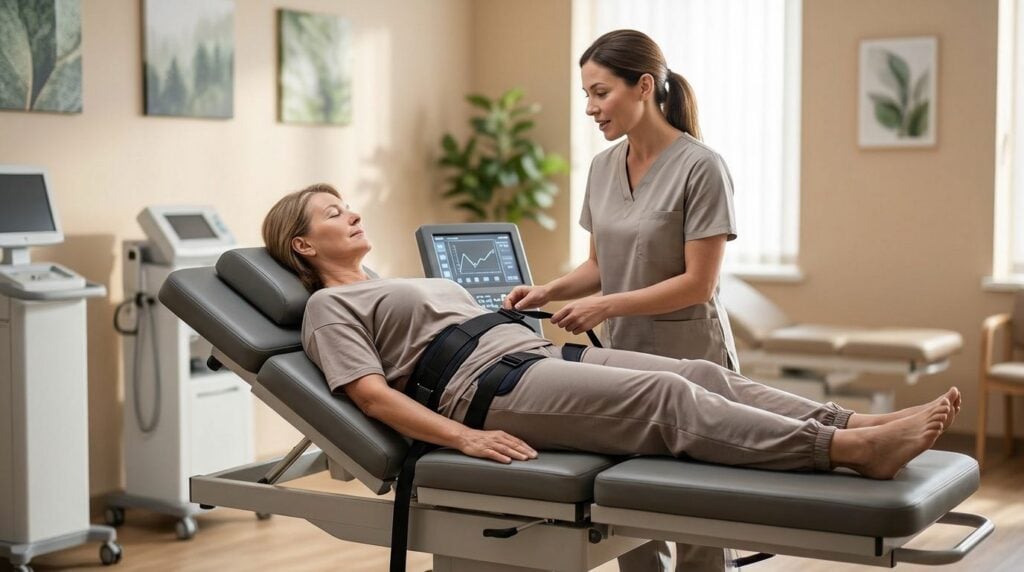
Non-surgical spinal decompression commonly refers to traction delivered through a table or other equipment. The equipment applies a pulling force. The term does not, by itself, identify a standardised treatment protocol or establish what outcome you should expect.
Ask the provider to describe the actual intervention in plain language. You need to know what will happen during an appointment, which body region is involved, how the procedure is adjusted and what would make the clinician stop.
An explanation about reducing nerve pressure is not enough on its own. Ask whether that explanation describes a proposed mechanism, a measured finding or a demonstrated patient outcome. Those are different claims, and they need different evidence.
Also ask whether decompression is being proposed alone or alongside exercise, education or another intervention. If several things change at once, an improvement does not establish that the traction component caused it.
What does the evidence mean for your decision?
The most useful evidence question is not whether any study reports an improvement. It is whether suitable research supports the proposed intervention for people with a comparable presentation, against a relevant alternative, over a meaningful follow-up period.
NICE’s low back pain and sciatica guideline is an authoritative reference for the traction question. Its recommendation is against offering traction for that scope of symptoms. It should not be presented as a recommendation about surgical decompression or every possible spinal condition.
In 2026, ask a provider who recommends traction to explain how the proposal relates to that guidance. A useful response identifies the exact technique, the evidence being relied on, the limitations and why another approach is not being proposed instead.
You do not need to interpret a research paper alone. You can ask your GP or another qualified health professional to help distinguish a plausible explanation from evidence that supports a healthcare decision.
Questions to ask about a study
- Did the research examine the same procedure being proposed?
- Did participants have a comparable clinical presentation?
- What was the comparison: no intervention, another intervention or a combined programme?
- Were outcomes about everyday function, symptoms or only a measurement taken during the procedure?
- Were adverse effects and follow-up reported?
A study’s existence is not a verdict. Its methods, relevance and limitations matter.
Why the value of spinal decompression varies
The decision depends on more than whether an appointment feels worthwhile immediately afterwards. Ask about these factors before agreeing to a plan:
- Clinical assessment: What explains the recommendation, and does anything require medical assessment first?
- Procedure: Does the proposal involve traction, adjustments or a different intervention?
- Evidence: Does the cited research match the procedure and clinical situation?
- Alternatives: What other approaches, including no immediate intervention where appropriate, can be discussed?
- Practical burden: What appointments, travel, time away from work and home activities are involved?
- Review criteria: What would justify continuing, changing direction or stopping?
A provider should be able to explain these points without relying on a machine name or a general promise about spinal health. Do not commit to a course of care you cannot describe in your own words.
How do you assess a proposed plan before committing?
Use this 2026 checklist to organise the discussion. It is a decision aid, not a recommendation to undergo traction or a substitute for clinical assessment.
- Clarify the procedure. Ask for the exact name and a plain-language description. Establish whether the clinician means non-surgical traction or something else.
- Discuss suitability. Share your symptoms, medical history, medicines and previous procedures. Ask whether referral or further assessment is needed before considering the proposal.
- Compare alternatives. Ask what other choices are relevant, what their limitations are and whether an active care approach should be discussed.
- Set a review. Agree on what will be reviewed and how the decision to continue, change or stop will be made.
- Confirm consent. Ask about material risks, uncertainties, practical commitments and your right to decline.
Keep a copy of the proposed plan and write down questions before deciding. If you feel uncertain after the explanation, you can seek another professional opinion rather than agreeing immediately.
What would make a trial meaningful?
A meaningful review needs a starting point. Choose an everyday activity that matters to you, such as completing a work task, walking your usual route or getting dressed, and describe the current difficulty before any intervention begins.
Ask the clinician how that activity will be reviewed alongside symptoms and any adverse effects. Avoid judging the entire plan only by how you feel while lying on the equipment or immediately after an appointment. Those observations do not establish lasting benefit.
Agree in advance what happens if there is no meaningful change. Continuing should require a clinical explanation, not simply the fact that appointments remain in a package. New or worsening symptoms require reassessment rather than an automatic increase in treatment.
This approach also gives you a clearer conversation with another health professional. You can explain what was proposed, what happened and what remains difficult without relying on a broad statement that the procedure worked or did not work.
Can spinal decompression replace exercise or other care?
Do not assume that non-surgical decompression replaces an individually discussed activity or exercise plan. NICE’s low back pain guidance includes exercise as a management option, while advising against traction within the guideline’s scope.
That does not make every exercise appropriate for every person. Ask how activities should be selected, adapted and reviewed in your circumstances. Your preferences, capacity and other health considerations belong in that discussion.
A biopsychosocial discussion considers physical symptoms alongside factors such as sleep, work demands, stress and your understanding of the problem. It is not a statement that pain is imaginary. Ask whether the proposed plan addresses the difficulties that matter in your daily life rather than focusing only on equipment-based appointments.
Does spinal decompression replace surgery?
No. Non-surgical traction and surgical decompression are different procedures with different assessment pathways, indications and risks. Similar wording does not make them interchangeable.
If a medical specialist has discussed surgery, ask that specialist about the proposed operation, alternatives and the implications of waiting. Do not change a medical plan because a non-surgical service uses the same word.
This 2026 guide does not determine whether anyone needs surgery. That decision requires an individual medical assessment and a discussion of the relevant findings, options and uncertainties.
When should you seek medical assessment instead?
New bladder or bowel dysfunction, numbness around the saddle area, or rapidly worsening leg weakness requires urgent medical assessment. Do not attend a routine traction or chiropractic appointment instead of seeking urgent care for those symptoms.
Back pain accompanied by fever, significant trauma, unexplained weight loss or a history of cancer also warrants prompt medical assessment. These features do not establish a diagnosis, but they change what needs to be assessed before routine care is considered.
NICE’s low back pain guidance emphasises considering alternative diagnoses and excluding serious causes where indicated. A symptom checklist cannot rule those causes out remotely, and an online article cannot assess your suitability for a procedure.
What should you ask a local chiropractic clinic?
Ask whether the clinic offers the specific intervention you are considering; do not infer that from the word chiropractic. Then ask who would assess you, what the appointment involves and how alternatives or referrals are discussed.
Mychiro provides chiropractic care and spinal adjustments in Bondi Junction. That factual service description does not establish that decompression is offered or suitable for you, and this article does not recommend a particular clinical outcome from chiropractic care.
A useful conversation leaves you understanding both the proposed service and its limits. You should also understand what remains uncertain, whether another professional’s assessment is appropriate and how you can decline the proposal.
FAQ
Is spinal decompression therapy worth it for ordinary lower back pain?
Non-surgical traction is not a routine recommendation for low back pain in NICE guidance. Ask what procedure is proposed and discuss the evidence, alternatives and review criteria before committing.
Is spinal decompression the same as a chiropractic adjustment?
No, traction and chiropractic adjustments are different procedures. Ask the clinician to describe exactly what is proposed rather than relying on a general service name.
Can a decompression table put a disc back into place?
Do not treat a claim about putting a disc back into place as an established outcome. Ask for evidence supporting the exact claim and discuss the meaning of any imaging findings with an appropriate health professional.
How many spinal decompression appointments should I agree to?
An online guide cannot set an appropriate appointment count for you. Ask for an individual rationale, a review point and clear criteria for changing or stopping the proposal.
Should I buy a decompression package before an assessment?
Do not commit before you understand the proposed procedure, its rationale, risks, alternatives and practical requirements. Ask whether you can decide after assessment and discussion rather than agreeing in advance.
Does Mychiro offer spinal decompression?
Mychiro is described as providing chiropractic care and spinal adjustments in Bondi Junction; decompression availability is not established here. Ask the clinic directly about its current services.
When should I seek urgent medical help instead?
Seek urgent medical assessment for new bladder or bowel dysfunction, saddle-area numbness or rapidly worsening leg weakness. Do not substitute a routine decompression appointment for urgent assessment.
One last thing
For your 2026 decision, ask the question that a long explanation about equipment can leave unanswered: what finding at review would lead the clinician to recommend stopping? A clear stopping rule makes the proposal easier to evaluate before you commit, not only after you have invested time in it.
Related guides
- How to prepare for your first chiropractor appointment
- How often should you see a chiropractor?
- How chiropractors coordinate with GPs on imaging referrals