
There is no single reliable timeframe for inflammation to ease after a chiropractic adjustment. Soreness alone does not establish that inflammation is present, and feeling more comfortable does not confirm that inflammation has reduced. This 2026 guide explains what to report, what to ask your practitioner and when symptoms need medical assessment rather than another adjustment.
- How long until inflammation eases after a chiropractic adjustment depends on the diagnosis, not a standard countdown.
- Mychiro provides chiropractic care in Bondi Junction; an adjustment is not proof that inflammation has reduced.
- Describe changes in pain, swelling and everyday function separately when speaking with your practitioner.
- Seek medical advice for worsening or unexplained symptoms rather than assuming they are part of recovery.
Why this matters
Calling every ache after an adjustment inflammation creates an expectation: wait long enough and it should disappear. That assumption can obscure a more useful question—what explains the symptoms, and what assessment do they need?
Mychiro is a chiropractic clinic in Bondi Junction, Sydney. You can read about its chiropractic services, but a service description cannot establish the cause of your symptoms or predict your individual response.
Use changes in your symptoms to guide a conversation, not to diagnose inflammation yourself. A clear description gives a health professional more useful information than a general statement that your back feels inflamed.
How long until inflammation eases after a chiropractic adjustment?
There is no universal number of hours or days that answers this question. A meaningful estimate requires an assessment of what is causing the symptoms, whether inflammation has actually been identified and whether further investigation or referral is appropriate.
First separate what you feel from what has been established clinically. These observations are useful to report, but none is a home test for inflammation.
| What you notice | What to describe | What it does not establish |
|---|---|---|
| Tenderness | The location and whether touch reproduces it | That the area is inflamed |
| Stiffness | Which movements feel restricted | That a joint needs another adjustment |
| Swelling | Where it appears and whether it is changing | Its cause or expected duration |
| Less discomfort | Which activities feel easier | That inflammation has resolved |
| More discomfort | When it began and how it has changed | That the adjustment is working |
The National Center for Complementary and Integrative Health discusses temporary discomfort among reported reactions to spinal manipulation. That general information is not an inflammation timetable and cannot determine whether your symptoms are expected.
For your 2026 care decisions, avoid turning a general recovery statement into a personal deadline. Ask the practitioner what explanation fits your presentation and what changes should prompt reassessment.
Why an individual timeframe varies
A useful estimate starts with the clinical question, not the technique used. The following information belongs in the discussion because it helps your practitioner understand what needs assessment:
- The working diagnosis: Ask whether inflammation is suspected, established or simply being used as a general description.
- The symptoms before the appointment: Explain whether the current problem is new or resembles what you already experienced.
- The symptom pattern afterwards: Describe whether discomfort is improving, unchanged, fluctuating or worsening.
- Changes in everyday function: Report differences in walking, dressing, sleeping or working rather than focusing only on tenderness.
- Your relevant health history: Tell the practitioner about medical conditions, medicines, recent illness and previous reactions to care.
These factors do not produce a reliable countdown by themselves. They provide context for an individual assessment and help you ask more precise questions.
Avoid comparing your experience with someone else's appointment. The same label—such as back pain—does not establish the same underlying problem, assessment findings or appropriate management.
What should you do if you feel sore afterwards?
Report a change before assuming its meaning. You do not need to decide whether the discomfort represents inflammation before contacting the practitioner who provided the adjustment.
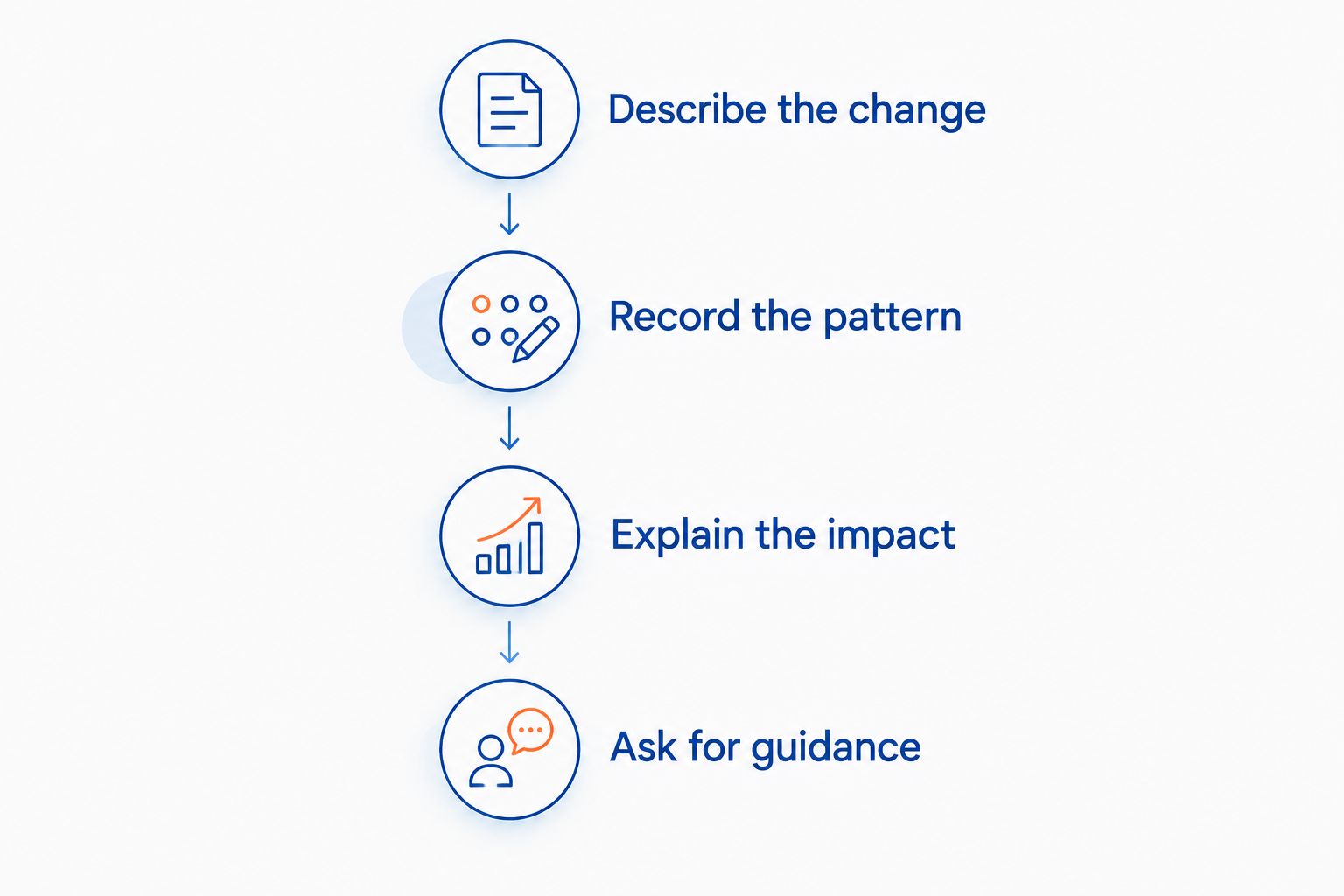
Use this sequence to prepare a clear account:
- Describe the change. Identify the location, the sensation and whether it differs from your original symptoms.
- Record the pattern. Note when you first noticed it and whether it is becoming less noticeable, staying similar or increasing.
- Explain the impact. Describe any change in ordinary activities, including whether you have stopped doing something because of the symptoms.
- Ask for guidance. Request advice about reassessment, medical review and whether the existing plan needs to change.
You do not need a detailed diary. A brief note written in your own words is enough to organise the conversation; avoid repeatedly testing a painful movement just to produce a more detailed record.
For a 2026 symptom record, include the appointment date and the dates of any noticeable changes. That preserves the sequence without implying that everyone should recover on the same schedule.
Does soreness mean an adjustment is working?
Soreness does not demonstrate that an adjustment is working. It also does not establish that inflammation is leaving your body or that another adjustment is needed.
Keep an observation separate from an explanation. Feeling tender after an appointment is an observation; attributing that tenderness to tissue healing, reduced nerve pressure or a necessary recovery stage requires a claim-specific basis.
The same distinction applies when you feel more comfortable. That experience matters, but it does not identify which biological process changed or establish that inflammation was present beforehand.
Ask your practitioner how the proposed plan will be reviewed. A useful discussion identifies the activities that matter to you, the changes being monitored and the circumstances in which the plan would be reconsidered.
Should you wait before contacting the practitioner?
You do not have to wait for an arbitrary deadline before asking about symptoms. Contact the practitioner if you are unsure about a change, particularly when it differs from what was discussed during consent or aftercare.
A message can stay factual: describe where the symptoms are, when they started, how they have changed and what you are finding difficult. Ask whether you need reassessment or advice from another health professional.
Do not interpret a booked follow-up appointment as an instruction to wait regardless of symptoms. A future appointment and advice about a new concern are separate matters.
Mychiro's contact page provides a route for clinic enquiries. For urgent symptoms, use emergency services rather than waiting for a clinic response.
When should you seek urgent medical assessment?
Do not use an expected soreness period to explain away severe, sudden or unfamiliar symptoms. Medical assessment takes priority over trying to determine whether an adjustment caused them.
Australian Healthdirect guidance identifies symptoms such as sudden weakness, difficulty speaking and loss of bladder or bowel control with back pain as reasons for urgent medical attention. Call 000 for a medical emergency, including stroke-like symptoms, chest pain or difficulty breathing.
Seek urgent medical assessment for a sudden severe headache or unusual severe neck pain, particularly with changes in vision, balance, speech, sensation or strength. These symptoms need medical evaluation, not an online explanation or another adjustment.
This is not an exhaustive checklist. If you are uncertain about the urgency of a symptom, contact an appropriate medical service for triage rather than relying on a recovery estimate.
What can you ask about activity and medicines?
Ask for advice that fits your assessment rather than following a generic aftercare routine. Explain what you normally do for work, exercise and home responsibilities, and ask whether any temporary changes are appropriate.
Do not use strenuous exercise, forceful stretching or self-manipulation as a test of whether an adjustment worked. If an activity brings on new or worsening symptoms, stop and seek individual advice rather than repeatedly testing it.
For medicines, ask a pharmacist or doctor about suitability, interactions and existing prescriptions. Do not start, stop or increase a medicine simply because an online article describes discomfort as inflammation.
The same caution applies to supplements and products promoted for recovery. A product label or general claim cannot establish what is appropriate for your symptoms or medical history.
What should a useful reassessment discussion cover?
In 2026, a useful reassessment discussion should still focus on your presentation rather than a preset number of appointments. Ask what has changed, what remains uncertain and how that affects the next decision.
You can bring these questions:
- What is the current explanation for my symptoms?
- Has inflammation been identified, or is that an assumption?
- Does this new discomfort change the assessment?
- What are the proposed options, including not proceeding with another adjustment?
- What are the relevant risks and uncertainties?
- When would medical assessment or referral be appropriate?
Another adjustment should not be presented as automatically necessary because you feel sore. Ask for the rationale before agreeing to further care, and explain if your symptoms or preferences have changed.
For local patients considering chiropractic care, Mychiro is a Bondi Junction clinic—not a substitute for urgent medical assessment. Whether chiropractic care is appropriate for an individual can be discussed following assessment.
How should you read online recovery claims?
Be cautious with articles that promise a precise inflammation timeline without identifying the condition, the population studied or how inflammation was measured. A statement about pain scores does not automatically support a statement about inflammation.
Likewise, evidence concerning one condition or intervention does not establish the same outcome for every adjustment. Look for a clear connection between the claim and the evidence rather than treating the presence of a reference as sufficient.
For 2026 reading, distinguish educational information from a personal prognosis. General resources can help you prepare questions, but they cannot examine you, review your history or decide whether a new symptom needs referral.
The practical test is simple: does the information explain its limits and tell you when to seek assessment? A confident deadline without that context is not enough to guide your care.
FAQ
How long until inflammation eases after a chiropractic adjustment?
There is no single reliable timeframe. An individual estimate requires assessment of the cause of your symptoms and whether inflammation has actually been identified.
Does feeling sore mean the adjustment worked?
Soreness does not demonstrate that an adjustment worked. Tell the practitioner what changed and ask whether the symptoms require reassessment.
Does less pain mean inflammation has gone?
Less pain does not confirm that inflammation has resolved. Describe improvements in comfort and activity without assuming what biological process changed.
Should I book another adjustment if I still feel sore?
Persistent soreness is not, by itself, a reason for another adjustment. Ask for reassessment and an explanation of the proposed options before agreeing to further care.
Should I take anti-inflammatory medicine afterwards?
Ask a pharmacist or doctor whether a medicine is appropriate for you. Suitability depends on your health history, other medicines and the reason for your symptoms.
What symptoms need urgent help after an adjustment?
Sudden weakness, speech or vision changes, severe unusual headache, or loss of bladder or bowel control require urgent medical assessment. Call 000 for a medical emergency rather than waiting for a clinic reply.
What should I tell the practitioner about new discomfort?
Describe the location, onset, pattern and effect on ordinary activities. Explain whether it differs from your original symptoms and ask what should happen next.
One last thing
Ask what the word inflammation means in your own assessment. Is it a confirmed finding, a possibility being considered or simply shorthand for discomfort?
That distinction changes the conversation. Instead of waiting for a universal deadline, you can ask what is being monitored, what remains uncertain and which changes need further assessment.
Related guides
- Is it normal to feel sore after an adjustment?
- How to care for your body after an adjustment
- What to expect from spinal manipulation