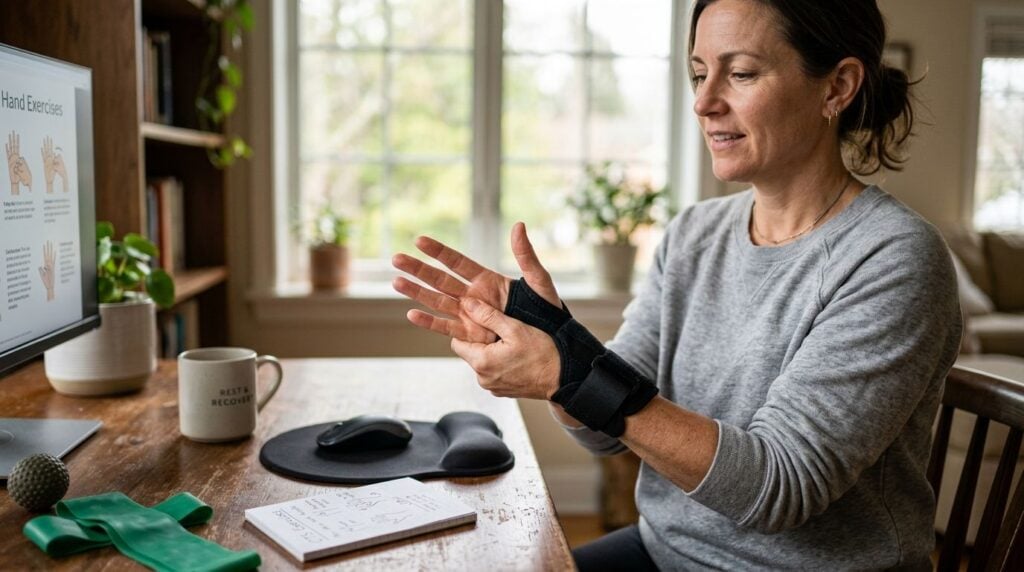
Carpal tunnel syndrome can often be managed without surgery, particularly when symptoms are mild to moderate and caught early — wrist splinting, activity changes, nerve gliding exercises and manual therapy are the main non-surgical options a GP, hand therapist or chiropractor may discuss with you. Surgery is usually reserved for cases with persistent numbness, weakness or thenar muscle wasting that don't improve after a proper trial of conservative care, so the first step is always a proper assessment rather than guessing at home.
- Wrist splinting, activity changes and nerve gliding exercises are the main non-surgical options for carpal tunnel syndrome in 2026.
- Carpal tunnel syndrome affects an estimated 3-6% of adults, making it one of the more common nerve entrapment conditions seen in general practice and allied health clinics.
- Chiropractic assessment at clinics such as MyChiro in Bondi Junction can be discussed as part of a broader care plan addressing wrist and neck mechanics.
- Ongoing numbness, weakness or muscle wasting at the base of the thumb needs medical review — these are not symptoms to manage alone.
Why this matters
Carpal tunnel syndrome happens when the median nerve gets compressed as it passes through the wrist, and left unmanaged it can progress from intermittent tingling to constant numbness and grip weakness. Many people search for non-surgical options in 2026 because they'd rather try conservative measures first, or because surgery isn't something they want to consider without exhausting other approaches.
The honest picture: some cases genuinely respond to conservative measures, others don't, and the difference usually comes down to how long symptoms have been present and how compressed the nerve already is. A proper assessment — not a symptom checklist — is what determines which category you're in. Chiropractic care for carpal tunnel syndrome can be one part of that conversation, alongside a GP or hand therapist.
Can carpal tunnel syndrome be managed without surgery?
For mild to moderate cases, yes — several non-surgical approaches are commonly discussed before surgery is considered. Here's how the main options compare:
| Option | What it involves | Best for | Verdict |
|---|---|---|---|
| Night wrist splinting | Holds the wrist near a 0-degree neutral angle to reduce pressure on the nerve overnight | Mild to moderate symptoms, especially nocturnal tingling | Try first |
| Ergonomic and activity changes | Adjusting keyboard height, grip habits, tool use and repetitive motions | Anyone with an identifiable aggravating activity | Try alongside splinting |
| Nerve and tendon gliding exercises | Guided wrist and finger movements to encourage nerve mobility | Mild cases under professional guidance | Discuss with a therapist |
| Manual therapy / chiropractic assessment | Assessment of wrist, forearm and cervical spine mechanics that may contribute to nerve irritation | People wanting a broader mechanical assessment | Can be discussed as part of a care plan |
| Corticosteroid injection | A GP or specialist injects medication near the carpal tunnel to reduce inflammation | Moderate symptoms not settling with splinting alone | Discuss with your GP |
| Surgical release | A surgeon divides the ligament to relieve pressure on the nerve | Persistent symptoms, muscle wasting, or failed conservative care | Reserved for confirmed, unresponsive cases |
The quotable line here: wrist splinting and activity modification are the two things worth trying before anything else, and if symptoms don't shift after a genuine trial, it's time for a hand therapist or GP to reassess rather than persisting alone.
Wrist splinting: the first-line conservative option
A neutral-position wrist splint, worn overnight, is usually the first thing raised in a carpal tunnel conversation. Keeping the wrist near 0 degrees reduces pressure inside the tunnel compared with the flexed position many people sleep in without realising it.
Splints don't correct the underlying cause of nerve compression on their own — they reduce one contributing factor. For people whose main trigger is a work task (typing, gripping tools, repetitive wrist flexion), a splint without an activity change tends to produce limited improvement.
Ergonomic and activity changes
Repetitive wrist flexion and extension, sustained gripping, and vibration exposure are common contributors to carpal tunnel symptoms. Adjusting keyboard and mouse height, using a looser grip on tools, and taking regular micro-breaks from repetitive tasks are the practical changes most often discussed.
This matters more for some occupations than others. Healthcare workers managing repetitive strain from constant lifting, gripping and manual tasks often need a workstation or task review alongside any hand-specific care, because addressing only the wrist while the underlying repetitive load continues rarely holds.
Nerve and tendon gliding exercises
Nerve and tendon gliding exercises involve moving the wrist and fingers through specific positions designed to encourage the median nerve to move more freely within the tunnel. These are usually introduced by a hand therapist or physiotherapist rather than attempted from a generic online routine, because doing them incorrectly or too aggressively can aggravate an already irritated nerve.
A short, supervised trial is the usual approach — not an open-ended home program without reassessment.
Chiropractic care and manual therapy for carpal tunnel symptoms
Chiropractic assessment looks beyond the wrist to forearm, elbow and cervical spine mechanics that can contribute to nerve irritation along the arm. This can be discussed as one part of a broader plan, alongside splinting and activity changes, rather than as a stand-alone answer to nerve compression at the wrist itself.
A chiropractor can assess posture, joint mobility and muscle tension patterns that may be adding load to the area, and can discuss whether manual therapy fits alongside other conservative measures following an individual assessment. This is not a substitute for medical review if numbness, weakness or muscle wasting are present — those signs need a GP or hand specialist's input regardless of what else is tried.
Discuss your wrist symptoms with a chiropractor
Book an assessment to see whether chiropractic care fits alongside your existing care plan.
Corticosteroid injections and medication
A corticosteroid injection near the carpal tunnel is a option a GP or specialist may raise when splinting and activity changes haven't settled moderate symptoms. It's a medical decision that sits outside allied health scope, and it's raised here only so the full non-surgical picture is clear — it needs to be discussed directly with a GP or hand specialist, not self-arranged.
Over-the-counter anti-inflammatories are sometimes used short-term for symptom flare-ups, again best discussed with a pharmacist or GP given individual health history.
Why carpal tunnel symptoms vary so much from person to person
Not everyone with wrist tingling has the same underlying picture, and the drivers behind carpal tunnel syndrome differ:
- Occupational repetition — typing, hairdressing, hand tool use and assembly line work add sustained load to the wrist
- Wrist positioning during sleep — a flexed sleeping position increases pressure inside the tunnel overnight
- Fluid retention — pregnancy and some hormonal changes can increase pressure within the carpal tunnel
- Metabolic factors — conditions such as diabetes and thyroid disorders are recognised risk factors for nerve entrapment
- Anatomical variation — some people simply have a narrower carpal tunnel space than others
- Prior wrist injury — old fractures or ligament injuries can alter the space available for the nerve
This is why two people with near-identical symptoms can respond very differently to the same splint or exercise program — the underlying driver isn't the same.
FAQ
Can carpal tunnel syndrome go away without surgery?
Mild to moderate carpal tunnel syndrome can often improve with splinting, activity changes and guided exercises, without surgery being needed. Ongoing numbness, weakness or muscle wasting at the base of the thumb should be reviewed by a GP or hand specialist regardless of what conservative measures have been tried.
How long does it take for carpal tunnel symptoms to settle with a splint?
Wrist splints are usually trialled for several weeks before reassessing symptoms, since nerve irritation doesn’t resolve overnight. If tingling or numbness hasn’t shifted after a genuine trial, that’s the signal to book a review rather than continue indefinitely.
Is chiropractic care useful for carpal tunnel syndrome?
Chiropractic assessment can be discussed as one part of a broader care plan, looking at wrist, forearm and cervical spine mechanics that may contribute to nerve irritation. It’s not a stand-alone answer to confirmed nerve compression, and persistent symptoms still need medical review.
What are the warning signs that carpal tunnel syndrome needs urgent medical assessment?
Thenar muscle wasting (a flattening at the base of the thumb), constant numbness, grip weakness and night pain that doesn’t ease with repositioning are signs that need prompt GP or hand specialist review in 2026, not a wait-and-see approach.
Does carpal tunnel syndrome always need surgery?
No — many people manage carpal tunnel syndrome with non-surgical approaches such as splinting and activity modification, and surgery is generally reserved for cases that don’t respond to a proper conservative trial or that show nerve damage on assessment.
Can wrist exercises make carpal tunnel syndrome worse?
Nerve gliding exercises done too aggressively or without guidance can aggravate an already irritated median nerve, which is why a hand therapist or physiotherapist usually supervises the first few sessions. A short, guided trial is safer than an open-ended routine from a generic source.
How common is carpal tunnel syndrome in 2026?
Carpal tunnel syndrome affects an estimated 3-6% of adults, making it one of the more common nerve entrapment conditions seen across GP clinics, hand therapy practices and allied health settings in 2026.
What’s the difference between carpal tunnel syndrome and general wrist strain?
Carpal tunnel syndrome specifically involves median nerve compression, producing numbness or tingling in the thumb, index and middle fingers, whereas general wrist strain is more likely to cause localised soreness without that nerve distribution pattern. A Phalen’s test, held for up to 60 seconds, is one of the simple checks used to help tell the two apart during assessment.
One last thing
The detail most people miss in 2026: carpal tunnel symptoms that are worse first thing in the morning or wake you overnight are usually a splinting-and-positioning problem, while symptoms that build through the day during a specific task are usually an activity-and-ergonomics problem — and they call for different first steps. Working out which pattern you have is often more useful than any single exercise or gadget.
Related guides