

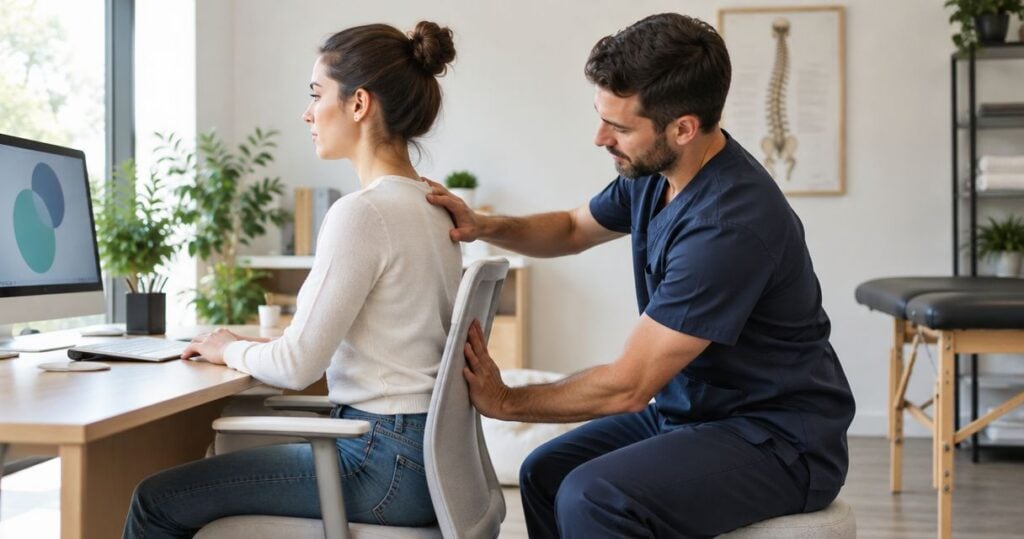
Seeing a chiropractor for desk posture may be appropriate following assessment if you have ongoing discomfort or difficulty with everyday activities, but posture appearance alone is not a reason to commit to adjustments. The decision should depend on your symptoms, health history, preferences and the proposed care—not a promise to straighten your spine. This 2026 guide explains what to ask, what to check at your desk and when to seek medical advice instead.
- Is it worth seeing a chiropractor for desk posture? Consider assessment for ongoing concerns, not automatic adjustments.
- MyChiro provides chiropractic care in Bondi Junction, Sydney; suitability depends on individual assessment.
- A desk posture photograph does not establish why you have discomfort or what care you need.
- Ask about alternatives, risks, consent and review criteria before agreeing to chiropractic care.
Is it worth seeing a chiropractor for desk posture?
An assessment may be appropriate; a posture-based commitment to ongoing adjustments is a separate decision. Start by identifying what concerns you: discomfort during typing, difficulty completing work, or simply how you look in a photograph.
MyChiro is a chiropractic clinic and wellness centre in Bondi Junction, Sydney. Its chiropractic services are an option to discuss following assessment, not evidence that every desk worker needs an adjustment.
| Starting point | What to consider | Useful feature | Limitation |
|---|---|---|---|
| You feel comfortable but dislike a posture photograph | Review your workspace and clarify your concern | Keeps the decision focused on an actual need | Appearance alone does not establish a diagnosis |
| Discomfort keeps interrupting your work | Discuss assessment with a qualified health professional | Provides an opportunity to review symptoms and history | Assessment does not guarantee a particular outcome |
| Your desk equipment is difficult to use comfortably | Ask your employer about a workstation review | Addresses the work environment directly | A workstation review is not a medical assessment |
| Symptoms are new, severe or accompanied by warning signs | Seek appropriate medical advice | Prioritises assessment of potentially important symptoms | Routine posture advice is not a substitute |
These are decision points, not diagnoses. You do not need to decide in advance whether an adjustment, exercise programme or another approach is appropriate.
Why this matters
A desk posture question can become a purchase decision before the underlying concern is clear. You might be offered appointments, equipment or a programme without first defining what you want assessed.
For a 2026 decision, separate three questions: what is happening, what options are reasonable, and how will any proposed care be reviewed? A clear explanation should address each question without relying on a photograph or a general warning about sitting.
Ask for a reason for care that relates to your own circumstances. A statement that everyone who works at a desk needs regular adjustments is not an individual assessment.
When an assessment may be appropriate
If discomfort persists, returns repeatedly or interferes with work and daily activities, you can discuss it with a qualified health professional. Describe the problem rather than diagnosing yourself as having a spine that needs correcting.
Explain where you feel discomfort, when it started, which tasks bring it on and whether anything has changed. Include relevant medical history, medicines, previous injuries and any symptoms away from the desk.
A chiropractic consultation is not an obligation to receive manual care. Ask what the assessment involves, what its findings mean and whether referral or another form of assessment is appropriate.
Bring a description of your workday rather than only a posed side-on photograph. Your clinician should understand the tasks you actually perform, including laptop use, meetings, commuting and work away from your usual desk.
When a posture concern does not justify automatic care
Looking rounded forward in a photograph does not, by itself, establish a clinical problem. Nor does a comparison with a straight posture illustration explain the cause of discomfort.
If you have no symptoms or activity limitations, ask what specific concern an appointment or proposed programme would address. You can seek information without agreeing to a course of care.
In 2026, be cautious about explanations that present desk work as proof of spinal damage or make future problems sound inevitable. Ask the practitioner to distinguish an observation about your position from a diagnosis and a supported reason for intervention.
The same distinction applies to products. A chair, posture wearable or laptop stand should have a clear practical purpose; its marketing does not establish that your body needs correcting.
Why the decision varies
Whether a chiropractic assessment is appropriate depends on your situation, not your job title alone. Use these factors to organise the discussion:
- Your concern: Distinguish discomfort or activity limitations from dissatisfaction with appearance.
- Your symptom history: Explain onset, changes, previous episodes and anything occurring outside desk work.
- Your health history: Share information relevant to assessment, proposed care and referral decisions.
- Your work tasks: Describe equipment, work locations and the tasks you find difficult.
- Your preferences: Say whether you want information, a workstation discussion or an explanation of care options.
- The proposed plan: Ask about its rationale, alternatives, risks and criteria for review.
None of these factors supplies a universal appointment schedule. The recommendation should follow the assessment rather than precede it.
What should you check at your desk first?
A workstation check gives you useful information to bring to an assessment. It is not a diagnostic test or a promise that equipment changes will resolve symptoms.
Safe Work Australia’s computer-based work guidance addresses workstation setup and work organisation. Use that type of workplace guidance for practical setup questions, rather than treating a product advertisement as clinical advice.
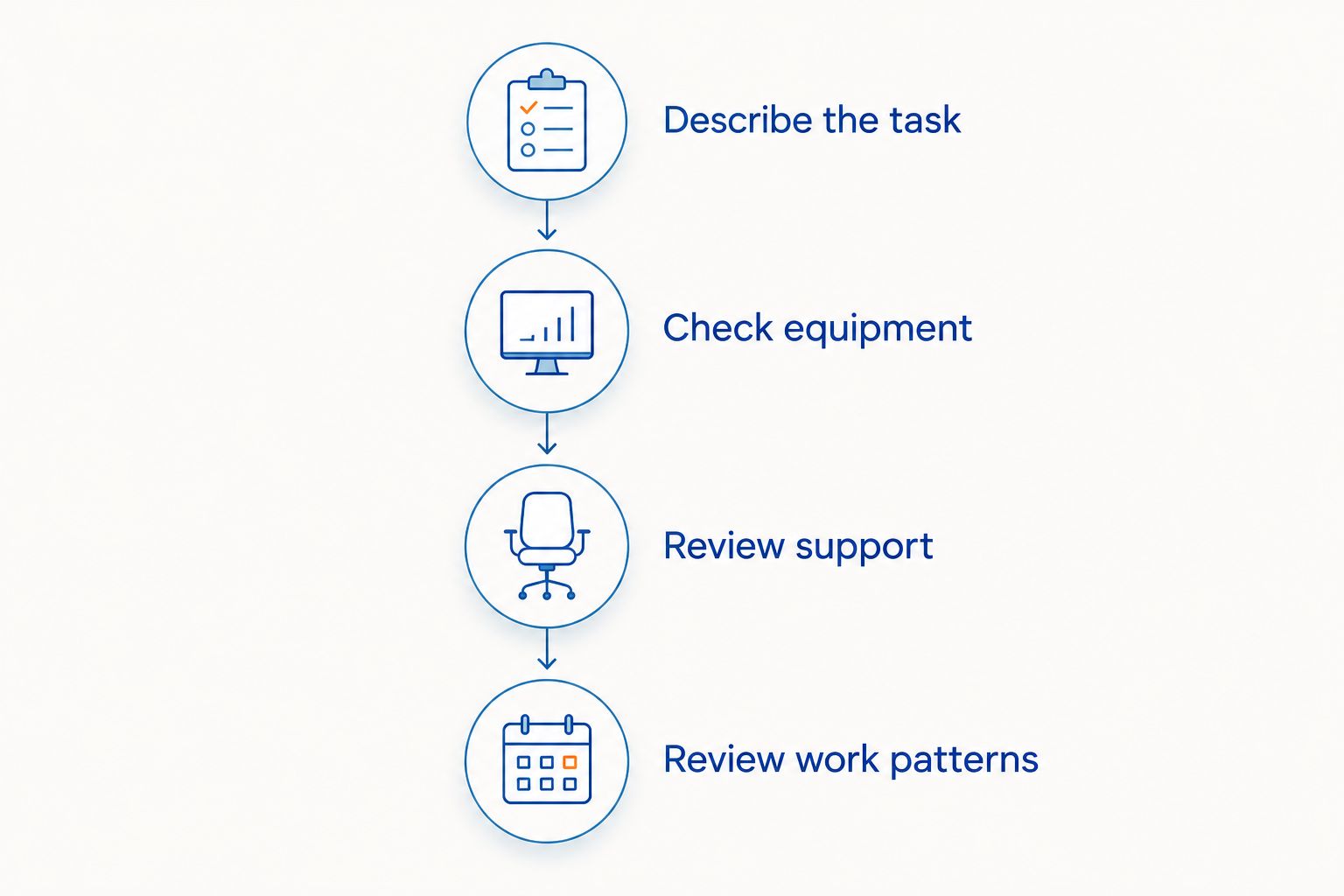
- Describe the task. Note whether you mainly type, read, use a mouse, take calls or switch between screens. Identify what feels awkward during the actual task.
- Check equipment. Look at whether your screen, keyboard and mouse are positioned where you can use them without repeatedly reaching or twisting. Ask for workplace assistance if the furniture does not adjust to your needs.
- Review support. Check whether the chair and available foot support let you work comfortably. Do not force yourself into a rigid position to match a diagram.
- Review work patterns. Consider whether your schedule allows changes of task and position. Raise practical barriers with your employer rather than assuming a new chair will address them.
If you use a laptop in several locations, describe each setup separately. A meeting-room table, a home desk and a sofa are different work environments; a photograph of only one can leave out important context.
Avoid assigning yourself an exact posture score or a universal sitting deadline. Record your own experience instead, without turning it into a diagnosis.
What should you ask before agreeing to adjustments?
Consent should follow an explanation, not an assumption that adjustments are necessary. Ask the practitioner to explain the proposed approach in language you understand.
Useful questions include:
- What did the assessment identify, and what remains uncertain?
- Why are you recommending this approach for my circumstances?
- What evidence supports the specific benefit being discussed?
- What are the material risks and alternatives?
- What happens if I decline manual care?
- When will we review whether to continue, change or stop the plan?
If imaging is proposed, ask what clinical question it would answer and how the result would change the recommendation. Do not assume that a desk posture concern automatically requires a scan.
For a MyChiro chiropractic consultation, the same questions apply. The clinic’s location and service description do not replace an individual explanation of suitability, consent or alternatives.
You can also ask for information in writing and take time to consider it. There is no need to agree to a long programme simply because it is presented during an initial discussion.
How should you judge a proposed care plan?
Judge the explanation before judging the number of appointments. A plan should identify the concern being addressed, explain the proposed approach and state when the recommendation will be reconsidered.
For your 2026 appointment, bring a short list of everyday activities that matter to you. Examples include completing a work meeting, using your computer or carrying out usual household tasks; these are discussion points, not promised results.
Ask how the practitioner will distinguish meaningful change from a different-looking photograph. Also ask what would prompt referral, a different approach or no further appointments.
A plan without a review point leaves you without a clear decision about continuation. Likewise, a promise of permanent posture correction is not a substitute for explaining evidence, uncertainty and individual circumstances.
Do I need a chiropractor if I only look slouched?
Looking slouched alone does not establish that you need chiropractic care. If your concern is appearance rather than symptoms or function, clarify what you want assessed before agreeing to an intervention.
You can discuss workspace questions with your employer and health concerns with a qualified health professional. An appointment should address an identified concern, not create one from a photograph.
Should I see a GP instead for desk-related symptoms?
A GP can assess symptoms that are unexplained, worsening or accompanied by other health changes. Do not assume that symptoms occurring at a desk necessarily come from posture.
Seek urgent medical assessment for new weakness, new loss of bladder or bowel control, numbness around the groin, or severe pain following a significant injury. Healthdirect’s back-pain guidance identifies warning symptoms requiring prompt assessment; call 000 for a medical emergency in Australia.
Can I ask for advice without agreeing to an adjustment?
You can ask for an explanation and decline a proposed adjustment. Discuss alternatives, including referral or no manual intervention, and ask what each option involves.
Before attending, clarify what the appointment includes. A consultation and consent to a particular procedure are separate decisions.
FAQ
Is it worth seeing a chiropractor for desk posture in 2026?
A chiropractic assessment may be appropriate following discussion of ongoing symptoms or activity limitations, but posture appearance alone does not establish a need for adjustments. Ask about the rationale, alternatives, risks and review criteria before agreeing to care.
Does a side-on posture photo show why my neck hurts?
A side-on posture photograph does not establish the cause of neck discomfort. Describe your symptoms, health history and work tasks to a qualified health professional rather than relying on the image alone.
Do I need regular adjustments because I work at a desk?
Desk work alone does not establish a need for regular adjustments. Any proposed schedule should have an individual rationale and a clear point for review.
Should I buy a new chair before seeking advice?
You do not need to assume a new chair is the answer. Review your existing setup and ask your employer about workstation assistance; persistent or concerning symptoms warrant a separate health discussion.
What should I bring to a desk posture appointment?
Bring a description of your symptoms, relevant health history, work tasks and questions. A workstation photograph can provide context, but it does not replace clinical assessment.
Can I decline a chiropractic adjustment?
You can decline a proposed adjustment and ask about alternatives. Request an explanation of the assessment findings, proposed care, material risks and options before deciding.
When should I seek medical advice rather than posture advice?
Seek medical advice for unexplained, worsening or concerning symptoms rather than assuming posture is responsible. New weakness, bladder or bowel changes, or numbness around the groin require urgent medical assessment.
One last thing
Before any appointment, write down what would make the conversation useful—even if you decide against care. A clear explanation, an appropriate referral or a decision not to proceed can all be legitimate endpoints of an assessment.
For a 2026 discussion with MyChiro or another qualified health professional, bring this question: What finding would change your recommendation? It keeps the conversation focused on assessment and informed choice rather than an automatic posture programme.
Related guides
- How to prepare for your first chiropractor appointment
- What qualifications should a Sydney chiropractor have?
- How often should you see a chiropractor?
- Lower back pain when sitting: causes and practical steps