

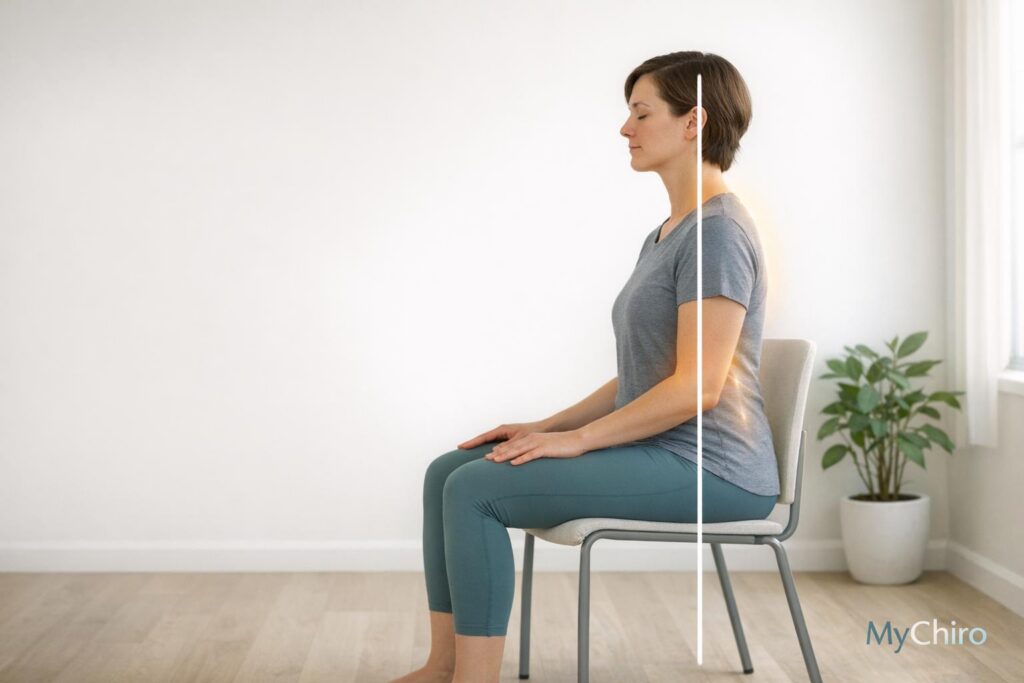
Progressive Muscle Relaxation (PMR) is a simple technique that combines tensing and relaxing muscle groups to reduce tension and improve posture. Originally developed in the 1920s, PMR helps you identify where your body holds stress, making it easier to release tightness in areas like the neck, shoulders, and back. This can prevent discomfort, support spinal alignment, and ease conditions like headaches or TMJ pain.
Key Benefits of PMR:
- Teaches you to recognise and release muscle tension.
- Promotes better posture by addressing tightness in key areas.
- Reduces stress by shifting the body into a relaxed state.
- Complements chiropractic care for long-term musculoskeletal health.
PMR is easy to practise at home in just 10–15 minutes a day. It’s particularly helpful for those with desk jobs or anyone looking for a practical way to manage tension and improve physical well-being.
How PMR May Improve Posture
Building Awareness of Muscle Tension
One of the first steps to improving posture is understanding where your body holds tension. Progressive Muscle Relaxation (PMR) helps by teaching you to distinguish between tense and relaxed muscles – something many of us overlook in our day-to-day lives. The technique involves tensing each muscle group for 4–10 seconds and then fully releasing. This contrast makes it easier to pinpoint areas of tightness.
"By exaggerating the strain in each muscle, we’re more able to observe it, which gives us the opportunity to relax it." – Claudia Zurlini, Senior Coordinator, Public & Patient Education at HSS
This method is particularly effective for postural muscles like those in the shoulders, neck, and back. For example, shrugging your shoulders up to your ears during PMR can highlight tension in the upper back, which often contributes to a slouched posture. Similarly, pressing the back of your head against a chair helps you focus on the muscles involved in "forward head" posture – a common issue for people who spend long hours at a desk. With regular practice, PMR helps you build a mental map of where tension builds up, making it easier to release it before it becomes a long-term issue. This awareness also prepares you for exercises that promote better spinal alignment.
Supporting Healthy Spinal Alignment
Once you’ve developed a better sense of where tension accumulates, PMR can help you manage it before it starts to affect your posture. By practising regularly, you can address muscle tightness early, preventing temporary stress from turning into a lasting habit. This is especially important for areas like the neck, shoulders, and back, which are crucial for maintaining spinal alignment.
Certain PMR movements directly target these postural muscles. For instance, arching your back away from the floor or chair activates and then relaxes the spinal extensors, while tightening your abdominal muscles enhances core awareness. Both of these are essential for maintaining proper alignment whether you’re sitting or standing. Over time, consistent PMR practice can make it easier to release stress-induced tension in these key areas.
"The more you practice PMR, the more you learn to recognize the difference between your body’s tense and relaxed states, and the better you become at taming the tension before it takes hold." – Claudia Zurlini, Senior Coordinator, Public & Patient Education at HSS
While PMR doesn’t directly correct spinal alignment, reducing chronic muscle tension can complement other strategies – like ergonomic adjustments, regular movement, or chiropractic care – to promote better posture and overall musculoskeletal health.
sbb-itb-585d67d
Research on PMR for Tension Reduction
Research Findings on PMR and Relaxation
Studies indicate that Progressive Muscle Relaxation (PMR) can help alleviate muscle tension and manage stress levels. For instance, a 2024 systematic review of 46 studies involving over 3,402 adults found a strong connection between PMR and reductions in stress markers. These benefits appear to last, too. A 1983 study by Murphy reported notable anxiety reductions three months after practising PMR, while a 2022 study by Zhang et al. observed consistent decreases in test anxiety over two months.
PMR also brings measurable physiological changes. It can lower cortisol levels (the primary stress hormone) and improve heart rate and blood pressure. This happens as the body transitions from the "fight-or-flight" mode of the sympathetic nervous system to the "rest-and-digest" state of the parasympathetic system.
"With progressive muscle relaxation, you’re trying to calm down that sympathetic output and let your parasympathetic system take over. When that switch happens, you can see a change in your heart rate and blood pressure."
– Matthew Kampert, DO, Sports Medicine Physician, Cleveland Clinic
PMR isn’t just about stress – it’s also recognised for its role in managing physical discomfort. The American Migraine Foundation highlights PMR as a helpful tool for controlling and preventing tension-related headaches. When combined with biofeedback, PMR and similar techniques have been shown to cut headache frequency and severity by up to 60%. Additionally, PMR has been linked to relief from various types of pain, such as migraines and TMJ (temporomandibular joint) discomfort. By reducing stress markers, PMR may even promote better muscle balance and posture indirectly.
Comparing PMR to Other Relaxation Methods
When compared to other relaxation techniques, PMR stands out for its physical focus, which can be particularly appealing to people who find traditional meditation difficult. The act of tensing and releasing muscles provides a tangible, structured approach that can feel less abstract than trying to quiet the mind.
| Technique | Primary Focus | Key Advantage |
|---|---|---|
| Progressive Muscle Relaxation (PMR) | Physical tension and release of specific muscle groups | Ideal for those struggling with meditation; enhances awareness of physical tension |
| Mindfulness/Meditation | Quieting the mind and observing thoughts | Great for mental clarity, but often challenging for beginners |
| Deep Breathing | Controlled inhalation and exhalation | Helps release tension and pairs well with PMR exercises |
Some research even suggests that PMR may rival acupuncture in reducing anxiety. In certain cases, it has shown effects comparable to medication for lowering systolic blood pressure. While PMR works well on its own, its impact can be amplified when combined with practices like cognitive behavioural therapy or biofeedback. This adaptability makes PMR a valuable tool for addressing musculoskeletal tension and stress-related challenges.
Guided Progressive Muscle Relaxation
How to Practise PMR
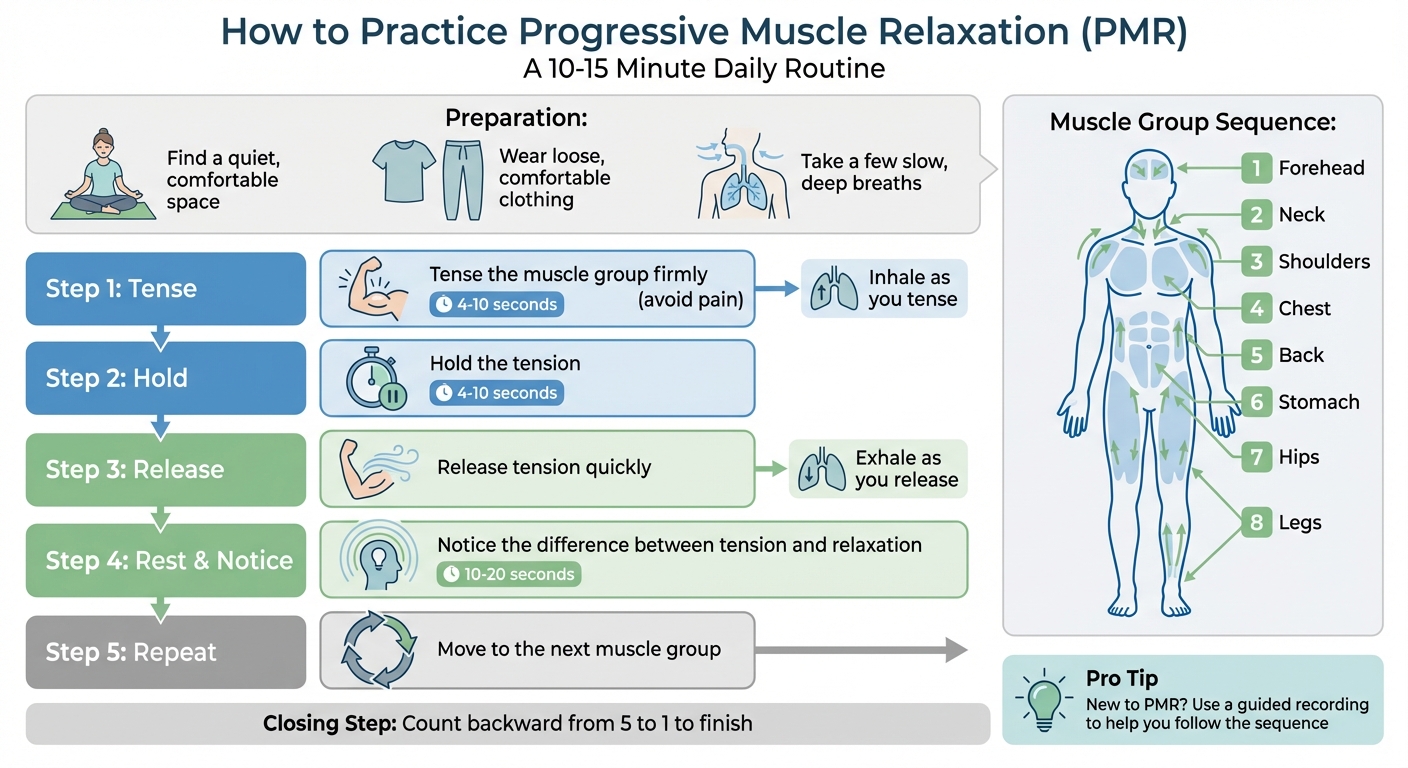
How to Practice Progressive Muscle Relaxation: Step-by-Step Guide
Step-by-Step PMR Practice
Progressive Muscle Relaxation (PMR) involves tensing specific muscle groups as you inhale, holding the tension for 4–10 seconds, and then releasing it quickly as you exhale. After each release, take 10 to 20 seconds to rest and notice the difference between the feeling of tension and relaxation before moving on to the next muscle group.
A typical session takes about 10 to 15 minutes. To start, find a quiet space where you can lie down or sit comfortably. Wear loose, comfortable clothing. Begin by taking a few slow, deep breaths, focusing on the rise and fall of your belly.
The process usually follows a sequence from head to toe (or vice versa). For example, you might start by wrinkling your forehead into a frown, then move through your neck, shoulders, chest, back, stomach, hips, and legs. Each muscle group follows the same pattern: tense it firmly (but avoid pain or cramping), hold briefly, and then release completely.
"PMR is a relaxation method that allows you to focus on something, which is great for people who get frustrated at the challenge of quieting their mind."
– Claudia Zurlini, Senior Coordinator, Public & Patient Education at HSS
If you’re new to PMR, consider using a guided recording to help you stick to the sequence without worrying about what comes next. Once you’ve worked through all the muscle groups, conclude by slowly counting backward from 5 to 1.
Tips for Building a Consistent Practice
Once you’ve got the basics down, making PMR a regular part of your routine can help you get the most out of it. Here are some tips to keep up the habit:
- Stick to a schedule: Consistency is key. Choose a time that fits naturally into your day – whether it’s in the morning to start off calm, during a lunch break to reset, or before bed to wind down for better sleep. Setting aside the same 10 to 15 minutes daily makes it easier to build the habit.
- Create a relaxing space: Find a private, comfortable spot, like a carpeted floor or your bed. Let others in your household know you need uninterrupted time. A quiet, distraction-free environment and comfortable clothing can make your session more effective.
Over time, as you practise regularly, you’ll become more aware of where you tend to hold tension. This awareness can help you apply PMR techniques in smaller doses throughout the day. For instance, you might tense and release your shoulders during a quick work break without needing the full 15-minute session. This adaptability makes PMR a handy tool for managing tension on the go, not just during scheduled sessions.
A consistent PMR routine can amplify its benefits and pairs well with chiropractic care, as you’ll see in the next section.
Combining PMR with Chiropractic Care
How PMR Works Alongside Chiropractic Care
Progressive Muscle Relaxation (PMR) and chiropractic care tackle different aspects of musculoskeletal health, but they work hand-in-hand to support your overall well-being. Chiropractic care focuses on improving spinal joint movement and alignment, while PMR hones in on relieving soft-tissue tension that affects how your body holds itself during daily activities.
Practising PMR regularly can help you recognise tension patterns in your body, which may amplify the effects of chiropractic adjustments. Chronic muscle tightness often impacts posture and spinal alignment, so easing this tension with PMR might help maintain the benefits of chiropractic care between visits. Over time, this combination may even assist in improving posture control.
PMR is particularly effective for areas like the neck, back, and jaw (TMJ) – key focus points for chiropractic care. By deliberately tensing and releasing these muscles, you create a clear contrast that makes it easier to notice and address subtle, everyday tension.
Benefits of a Combined Approach
When paired with chiropractic care, the heightened body awareness gained from PMR can offer additional relief for musculoskeletal tension. Spending just 10 to 15 minutes on PMR may help prevent tension from becoming chronic, potentially extending the positive effects of your chiropractic sessions.
This approach is especially valuable for people who sit at desks for long hours or experience persistent tension in specific areas. PMR doesn’t require any special tools and can be done virtually anywhere, making it a practical addition to professional care. Together, chiropractic adjustments and PMR provide a well-rounded way to support musculoskeletal health – combining hands-on spinal care with self-guided muscle relaxation to enhance body awareness and overall function.
Key Takeaways
Progressive Muscle Relaxation (PMR) is a straightforward technique designed to ease muscle tension and encourage better posture. By methodically tensing and releasing specific muscle groups – like those in the neck, back, shoulders, and jaw – you can train yourself to spot and release tension before it becomes a persistent issue. This increased awareness of your body can be especially helpful for those dealing with desk-related strain or ongoing tightness.
The best part? PMR requires no special tools and only takes 10 to 15 minutes a day. It can help alleviate musculoskeletal discomfort and promote improved posture by shifting your body from a state of stress to relaxation. When combined with chiropractic care, PMR complements spinal adjustments by addressing soft-tissue tension, which plays a critical role in alignment and posture.
If you’re looking to manage desk-related strain or want a natural way to support your musculoskeletal health, regular PMR practice gives you the tools to manage tension effectively. It also helps you recognise subtle patterns in your body, offering quick relief and promoting long-term postural improvements.
This information is general and not intended to replace professional medical advice. Chiropractic care focuses on musculoskeletal health, and results may vary. Always consult a qualified healthcare professional before making health-related decisions.
FAQs
Is PMR safe if I have neck or back pain?
Progressive muscle relaxation (PMR) is a safe practice when performed properly, even for individuals dealing with neck or back pain. To ensure comfort, approach the exercises gently and avoid excessive muscle tension. Pay attention to your body’s signals and take extra care if you have any pre-existing pain or injuries.
How often should I practise PMR to notice changes in tension?
Practising progressive muscle relaxation regularly – or whenever you feel the need – can help you recognise and manage tension more effectively over time. Building it into your routine is often encouraged, as consistent practice may enhance its overall effectiveness, according to some studies.
Can PMR replace posture exercises or chiropractic care?
Progressive muscle relaxation (PMR) is a technique that can ease stress and muscle tension, contributing to a sense of calm and overall well-being. However, it’s important to note that PMR is not a replacement for posture exercises or chiropractic care. These methods are specifically designed to address musculoskeletal health, spinal alignment, and posture correction.
While PMR can work alongside these approaches by helping to release built-up tension, it doesn’t offer the precise, targeted benefits that exercises or chiropractic treatments provide for structural and biomechanical concerns.


