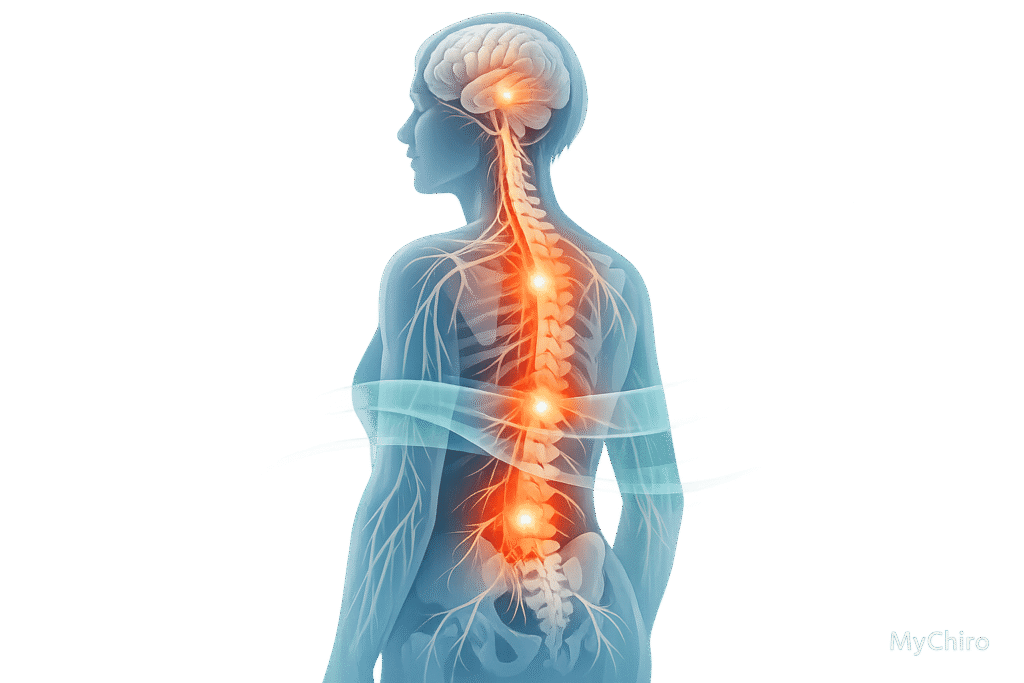
Persistent pain can continue beyond expected healing and may have several contributors. For people living with ongoing pain, an individual assessment can help guide care. Symptoms such as hyperalgesia (increased pain sensitivity) or allodynia (pain from normally non-painful stimulation) deserve appropriate assessment.
Key points:
- Changes in pain processing, including central sensitisation, may be relevant to some persistent pain experiences; they do not explain every case.
- Research into pain-signalling pathways does not provide a simple chemical test or a single treatment for all chronic pain.
- Brain research, including studies of grey matter, cannot diagnose progressive brain damage from pain symptoms alone.
- Sleep, activity, work demands, stress and health conditions can affect the experience of pain.
Treatment options include:
- Musculoskeletal care: Advice, exercise or manual therapy may be considered for selected back or neck complaints.
- Daily habits: Suitable activity and comfortable task arrangements may support daily function.
- Psychological support: Appropriate therapy may help with pain-related distress, coping and activity concerns.
A plan can consider the particular condition, relevant evidence and your goals. Medical, physical and psychological approaches may have different roles; more treatment is not automatically better.
Video Discussion: Persistent Pain
sbb-itb-585d67d
Understanding Pain Sensitivity
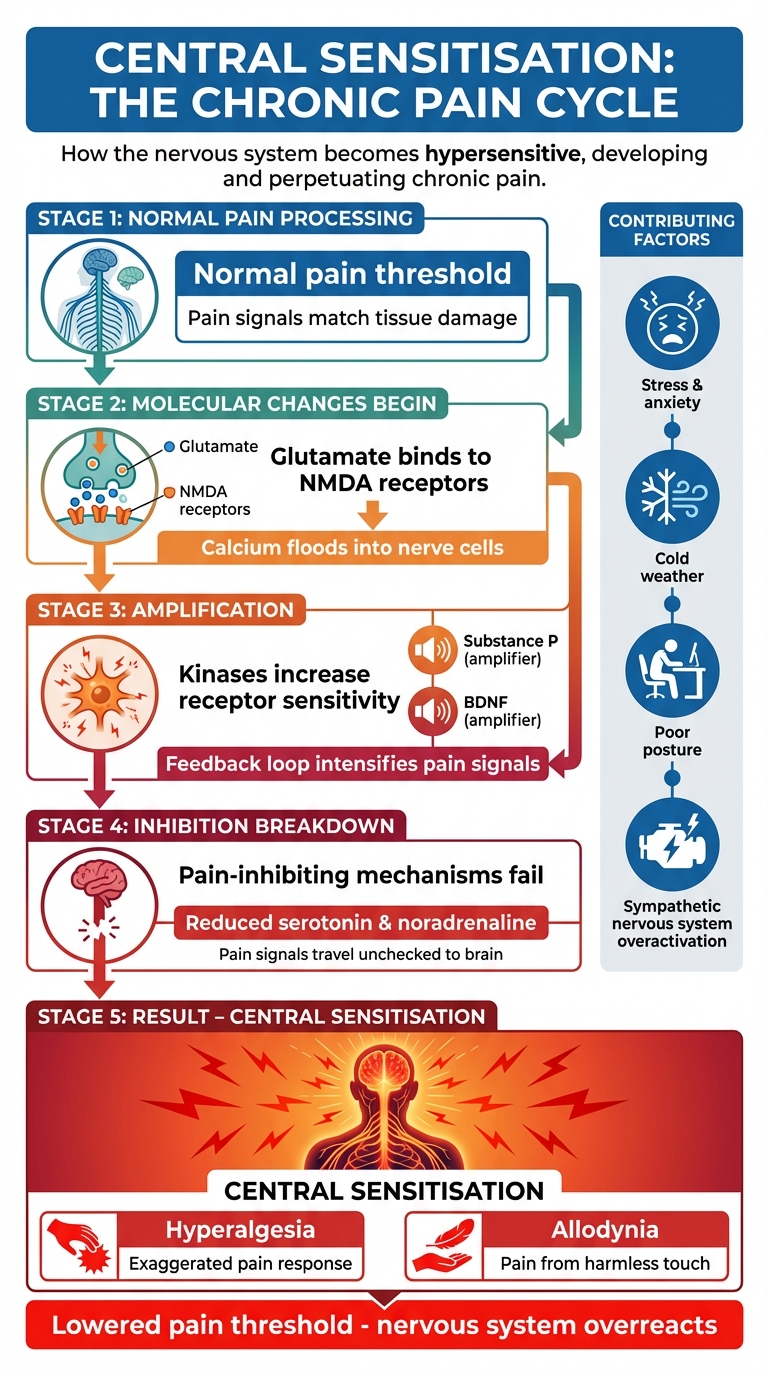
Central sensitisation is one aspect of pain processing; this illustration does not diagnose the cause of an individual’s symptoms.
How Central Sensitisation Works
Central sensitisation refers to increased responsiveness in pain-processing pathways. It is not a judgement that someone’s pain is excessive or imaginary, and it cannot be diagnosed from a general symptom list alone.
Research examines substances such as glutamate, Substance P and brain-derived neurotrophic factor (BDNF). Their roles are complex; symptoms do not establish an individual imbalance or predict a response to spinal treatment.
Persistent pain is real. Assessment should consider possible causes, warning signs and the effect on daily life.
The body’s pain-modulating pathways can be involved in persistent pain. This does not mean that every person has a neurotransmitter deficiency or needs a treatment claimed to correct one.
An explanation of a possible mechanism should be considered alongside clinical findings and evidence about treatments that help patients.
Changes in Pain Perception
Hyperalgesia means increased sensitivity to painful stimulation. Allodynia means pain from something that does not normally cause pain, such as light touch. These experiences can be discussed with a clinician.
Changes in sensitivity can have several explanations. Assessment can consider the pattern, associated symptoms and relevant health history.
The stress response may influence how pain is experienced. A flare-up does not by itself show inflammation is damaging the brain or that the nervous system needs realigning.
Brain Research and Persistent Pain
What Brain Studies Can Show
Researchers study areas such as the anterior cingulate cortex, insula and prefrontal cortex in relation to pain. Group-level findings cannot tell from symptoms alone that an individual has brain damage.
Neuroplasticity describes the nervous system’s capacity to change. It does not mean that a person has deliberately learned pain or can simply choose to stop it.
Neurotrophins are involved in nerve-cell function, but laboratory findings do not establish chiropractic treatment for a mood disorder. Discuss persistent low mood or anxiety with your GP or a mental health professional.
Pain, sleep and mood can interact. Care should consider the symptoms and concerns affecting you rather than assume one brain mechanism explains them all.
Considering the Wider Pain Experience
Persistent pain can affect sleep, concentration, mood and daily activities. Tell your clinician which effects matter most so that care goals are relevant.
The autonomic nervous system helps regulate automatic body functions. Pain does not by itself establish a general autonomic imbalance. A useful starting point is:
Describe the symptoms, what changes them and how they affect the activities you want to manage.
The brain and spinal cord help process pain, but symptoms do not establish progressive nerve-cell damage. New or changing symptoms should be assessed rather than attributed automatically to a known pain condition.
Where Musculoskeletal Care May Fit
Assessment and Treatment Options
A musculoskeletal assessment can consider a specific back or neck complaint and its effect on daily activities. Options may include advice, suitable exercise, manual therapy or referral.
Spinal adjustments have not been established as a reliable way to regulate sympathetic or parasympathetic function, or as treatment for high blood pressure. Medical concerns need appropriate assessment and care.
Laboratory findings about proteins such as BDNF or NGF do not establish that chiropractic treatment repairs nerves or improves general nervous-system health. Ask about clinical outcomes relevant to your complaint.
Before deciding on a treatment, discuss the likely benefits, possible risks and alternatives for the condition being assessed.
- Agree goals and a review point for care.
Addressing Posture and Movement Problems
Comfortable movement and task arrangements may be useful for some symptoms. A particular posture does not by itself show nerve damage or a need for realignment.
For desk-related discomfort or headaches, assessment can consider the symptoms and relevant warning signs. Advice may include suitable activity or workspace changes; the type of headache matters when discussing treatment.
Working Alongside Other Treatments
Persistent pain may need more than one type of support. Different clinicians can address different concerns, with clear roles and shared goals. A combination should be chosen for a reason, rather than assumed to give the best result.
Suitable activity or relaxation may help with coping and daily function. Choose a manageable starting level and seek tailored advice when needed.
A care plan can aim to improve daily function and quality of life without promising to eliminate chronic pain.
- Review progress and reconsider options if the plan is not helping.
Discuss costs, likely benefits and review points for each part of care. More treatment is not automatically better.
This information is general in nature and is not a substitute for professional medical advice.
Chiropractic care focuses on musculoskeletal health and results vary between individuals.
Please consult a qualified healthcare professional before making decisions about your health.
Lifestyle and Movement Strategies for Chronic Pain
Practical habits can form part of a persistent-pain plan, whether or not manual treatment is chosen. Adapt them to your health, symptoms and circumstances.
Improving Ergonomics and Posture
A comfortable chair, screen position and task setup may help a desk-based day. They do not diagnose or automatically relieve nerve-related pain, which may need appropriate assessment.
Suitable strengthening or other exercise can be selected for your abilities and goals. A weak core should not automatically be treated as the cause of pain or evidence that your spine is unstable.
Exercise and Movement for Pain Relief
Walking, swimming or other suitable activity may form part of care. Choose an appropriate starting level and build gradually, with advice if an injury, medical condition or symptoms make exercise uncertain.
Gentle movement may help some people manage stiffness. It is not a way to flush inflammatory substances out of the spine. Review useful activities and symptoms rather than relying on a wearable heart-rate measure to judge treatment success.
Managing Stress and Tension
Pain can affect sleep and mood. Some people find comfortable breathing, mindfulness or relaxation helpful for coping, while persistent distress may need professional support.
Notice patterns that affect comfort and function, without assuming every flare-up means damage. A clinician can help plan manageable activity and discuss treatment or referral for the particular problem.
Conclusion
Persistent pain has several possible contributors and affects people differently. An individual assessment can help clarify what needs attention and what support may be useful.
A plan should address the concerns identified, with goals for symptoms and daily function. Chiropractic care may be considered for selected musculoskeletal complaints, but is not an established way to recalibrate the nervous system.
At MyChiro in Bondi Junction, new patients can book a free initial consultation about back pain, neck pain or headaches. Same-day treatment is optional, costs $125 and is offered only if clinically appropriate, with no obligation to proceed.
This content is for general informational purposes and should not replace professional medical advice. Chiropractic care focuses on musculoskeletal health, and outcomes may vary. Always consult a qualified healthcare provider before making health-related decisions.
FAQs
How can I tell if my pain is due to central sensitisation?
Pain sensitivity can change for several reasons. Central sensitisation cannot be diagnosed from a symptom list alone, and it does not exclude other causes. Discuss ongoing or unexplained symptoms with an appropriate clinician.
Can chronic pain occur even after an injury has healed?
Pain can persist beyond expected healing and may involve changes in pain processing. It is still real. New or changing symptoms should be assessed rather than assumed to have the same cause as an existing pain condition.
Is chiropractic care suitable for my type of chronic pain?
Chiropractic assessment may offer options for selected muscle or joint complaints, such as some back or neck pain presentations. Suitability depends on the findings and relevant evidence. Ask about benefits, risks, alternatives and a review plan; neurological symptoms may need medical assessment or referral.