


Dealing with a sore tailbone can be a real pain—literally. That persistent ache right at the base of your spine can make simple things like sitting at your desk or getting out of the car a dreaded task. The good news is that the right kind of gentle movement can make a world of difference.
We're not talking about aggressive, high-impact workouts here. The goal is to carefully release tension in the muscles surrounding your tailbone and build up some foundational strength to better support the area. Think of it as taking the pressure off the sore spot by making sure its neighbours are doing their job correctly.
Getting to Know Your Tailbone (And Why It Hurts)
Before we jump into the exercises, it helps to quickly understand what’s going on down there. Your tailbone, technically called the coccyx, isn't just a leftover bit at the end of your spine. It's a crucial anchor point for a whole network of muscles, tendons, and ligaments that make up your pelvic floor and connect to your glutes.
When you experience that sharp, localised ache—known as coccydynia—it's often because those surrounding muscles are either too tight or too weak.
What's Causing the Discomfort?
For many people I've worked with, the problem starts with a direct impact, like a clumsy fall on a hard floor. But just as often, it’s a gradual thing. Long hours slouched in an office chair, the repetitive strain of certain sports, or the physical changes that come with pregnancy and childbirth can all contribute.
Essentially, when the muscles connected to your tailbone get overworked and tight, they can start to pull on it. On the flip side, if your core and glutes are weak, they can't provide the stability your pelvis needs, leaving the coccyx to take on more load than it’s designed for. This is precisely why our exercises focus on the supporting cast of muscles, not the tailbone itself.
The whole point of these movements isn't to "work through the pain." It's about gently coaxing tight muscles to relax and building a stronger, more stable pelvic region to take the pressure off your coccyx for good.
In Australia, tailbone injuries from falls or issues from prolonged sitting are incredibly common. As a first line of defence, Healthdirect Australia recommends things like using a purpose-built cushion and maintaining good posture. These exercises are the next logical step in your recovery.
How Gentle Movement Can Help
Our approach is a simple, two-pronged attack: release and support.
- First, we release. We'll use targeted stretches to ease the tension in tight spots like your glutes and piriformis muscle, which are often the main culprits pulling on the tailbone.
- Then, we support. We’ll introduce foundational strengthening moves for your deep core and pelvic floor. This creates a natural "corset" of muscle that helps stabilise your pelvis and distribute your body weight more evenly, moving pressure away from that sensitive area.
Now that you've got the 'why' behind it, let's get into the 'how'.
To give you a clearer picture of how these strategies work together, here’s a quick summary.
Quick Guide to Managing Tailbone Discomfort
This table outlines the main ways to tackle tailbone pain, showing how targeted exercise fits into a broader management plan.
| Strategy | Objective | Example |
|---|---|---|
| Modify Your Setup | Reduce direct pressure on the coccyx. | Using a U-shaped or donut cushion on your chair. |
| Improve Posture | Distribute body weight evenly and avoid slumping. | Sitting upright with feet flat and shoulders back. |
| Gentle Stretching | Release tension in muscles pulling on the tailbone. | A Piriformis Stretch or Child's Pose. |
| Core Strengthening | Build a supportive muscular "corset" around the pelvis. | Pelvic tilts or a modified bird-dog exercise. |
| Take Movement Breaks | Avoid prolonged pressure from static positions. | Standing up to walk around every 30-60 minutes. |
As you can see, exercise is just one piece of the puzzle, but it's a powerful one because it addresses the root muscular imbalances that often cause or worsen the problem. Let’s dive into the specific movements that can bring you some relief.
When your tailbone starts acting up, it’s rarely an isolated problem. The muscles all around it—your glutes, lower back, and even your pelvic floor—tend to tense up as if to guard the sore spot. This protective clenching can create a vicious cycle, where the tightness actually makes the original pain feel much worse.
The trick isn't to force your way through the pain. Instead, you need to gently coax those overworked muscles into letting go. That’s where slow, mindful stretching becomes your best friend. By carefully lengthening the muscles connected to your coccyx, you can boost blood flow, ease that persistent tension, and give your body a chance to heal. It's like telling your body's alarm system that it's okay to stand down.
This process is a direct response to things like prolonged sitting, which, as you can see below, puts constant pressure right where you don't want it.
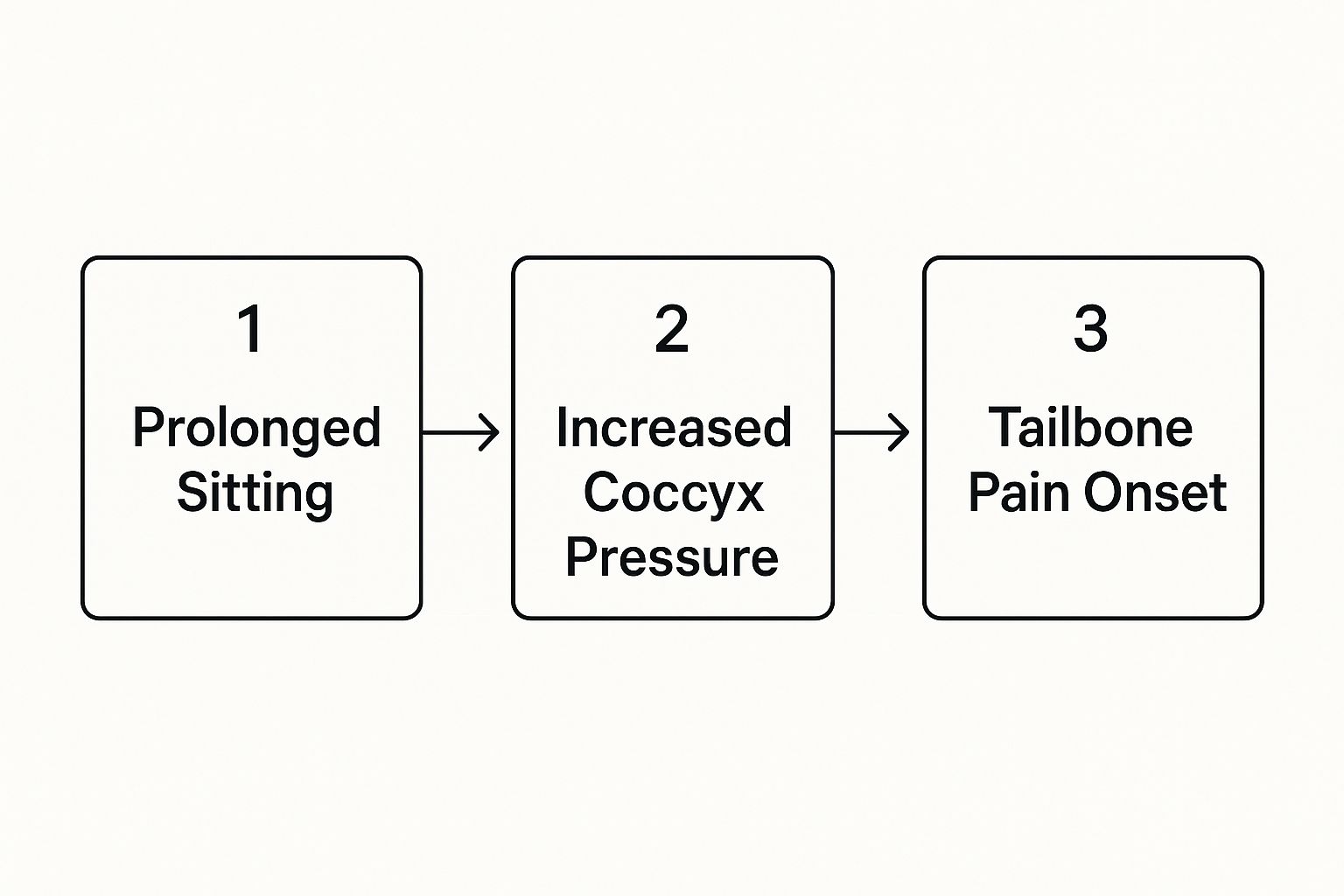
Movement and stretching are the antidotes to this kind of static pressure. They get things moving and break the pain cycle.
Releasing the Piriformis and Glutes
Deep in your buttocks, you have a small muscle called the piriformis. When it gets tight, it's a notorious troublemaker for tailbone pain. Gentle stretching of this muscle may ease some of the tension around the area for some people.
Figure-Four Stretch (Piriformis)
Start by lying on your back with your knees bent and feet flat on the floor. Now, cross your right ankle over your left knee, making a shape like the number "4" with your legs.
Reach through the opening you’ve created and link your hands behind your left thigh. Gently pull your left leg toward your chest until you feel a comfortable stretch deep in your right glute.
Breathe into it and hold for 20–30 seconds. The key here is gentle. You're looking for a release, not a strain. Don't forget to switch sides.
Single Knee-to-Chest Hug
This is a classic for a reason. It’s a simple, safe way to target your lower back and glutes, and it feels incredible first thing in the morning or just before bed.
Lie on your back again, but this time with both legs out straight. Gently bring your right knee up towards your chest, using your hands to give it a gentle hug inwards. You should feel a lovely, easing stretch across your lower back and the top of your glute.
A little pro tip: For a slightly different angle that can hit just the right spot, try guiding your knee towards the opposite shoulder. Hold for 20–30 seconds, release slowly, and then repeat with your left leg.
It’s not just a nice feeling; there’s solid science behind it. A large-scale review in 2021 confirmed that exercise therapy is highly effective for chronic low back issues. On average, participants saw their pain drop by about 9.1 points on standard scales compared to those who didn't use targeted exercises.
Modified Child’s Pose for Comfort
A traditional child's pose can sometimes put unwanted pressure directly on a sore tailbone. This modified version, however, gives you all the lower-back-releasing benefits without the discomfort.
To get into it, start on your hands and knees. Widen your knees so they're a bit further apart than your hips—this creates space. Then, tuck a pillow or a rolled-up towel between your heels and your bottom.
From there, slowly sit back onto the pillow, letting your forehead rest either on the floor or on another cushion. This simple adjustment lets your lower back lengthen and relax beautifully, taking all the pressure off your coccyx.
After your stretches, gently massaging the surrounding muscles may help them relax further and support winding down.
Building a Stronger Core and Pelvic Floor for Support
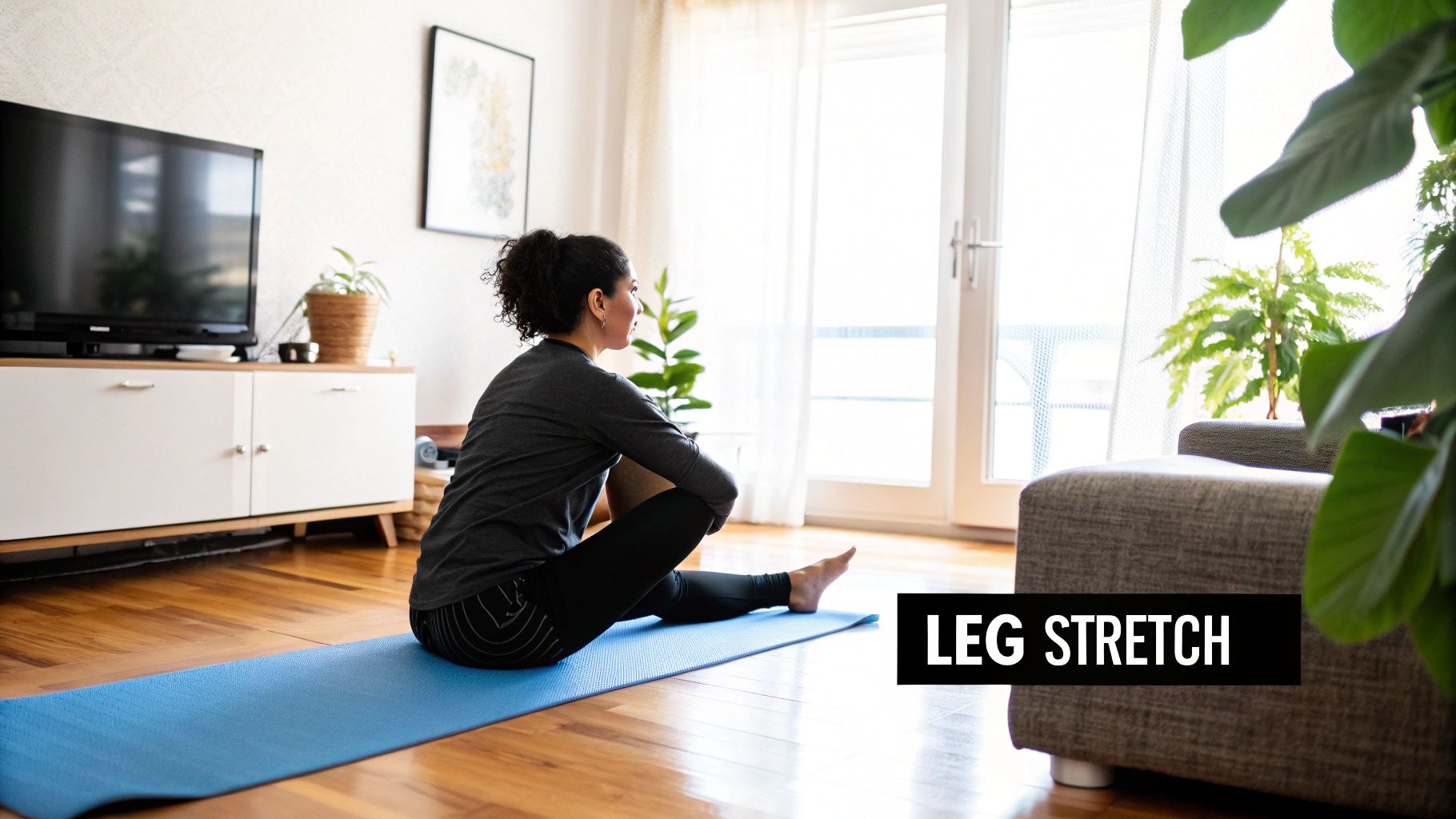
While stretching is fantastic for easing that tight, tense feeling around your tailbone, building strength is your long-term ticket to relief. Think of your core and pelvic floor muscles as a natural, built-in brace for your entire pelvis. When these muscles are strong and working as a team, they act like a shock absorber, distributing your body weight and taking the pressure off your coccyx.
But if they're weak or you're not using them correctly, that stress has to go somewhere—and it often lands right on your tailbone. This is a huge factor when you’re lifting something, getting up from a chair, or even just sitting with a bit of a slump.
Now, the goal isn't to start smashing out intense crunches to build a six-pack. In fact, that kind of exercise can often make things worse by increasing downward pressure on the pelvic area. Instead, we'll focus on foundational moves that gently wake up those deep stabilising muscles from the inside out. This careful approach to tailbone pain exercises helps you build support without accidentally flaring up the sensitive spot, which is a common trap with generic core workouts.
Activating Your Deep Core Muscles
Before you jump into any exercises, the first and most important step is to learn how to properly “find” and engage your deep core and pelvic floor. These are the muscles everyone forgets about because you can't see them in the mirror, but they’re the ones that truly matter for stability.
Here’s a simple cue I use with my clients: imagine you're trying to gently stop the flow of urine mid-stream. That subtle lifting feeling is your pelvic floor turning on. Next, picture a piece of string running between your two hip bones at the front. Visualise gently tightening that string to draw your hip bones slightly toward each other. This is your transverse abdominis—your body's deepest core muscle—kicking in.
The key here is subtlety. You’re not trying to forcefully suck in your gut or clench your glutes for dear life. It’s a gentle, deep tightening that creates a supportive corset around your middle. Get a feel for this sensation before you even start the exercises below.
Foundational Strengthening Movements
Once you can connect with that deep core engagement, you can start adding some gentle movement. These exercises are specifically designed to build endurance in the muscles that give your pelvis the support it needs.
-
Pelvic Tilts: Lie on your back with your knees bent and your feet flat on the floor, about hip-width apart. Take a breath out, and as you do, gently engage your core and pelvic floor to flatten your lower back into the floor. Your pelvis will tilt up slightly. Breathe in as you slowly relax back to the starting position.
-
Glute Bridges: Starting in the same position, get your core firing. On an exhale, lift your hips off the floor until your body makes a straight line from your shoulders to your knees. Give your glutes a good squeeze at the top, but be careful not to over-arch your lower back. Hold it for a second, then slowly lower yourself back down.
Adding Dynamic Stability
After you've mastered the basics and can perform them without pain, you can introduce exercises that challenge your stability a bit more.
The Bird-Dog exercise is a brilliant one for this. Get onto all fours, making sure your hands are directly under your shoulders and your knees are under your hips. Keep your back flat and your core engaged as you slowly reach your right arm forward and extend your left leg straight back. The real challenge is to keep your hips perfectly level—no tilting! Hold for a few seconds, then slowly return to the start and switch sides.
Remember, consistency will always beat intensity. Weaving these controlled movements into your regular routine can make a world of difference. Understanding why you need chiropractic exercises in your daily routine really highlights how this kind of proactive care is essential for long-term spinal health, and building this foundational strength is a cornerstone of that process.
Simple Posture Adjustments for All-Day Relief
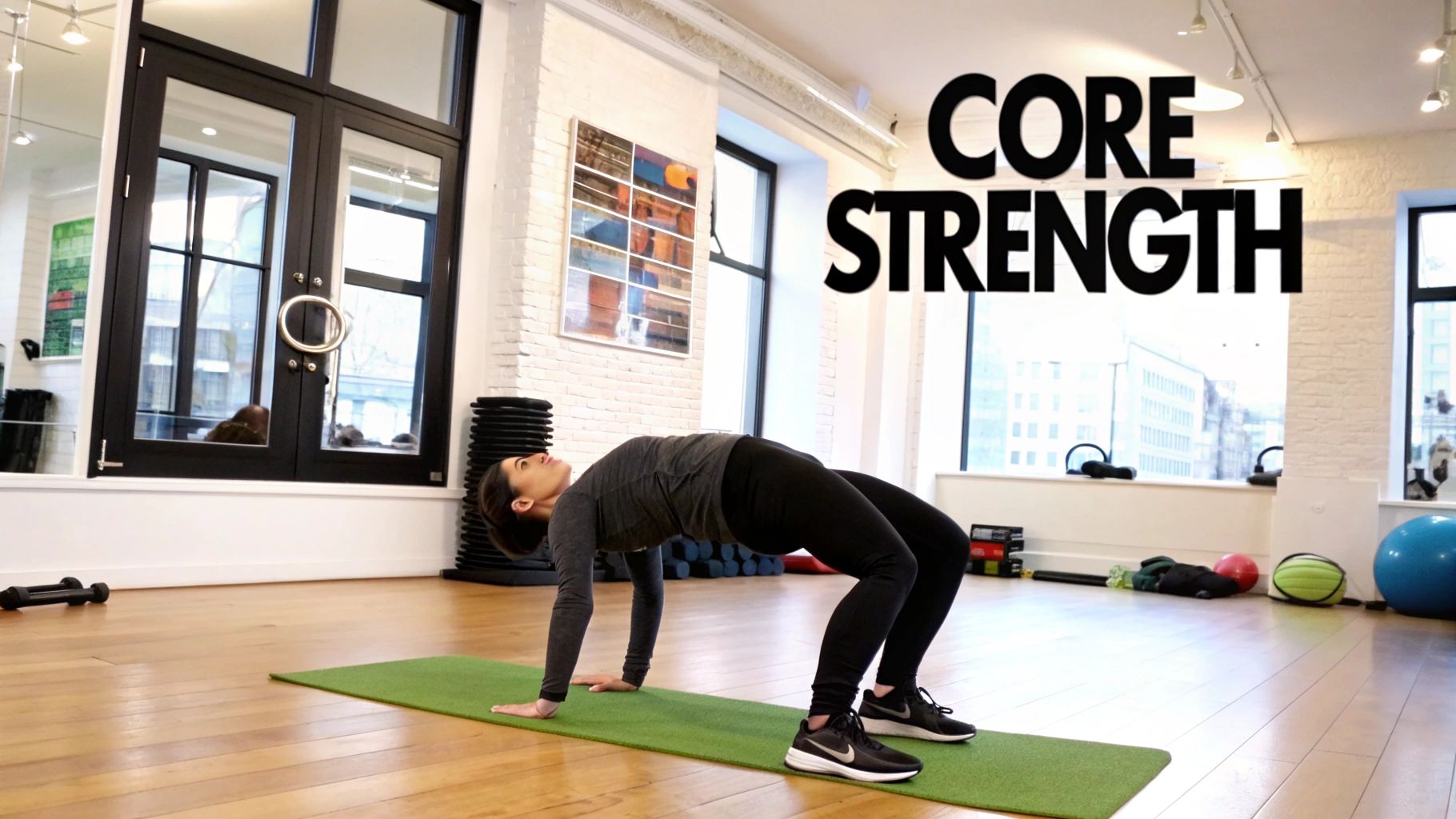
The stretches and strengthening exercises you do are absolutely vital, but their good work can be undone in a matter of hours. The real challenge is what happens during the other 23 hours of the day.
How you sit, stand, and move has a massive impact on your tailbone. Every single time you slump or slouch, you're putting direct, sustained pressure right on your coccyx. This is where consciously improving your posture becomes one of the most powerful tailbone pain exercises you can do.
By making small, mindful adjustments throughout your day, you start to actively reduce the strain on that sensitive area. It's this proactive approach that really makes a difference for long-term comfort. Beyond specific exercises, simply learning how to sit with a neutral spine at your desk is a big step in minimising the pressure on your tailbone.
Re-Evaluating Your Sitting Environment
Take a good look at where you spend most of your seated time. Whether it’s your office chair or the favourite spot on your couch, your sitting position is critical. The goal is to create an environment that naturally supports a neutral spine—where your ears, shoulders, and hips are all roughly in a vertical line.
Think about your chair. Is it encouraging you to slump into a 'C' shape? A fantastic and simple fix is to roll up a small towel or grab a lumbar cushion and place it in the curve of your lower back. This tiny change helps tilt your pelvis forward just enough to shift your weight off the tailbone and onto your "sit bones" where it belongs.
It's worth noting that back problems are a significant health issue in Australia, affecting around 13.6% of the population. A key part of managing this is often physiotherapy and exercises focused on building strength and improving posture to restore function.
Finding and Maintaining a Neutral Spine
Finding your neutral spine isn't about being rigid or holding a stiff, unnatural pose. It’s all about finding a balanced, comfortable middle ground.
Here’s a quick trick to find yours:
- Sit on the edge of your chair and let yourself slouch forward completely. Really round your back.
- Now, do the opposite. Arch your back as far as you comfortably can, pushing your chest forward.
- Finally, release back to the position that feels like the perfect middle point between those two extremes. That’s your neutral spine.
Once you’ve found it, the trick is to maintain it. I often suggest setting a quiet timer on your phone for every 30 minutes as a reminder to do a quick posture check. This simple habit helps you build the muscle memory you need for better alignment and really shows you how poor posture can result in back pain.
Posture in Motion: Daily Activities
It’s not just sitting still that can aggravate your coccyx. Everyday movements like bending down and lifting things can also contribute to the problem if you’re not careful.
Next time you need to pick something up off the floor, fight that common urge to bend at the waist. Instead, make a conscious effort to keep your back straight and bend at your knees and hips. Let your strong leg and core muscles do the heavy lifting.
This one change protects your entire spine, including your tailbone. By making these small but powerful habits part of your daily routine, you create a supportive framework that reduces irritation all day long—not just when you’re doing your stretches.
Crafting Your Own Tailbone-Friendly Routine
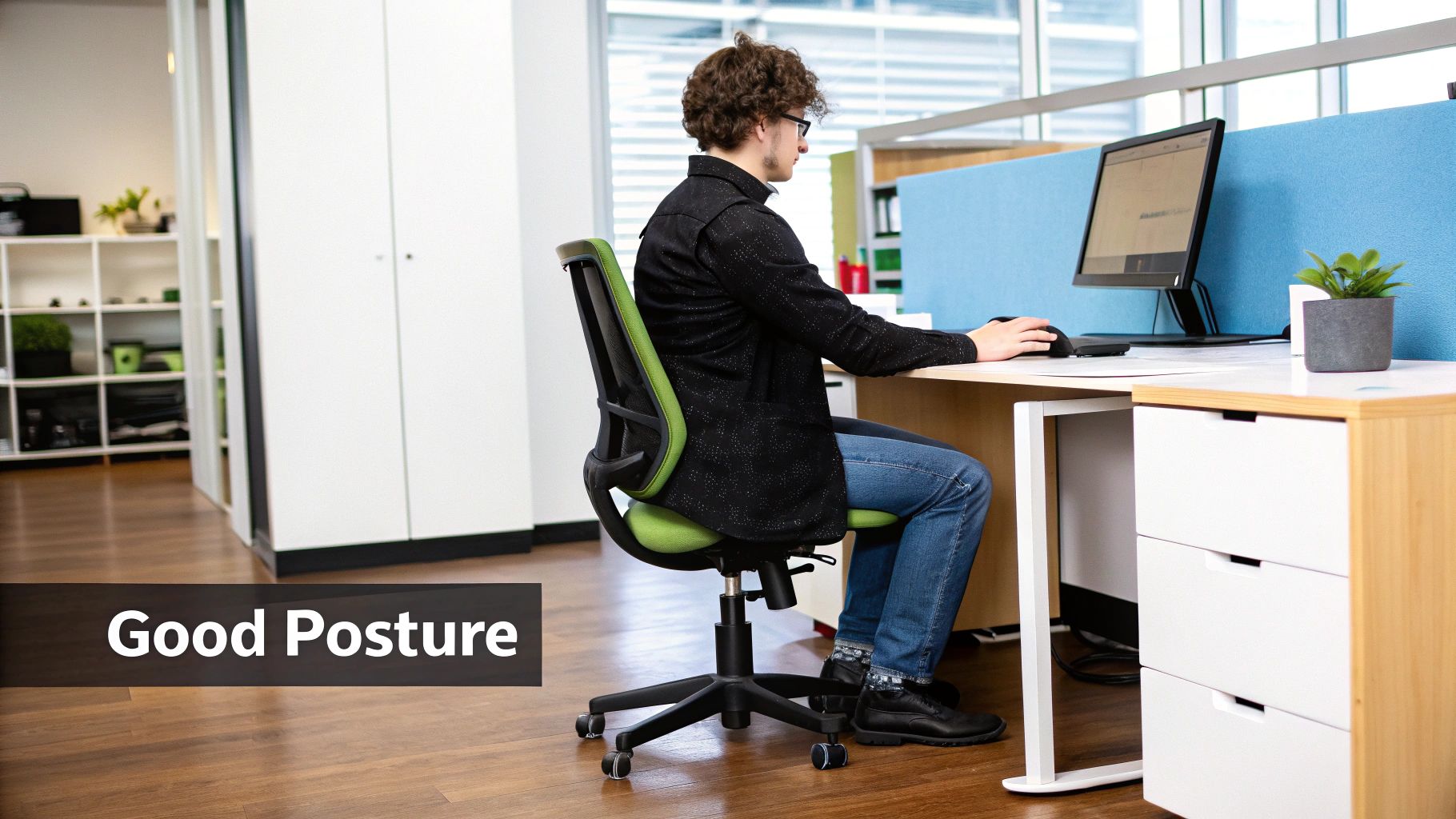
When it comes to tailbone pain, there’s no single, magic routine that works for everyone. Real, lasting relief comes from creating a flexible plan that’s built around your body's specific signals. This means mixing the right stretches, strengthening moves, and posture work into a schedule that feels helpful, not punishing.
The most critical skill you'll develop is listening to your body. You need to get familiar with the difference between a muscle working hard (that good ache in your glutes after doing bridges) and a warning sign that you’re overdoing it (a sharp or worsening pain right at your coccyx).
Building a Consistent Schedule
With tailbone pain exercises, consistency beats intensity every single time. It's much better to do short, regular sessions than one marathon workout a week. This approach keeps your joints mobile and steadily builds strength without flaring up that sensitive area.
Try aiming for 15-20 minutes a day. That's a realistic goal that delivers fantastic results. You could try some gentle stretches first thing in the morning to work out any stiffness, then save your strengthening exercises for the afternoon when your body is naturally warmer.
To stick with it long-term, build up your overall fitness gradually so you can get through your routine without feeling completely drained.
Key Takeaway: The goal is to make these movements a normal part of your life, just like brushing your teeth. It’s the small, daily actions that add up to create real change and keep discomfort at bay.
Sample Weekly Activity Planner
To help you get started, here’s a simple template. Think of it as a starting point to structure your week, making sure you balance gentle movement with dedicated rest.
| Day | Focus Activity | Duration | Notes |
|---|---|---|---|
| Monday | Gentle Stretching (e.g., Cat-Cow, Piriformis Stretch) | 15 mins | Focus on releasing morning stiffness. |
| Tuesday | Strengthening (e.g., Glute Bridges, Bird-Dog) | 20 mins | Engage your core. Don’t rush the reps. |
| Wednesday | Active Rest | 20-30 mins | Gentle walk or light activity. |
| Thursday | Gentle Stretching | 15 mins | Check in with how your body feels. |
| Friday | Strengthening & Posture Work | 20 mins | Mix in some posture checks at your desk. |
| Saturday | Active Rest | 30 mins | A longer walk, if comfortable. |
| Sunday | Full Rest | All Day | Allow your body to fully recover. |
Remember, this is just a guide. Feel free to swap days or adjust the activities based on how you feel.
Progressing Safely and Sensibly
Once you start feeling stronger, you’ll naturally want to push yourself a little more. That’s great, but it has to be done carefully. Progress here isn't about lifting heavy weights or attempting intense new exercises.
Instead, smart progression looks more like this:
- Holding longer: Can you hold your stretches for 30 seconds instead of 20?
- Adding more reps: Try doing 12-15 glute bridges instead of the usual 10.
- Improving your form: Really focus on keeping your core tight during the bird-dog exercise.
Pay close attention to any signals of irritation. If a particular movement starts to bother you, that’s your cue to back off for a day or two. This isn’t a failure—it’s smart self-care. This ability to adapt is what will make your routine successful in the long run.
Your Questions Answered: Exercising with Tailbone Pain
https://www.youtube.com/embed/MF-k671LFHg
Starting any new exercise routine, especially when you're dealing with a sensitive area like the coccyx, naturally brings up a few questions. Getting clear answers is the best way to feel confident that you're on the right track and doing things safely.
Let’s walk through some of the most common things people ask when they start doing tailbone pain exercises. Knowing what to expect, what to skip, and when to call in a professional is a huge part of the healing process.
How Long Until Tailbone Exercises Start Helping?
This is probably the number one question, and the honest answer is: it’s different for everyone. Some people feel a sense of release almost immediately after a few sessions of gentle stretching. That initial relief often comes from easing the tension in the tight muscles around your pelvis and glutes and getting a bit more blood flowing to the area.
For more deep-seated relief that comes from strengthening, you need to be a bit more patient. It generally takes about two to four weeks of consistent effort to build enough strength and support to notice a real change in how you feel day-to-day.
The real aim here is slow and steady progress. Concentrate on doing the exercises correctly and regularly, rather than watching the calendar. The results will come.
Are There Exercises I Should Avoid with Tailbone Discomfort?
Yes, absolutely. This is a critical one. Some movements place direct pressure on your tailbone or create jarring impacts that will only make things worse. It’s smart to put these on hold for a while.
Here are the main culprits to avoid or modify:
- Traditional Sit-ups and Crunches: These put a lot of pressure on the pelvic floor and can strain the area.
- High-Impact Activities: Things like running (especially on pavement) or jumping send shockwaves right up your spine to your coccyx.
- Standard Cycling: Most narrow bike seats are notorious for putting pressure directly on the tailbone.
- Deep Squats: While great for some, going too deep can sometimes cause a pinching feeling at the bottom for those with tailbone issues.
The golden rule is simple: listen to your body. If you feel a sharp, sudden, or worsening pain in your tailbone during any movement, that’s your body’s signal to stop immediately. For a broader look at safe movements, exploring other essential chiropractic exercises for back pain relief can also give you a better idea of what helps and what hurts.
When Should I See a Healthcare Professional?
While these exercises are a fantastic tool for managing muscle-related tailbone pain, they don’t replace professional medical advice. There are definite times when you need to book in with a doctor, physiotherapist, or chiropractor.
You should seek a professional opinion if:
- The pain is severe or seems to be getting worse, not better.
- The problem started after a nasty fall or a direct injury to the area.
- You've been doing gentle exercises consistently for a few weeks with zero improvement.
- You notice any "red flag" symptoms, like numbness, weakness, or tingling in your legs, or any changes in bowel or bladder control. These are urgent.
A healthcare professional can give you a proper diagnosis and map out a treatment plan that’s built specifically for you and your situation.
At MyChiro, our focus is on getting to the root cause of your pain to find a lasting solution. If you're tired of dealing with persistent tailbone issues, book a consultation with our team at https://www.mychiro.com.au to get a personalised assessment and a clear plan forward.
Article created using Outrank


