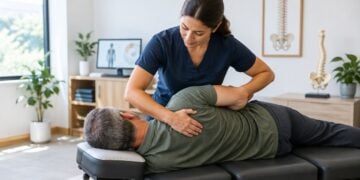


When people think of core training, the focus is often on visible muscles like the rectus abdominis. However, core stability relies on a deeper, less visible muscle: the transverse abdominis (TVA). This muscle acts as your body's natural corset, wrapping around your midsection to support your spine and pelvis. Properly engaging the TVA is fundamental for improving posture, enhancing stability during everyday movements, and managing lower back discomfort.
Strengthening these deep core muscles is commonly discussed as a way to support the trunk and lower back; suitability varies and can be discussed with a qualified health professional.
This information is for educational purposes only and should not replace professional medical or health advice. Always consult with a qualified healthcare professional, such as a chiropractor or physiotherapist, before beginning any new exercise program. This is particularly important if you have pre-existing health conditions or concerns. They can assess your individual needs and advise on appropriate exercises.
1. Dead Bug Exercise
The Dead Bug exercise is a foundational movement designed to enhance core stability and motor control. It specifically targets the transverse abdominis, the deepest layer of abdominal muscle that helps to stabilise the lumbar spine and pelvis. The exercise involves lying on your back and coordinating the movement of your opposite arm and leg while actively preventing your lower back from arching. This deliberate, slow movement challenges the core to maintain a neutral spine position.
This exercise is a cornerstone in many rehabilitation and functional fitness programmes. For instance, it is often incorporated into physical therapy protocols for managing lower back discomfort and features in assessment tools like Gray Cook's Functional Movement Screen. Its emphasis on controlled stabilisation makes it one of the transverse abdominis exercises commonly discussed for re-establishing core function without placing high loads on the spine.
How to Perform the Dead Bug
Follow these steps to perform the exercise with correct form:
- Starting Position: Lie on your back on a comfortable, firm surface. Raise your legs so your hips and knees are bent at a 90-degree angle, creating a "tabletop" position with your shins parallel to the floor. Extend your arms straight up towards the ceiling, directly over your shoulders.
- Core Engagement: Gently flatten your lower back towards the floor, engaging your abdominal muscles. You should feel a light tension, as if you are preparing to be nudged in the stomach.
- Controlled Movement: Take a deep breath in. As you exhale, slowly lower your right arm and left leg towards the floor simultaneously. Move only as far as you can while keeping your lower back in contact with the floor and your core engaged.
- Return to Start: Inhale as you slowly bring your arm and leg back to the starting position with control.
- Alternate Sides: Repeat the movement on the opposite side, lowering your left arm and right leg. This completes one repetition.
Key Insight: The primary goal is not how low you can lower your limbs, but rather how well you can prevent your spine from moving. The focus is on anti-extension, which is your core’s ability to resist the pull of gravity that tries to arch your back.
Tips for Effective Performance
To maximise the benefits and maintain safety, consider the following:
- Move Slowly: The exercise is about control, not speed. Aim for a 3-5 second count as you lower your limbs and another 3-5 seconds as you return.
- Breathe Deliberately: Coordinate your breath with the movement. Exhale as you lower your arm and leg to help deepen the contraction of the transverse abdominis.
- Maintain Contact: Keep your lower back in a neutral position, with a gentle pressure on the floor. If you feel it begin to arch, you have lowered your limbs too far. Reduce your range of motion.
- Start Small: If the full movement is challenging, begin by only lowering one leg at a time, then one arm at a time, before progressing to the opposite arm and leg combination.
2. Pallof Press
The Pallof Press is an anti-rotation exercise that directly challenges the core's ability to resist twisting forces. Its primary target is the transverse abdominis, which it activates to stabilise the torso and prevent the spine from rotating. By holding a resistance band or cable handle at your chest and pressing it away from your body, you increase the rotational demand, forcing your deep core muscles, including the transverse abdominis, to work hard to maintain a neutral, upright posture.
Developed by physical therapist John Pallof, this movement is highly regarded in both rehabilitation and performance settings. It is a staple in the programmes of strength coaches like Eric Cressey and Mike Boyle due to its effectiveness in building a resilient core without high spinal load. The exercise is particularly useful for those involved in rotational sports like golf or tennis and is often prescribed in physical therapy to improve lumbo-pelvic stability. Its focus on controlled resistance makes it one of the premier transverse abdominis exercises for building functional strength.
How to Perform the Pallof Press
Follow these steps to perform the exercise with correct form:
- Starting Position: Stand sideways to a cable machine or a resistance band anchor point, positioned at chest height. Grasp the handle with both hands and pull it to the centre of your chest. Step away from the anchor to create tension. Stand with your feet shoulder-width apart and knees slightly bent.
- Core Engagement: Brace your core as if preparing for an impact. Keep your hips and shoulders square, facing directly forward.
- Controlled Movement: Exhale and slowly press the handle straight out in front of your chest until your arms are fully extended. The resistance will try to pull you back towards the anchor point.
- Hold and Resist: Hold this extended position for a designated time (e.g., 10-30 seconds), breathing steadily while actively resisting the rotational pull.
- Return to Start: Inhale as you bring the handle back to your chest with control. Complete all repetitions on one side before switching to the other.
Key Insight: The main objective is to prevent any rotation in your torso, hips, or shoulders. The exercise is about anti-rotation, which is your core's capacity to maintain spinal alignment against an external rotational force.
Tips for Effective Performance
To maximise the benefits and maintain safety, consider the following:
- Start with Light Resistance: Master the form with a lighter weight or band first. The goal is to feel the core working, not to fight excessive resistance.
- Keep Shoulders Square: Do not let the resistance pull the shoulder closest to the anchor point back. Your torso should remain still and forward-facing.
- Breathe Normally: Avoid holding your breath during the hold. Focus on steady, diaphragmatic breathing to maintain core tension. The Pallof Press can also be a helpful movement for those addressing posture.
- Engage Glutes: Squeezing your glutes throughout the movement will provide additional stability to your pelvis and lower back, enhancing the exercise's effectiveness.
3. Plank Exercise
The Plank is a classic isometric exercise that builds core strength and endurance by requiring you to hold your body in a straight, rigid line. It directly challenges the transverse abdominis to work continuously, providing stability to the spine and pelvis. By supporting your body weight on your forearms and toes, you create a sustained tension that forces the deep core muscles to engage to prevent your hips from sagging.
The Plank's effectiveness lies in its simplicity and accessibility, making it a staple in various fitness settings, from military training to yoga and Pilates classes. It's often featured in popular fitness challenges because it provides a clear benchmark for progress. As one of the most recognised transverse abdominis exercises, its focus on static stabilisation helps improve posture and core control without requiring dynamic movement, which can be beneficial for individuals focusing on foundational strength. This exercise may also be adapted for specific rehabilitation programs.
How to Perform the Plank
Follow these steps to perform the exercise with correct form:
- Starting Position: Begin by lying face down on a mat. Place your forearms on the floor with your elbows directly under your shoulders and your hands clasped or palms flat on the floor.
- Lift and Align: Lift your hips off the floor, engaging your core and glutes. Your body should form a straight line from your head to your heels. Support your weight on your forearms and the balls of your feet.
- Core Engagement: Actively pull your belly button in towards your spine to engage the transverse abdominis. Keep your back flat and avoid letting your hips drop or rise too high. Your gaze should be directed towards the floor, keeping your neck in line with your spine.
- Hold and Breathe: Maintain this position for your desired duration. Breathe steadily and naturally throughout the hold; do not hold your breath.
- Lower with Control: When you can no longer maintain proper form, gently lower your knees to the floor to finish the exercise.
Key Insight: The primary objective is to maintain a straight line and resist the force of gravity pulling your hips down. The focus is on anti-extension and anti-flexion, meaning your core is working to prevent both arching and rounding of your spine.
Tips for Effective Performance
To maximise the benefits and maintain safety, consider the following:
- Mind the Hips: Your hips are often the first part of the body to move out of alignment. Consciously squeeze your glutes and core to keep them level and aligned with your shoulders.
- Breathe Normally: Holding your breath creates unnecessary tension and can increase blood pressure. Focus on calm, consistent breathing to help you hold the position longer.
- Quality Over Quantity: It is better to hold a plank with good form for 15 seconds than one with poor form for 60. Stop the exercise as soon as your form begins to deteriorate.
- Start with Shorter Holds: If you are new to the exercise, begin with holds of 15-30 seconds and gradually increase the time as your strength improves.
4. Bird Dog Exercise
The Bird Dog exercise is a fundamental core stabilisation movement performed from a quadruped (hands and knees) position. It directly challenges the transverse abdominis to maintain a neutral spine while coordinating the movement of opposite limbs. By extending an arm and the opposite leg, you create instability that your deep core muscles, including the transverse abdominis, must counteract to prevent the lower back from sagging or the hips from rotating.
This exercise is widely recognised for its low-impact nature, making it a staple in various health and fitness settings. It is frequently prescribed in physical therapy protocols for managing back discomfort, utilised in senior fitness programmes to enhance balance, and is a standard component of Pilates mat classes. Its focus on controlled stabilisation makes it an excellent choice among transverse abdominis exercises for improving postural endurance and core control without stressing the spinal joints. You can enhance your spinal mobility by exploring complementary movements like the Cat-Cow exercise.
How to Perform the Bird Dog
Follow these steps to perform the exercise with correct form:
- Starting Position: Begin on all fours on a comfortable surface. Place your hands directly under your shoulders and your knees directly under your hips. Your back should be in a neutral, flat position, like a tabletop.
- Core Engagement: Engage your abdominal muscles by gently drawing your navel in towards your spine. Imagine you are bracing your midsection to keep your back still.
- Controlled Movement: Exhale as you slowly extend your right arm straight forward and your left leg straight back, keeping them in line with your torso. Focus on lengthening from your fingertips to your heel.
- Hold and Return: Hold the extended position for a few seconds, concentrating on keeping your hips and shoulders square to the floor. Inhale as you slowly and with control return your arm and leg to the starting position.
- Alternate Sides: Repeat the movement on the opposite side, extending your left arm and right leg. This completes one repetition.
Key Insight: The main objective is to resist rotation and extension forces. Your core is working to prevent your hips from tilting or your lower back from arching. Think about keeping a glass of water balanced on your lower back throughout the movement.
Tips for Effective Performance
To get the most from this exercise and maintain proper alignment, consider the following:
- Go Slow: Control is more important than speed. Perform each extension and return over a 3-5 second count to maximise muscle engagement.
- Keep Hips Level: Actively resist the urge to rotate your hips as you lift your leg. Point the toes of your extended leg down towards the floor to help keep your pelvis neutral.
- Focus on Length: Instead of lifting your arm and leg as high as possible, focus on reaching them as far away from your body as you can. This promotes stability over excessive range of motion.
- Start with a Single Limb: If the full movement is too challenging, begin by extending just one leg at a time, then just one arm at a time. Progress to the opposite arm and leg combination once you feel stable.
5. Hollow Body Hold
The Hollow Body Hold is a challenging isometric exercise renowned for its ability to build core strength and stability. It involves creating a C-shaped or "hollowed-out" body position while lying on your back, which demands intense and sustained activation from the transverse abdominis to maintain the lumbar spine's position against the floor. This exercise teaches the body to create and hold tension through the midsection, a fundamental skill for advanced movements.
This exercise is a foundational component in disciplines that require exceptional core control, such as gymnastics, calisthenics, and CrossFit. Its inclusion in these programmes is one reason it is commonly discussed. Physical therapists may also incorporate variations of the hollow body hold into advanced core strengthening protocols to improve spinal stabilisation and postural endurance, making it one of the most potent transverse abdominis exercises for building a resilient core.
How to Perform the Hollow Body Hold
Follow these steps to perform the exercise with correct form:
- Starting Position: Lie flat on your back on a firm surface with your legs together and your arms extended overhead on the floor.
- Core Engagement: Press your lower back firmly into the floor, eliminating any space between your back and the ground. This action engages the transverse abdominis. You should feel your abdominal wall tighten.
- Assume the Hold: Simultaneously lift your arms, head, shoulder blades, and legs off the floor. Your body should form a shallow, curved line, resembling the shape of a banana or a boat. Keep your chin tucked slightly towards your chest to avoid neck strain.
- Maintain Position: Hold this C-shaped position, focusing on keeping your lower back pressed into the floor. Breathe shallowly but consistently throughout the hold.
- Release with Control: After the desired time, slowly lower your arms and legs back to the starting position with control, rather than just dropping them.
Key Insight: The success of the Hollow Body Hold is determined by your ability to maintain lumbar flexion. The moment your lower back arches and lifts off the floor, you have lost the core engagement that makes this exercise effective. The goal is to fight the tendency of your limbs to pull your spine into extension.
Tips for Effective Performance
To maximise the benefits and maintain safety, consider the following:
- Prioritise Form: The lower back must remain in contact with the floor. If it starts to arch, modify the exercise immediately by bending your knees or raising your limbs higher.
- Progress Gradually: Start with an easier variation, like the tuck hold (knees bent towards your chest). As you get stronger, progress by extending one leg, then both legs, and finally by lowering your arms and legs closer to the floor.
- Breathe Through It: Do not hold your breath. Maintain a steady, albeit shallow, breathing pattern. Holding your breath can increase intra-abdominal pressure without contributing to muscular control.
- Time Over Height: Focus on increasing the duration of your holds with good form before trying to lower your limbs closer to the ground. Start with 10-15 second holds and build from there.
6. Turkish Get-Up
The Turkish Get-Up is a complex, total-body movement that builds strength, stability, and movement coordination. It guides you through a sequence of positions, from lying on your back to standing upright, all while holding a weight overhead. Each transition in the sequence heavily engages the transverse abdominis to stabilise the spine and torso, making it a functional exercise for developing core strength.
This exercise is highly regarded in various fitness and rehabilitation settings. It is a staple in kettlebell training systems, such as those popularised by Pavel Tsatsouline and the StrongFirst organisation, and is used in assessments like the Functional Movement Screen to evaluate movement quality. The Turkish Get-Up is prized for its ability to expose and correct imbalances and weaknesses throughout the body, with the core acting as the central link for every step.
How to Perform the Turkish Get-Up
The Get-Up is a multi-step movement. Focus on mastering each step before linking them together. Here are the steps for the right-sided Get-Up:
- Starting Position: Lie on your back with a kettlebell in your right hand. Your right knee should be bent with your foot flat on the floor. Your right arm is extended straight up, and your left arm and leg are out to the side at about a 45-degree angle.
- Press to Elbow: Drive through your right foot and push the kettlebell up as you roll onto your left elbow. Keep your eyes on the kettlebell and your chest open.
- Post to Hand: Straighten your left arm, pushing up onto your left hand. Your hips should lift off the floor.
- Sweep the Leg: Sweep your left leg back and under your body, placing your left knee on the floor between your left hand and right foot. You should now be in a lunge-like position.
- Hinge to Lunge: Lift your left hand off the floor and bring your torso upright into a stable half-kneeling lunge position.
- Stand Up: Drive through your front foot to stand up, bringing your feet together.
- Reverse the Movement: To return to the start, reverse each step with the same deliberate control. This completes one repetition.
Key Insight: The Turkish Get-Up is a loaded, moving plank. Your transverse abdominis works constantly to prevent your torso from twisting or collapsing under the weight. The goal is seamless, controlled movement, not speed.
Tips for Effective Performance
To get the most from the exercise and perform it correctly, consider the following:
- Master the Movement First: Before adding any weight, practice the entire sequence of the Turkish Get-Up until it feels smooth and natural.
- Focus on One Phase: Break the movement down and practise each transition individually before linking them together. For example, work on moving from your back to your elbow repeatedly.
- Keep Your Eyes on the Weight: Maintaining eye contact with the weight helps keep your arm and shoulder in a stable, packed position.
- Move Slowly and with Control: This is not an explosive lift. Each step should be performed with intention and stability, making it one of the transverse abdominis exercises commonly discussed for building control.
6 Exercises for Transverse Abdominis Comparison
| Exercise | Implementation Complexity 🔄 | Resource Requirements ⚡ | Potential Benefits 📊 | Ideal Use Cases 💡 | Key Advantages ⭐ |
|---|---|---|---|---|---|
| Dead Bug Exercise | Low – simple movement pattern, body awareness needed | Minimal – no equipment required | Improved deep core stabilization and functional movement | Beginners, physical therapy, core control training | Low-impact, scalable, improves pelvic alignment |
| Pallof Press | Moderate – requires setup and technique | Requires cable machine or resistance band | Enhanced rotational stability and unilateral core strength | Sports training, rehab, anti-rotation focus | Builds rotational stability, identifies asymmetries |
| Plank Exercise | Low – easy to learn but form sensitive | None needed | Increased core endurance and posture improvement | General fitness, endurance, posture correction | Simple, modifiable, time-progress measurable |
| Bird Dog Exercise | Low to moderate – coordination and balance challenge | None needed | Improved coordination, balance, hip and shoulder stability | Rehab, seniors, balance and coordination training | Low-impact, strengthens posterior chain, modifiable |
| Hollow Body Hold | Moderate – requires core strength and form focus | None needed | High core compression strength and endurance | Gymnastics, advanced core strengthening | Builds deep core endurance, scalable progress |
| Turkish Get-Up | High – complex multi-step movement requiring coordination | Requires weight (e.g., kettlebell) | Full-body stability, mobility, and functional strength | Functional training, kettlebell programs, mobility | Full-body integration, mobility, high carryover |
Integrating Core Exercises into Your Routine Safely
You've now explored a curated collection of effective transverse abdominis exercises, from the foundational Dead Bug to the more complex Turkish Get-Up. Each movement offers a unique way to challenge and strengthen the deepest layer of your abdominal wall, the muscle often described as the body's natural corset. Mastering these exercises isn't just about building a stronger core; it's about creating a stable foundation for all movement, which can play a significant role in posture, balance, and reducing the load on your lower back.
The key takeaway is that consistency and precision are more important than intensity. A well-executed Bird Dog or a steady Pallof Press may provide more benefit than a rushed set with poor form. The goal is to feel the deep, gentle contraction of the transverse abdominis, not to strain your neck or arch your back.
Your Action Plan for a Stronger Core
To translate this knowledge into practice, a structured approach is helpful.
- Start Small: Begin by selecting two or three exercises from this list that feel manageable and comfortable for you. A starting combination could be the Dead Bug for foundational control and the Plank for isometric endurance.
- Focus on Frequency: Aim to perform your chosen transverse abdominis exercises two to three times per week on non-consecutive days. This gives your muscles adequate time to recover and adapt.
- Prioritise Form: Before increasing repetitions or hold times, ensure your form is sound. It may be helpful to perform the movements in front of a mirror or record yourself to check your alignment. The quality of each contraction is the most important variable.
- Listen to Your Body: This is non-negotiable. Core training should feel challenging, but it should not cause sharp or radiating pain. If a particular movement causes discomfort, stop immediately. It may be necessary to regress to an easier variation or seek professional guidance.
The Broader Impact of Core Stability
Strengthening your transverse abdominis is a proactive step toward improved functional fitness. A stable core acts as a central anchor, allowing for more efficient transfer of force between your upper and lower body. This can enhance athletic performance, make daily activities like lifting groceries feel easier, and contribute to better overall body mechanics, especially for individuals who spend long hours sitting at a desk.
While these exercises are beneficial for many, it's important to recognise that they are not a universal solution for all types of back pain or postural issues. Any exercise program carries inherent risks, and incorrect form can potentially lead to strain. A professional assessment can help identify the specific factors contributing to your discomfort and ensure you are performing movements that are appropriate for your body.
If you're experiencing persistent discomfort or want professional guidance on how to perform transverse abdominis exercises correctly for your specific needs, the team at MyChiro is available for consultation. Our chiropractors can provide a thorough assessment and develop a personalised management plan to support your health goals. Visit MyChiro to learn more or to book an appointment.