


If you’re struggling with insomnia, a chiropractor in Sydney could help by addressing physical discomfort and nervous system imbalances that might be interfering with your sleep. While it’s not a direct treatment for sleep disorders, adjustments aim to improve spinal alignment, ease muscle tension, and support relaxation, potentially making it easier to rest.
Here’s what you need to know:
- Misalignments in the spine can disrupt nervous system communication, affecting your ability to relax and transition into sleep.
- Chiropractic sessions focus on spinal adjustments and soft tissue therapies to relieve tension, reduce inflammation, and improve posture.
- Many people feel more relaxed after treatment, with some noticing sleep improvements after just a few sessions.
- Chiropractors may also provide advice on sleep positions, pillows, and mattresses to support proper alignment.
Chiropractic care works best when combined with healthy sleep habits, such as maintaining a consistent sleep schedule, creating a calming bedtime routine, and managing stress. If sleep issues persist, consult a healthcare professional for personalised advice.
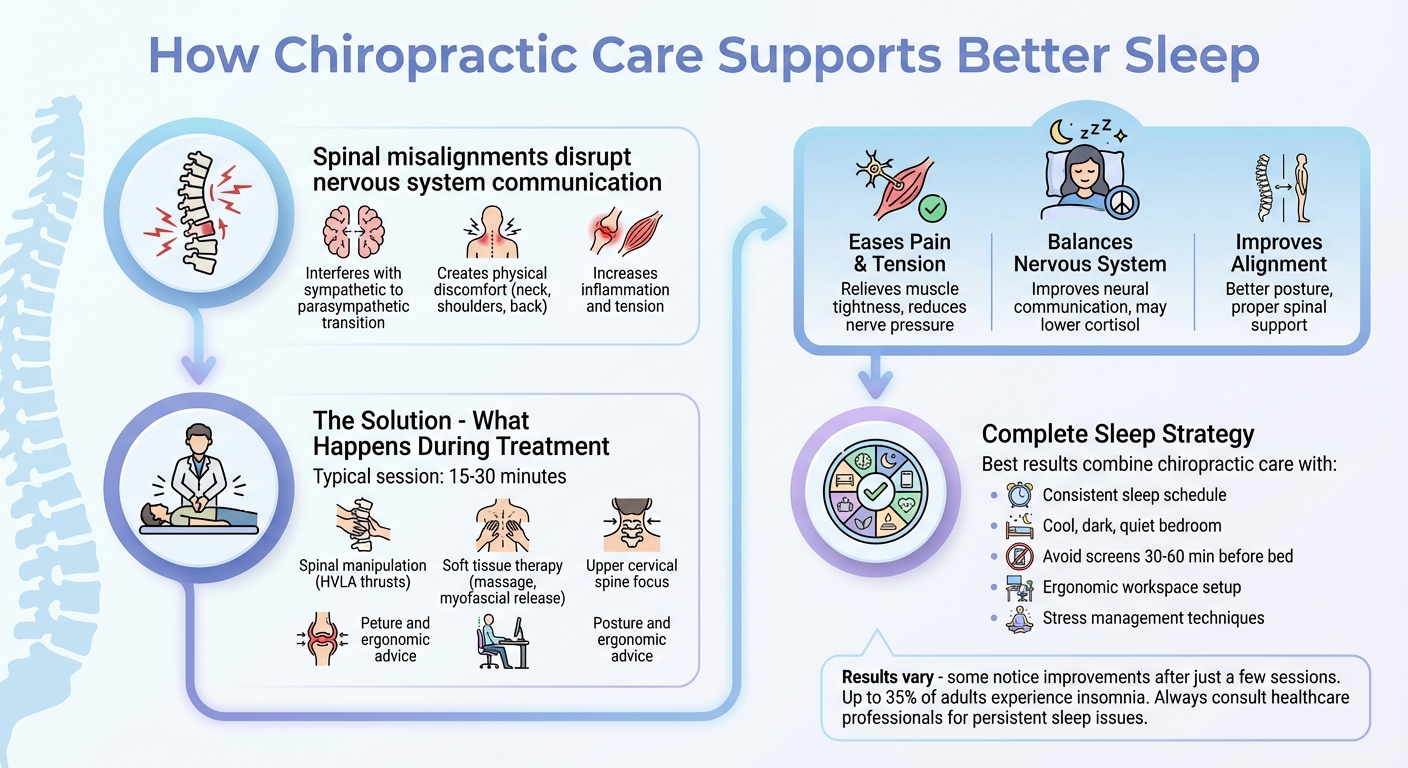
How Chiropractic Care Supports Better Sleep: A Step-by-Step Guide
Why You Need to See a Chiropractor for Sleep Problems | Align Wellness Center in Northbrook, IL

sbb-itb-585d67d
How Spinal Health Affects Sleep
Your spine does more than just hold you upright – it plays a key role in protecting the central nervous system, which allows the brain and body to communicate. When your spine is out of alignment, it can interfere with this communication and may impact your ability to sleep.
Nervous System Function and Sleep
The autonomic nervous system operates in two modes: sympathetic (fight-or-flight) and parasympathetic (rest-and-digest). To sleep well, your body needs to transition from a state of alertness (sympathetic) to relaxation (parasympathetic). Mitchell B. Liester, M.D., Assistant Clinical Professor at the University of Colorado School of Medicine, explains:
"Optimal sleep requires a shift from sympathetic dominance to parasympathetic activation – a transition that can be disrupted by neural interference patterns stemming from spinal misalignments."
The cervical spine, located in the neck, is particularly close to the brainstem, which controls sleep-wake cycles. Misalignments in this area may interfere with the neural pathways that manage these transitions, making it harder for your body to shift into a restful state.
On top of that, spinal misalignments can create physical discomfort, making it even harder to get a good night’s sleep.
Physical Discomfort That Disrupts Sleep
Spinal issues don’t just affect the nervous system – they can also cause direct physical discomfort that disturbs your sleep. Irritated nerves or stiff muscles in the neck, shoulders, or back can make it hard to find a comfortable sleeping position, leading to frequent awakenings.
Misalignments in the spine can also increase inflammation, which may disrupt your ability to relax. Physical tension that builds up during the day often becomes most noticeable at night when you’re trying to unwind. This lingering tension, even if you’re mentally ready for sleep, can prevent your body from fully relaxing.
What Happens During a Chiropractic Session
When you visit a chiropractor, your session usually starts with a quick discussion about your medical history and daily habits, including sleep patterns and any areas of discomfort. The chiropractor will assess your spinal alignment and check for tension that could be affecting your sleep. Misalignments and muscle tension are often key contributors to poor sleep, so addressing these issues is a primary focus. Here’s what you can expect during your session.
Common Adjustment Techniques
Chiropractors often use spinal manipulation, which involves applying controlled, gentle force to realign your vertebrae and improve movement. One popular method is high-velocity, low-amplitude (HVLA) thrusts. These are quick, precise movements aimed at influencing your neuromuscular system and encouraging relaxation.
In addition to spinal adjustments, soft tissue therapies such as therapeutic massage or myofascial release may be used to relieve muscle tension. Techniques like mobilisation are also common; these help loosen stiff spinal joints, improving circulation and communication within your nervous system. Special attention is often given to the upper cervical spine, as this area plays an important role in regulating your sleep-wake cycle.
Your chiropractor might also offer advice on posture and ergonomics. This could include suggestions for sleep positions, supportive pillows, or mattresses that promote proper alignment while you rest.
What You Might Feel During Treatment
During the session, you may feel gentle pressure or the release of muscle tension. It’s also common to hear a popping or clicking sound – this is completely normal and simply signals that a joint has been adjusted. Most people describe the sensation as a light nudge rather than anything forceful or painful.
After the session, many feel noticeably more relaxed, with reduced tension and an overall sense of calm. Some individuals experience immediate benefits, while for others, improvements develop gradually over time.
How Long Sessions Take and How Often You’ll Need Them
A typical chiropractic session lasts about 15 to 30 minutes. However, your first visit may take longer since it usually involves a more in-depth evaluation. The number of sessions you’ll need depends on your specific situation. Minor issues might require only a few visits, while chronic tension or misalignments could need ongoing care over weeks or months.
While results vary, some people notice better sleep quality after just a few sessions. For others, the improvements may take a bit longer, depending on their individual needs and the severity of their concerns.
How Chiropractic Care May Help With Sleep
Chiropractic care might play a role in improving sleep by addressing physical and neurological issues that disrupt rest. While the effects can differ from person to person, specific adjustment techniques aim to promote relaxation and balance within the nervous system, potentially supporting better sleep.
Easing Pain and Muscle Tension
Spinal misalignments can lead to muscle tightness and joint discomfort, particularly in areas like the neck and back. This tension can make it hard to find a comfortable sleeping position. Chiropractic adjustments aim to restore proper alignment, which may help relieve pressure on spinal nerves and ease physical discomfort. By stimulating mechanoreceptors, adjustments can also send signals to the brain that reduce stress and encourage relaxation. This process may help the body transition from the "fight or flight" mode of the sympathetic nervous system to the "rest and digest" state of the parasympathetic system, creating a more sleep-friendly environment.
Balancing the Nervous System
The nervous system is key to maintaining healthy sleep-wake cycles, and spinal misalignments can disrupt its function. The upper cervical spine, located near the brainstem, is particularly important for sleep regulation. Adjustments in this area may help improve neural communication, potentially supporting natural circadian rhythms. Some studies suggest chiropractic care might lower cortisol levels (a hormone associated with stress) and reduce inflammation, both of which can interfere with sleep quality.
Improving Posture and Alignment
Proper posture plays a critical role in overall sleep comfort. Poor habits – like slouching over devices, "tech neck", or sleeping in awkward positions – can strain the neck and shoulders, preventing full relaxation at night. Chiropractic adjustments aim to realign the spine, potentially improving communication between the brain and body, which may help muscles relax more effectively before bed. Chiropractors can also offer practical advice on sleep ergonomics, including tips for choosing the right pillow and mattress to support your spine. For instance, avoiding stomach sleeping and adopting positions that maintain natural spinal curves can make a noticeable difference in how well you sleep over time.
Other Ways to Improve Your Sleep
Chiropractic adjustments can help with spinal alignment and tension, but your daily habits also play a major role in ensuring a good night’s sleep. What you do throughout the day sets the stage for how well you rest at night.
Sleep Hygiene Basics
Keeping a consistent sleep schedule is key to stabilising your internal clock. Many Australians face sleep challenges, and irregular routines often make things worse.
Your bedroom environment matters too. A cool, dark, and quiet space can encourage relaxation. Adding calming elements like soothing scents or a white noise machine can help. Try to avoid screens for 30–60 minutes before bed – blue light from devices disrupts melatonin production. On the flip side, getting some natural light in the morning, such as during a walk, can help reset your internal clock.
What you consume also plays a role. Avoid heavy meals, caffeine, and alcohol close to bedtime. And don’t overlook your bedding – supportive mattresses and pillows can ease pressure points, helping you sleep more comfortably.
Posture and Workspace Setup
The tension you build up from poor posture during the day doesn’t just vanish when you go to bed. For instance, hunching over a computer can strain your shoulders and neck, which may make it harder to relax at night. This strain can even trigger your body’s fight-or-flight response, keeping you alert when you’re trying to unwind.
Simple ergonomic fixes can make a big difference. Adjust your monitor height, use a supportive chair, and take regular stretching breaks. These adjustments can help maintain spinal alignment, reduce muscle stiffness, and ease nerve irritation – all factors that support better sleep. These tweaks work hand-in-hand with chiropractic care to keep your body in balance.
Managing Stress
Stress management is another important piece of the puzzle when it comes to sleep. Techniques like meditation or spending a few quiet minutes before bed can help shift your nervous system into a more relaxed state. Gentle stretches or mobility exercises before bed can also release physical tension built up during the day.
Creating a wind-down routine with low-stimulation activities can signal your brain that it’s time to rest. With up to 35% of adults dealing with insomnia or other sleep disorders, chronic stress is often a key factor. Neuroscientist Matthew Walker explains it well:
"Small annoyances become major frustrations. Anxiety escalates more easily. Positive experiences lose their luster."
Conclusion
Chiropractic adjustments can play a role in improving sleep quality by addressing spinal alignment issues, easing musculoskeletal discomfort, and reducing neural interference – factors that may disrupt relaxation and rest.
However, it’s important to recognise that chiropractic care isn’t a direct treatment for sleep disorders. Instead, it works by supporting physical conditions that may naturally enhance rest. As Jacinth Tan puts it:
"Chiropractic care doesn’t treat sleep disorders directly, but by supporting nervous system function, it may help your body find a more restful rhythm."
This approach works best when paired with healthy sleep habits. Since sleep challenges often arise from a mix of factors – like physical tension, stress, poor sleep routines, or underlying health issues – chiropractic care is most effective as part of a broader strategy. Incorporating good sleep hygiene, improving your posture, and stress management can further support restful sleep.
If sleep problems persist, especially when linked to chronic discomfort, it’s essential to consult a healthcare professional to create a personalised care plan.
This information is general and not a substitute for professional medical advice.
Chiropractic care focuses on musculoskeletal health, and results can vary between individuals.
Always consult a qualified healthcare professional before making health-related decisions.
FAQs
Can chiropractic care help with stress-related insomnia?
Chiropractic care might offer relief for stress-related insomnia by targeting spinal tension and enhancing nervous system function. By addressing these physical stressors, this method could help reduce overall stress levels, potentially leading to better sleep. While outcomes can differ from person to person, chiropractic care is typically regarded as safe when performed by a qualified professional.
Is it safe to get neck adjustments for sleep issues?
Neck adjustments, when carried out by a qualified practitioner, are typically regarded as safe. There is some evidence indicating that these adjustments may contribute to better sleep by promoting proper spinal alignment and supporting the function of the nervous system. However, outcomes can differ from person to person. It’s essential to consult a professional to assess whether this method aligns with your specific needs.
When should I see a GP for ongoing insomnia?
If your insomnia continues even after trying lifestyle adjustments or other non-medical approaches, it’s a good idea to see your GP. Additionally, if you think there might be an underlying health condition contributing to your sleep difficulties, a medical evaluation could be necessary.


