

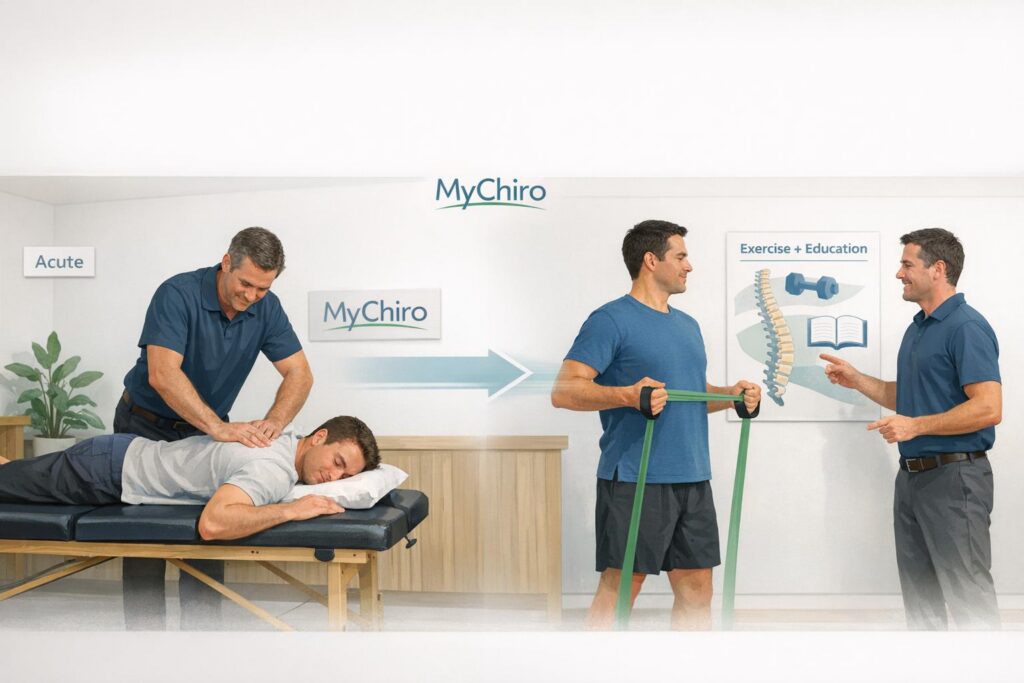
Manual therapy offers tailored benefits for acute and chronic pain, addressing different needs based on pain duration and underlying factors.
- Acute pain (less than 12 weeks): Manual therapy can provide fast relief, reduce inflammation, and support natural healing. Techniques like joint manipulation and soft tissue methods improve mobility and may help prevent pain from becoming chronic. Studies show up to 94% of patients report significant pain reduction within four weeks.
- Chronic pain (more than 12 weeks): The focus shifts to managing long-term symptoms and improving function. Manual therapy helps ease stiffness, enhance mobility, and reduce reliance on medication. Combining it with exercise and lifestyle changes leads to better results. Research shows spinal manipulative therapy improves pain scores by 14 points on a 100-point scale.
While acute pain often resolves naturally, about 25% of cases may develop into chronic pain, highlighting the importance of early care. Manual therapy is safe when performed by qualified practitioners, with minor side effects like muscle soreness being common.
Key takeaway: Manual therapy is more effective when paired with exercise and education, offering short-term relief for acute pain and long-term management for chronic pain.
Manual Therapy for Acute Pain
How Manual Therapy May Help Acute Pain
When dealing with acute injuries like a back strain, neck sprain, or twisted ankle, manual therapy can play a role in supporting the body’s natural healing processes. This is achieved through a mix of biomechanical and neurophysiological effects.
On the biomechanical side, techniques like joint mobilisation and soft tissue manipulation can improve tissue flexibility and boost blood flow. This increased circulation helps deliver more oxygen and nutrients to the affected area, aiding recovery.
From a neurophysiological perspective, manual therapy can lead to quick changes in the body. For instance, studies have found that joint manipulation can reduce inflammatory cytokines (such as TNF-α and IL-1β) by 20%, with these effects lasting at least two hours post-treatment. Additionally, spinal manipulation has been shown to increase endogenous cannabinoids by 168%, which may help provide natural pain relief.
Other techniques, such as manual lymphatic drainage, are sometimes used to reduce swelling after injuries or surgeries and improve circulation. Gentle mechanical stimulation can also help prevent the development of pain memory and avoidance behaviours, which are common after acute injuries.
Research on Acute Pain Relief
Research backs up these mechanisms, showing that manual therapy can offer quicker relief for acute pain. Even though most cases of acute low back pain (about 75–90%) resolve within six weeks regardless of treatment, manual therapy may provide faster symptom improvement.
A notable randomised clinical trial conducted at the UPMC Center for Integrative Medicine from 2010 to 2013 examined 107 adults with acute low back pain lasting less than 12 weeks. Participants received one of three treatments: manual-thrust manipulation (MTM), mechanical-assisted manipulation (MAM), or usual medical care (UMC). Led by Michael Schneider, DC, PhD, the study revealed that after four weeks, 94% of those in the MTM group experienced a 30% or greater reduction in pain, compared to just 56% in the UMC group. Similarly, 76% of the MTM group saw a 30% reduction in disability scores, compared to 48% in the UMC group.
However, these benefits seem to be short-lived. By six months, the differences between the groups were no longer statistically significant. Research suggests that while manual therapy offers better short-term pain and function improvement (one to three months) for acute to subacute low back pain compared to sham treatments, combining it with other approaches – like staying active, education, and reassurance – may lead to better outcomes than manual therapy alone. This highlights manual therapy’s role as part of a broader strategy for managing acute pain.
sbb-itb-585d67d
Manual Therapy for Chronic Pain
Managing Chronic Pain with Manual Therapy
Manual therapy isn’t just for acute pain – it can also play a role in managing chronic conditions, though the approach shifts to focus on long-term strategies. Chronic pain, defined as pain lasting more than 12 weeks, often requires more than just quick symptom relief. Instead, manual therapy may help adjust how pain is perceived and improve physical function over the long haul.
Research indicates that spinal manipulative therapy (SMT) can reduce chronic low back pain by an average of 14 points on a 100-point scale and improve functional ability by 12.9 points. To put that into perspective, even a 10-point improvement is often considered meaningful.
The benefits of manual therapy for chronic pain stem from different mechanisms compared to acute care. Chronic pain is often influenced by factors like psychosocial stress, physical inactivity, and lifestyle habits, rather than just the original injury. Techniques such as spinal manipulation, mobilisation, and soft tissue methods (like massage or myofascial release) can help ease joint stiffness, increase mobility, and make movement more comfortable. Additionally, these hands-on methods may offer a non-drug alternative for managing pain, potentially reducing the need for medication.
That said, manual therapy alone is rarely enough for lasting relief. Research consistently shows that combining hands-on care with active rehabilitation strategies is key to improving function and reducing pain over time.
Combining Manual Therapy with Other Approaches
The best results often come when manual therapy is paired with exercise therapy rather than used on its own. Studies have found that incorporating manual techniques with exercises focused on strengthening, stretching, and stabilisation leads to better outcomes. For example, one study reported a 40% higher return-to-work rate after two months for individuals who received both manual therapy and exercise, compared to those who relied on exercise alone.
"Manual therapy as an adjunct to exercise provides increased improvements in short-term pain, function and disability outcomes than exercise alone in the management of LBP." – Journal of Bodywork and Movement Therapies
This combined approach, sometimes called mixed modality care, addresses not just physical restrictions but also the deconditioning that often accompanies chronic pain. When manual therapy is integrated with posture correction, activity adjustments, and lifestyle changes, it can enhance results even further. Since chronic pain is often linked to sedentary behaviours and a lack of physical activity, some research suggests ongoing treatments – such as sessions every two weeks – may help maintain progress, especially for those with persistent musculoskeletal issues.
Chiropractors frequently adopt this blended approach, creating tailored care plans that combine hands-on techniques with personalised exercise programs. This dual focus supports not only pain relief but also long-term musculoskeletal health.
Manual Therapy for the Management of Musculoskeletal (MSK) conditions
Comparing Acute and Chronic Pain Outcomes
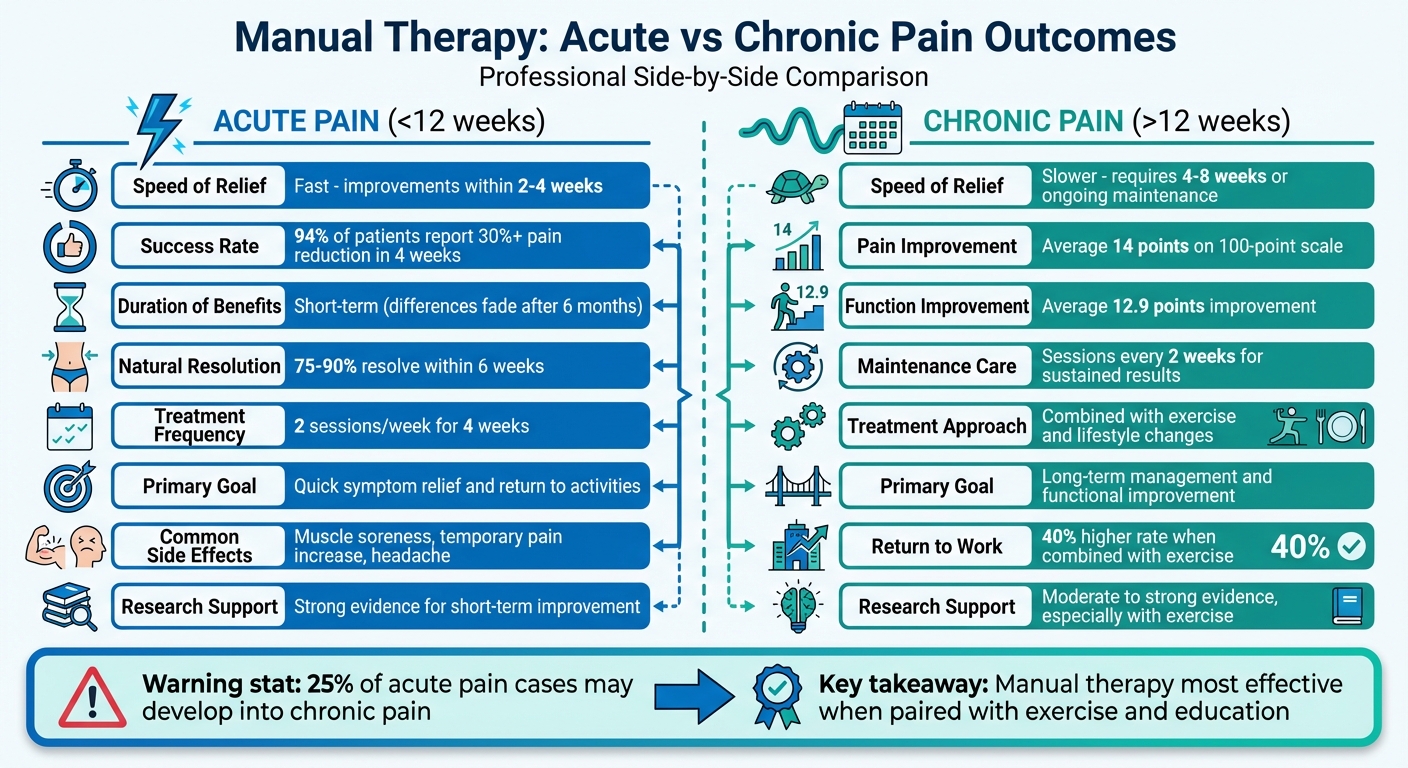
Acute vs Chronic Pain Manual Therapy Outcomes Comparison
Acute vs Chronic Pain: Side-by-Side Comparison
When it comes to manual therapy, the strategies for treating acute and chronic pain differ significantly. These differences reflect the varying goals, timelines, and expected results for each type of pain, emphasising the need for a tailored approach.
For acute pain (lasting less than 12 weeks), manual-thrust manipulation often provides rapid relief. Studies show that up to 94% of patients experience significant pain reduction within just four weeks. Most cases of acute low back pain tend to resolve within six weeks, which can minimise the long-term differences between treatment methods.
On the other hand, chronic pain (lasting more than 12 weeks) demands a shift in focus. Here, the priority is long-term management and improving functionality rather than quick relief. Research indicates that spinal manipulative therapy (SMT) for chronic low back pain improves pain scores by an average of 14 points on a 100-point scale and function by 12.9 points compared to no treatment. While these improvements may seem modest, they are meaningful for individuals facing persistent pain. As highlighted in the Cochrane Database of Systematic Reviews:
"SMT may result in a medium improvement in pain and a large improvement in functional status [for chronic pain] when compared to no treatment."
The table below highlights the key differences in outcomes for acute and chronic pain:
| Feature | Acute/Subacute Pain (<12 Weeks) | Chronic Pain (>12 Weeks) |
|---|---|---|
| Speed of Relief | Fast; significant improvements often seen within 2–4 weeks | Slower; may require 4–8 weeks or ongoing maintenance every 2 weeks |
| Duration of Benefits | Short-term; often no major difference from usual care after 6 months | Long-term potential, especially when combined with exercise and education |
| Common Reactions | Minor/transient: muscle soreness, temporary pain increase, or headache | Similar to acute: muscle soreness or temporary pain flares; no serious adverse events typically reported |
| Research Support | Strong evidence for short-term pain and function improvement | Moderate to strong evidence for short-term relief; moderate for long-term when paired with exercise |
| Treatment Aim | Quick symptom relief and return to normal activities | Long-term pain management, functional improvement, and addressing psychosocial barriers |
What Affects Treatment Outcomes
Several factors influence the effectiveness of manual therapy for both acute and chronic pain, beyond the differences in outcomes.
Pain duration plays a crucial role. People with recent back pain episodes (within the last three months) tend to respond more quickly to manual therapy compared to those with chronic pain. Chronic pain often involves additional complexities, such as changes in the nervous system and psychosocial influences.
Injury type and location also matter. For instance, thoracic spinal manipulation has shown better results for neck pain than direct cervical manipulation, regardless of whether the pain is acute or chronic. Additionally, patients with localised lumbar or buttock pain that doesn’t radiate below the knee and is triggered by palpation often respond well to manual-thrust manipulation.
Psychosocial factors become increasingly relevant in chronic pain cases. As Benjamin Hidalgo from the Institute of Neuroscience explains:
"In chronic LBP, psychosocial factors are of prime importance in explaining the prolongation of pain."
Factors like fear-avoidance beliefs, psychological distress, and social environment can significantly impact treatment outcomes in chronic pain, whereas acute pain outcomes are more closely tied to the physical injury.
Physical condition is another key factor. Obesity and a lack of physical fitness, often linked to sedentary lifestyles, can hinder the effectiveness of manual therapy, especially for chronic pain. Combining manual therapy with exercise and lifestyle adjustments often produces better results than relying on manual therapy alone.
Finally, personal goals differ between acute and chronic pain cases. For acute pain, the focus is on immediate symptom relief and a quick return to daily activities. Chronic pain management, however, prioritises broader goals like improving quality of life, increasing return-to-work rates, and achieving long-term functional progress. This typically requires a more sustained and multi-faceted approach.
Manual Therapy in Chiropractic Practice
How Chiropractors Use Manual Therapy
Chiropractors rely on manual therapy to promote musculoskeletal health, tailoring their techniques based on whether a patient’s pain is acute or chronic. The approach varies depending on how long the condition has persisted and its specific nature.
For acute and subacute pain (lasting less than 12 weeks), chiropractors often use Manual-Thrust Manipulation (MTM). This is a high-velocity, low-amplitude technique typically performed with the patient in a side-lying position. It’s particularly effective for recent injuries or sudden flare-ups, offering relief in a relatively short time. Acute care plans often involve two sessions per week over a four-week period. Studies have indicated that manual-thrust manipulation can reduce short-term disability effectively[1].
In cases of chronic pain (lasting more than 12 weeks), chiropractors tend to use a combination of methods. These may include spinal manipulation, mobilisation, soft-tissue techniques (like myofascial or trigger point release), and tailored exercises. As Michael Schneider, DC, PhD explains:
"Manual-Thrust Manipulation (MTM) provides greater short-term reductions in self-reported disability and pain scores compared with Usual Medical Care (UMC) or Mechanical-Assisted Manipulation (MAM)."
For chronic conditions, maintenance care often involves manipulative therapy every two weeks to help maintain functional improvements over time. Chiropractors use palpation to identify problem areas in the thoracic, lumbar, and sacroiliac regions, ensuring treatments are tailored to the patient’s specific needs. Chronic pain care also frequently adopts a bio-psycho-social approach, addressing not just physical symptoms but also factors like sedentary habits and deconditioning.
These techniques provide the foundation for highly personalised care, accommodating individual lifestyles and specific challenges, whether occupational or personal.
Tailored Care for Different Needs
Chiropractic care is designed to adapt to the diverse demands of daily life, with manual therapy techniques forming the backbone of these personalised treatment plans.
- Office workers: For those struggling with neck tension or headaches from long hours at a desk, chiropractors often focus on relieving tech-neck strain. Gentle adjustments are scheduled flexibly to fit around busy workdays.
- Active parents: Parents dealing with back pain or sciatica from lifting and other physical activities can benefit from targeted care. This helps manage strain and supports long-term spinal health, enabling them to keep up with their active routines.
- Wellness enthusiasts: For individuals prioritising prevention and overall balance, chiropractic care can complement existing health routines. These sessions aim to maintain musculoskeletal health as part of a broader approach to wellness.
At Dr Steve’s practice in Bondi Junction, treatments are provided in a calm and welcoming environment. Convenient online booking ensures that even the busiest schedules can be accommodated. Whether addressing acute pain with immediate care or offering ongoing support for chronic conditions, chiropractic plans are tailored to meet individual goals. While manual therapy is generally safe when performed by a qualified practitioner, it’s worth noting that temporary muscle soreness may affect 50% to 67% of patients[2].
Conclusion
Key Points
Manual therapy can provide different benefits depending on whether the pain is acute or chronic. For acute pain (lasting less than 12 weeks), manual-thrust manipulation has been shown to offer short-term relief. Research highlights that 94% of patients experienced at least a 30% reduction in pain within four weeks. The primary aim for acute cases is to reduce symptoms quickly and help individuals resume their daily routines.
When it comes to chronic pain (lasting more than 12 weeks), the focus shifts to improving function and managing discomfort over the long term. Studies suggest manual therapy can lead to moderate improvements, with some reporting an average increase of 14 points on a 100-point pain scale compared to no treatment. Combining manual therapy with exercise or other complementary methods often achieves better outcomes. Chronic pain management may also involve maintenance sessions every two weeks to maintain progress.
Research shows that 75–90% of acute low back pain cases resolve within six weeks, regardless of treatment. However, about 25% of cases may progress to chronic pain, highlighting the importance of timely and appropriate care. The effectiveness of manual therapy depends on factors like pain location, duration, and individual preferences, emphasising the need for personalised treatment plans.
These insights reinforce how chiropractic care adapts manual therapy to meet both immediate and long-term goals for musculoskeletal health. When performed by a qualified practitioner, manual therapy is generally safe. Temporary muscle soreness is a common side effect, while serious complications are rare. For chronic conditions, combining manual therapy with exercise and lifestyle changes often provides more lasting results.
Disclaimer
This information is general in nature and does not replace professional medical advice. Chiropractic care focuses on musculoskeletal health, and results may vary from person to person. Always consult a qualified healthcare professional before making decisions about your health.
[1] Schneider et al., Spine, 2015.
FAQs
When should I consider manual therapy for a new injury?
Manual therapy can be an effective option for addressing a new injury, especially when it’s performed by a qualified practitioner. It may help in reducing pain, enhancing mobility, and aiding recovery, but this should always follow a proper assessment and diagnosis. Be sure to consult a healthcare professional to find the most suitable treatment plan for your condition.
How many sessions are typically needed for chronic pain?
Managing chronic pain takes a personalised approach, and the number of sessions needed can differ greatly from person to person. Treatment typically involves multiple sessions spread over time, allowing for regular check-ins and adjustments. This ensures the care plan aligns with the individual’s condition and how they respond to the therapy.
Who should avoid manual therapy?
People dealing with specific health conditions like severe osteoporosis, spinal instability, or infections should typically steer clear of manual therapy unless a healthcare professional explicitly recommends it. These conditions can heighten the risks linked to manual therapy, making professional guidance essential.