How do manual therapies differ, and where do they fit when pain comes with neurological symptoms? Back or neck pain, tingling and weakness need assessment before choosing treatment. Manual therapy may be an option for some musculoskeletal pain; it is not a general treatment for neurological disease.
- Chiropractic care can include assessment, exercise advice and manual techniques for musculoskeletal problems. Symptoms described as nerve-related issues like sciatica need assessment to identify the cause and whether referral is needed.
- Physiotherapy may combine education, exercise and hands-on techniques. The approach depends on the person’s condition, goals and response to care.
- Osteopathy may use joint and soft tissue techniques alongside exercise and self-management advice for musculoskeletal concerns.
- Massage therapy works with soft tissues and may offer temporary relief of muscle discomfort. It does not establish the cause of numbness, weakness or other neurological symptoms.
Quick Comparison
| Therapy Type | Possible role | Key Techniques | Risks/Limitations | Evidence considerations |
|---|---|---|---|---|
| Chiropractic | Selected back or neck pain after assessment | Mobilisation, manipulation, exercise advice | Technique-specific risks; referral may be needed | Depends on condition and technique |
| Physiotherapy | Movement, strength and rehabilitation goals | Exercise, education and manual techniques | Plan and exercises need individual tailoring | Depends on condition and intervention |
| Osteopathy | Selected musculoskeletal pain | Joint and soft tissue techniques, exercise advice | Evidence varies between approaches | Not evidence for treating neurological disease |
| Massage Therapy | Temporary muscle comfort | Soft tissue techniques | Does not diagnose or treat all causes of pain | Depends on condition and comparison |
Professional titles do not tell you which technique will be used or how well it will work for you. Ask what the assessment suggests, which options are reasonable, and how progress and any adverse effects will be reviewed.
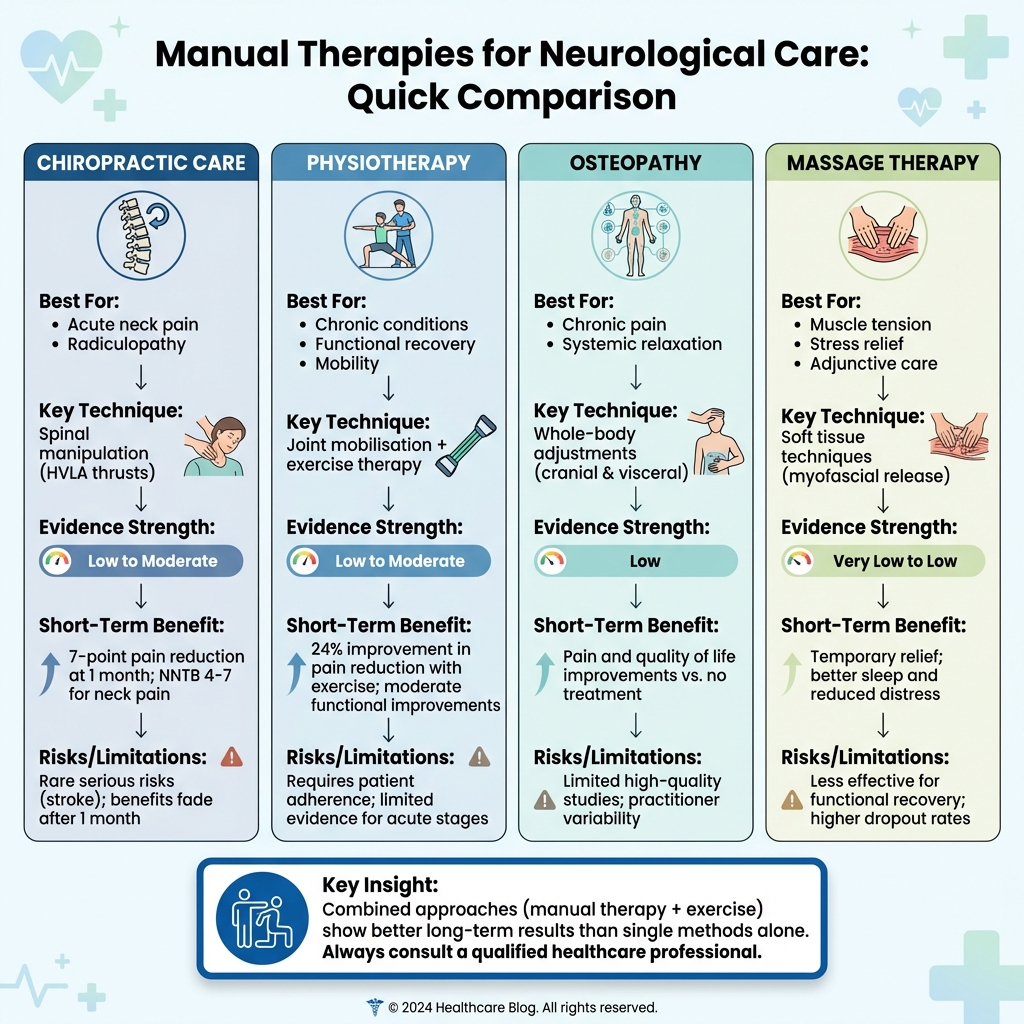
This older graphic contains broad treatment rankings and numerical benefit claims that should not guide care. The updated text explains why suitability, benefits and risks depend on the condition and technique.
Top 5 Differences between a Physiotherapist and Chiropractor
sbb-itb-585d67d
Comparing Methods: Chiropractic vs. Other Manual Therapies
The techniques used by chiropractors, physiotherapists and osteopaths can overlap. Their role in musculoskeletal pain should be distinguished from rehabilitation for a diagnosed neurological condition.
Chiropractic Spinal Adjustments
Some chiropractors use high-velocity, low-amplitude (HVLA) thrusts: a short, controlled movement applied to a joint. A click can occur, but it does not show that a bone was out of place or that nerve function has been restored. Mobilisation, exercise advice or referral may be considered instead.
Research on manual therapy concerns particular diagnoses and techniques. It does not establish one best treatment for everyone, or show that spinal manipulation is a replacement for medical assessment of neurological symptoms.
Physiotherapists may also use mobilisation or manipulation when appropriate; the choice of technique is not determined by professional title alone.
Physiotherapy Manual Techniques
Physiotherapy may include joint mobilisation, soft tissue techniques and, where appropriate, manipulation. These are considered alongside exercise, education and the person’s wider rehabilitation needs.
Ask your practitioner which technique they propose, what it aims to help, and what alternatives are available.
A plan may include exercise therapy, such as graded strengthening or movement practice. Expected benefits depend on the condition and programme; a single percentage does not predict your individual response.
Osteopathic Manipulative Treatment
Osteopaths may take a whole-person approach to musculoskeletal assessment, considering symptoms, activity and health history. Treatment can include mobilisation, manipulation, soft tissue work and exercise advice. Specific techniques require their own evidence and risk discussion.
Ask how a proposed hands-on technique relates to your symptoms and goals, and how the practitioner will decide whether to continue, change or stop it.
In Australia, osteopaths are registered allied health professionals. Registration as an osteopath does not make someone a medical practitioner. This differs from the US osteopathic physician (DO) qualification. Claims that cranial techniques alter cerebrospinal fluid flow or treat neurological disease are not established by evidence for ordinary back or neck pain.
Massage may be considered for a separate muscle discomfort problem, but new neurological symptoms still need appropriate clinical assessment.
Massage Therapy for Muscle Discomfort
Massage uses soft tissue techniques, such as kneading or sustained pressure. Some people find it helpful for short-term muscle comfort. That does not establish a treatment for nerve damage, impaired circulation or the underlying cause of neurological symptoms.
Benefits vary by condition and technique. Massage should not delay medical assessment of unexplained weakness, numbness or dizziness. Pressure and positioning should be adapted to the person’s health and preferences.
Evidence and Limitations of Each Approach
Evidence for Back and Neck Pain
Studies of back or neck pain do not establish benefits for neurological diseases. The diagnosis, comparison treatment, follow-up period and quality of the research all affect what can reasonably be concluded.
For some adults with low back pain, spinal manipulation may provide modest short-term improvement in pain or function. The size of benefit varies, and results are often similar to other recommended approaches. This is not a promise of lasting recovery or evidence that spinal alignment controls general health.
Neck pain studies compare different manual techniques, exercise programmes and other treatments. Findings from one trial do not establish that cervical manipulation is generally better than medication or that it suits every person with neck pain.
For primarily chronic neck pain, a 2025 Cochrane review found that manual therapy with exercise may improve function compared with placebo, but may not reduce pain. Results looked more favourable against no treatment, and confidence in the evidence was low. These findings do not establish a cure for headaches or nerve disease.
Discuss the likely size and duration of any benefit, the uncertainties, and what would count as worthwhile progress for you.
Comparison Table: Questions to Discuss
| Therapy Type | Evidence considerations | Possible role | Limitations | Assessment focus |
|---|---|---|---|---|
| Chiropractic (SMT) | Condition- and technique-specific | May help selected musculoskeletal pain | Benefits vary; risks and alternatives need discussion | Symptoms, neurological signs and referral needs |
| Physiotherapy | Condition- and programme-specific | Movement and exercise-based rehabilitation | Programme must match health, capacity and goals | Function, strength and daily activity |
| Osteopathy (OMT) | Depends on condition and technique | Management of selected musculoskeletal concerns | Cannot infer neurological benefits from pain studies | Symptoms, movement and wider health history |
| Massage Therapy | Condition- and technique-specific | Possible short-term muscle comfort | Does not identify the cause of neurological symptoms | Suitability, comfort and need for clinical assessment |
Temporary soreness can occur after manual therapy. Serious adverse events have also been reported, including artery injury and stroke in association with neck manipulation; their frequency and causal relationship are uncertain. Risk depends on the technique and the person’s health. Discuss benefits, risks and alternatives before deciding.
Choosing the Right Manual Therapy for Your Needs
When Chiropractic Care May Help
An assessment can help determine whether neck pain, suspected radiculopathy or headache associated with neck symptoms needs medical investigation, a trial of musculoskeletal care or another approach. These labels alone do not establish that manipulation is suitable.
The duration of symptoms is one part of the assessment. Your health history, examination findings, daily activities and goals also matter. A fixed recovery timetable cannot be promised.
Discuss potential risks before chiropractic manipulation, particularly of the neck. Ask about options such as exercise, mobilisation or referral. You can decline a technique and discuss alternatives without agreeing to treatment.
If your main concern is returning to work, sport or daily tasks, discuss a plan with clear functional goals and a review point.
Physiotherapy for Functional Recovery
Physiotherapy can focus on functional recovery, including movement practice and graded strengthening. These goals are not exclusive to one profession; ask how the proposed programme fits your diagnosis and activities.
For low back pain with or without sciatica, NICE recommends considering manual therapy only within a package that includes exercise. This does not mean every person needs hands-on treatment or that more treatment is better.
The Role of Combined Care Approaches
Some plans use more than one approach, but combining treatments does not automatically improve results. If you are not progressing, review the diagnosis, goals and plan before adding sessions or techniques.
A useful plan explains what you can do between appointments, when progress will be reviewed and when another opinion or referral is needed.
Coordinated care may be useful when needs span several professions. Tell each practitioner about other treatment you receive so advice can be coordinated and unnecessary duplication avoided.
This information is general in nature and not a substitute for professional medical advice.
Chiropractic care focuses on musculoskeletal health, and results vary between individuals.
Always consult a qualified healthcare professional before making decisions about your health.
Conclusion
Choosing care starts with understanding the problem. New or unexplained neurological symptoms need appropriate assessment; a manual therapy comparison cannot determine their cause. For musculoskeletal back or neck pain, discuss options that fit your health, preferences and goals.
If hands-on treatment is proposed, ask about realistic benefits, risks, alternatives and how it fits with active self-management. You can choose an approach that does not include manipulation.
Research results are averages, not a forecast for an individual. Improvement in pain does not prove that a nerve has been repaired or a neurological condition has been treated.
At MyChiro in Bondi Junction, new patients can book a free initial consultation to discuss back pain, neck pain or headaches and appropriate next steps. Same-day treatment is optional, costs $125 and is offered only when clinically appropriate. There is no obligation to proceed.
This information is general and not a substitute for professional medical advice.
Chiropractic care focuses on musculoskeletal health, and results can vary between individuals.
Always consult a qualified healthcare professional before making health-related decisions.
FAQs
When should I choose mobilisation over manipulation?
Mobilisation uses slower, repeated joint movements; manipulation usually involves a brief, controlled thrust. Neither is suitable for everyone or risk-free. Discuss your health history, the proposed technique, expected benefits and alternatives. You can decline manipulation.
How can I tell if my nerve pain is radiculopathy?
Pain travelling from the neck or back into an arm or leg can have several causes. Numbness, tingling, weakness or reflex changes may suggest nerve involvement, but symptoms alone cannot confirm radiculopathy. A clinician can assess you and decide whether medical referral or imaging would change management.
What are the red flags that need urgent medical care?
Call 000 for sudden facial droop, speech difficulty, one-sided weakness or other suspected stroke symptoms. New bladder or bowel control changes, numbness around the groin or saddle area, or rapidly worsening limb weakness need urgent emergency assessment. Do not wait for a manual therapy appointment.