

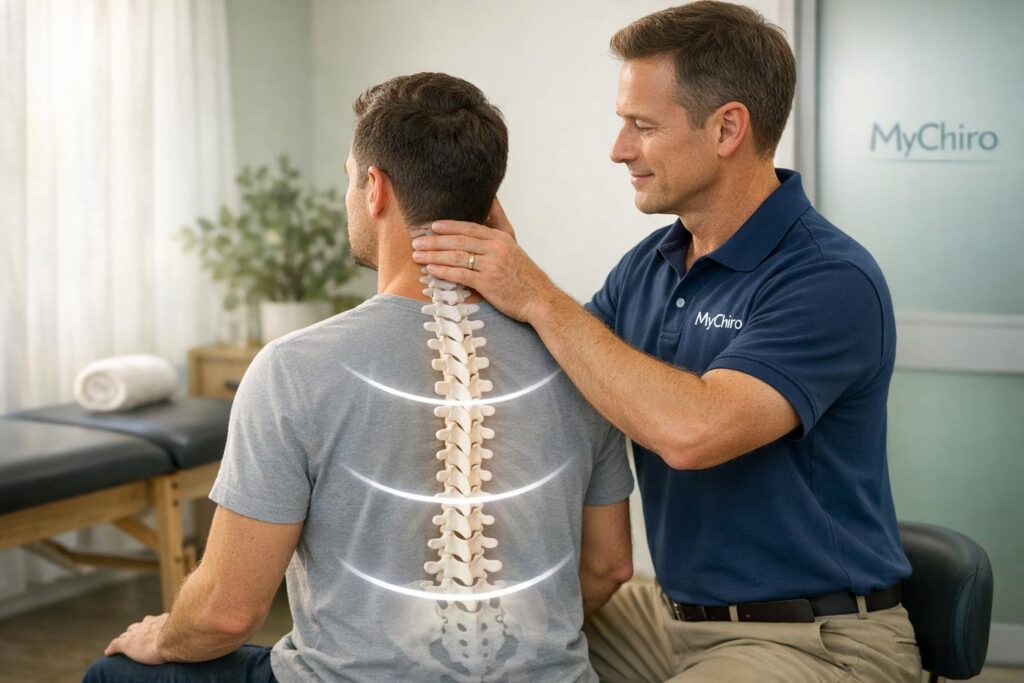
Stress can lead to physical pain, especially in the neck, back, and shoulders, due to muscle tension and poor posture. Chiropractic care may help by addressing spinal misalignments, improving posture, and supporting the nervous system. Adjustments aim to relieve pressure on nerves, reduce muscle tension, and enhance mobility. Combining chiropractic care with exercise, relaxation techniques, and ergonomic changes can further ease stress-related discomfort. If you’re experiencing persistent pain, consulting a chiropractor could help manage these symptoms effectively.
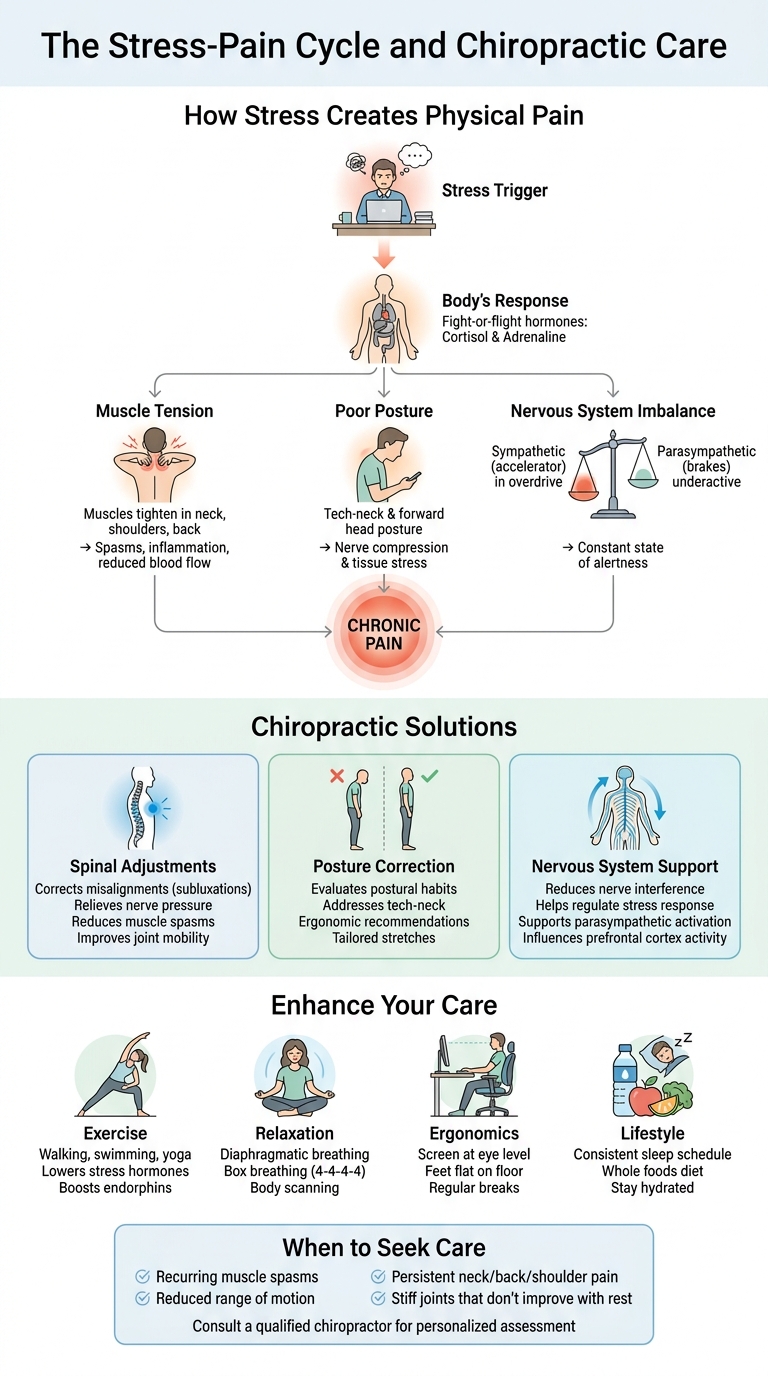
How Stress Creates Physical Pain and Chiropractic Solutions
Chiropractic Care for Stress Relief | Calm Your Nervous System Naturally
sbb-itb-585d67d
How Stress Creates Physical Pain
Stress kicks off your body’s fight-or-flight response, flooding your system with hormones like cortisol and adrenaline. While this reaction is crucial in emergencies, when it becomes a long-term state, it can lead to physical discomfort. Let’s break down how stress contributes to pain.
Stress and Muscle Tension
When you’re stressed, your muscles tend to tighten – especially in areas like your neck, shoulders, and back. If this tension persists, it can result in spasms, inflammation, and reduced blood flow. Over time, these issues may cause chronic discomfort. Stress also impacts how you carry yourself, which can make the pain even worse.
Stress and Poor Posture
Stress doesn’t just affect how you feel – it can also influence how you move and hold your body. When you’re anxious or overwhelmed, you might unconsciously hunch your shoulders, push your neck forward, or collapse your chest. These posture habits, often called "tech-neck" or forward head posture, compress the tissues in your neck and upper back. This compression can irritate nerves, sending stress signals back to your brain. It’s a vicious cycle: poor posture increases tension, which feeds back into stress.
The Nervous System’s Role in Stress-Related Pain
Your nervous system has two key branches: the sympathetic system (your "accelerator") and the parasympathetic system (your "brakes"). Chronic stress can throw this system off balance, keeping your "accelerator" stuck in overdrive while your "brakes" barely engage. This imbalance leaves your body in a constant state of alertness.
Spinal misalignments, known as subluxations, can worsen this problem. As Dickson Chiropractic explains:
"Misalignments – often referred to as subluxations – create additional stress within the nervous system, which can manifest as tension, discomfort, or even pain."
When vertebrae shift out of alignment, they can press on nerves, disrupting communication between your brain and body. This disruption can heighten your sensitivity to pain and make it harder for your body to manage stress effectively. Understanding this connection is a key step before exploring how spinal adjustments might help restore balance.
How Chiropractic Care May Help Manage Stress-Related Pain
Chiropractic care can play a role in managing pain tied to stress by addressing spinal alignment, improving posture, and supporting the nervous system. While it doesn’t directly target stress itself, it may help alleviate the physical discomfort that often accompanies chronic stress. By focusing on these areas, chiropractic adjustments may help interrupt the tension-pain cycle caused by stress.
Spinal Adjustments for Pain Relief
Chiropractic adjustments involve applying precise pressure to specific joints to restore alignment and improve mobility. Misaligned vertebrae can press on nerves, leading to pain and restricted movement. Dr Jeremy Coffey, a chiropractor at Western Reserve Hospital, explains:
"The kinds of chronic pain most effectively treated with chiropractic care are joint related…neck, back, hips, shoulders. Chiropractic care will loosen up the muscles…and help mobilise joints for optimal movement."
By correcting spinal alignment, these adjustments may relieve nerve pressure and reduce muscle spasms, improving movement in areas commonly affected by stress. Some research even suggests that spinal manipulation could boost endorphin production – natural chemicals that help ease pain and enhance mood.
Posture Assessment and Correction
Poor posture, like slouching at a desk or constantly looking down at a screen, can lead to tension in the neck and upper back. Chiropractors evaluate postural habits and work to correct them through adjustments and ergonomic advice. For instance, addressing "tech-neck" early can help prevent nerve compression that sends stress signals to the brain. Many chiropractors also recommend tailored stretches and workplace changes to maintain better posture and prevent strain from building up. Improved posture not only eases discomfort but may also help the nervous system relax more effectively.
Supporting Nervous System Function
Chiropractic care also aims to support a balanced nervous system, which plays a key role in how the body handles stress. Chronic stress often keeps the "fight-or-flight" response on overdrive, leaving the body in a constant state of tension. By reducing nerve interference caused by spinal misalignments, chiropractic adjustments may help the nervous system regulate itself more effectively.
Research on Heart Rate Variability (HRV) highlights this connection. A 2023 study in the Journal of Neural Plasticity found that spinal adjustments influenced activity in the prefrontal cortex, the brain’s hub for decision-making and stress regulation. As Dickson Chiropractic explains:
"By ensuring the spine is aligned, chiropractors can reduce the strain on the nervous system, allowing it to function more efficiently and respond to stress more effectively."
Additional Strategies for Managing Stress-Related Pain
Chiropractic care, with its focus on spinal adjustments and posture improvement, can be a great tool for managing stress-related pain. However, combining it with other approaches can enhance its effects. Strategies like regular physical activity can help lower stress hormones, boost endorphins, and improve muscle support, flexibility, and circulation. Together, these methods can further address the physical factors contributing to stress-related discomfort.
Stretching and Mobility Exercises
Adding gentle mobility exercises to your routine can work hand-in-hand with chiropractic care to reduce tension. Activities like walking, swimming, or yoga are low-impact options that may help ease muscle tightness. Many chiropractors recommend personalised stretches tailored to specific areas of tension, helping to prevent tightness from recurring. Start slowly and increase intensity over time to allow your body to adapt comfortably.
Relaxation Techniques
Relaxation practices can help counteract the physical toll of stress. Breathing exercises, for instance, are simple yet effective tools:
- Diaphragmatic breathing: Sit or lie down comfortably, placing one hand on your chest and the other on your abdomen. Breathe deeply through your nose, letting your abdomen rise while keeping your chest still.
- Box breathing: Inhale for a count of four, hold for four, exhale for four, and hold again for four. This technique can quickly promote calm and focus.
Mindfulness practices, such as body scanning (mentally focusing on each part of your body to release tension), can increase awareness of where stress accumulates. Even dedicating 5–10 minutes daily to meditation can help lower stress levels over time.
Ergonomic and Lifestyle Changes
Small adjustments in your daily environment and habits can make a big difference in managing stress-related pain. For example:
- Set up your workspace so your screen is at eye level and your feet rest flat on the floor.
- Establish consistent sleep habits, such as sticking to a regular bedtime, keeping your room dark and quiet, and avoiding screens before bed.
- Focus on a diet rich in whole foods, while staying hydrated. Cutting back on caffeine, sugar, and processed foods may also help regulate the body’s stress response.
These lifestyle tweaks, combined with chiropractic care, can create a well-rounded approach to managing stress-related pain effectively.
When to Consider Chiropractic Care for Stress-Related Pain
Common Symptoms of Stress-Related Pain
Stress often shows up in physical ways, leading to recurring muscle spasms, inflammation, and tension in areas like the neck, back, hips, and shoulders. You might notice symptoms such as reduced range of motion, stiff joints, or muscles that feel tight and knotted (known as myofascial trigger points) that don’t seem to improve with rest.
Chiropractic care is designed to target chronic pain connected to joint issues in these areas. If these symptoms sound familiar, it could be a good idea to consult a qualified Chiropractor to evaluate your musculoskeletal health. Catching these signs early can make a big difference in managing the pain effectively.
Why Early Intervention Matters
Taking action early is crucial when it comes to stress-related pain. Addressing these issues sooner rather than later can stop them from developing into chronic or more severe conditions. Early chiropractic care can help realign your spine, reduce inflammation, and support your body’s natural healing abilities. Plus, it’s a non-invasive approach that is generally safe when performed by a trained professional.
Dr. Coffey highlights this point:
"chiropractic care can be that first line of defense, where it doesn’t have that many risks or aspects that are going to aggravate the pain."
Conclusion
Managing stress-related pain often starts with addressing spinal alignment and supporting the nervous system. Stress can show up in the body as muscle tension, poor posture, and nervous system strain – areas where chiropractic care might play a role. By improving spinal alignment, enhancing joint mobility, and addressing inflammation, chiropractic adjustments could help ease the physical toll stress takes on your body. This non-invasive method fits well with broader wellness practices.
Incorporating chiropractic care with regular physical activity, ergonomic adjustments, and relaxation techniques can help your body heal naturally and may prevent pain from becoming a long-term issue. Chiropractors often take a holistic approach, considering factors like lifestyle, diet, and stress levels to uncover the underlying causes rather than just addressing symptoms.
If you’re dealing with persistent discomfort, it’s worth consulting a qualified Chiropractor to evaluate your musculoskeletal health. A thorough health history and examination can help shape a treatment plan tailored to your needs. Be open with your healthcare provider about your symptoms, lifestyle habits, and goals to create an effective strategy for managing stress-related pain. Keep in mind that individual results can vary.
This content is intended for general informational purposes and should not replace professional medical advice. Chiropractic care focuses on musculoskeletal health, and outcomes differ from person to person. Always consult a qualified healthcare professional before making health-related decisions.
FAQs
How can I tell if my pain is stress-related?
Stress-related pain usually manifests as muscle tension, headaches, or general discomfort that tends to flare up during times of stress, fatigue, or emotional strain. Unlike pain caused by a specific injury, this type of discomfort is often tied to increased muscle tension or heightened nervous system activity. If you notice your pain worsening alongside poor sleep, heavy workloads, or emotional stress, it’s a good idea to seek advice from a healthcare professional. They can assess your symptoms and recommend ways to manage the pain, which might include lifestyle changes or chiropractic care.
How many chiropractic visits might I need for stress-related pain?
The frequency of chiropractic visits for stress-related pain varies from person to person. It largely depends on your unique needs and how your body responds to treatment. For tailored guidance, it’s a good idea to consult directly with a chiropractor. They can assess your situation and recommend a care plan that suits you best.
When should I see a GP instead of a chiropractor?
If you’re experiencing severe or unexplained pain, signs of infection, neurological symptoms, or suspect a serious medical condition, it’s important to see a GP. While chiropractic care is centred on musculoskeletal health, it may not address all health issues. For urgent or non-musculoskeletal concerns, always consult a GP first.


