


Myofascial release and chiropractic care work hand-in-hand to address pain, improve mobility, and support overall musculoskeletal health. Myofascial release focuses on easing tension in the fascia – connective tissue surrounding muscles – through gentle, sustained pressure. This helps reduce tightness, improve flexibility, and enhance blood flow. Chiropractic care, on the other hand, targets joint alignment and nervous system function through spinal adjustments.
When combined, these therapies provide a more comprehensive approach. Myofascial release prepares soft tissues, making chiropractic adjustments more effective and longer-lasting. Together, they address both the root causes of discomfort and the surrounding soft tissue restrictions, offering better movement and pain relief. Whether dealing with chronic back pain, fibromyalgia, or post-surgical recovery, this dual approach can improve outcomes.
Key benefits of combining these therapies include:
- Pain reduction: Tackles both joint misalignments and fascial tightness.
- Improved flexibility: Restores range of motion by releasing restrictions.
- Long-term support: Helps prevent recurring issues by addressing soft tissue tension.
For optimal results, a tailored treatment plan is crucial, considering individual needs and conditions.
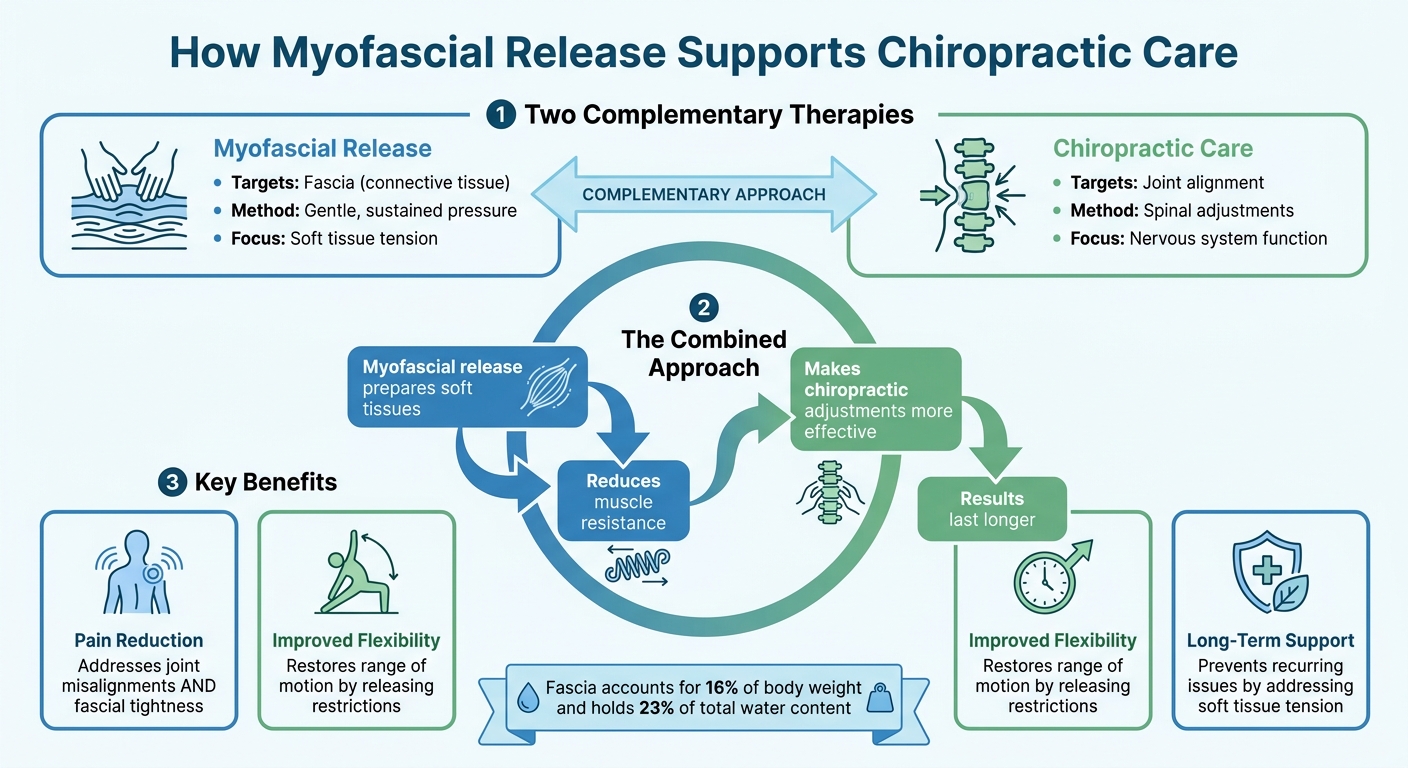
How Myofascial Release and Chiropractic Care Work Together
The Science Behind Myofascial Release
How Myofascial Release Affects the Body
Myofascial release relies on gentle, sustained pressure rather than aggressive manipulation. This technique focuses on the fascia – a vital connective tissue that accounts for about 16% of your body weight and holds around 23% of your total water content. Applying steady pressure helps restore the fascia’s elasticity and alleviates tightness that can limit movement.
This method also interacts with the nervous system. By targeting specific trigger points, myofascial release may influence sensory nerve receptors, sending signals to the central nervous system. This could lead to a reduction in muscle hypertonicity, helping chronically tight muscles relax, regain their natural length, and ease referred pain.
Additionally, releasing fascial restrictions may boost blood flow, bringing much-needed oxygen and nutrients to muscles while potentially decreasing inflammation. These physiological changes form the basis for the benefits often observed during chiropractic care.
Benefits for Chiropractic Patients
For chiropractic patients, myofascial release can be a game-changer. By easing muscle resistance, it may make adjustments more effective. Since soft tissues like muscles and fascia play a key role in bone alignment, releasing tension in these areas could help break the cycle where spasms pull vertebrae out of alignment after an adjustment. As Belgian chiropractic researcher Gillet explained:
Abnormality in the spinal muscles, ligaments, and [peri]articular soft tissues is the real factor responsible for subluxations.
Clinical studies back up its effectiveness. Randomised controlled trials show that patients receiving myofascial release report improved physical function, particularly those managing chronic back pain, fibromyalgia, or recovering from surgery. Meta-analyses also highlight benefits for people dealing with migraines and long-term musculoskeletal issues. By combining chiropractic adjustments to address joint alignment with myofascial release to tackle soft tissue restrictions, patients may experience better mobility and longer-lasting relief.
sbb-itb-585d67d
Common Myofascial Release Techniques
Sustained Pressure
The pin-and-hold technique is a popular method in myofascial release therapy. In chiropractic care, this involves applying steady, gentle pressure to a specific trigger point or "knot" in the fascial tissue for at least 60 seconds. This constant pressure encourages the nervous system to release tension in the tissue while promoting fluid exchange. Once the pressure is removed, fresh fluid flows into the area, which may improve circulation and ease tightness.
Chiropractors often perform this technique directly on the skin without using oils or lotions. This allows them to better detect and address fascial restrictions. The key is maintaining moderate pressure – if it feels painful or causes you to hold your breath, the pressure may be too intense.
Direct Release with Movement
Known as compress, shear, and lengthen, this method combines pressure with movement for a more dynamic approach to releasing fascial tightness. During a session, the chiropractor applies compression to the tissue, introduces a shearing motion, and guides movement in a nearby joint. The combination of these actions is more effective than simple pressure alone, as the shearing and movement work together to lengthen the fascia.
This technique is especially helpful in preparing the body for chiropractic adjustments. By addressing fascial tension, it can reduce the pull on joints and create more freedom of movement.
Self-Care Techniques Between Appointments
To maintain progress between sessions, you can try foam rolling or using roller massagers at home. Focus on applying gentle, sustained pressure to tight spots for about 60 seconds. For larger muscle areas, use light, sweeping motions that move towards the centre of your body, which supports lymphatic drainage.
Before starting any self-care routine, consult your chiropractor to ensure you’re using the right techniques for your needs. Regular self-myofascial release can help keep tissues relaxed and support the benefits of your chiropractic treatments. Together, these practices address soft tissue restrictions and enhance overall mobility.
Benefits of Combining Myofascial Release with Chiropractic Care
Better Pain Management
Combining joint alignment with soft tissue therapy offers a two-pronged approach to pain relief. Chiropractic adjustments aim to restore proper joint positioning, while myofascial release focuses on the fascia – the connective tissue surrounding your muscles. Studies suggest that myofascial release can significantly reduce pain for those dealing with conditions like fibromyalgia, chronic back pain, or post-surgical recovery.
"By releasing fascial restrictions, this therapy improves blood circulation to the affected areas, promoting healing and reducing inflammation." – Muscle Works Chiropractic
When fascial stiffness is addressed, chiropractic adjustments may become more effective. With softened tissues, joints are less likely to shift back out of alignment. This combined strategy not only reduces discomfort but also supports improved mobility.
Improved Movement and Flexibility
Releasing fascial restrictions doesn’t just reduce pain – it can also improve how your body moves. Tight fascia can limit your range of motion, even after a chiropractic adjustment. Myofascial release, which applies sustained pressure to these restrictions, can help restore flexibility and make daily activities feel less challenging. Research highlights its ability to ease muscle tension across various patient groups.
This dual approach tackles movement issues from different angles, which is particularly beneficial if you struggle with recurring muscle tightness or limited mobility.
Prevention and Long-Term Support
Beyond immediate relief, regular myofascial release can provide ongoing support for your musculoskeletal system. Paired with chiropractic care, it may help prevent chronic muscle tension that often leads to persistent pain and stiffness.
Conclusion: Supporting Musculoskeletal Health
Key Takeaways
Combining techniques like myofascial release with chiropractic adjustments can help promote better musculoskeletal health. By preparing soft tissues, myofascial release may reduce muscle tension that pulls on the spine, potentially extending the benefits of adjustments. This integrated approach can aid in pain relief, improve mobility, and lower the risk of recurring issues – but results will always differ from person to person.
"When you address both the muscular system and the skeletal system, you’re not just treating symptoms. You’re interrupting the feedback loop that’s been perpetuating your pain." – Dr. David Maklan, Chiropractor
Muscles and fascia play a critical role in supporting bone alignment and movement. Since muscles influence how bones are positioned, releasing chronic tension could make the results of chiropractic care last longer.
The Importance of Tailored Care
Not everyone responds to treatment in the same way. Some individuals may have spinal misalignments with minimal discomfort, while others might experience intense pain despite proper alignment. That’s why a thorough evaluation of posture, movement patterns, and fascial restrictions is essential to create a personalised treatment plan.
By addressing both soft tissue and spinal health through a customised approach, you can work towards long-term musculoskeletal wellness. If you’re in the Bondi Junction area, Dr Steve provides chiropractic care tailored to your needs – whether you’re dealing with desk-related strain, staying active with your family, or focusing on overall wellbeing.
This content is for informational purposes only and does not replace professional medical advice.
Chiropractic care focuses on musculoskeletal health, and outcomes can vary between individuals.
Always consult a qualified healthcare professional before making health-related decisions.
Myofascial and chiropractic treatment of hip and lumbar pain relaxing ASMR
FAQs
Does myofascial release hurt?
Myofascial release is a gentle approach designed to ease tension in the fascia, the connective tissue surrounding muscles and organs. Unlike more intense therapies, it tends to be less forceful and less likely to cause pain. That said, some people might feel slight discomfort during the session, but this is usually brief and easy to handle.
How many sessions might I need?
The number of sessions you’ll need can differ depending on your personal circumstances and how your body responds to the treatment. To get advice tailored to your situation, it’s a good idea to consult a qualified healthcare professional.
Who should avoid myofascial release?
If you have an active infection, skin conditions, or certain connective tissue disorders, it’s usually best to steer clear of myofascial release – unless a qualified healthcare professional recommends otherwise. Always check with your practitioner to see if this therapy is right for your situation.


