

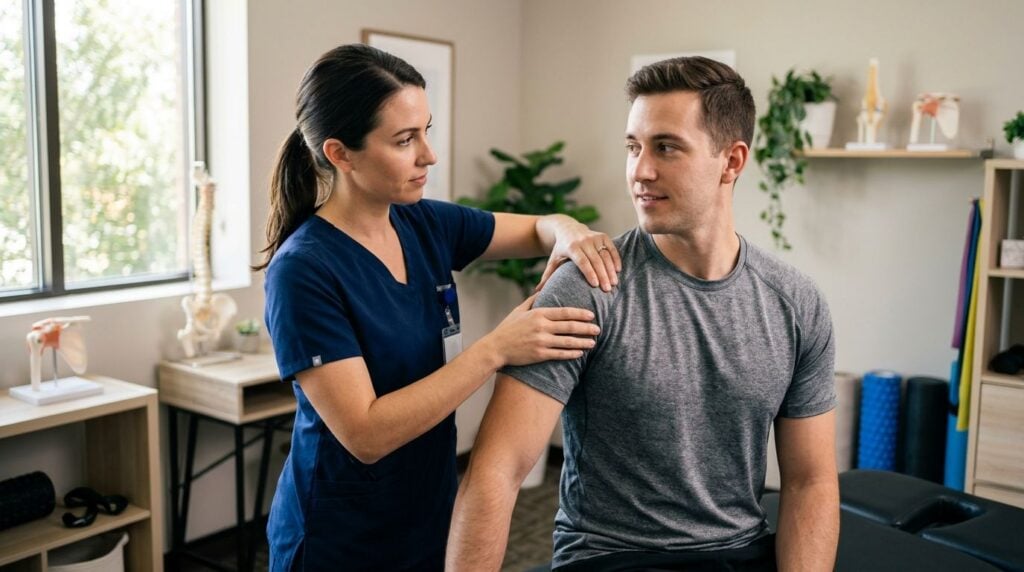
Shoulder dislocation recovery chiropractic care is a stage of rehabilitation that can be discussed with a chiropractor once the joint has been medically reduced and cleared for movement work, with attention on surrounding muscle balance, scapular control and gradual range of motion rather than the dislocation itself. People recovering from a dislocated shoulder need a different plan than someone with ordinary shoulder stiffness, because the ligaments and joint capsule have been acutely stretched, so the sequence and timing of each rehab stage carries more weight than it does for chronic pain.
- A dislocated shoulder needs emergency reduction and imaging before any other care is considered in 2026.
- Chiropractic care for shoulder dislocation recovery may be appropriate once a doctor confirms the joint is stable.
- Recovery generally moves through immobilisation, gentle mobility work, then progressive strengthening over several months.
- MyChiro chiropractors in Bondi Junction can be part of a broader rehabilitation team after medical clearance.
Why chiropractic care matters for shoulder dislocation recovery
The shoulder is widely recognised in orthopaedic literature as the most frequently dislocated major joint in the body, largely because its socket is shallow and its range of motion is wide. That anatomy means the joint depends heavily on surrounding muscles and ligaments for control, not just bone stability. In 2026, the standard sequence after a dislocation still runs through emergency assessment, imaging, reduction and a period of immobilisation before active rehabilitation starts.
Once a doctor or physiotherapist clears a patient to begin active rehabilitation, the focus shifts from protecting the joint to rebuilding control around it. That rebuilding phase is where chiropractic care can fit into shoulder dislocation recovery, working alongside physiotherapy or a GP-led plan rather than replacing acute medical management. MyChiro chiropractors can assess how the spine, shoulder blade and rib cage are moving and discuss an exercise progression as part of a broader plan, but the acute injury itself must be assessed and reduced by emergency or medical staff first.
What shoulder dislocation recovery care typically involves
Get the joint assessed and reduced by medical staff first
Most emergency departments in 2026 follow the same core protocol: assess, image, reduce, immobilise. Self-manipulation or waiting it out at home is not an appropriate substitute for this step.
- Attend an emergency department or urgent care clinic for a suspected dislocation
- Request an X-ray to check for fractures alongside the dislocation
- Have the joint reduced only by a qualified medical professional
- Ask about a sling or immobilisation period based on the type of dislocation
- Get written follow-up instructions before leaving the clinic
Follow the immobilisation period your doctor or physiotherapist sets
- Wear the sling for the timeframe your treating doctor recommends
- Avoid lifting the arm above shoulder height until cleared
- Ice the area in the first 48-72 hours if swelling is present
- Keep the elbow, wrist and hand moving to prevent stiffness elsewhere
- Book a follow-up review to confirm the joint is tracking normally
Reintroduce gentle range-of-motion work once cleared
- Start with pendulum swings before any active lifting
- Add passive stretches guided by a physiotherapist or chiropractor
- Track range of motion weekly rather than pushing through discomfort
- Avoid rotational movements that mimic the original dislocation mechanism
- Note any clicking, catching or instability and report it at your next review
Discuss a chiropractic assessment with a MyChiro chiropractor once medical clearance is given
Once a GP or orthopaedic specialist confirms the joint is stable, a chiropractor can review posture, scapular movement and spinal alignment that may be contributing to compensation patterns after the injury.
- Ask your chiropractor to check thoracic spine mobility alongside the shoulder
- Discuss how scapular positioning is loading the joint during daily movement
- Request a whole-body assessment rather than a shoulder-only review
- Combine chiropractic input with physiotherapy-led strengthening work
- Review progress against the range-of-motion benchmarks your doctor set
Rebuild strength through a structured program
- Progress from resistance bands to light dumbbells only once you can move through full range without discomfort
- Prioritise rotator cuff and scapular stabiliser exercises before heavy pressing
- Track strength symmetry between both shoulders before returning to sport
- Avoid overhead lifting until a physiotherapist confirms full stability
- Log any apprehension or giving-way sensation and report it immediately
Address contact-sport and repetitive-strain triggers
People who play contact sport injuries codes such as rugby, and those doing repetitive overhead movements like swimming, face a higher dislocation-recurrence risk than the general population, so technique review matters as much as strength work. The same applies to shoulder pain in swimmers, where repeated overhead strokes load an already-vulnerable joint capsule.
- Review the movement patterns in your sport that load the shoulder joint
- Modify tackling, paddling or overhead technique with a coach's input
- Build a longer warm-up focused on shoulder mobility before training
- Discuss protective strapping or bracing options with your treating team
- Delay full return to contact training until cleared by a doctor
Watch for recurrence and instability signs
- Note any sensation of the joint slipping without fully dislocating
- Track whether specific arm positions trigger apprehension or weakness
- Ask your doctor about an MRI if instability continues past 3 months
- Report numbness, tingling or circulation changes immediately
- Discuss a referral to an orthopaedic specialist for recurrent dislocations
Care options for shoulder dislocation recovery
| Option | Best for | Key limitation |
|---|---|---|
| Emergency department reduction | The acute dislocation itself | Does not address ongoing muscle imbalance |
| GP or orthopaedic follow-up | Confirming joint stability and ruling out fractures | Limited time for hands-on rehab guidance |
| Physiotherapy-led rehab | Structured strengthening and range-of-motion progression | Requires consistent attendance over months |
| Chiropractic assessment (post-clearance) | Reviewing spinal and scapular contributors to compensation | Not appropriate before medical clearance |
| Home exercise program | Maintaining gains between appointments | Hard to self-correct technique without feedback |
Common mistakes people make during shoulder dislocation recovery
- Returning to overhead lifting or contact sport before a doctor confirms stability
- Skipping imaging and assuming the joint "popped back in fine" on its own
- Only stretching the shoulder itself and ignoring thoracic spine and scapular control
- Ignoring recurring apprehension or a slipping sensation instead of booking a specialist review
- Comparing recovery timelines with someone else's dislocation instead of following an individualised plan
Discuss your recovery plan
Book an assessment once your doctor has cleared the joint for movement.
FAQ
Can a chiropractor treat a dislocated shoulder?
A dislocated shoulder needs to be reduced by a doctor or emergency staff first; a chiropractor cannot put the joint back into place. Once a doctor confirms the joint is stable, chiropractic care can be discussed as part of a broader rehabilitation plan alongside physiotherapy.
When can I see a chiropractor after a shoulder dislocation?
Most treating doctors want to confirm the joint is stable and any immobilisation period is complete before active rehabilitation begins. Ask your GP or orthopaedic specialist when it becomes appropriate to add a chiropractic assessment to your recovery plan.
What does shoulder dislocation recovery involve in 2026?
Recovery generally moves through immobilisation, gentle range-of-motion work, then progressive strengthening, though the exact timeline depends on the dislocation type and any ligament damage. A physiotherapist or doctor sets the pace based on your imaging and follow-up reviews.
Is chiropractic care appropriate for a first-time shoulder dislocation?
It can be discussed with a qualified health professional once the acute injury has been medically assessed and cleared, but reduction and imaging must happen through emergency or medical care first. A MyChiro chiropractor at that stage typically focuses on surrounding spinal and scapular movement rather than the joint itself.
How long does a dislocated shoulder take to recover?
Recovery timelines vary by dislocation type, associated ligament or labral damage, and how consistently rehabilitation exercises are followed, so a treating doctor or physiotherapist is best placed to estimate your timeline. Many rehab programs run for several months rather than weeks.
What are signs my shoulder dislocation isn’t healing properly?
Ongoing apprehension, a sensation of the joint slipping, numbness, or reduced range of motion past the timeline your doctor set are reasons to book a follow-up review. These signs warrant a conversation with your treating doctor or an orthopaedic referral, not a delay.
Can chiropractic care prevent a shoulder from dislocating again?
No care approach can guarantee a joint won’t dislocate again, but addressing scapular control, thoracic mobility and strength imbalances is a common focus of structured rehab once a doctor clears the joint. Discuss recurrence risk factors with your treating team.
Do I need a referral to see a chiropractor after a shoulder injury?
A referral isn’t always required, but sharing your imaging and doctor’s clearance notes with a chiropractor helps them plan an assessment around your specific injury. Bring any follow-up instructions from your GP or orthopaedic specialist to your first appointment.
One last thing
Recurrence risk after a first-time shoulder dislocation is generally higher in younger, more active patients, according to published orthopaedic literature, which is why scapular control work matters as much as comfort once the joint is cleared. If your shoulder has slipped more than once, ask your GP about an orthopaedic referral rather than repeating the same home exercises through 2026 without a review.
Related guides