

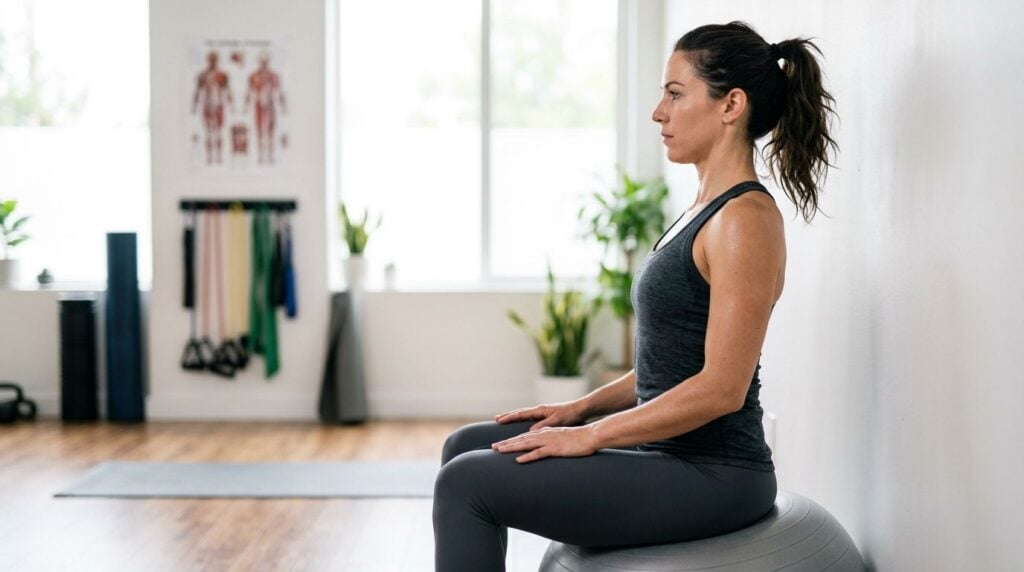
Upper crossed syndrome is a postural muscle imbalance pattern: tight chest and upper trapezius muscles pull against weakened deep neck flexors and lower trapezius, producing rounded shoulders and a forward head position. Exercises that stretch the tight muscles and strengthen the weak ones are the starting point most allied health professionals discuss, alongside changes to desk setup and daily posture habits.
- Upper crossed syndrome exercises target four muscle groups: tight pecs and upper traps, weak deep neck flexors and lower traps.
- Chin tucks, doorway pec stretches and scapular retraction are the three exercises most commonly recommended as a starting routine.
- Desk height, monitor position and bag-carrying habits are frequent contributors worth addressing alongside any exercise routine.
- A chiropractor or physiotherapist can assess posture and muscle length before you start, particularly if pain or numbness is present.
Why this matters
Upper crossed syndrome doesn't appear overnight. It builds up over months or years of screen time, driving, and carrying habits that keep the chest short and the upper back long and weak. Left unaddressed, the pattern is commonly associated with neck stiffness, shoulder tightness and reduced range of motion in the thoracic spine.
The pattern shows up in people who spend long stretches at a laptop, including those working from makeshift home offices, and it can also develop alongside conditions like winged shoulder blades, where the same weak scapular muscles are involved. A qualified health professional can assess whether your presentation fits the classic pattern or overlaps with something else.
How Do You Address Upper Crossed Syndrome With Exercises?
A structured routine usually combines stretching the tight muscles with strengthening the weak ones, done most days of the week. The general sequence discussed in postural rehabilitation literature looks like this:
- Stretch the chest and upper traps — doorway pec stretch, upper trap stretch, 20-30 second holds.
- Activate the deep neck flexors — chin tucks, 10 reps for 3 sets, holding each rep for 3-5 seconds.
- Strengthen the mid and lower traps — scapular retraction or resistance band rows, 10-15 reps for 2-3 sets.
- Mobilise the thoracic spine — extension over a foam roller or rolled towel, 8-10 reps.
- Reassess desk and screen setup so the exercises aren't working against hours of the same forward-head posture.
Consistency matters more than intensity here — a few minutes daily tends to be discussed more often in the literature than long, infrequent sessions.
Chin Tucks for Forward Head Posture
Chin tucks retrain the deep neck flexors, the small muscles that support the head directly over the shoulders rather than pushed forward. Sit or stand tall, draw the chin straight back (not down), and hold for 3-5 seconds. Ten reps for 3 sets, once or twice a day, is the volume most commonly recommended as a starting point.
Doorway Pec Stretch for a Tight Chest
Stand in a doorway with forearms against the frame at roughly shoulder height, then lean forward gently until a stretch is felt across the chest. Hold for 20-30 seconds and repeat two to three times per side. This directly targets the shortened pectoral muscles that pull the shoulders forward in upper crossed syndrome.
Scapular Retraction for a Weak Upper Back
Squeeze the shoulder blades together and slightly down, as if pinching a pencil between them, and hold for a few seconds before releasing. Ten to 15 reps for 2-3 sets, done with or without a light resistance band, strengthens the mid and lower trapezius that tend to be underactive in this pattern.
Thoracic Extension for Rounded Shoulders
Lying over a foam roller or rolled towel placed across the mid-back, gently extend backward over the roller for 8-10 reps. Improving thoracic mobility gives the upper back somewhere to move into once it's strengthened, rather than compensating through the neck.
Why Upper Crossed Syndrome Varies From Person to Person
How pronounced the pattern is, and how quickly it responds to exercise, depends on a handful of factors:
- Hours spent at a screen or steering wheel — prolonged forward-head postures reinforce the imbalance daily.
- Ergonomic setup — a monitor set too low or a chair without support pulls the head and shoulders forward; ergonomic setup adjustments are often discussed alongside exercise.
- Bag and device habits — carrying a heavy bag on one shoulder or cradling a phone against the ear adds asymmetric load.
- General strength and mobility levels — a weaker upper back and stiffer thoracic spine make the imbalance more pronounced.
- Stress-related muscle tension — the upper trapezius and neck muscles often hold tension during periods of stress, on top of postural load.
- Sleep position and pillow height — a pillow that pushes the neck into flexion or extension overnight can compound daytime posture habits.
Related Questions
Can upper crossed syndrome cause headaches?
Forward head posture and tight upper trapezius muscles are commonly associated with tension-type headache patterns, though headaches have many possible causes. If headaches are frequent or severe, a GP or chiropractor can assess whether posture is a contributing factor before ruling anything else in or out.
How long does it take to notice a change in posture?
There's no fixed timeline, and outcomes vary between individuals, but noticeable changes in posture and muscle tension are generally discussed over several weeks to a few months of consistent daily practice. Progress tends to depend on how consistently the exercises and ergonomic changes are followed rather than on the exercises alone.
Is upper crossed syndrome the same as tech neck?
The two terms describe overlapping postural patterns rather than identical conditions — tech neck usually refers specifically to forward head posture from device use, while upper crossed syndrome describes the fuller muscle imbalance across the chest, neck and upper back. Both are commonly addressed with similar chin tuck and thoracic mobility work.
A chiropractor can assess posture, muscle length and joint mobility across the neck and upper back before recommending an exercise program, particularly where pain, tingling or restricted movement is present alongside the postural changes. Core strength through the trunk also supports upper back positioning, which is covered in more depth in how to strengthen your core without straining your lower back.
Get a posture assessment
A chiropractor can assess neck and upper back posture before you start an exercise program.
FAQ
What is upper crossed syndrome?
Upper crossed syndrome is a postural pattern where tight chest and upper trapezius muscles pull against weakened deep neck flexors and lower trapezius muscles, producing rounded shoulders and a forward head position. It’s commonly linked to long hours at a desk or on a device.
Which exercises help with upper crossed syndrome?
Chin tucks, doorway pec stretches, scapular retraction and thoracic extension over a foam roller are the exercises most commonly recommended together. They target the tight and weak muscle groups involved in the pattern rather than a single area.
Can upper crossed syndrome be reversed?
Postural patterns like this can generally improve with consistent stretching, strengthening and ergonomic changes, though outcomes vary between individuals and severity. A health professional can assess your specific presentation before setting expectations.
How do you know if you have upper crossed syndrome?
Common signs include rounded shoulders, a head that sits forward of the shoulders when viewed from the side, and tightness across the chest and upper neck. A chiropractor or physiotherapist can confirm the pattern through a physical assessment.
Does upper crossed syndrome cause neck pain?
Neck stiffness and tightness are commonly reported alongside this postural pattern, though pain has many possible causes. Persistent or worsening neck pain warrants an assessment rather than assuming posture is the only factor.
Can a chiropractor help with upper crossed syndrome?
A chiropractor can assess posture, spinal and joint mobility, and muscle length across the neck, chest and upper back, then discuss an exercise and adjustment plan appropriate to what’s found. Assessment before exercise is generally recommended when pain or restricted movement is present.
How often should you do upper crossed syndrome exercises?
Most routines discussed in postural rehabilitation literature are done daily or most days of the week, with chin tucks and pec stretches taking only a few minutes. Consistency over weeks tends to matter more than the length of any single session.
Is stretching or strengthening more important for upper crossed syndrome?
Both are part of the same pattern — stretching addresses the tight chest and upper trap muscles while strengthening addresses the weak deep neck flexors and lower traps. Doing only one side of the routine tends to leave the imbalance only partly addressed.
One last thing
The exercises get most of the attention, but the desk setup, phone habits and pillow height sitting behind the pattern often need addressing too — otherwise the muscle imbalance simply gets reinforced again every afternoon at the laptop. Posture-focused screen breaks and an ergonomic review of your workstation, alongside the exercises above, are commonly recommended as the fuller picture heading into 2026.
Related guides
- Strengthening your core without straining your lower back
- Chiropractic care for gamers and esports players