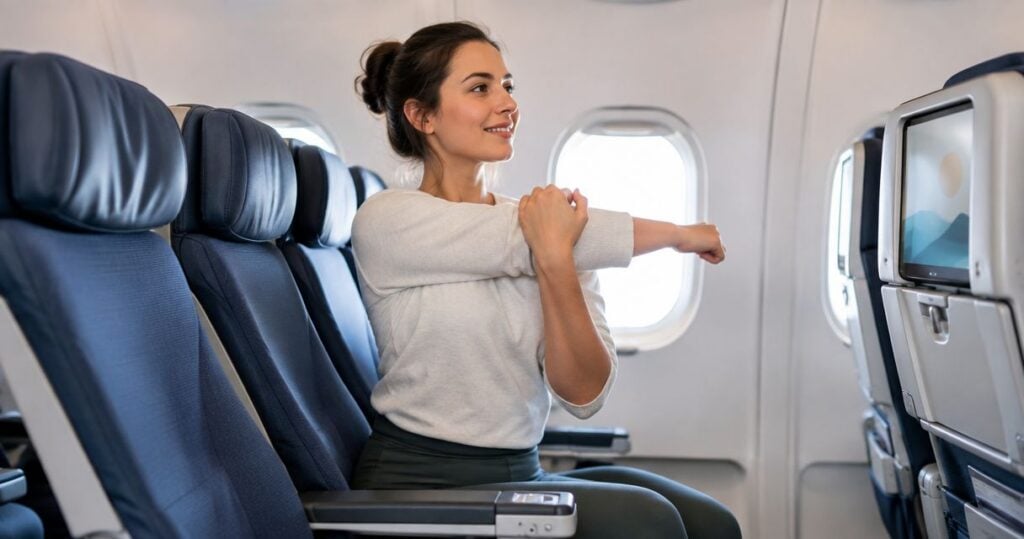
Long-haul cabins turn a healthy back into a stiff one faster than almost any other daily situation, and stretching in your seat is the main tool available to slow that down mid-flight. Getting up to walk the aisle every 60 to 90 minutes, combined with seated ankle pumps, shoulder rolls and a hip flexor stretch, is the combination most commonly recommended to help ease the muscle tightness that builds on a long flight. None of that changes the seat pitch, the cabin pressure or the four-to-eight-plus hours you spend mostly still, so stretching works as damage control rather than a complete fix. If pain travels down a leg, or stiffness hasn't settled within a couple of days of landing in 2026, that's worth getting assessed by a health professional rather than stretched through.
- Standing and walking every 60-90 minutes is the biggest single lever to help prevent back pain long flights on economy seating.
- Ankle pumps, seated hip flexor stretches and shoulder rolls target the muscles that tighten fastest in a cramped seat.
- Aisle walks matter more than any single stretch on flights over 4 hours.
- Pain that radiates down a leg or lingers a few days after landing is worth having assessed rather than stretched through.
Why this matters
Economy seat pitch on most long-haul aircraft sits around 30 to 31 inches, which locks your hips and knees into a fixed angle for the length of the flight. Add in cabin humidity that typically runs at 10 to 20 percent, well below the 30 to 60 percent most people are used to indoors, and the discs in your lower spine lose fluid faster than usual, making them slightly less able to cushion movement by the time you land.
This is exactly why staff who fly constantly build routines around it. The chiropractic care built around flight attendants and frequent flyers leans on the same principle passengers can use on a single long-haul trip: move on a schedule, don't wait for stiffness to show up before you act.
Stretching doesn't undo hours of sitting, but it interrupts the pattern of tightening that makes the last two hours of a flight the worst part for most people's backs.
How to stretch during a long flight to prevent back pain
Work through these in your seat, in the galley, or standing in the aisle when the seatbelt sign is off. None require extra room.
- Ankle pumps and calf raises — point and flex each foot 15-20 times, then lift your heels off the floor and lower them. Do this every 30 minutes to keep blood moving in your lower legs.
- Seated spinal twist — cross your arms over your chest, rotate your upper body toward the aisle, hold for 15-20 seconds, then rotate the other way.
- Seated hip flexor march — lift one knee toward your chest, hold briefly, lower, then switch sides. Ten reps per leg loosens the hips that lock up from sitting.
- Shoulder rolls and neck tilts — roll shoulders backward ten times, then tilt your ear toward each shoulder and hold for 10 seconds per side.
- Standing hamstring stretch — near the galley or bulkhead, place one heel on a step or low ledge and lean forward slightly from the hips.
- A short walk — aim for one lap of the cabin every 60-90 minutes on any flight over 4 hours. This does more for circulation and spinal load than any single stretch on this list.
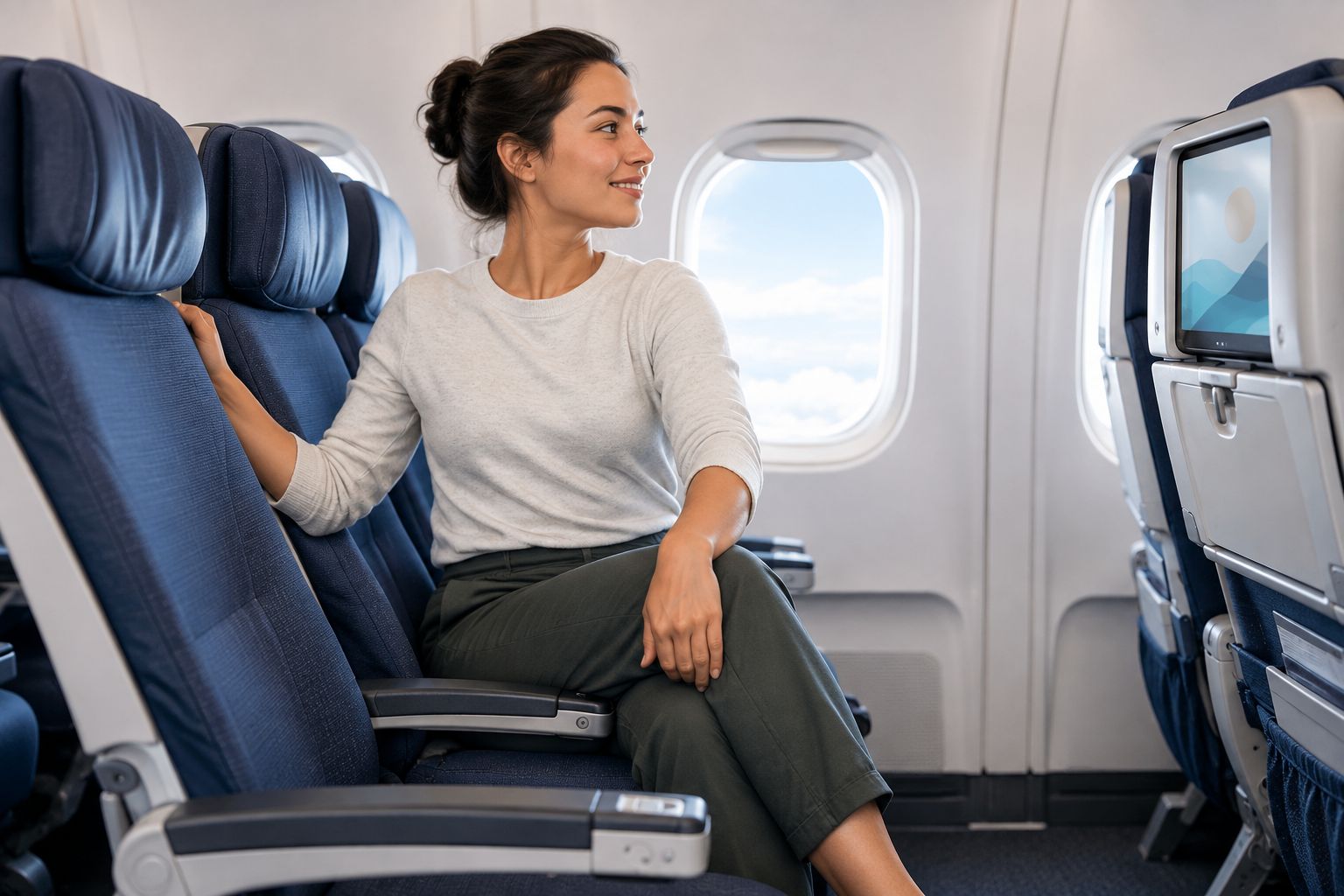
A neck pillow suited to frequent flyers and long-haul travel supports the stretches above rather than replacing them — it keeps your neck from slumping between stretch breaks, which matters most on overnight sectors when you're more likely to sleep through a scheduled aisle walk.
Why back pain varies flight to flight
Not every long flight leaves you the same. A few factors decide whether you land stiff or land fine:
- Flight duration — anything past 4-5 hours starts to compound muscle fatigue in ways a 90-minute domestic hop doesn't.
- Seat pitch and aisle vs window — an aisle seat makes it far easier to actually get up on schedule; a window seat next to sleeping passengers often means people skip walks they'd otherwise take.
- Carry-on weight and lifting into overhead bins — repeated lifting and twisting to load a heavy bag can aggravate a back that was already tight before boarding.
- Hydration during the flight — cabin air is dry, and low fluid intake compounds the disc dehydration mentioned earlier.
- Sleep position on the plane — slumping sideways against a window for hours puts the spine in a position it wouldn't tolerate as well on the ground.
- Pre-existing back or nerve issues — someone with an existing disc or sciatic issue will usually notice cabin immobility faster and more sharply than someone without one.
Is it better to sleep or stretch on a long flight?
Both, on a schedule rather than by accident — sleeping through an entire long-haul sector without moving is one of the more common reasons passengers land stiff. If you know you'll sleep for a long stretch, do a full round of the stretches above before you settle in, and set a phone reminder to wake for a short walk once mid-flight.
Can flying cause sciatica?
Flying itself doesn't cause sciatica, but prolonged sitting with pressure on the sciatic nerve can aggravate symptoms in someone who already has nerve irritation or a disc issue. Anyone with existing sciatic symptoms should plan for more frequent aisle walks than the 60-90 minute guideline above and consider an aisle seat specifically to make that easier.
Do compression socks help with back pain on flights?
Compression socks are aimed at circulation in the lower legs, not the back directly, so they don't replace the stretches above. Some travellers report they make it easier to keep moving comfortably during a long flight, which indirectly supports the aisle-walk habit that matters most for back stiffness.
If stiffness from a flight doesn't ease within a few days, or if you're dealing with recurring back pain from frequent travel, it's worth having it looked at rather than assuming the next flight will be the same. A chiropractor assessment can help identify whether the pattern is coming from posture, an old injury, or something that needs a different kind of care, and knowing when back pain needs a chiropractor versus a doctor is a useful first check before booking anything.
Book a spinal assessment
For back pain that lingers after travel, an assessment can help identify the cause.
FAQ
How often should you stretch on a long flight?
Aim to move every 60-90 minutes on flights over 4 hours, alternating short seated stretches with a walk down the aisle. Skipping movement for the whole flight is the most common reason passengers land stiff.
What stretches help lower back pain on a plane?
Seated spinal twists, hip flexor marches and standing hamstring stretches near the galley target the muscles that tighten most in a fixed seat position. Pair them with a short walk every 60-90 minutes for the best result.
Is it normal to have back pain after a long flight?
Mild stiffness after a long flight is common given hours of fixed seating and low cabin humidity around 10-20 percent. Pain that radiates down a leg or lasts more than a few days after landing is not something to ignore.
Should I wear a lumbar cushion on a long flight?
A lumbar cushion can help maintain the natural curve of your lower back during long periods of sitting, particularly on overnight sectors when you’re likely to sleep in one position. It supports the stretching routine rather than replacing it.
Does carrying heavy luggage make flight-related back pain worse?
Yes, repeated lifting and twisting to load bags into overhead bins can aggravate a back that’s already tight from sitting. Loading bags with your knees bent and avoiding a twisting motion reduces the strain.
Can flying trigger sciatica symptoms?
Flying doesn’t cause sciatica on its own, but prolonged sitting can aggravate symptoms in someone with existing nerve irritation or a disc issue. More frequent aisle walks and an aisle seat both help reduce that pressure.
How long should you wait before seeing someone about post-flight back pain?
If stiffness hasn’t eased within 2-3 days of landing, or if pain radiates into a leg, it’s reasonable to have it assessed rather than wait it out. Ongoing pain from frequent travel is worth discussing with a health professional.
One last thing
The detail most travellers miss is timing the stretches to takeoff and landing, not just mid-flight. Blood pooling in the legs starts within the first hour of sitting, well before most people feel stiff, so the first ankle-pump set matters more than people think — waiting until you already feel tight means you're stretching to recover rather than to prevent back pain long flights are known for causing in the first place.
Related guides
- Chiropractic care for travellers carrying heavy luggage
- Chiropractic care for pilots and aircrew with back strain
- How to know when back pain needs a chiropractor vs a doctor