

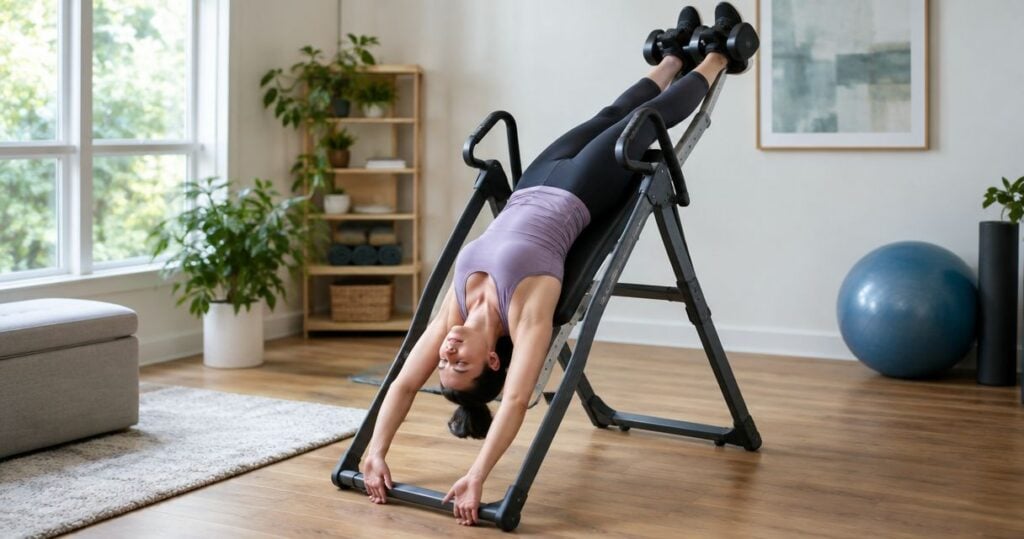
Best overall: Teeter FitSpine X3, for people running a structured decompression routine they've discussed with a chiropractor. Best for taller users: Innova ITX9600, built with a longer backrest. Best budget option: Exerpeutic 975SL, for testing inversion therapy before spending more.
- Teeter FitSpine X3 is the best inversion table for back pain in 2026 for supervised decompression routines.
- Innova ITX9600 suits taller users; Ironman Gravity 4000 suits users needing a higher weight capacity.
- Exerpeutic 975SL is the budget-friendly starting point; Stamina InLine folds flat for small apartments.
- Pregnancy, glaucoma and spinal implants are common reasons to check with a chiropractor before inverting.
Why this matters
Back pain sends more people searching for home equipment than almost any other complaint, and inversion tables sit near the top of that list every year. The idea is simple: hang upside down, or close to it, and let gravity pull traction through the spine instead of a physiotherapist's hands doing it.
That doesn't mean every back deserves one. Anyone with pain that radiates down a leg, or a recent flare-up they haven't had looked at, should get an assessment before adding new gear to the routine — read when back pain needs a chiropractor vs a doctor to work out which lane you're in first. Chiropractic assessment tends to focus on posture and joint mechanics, and clinicians such as the team at MyChiro use that assessment to work out whether inversion fits a specific pain pattern before recommending anything.
This guide ranks five inversion tables sold in Australia in 2026 by frame quality, angle range, weight rating and ease of use, not by marketing copy.
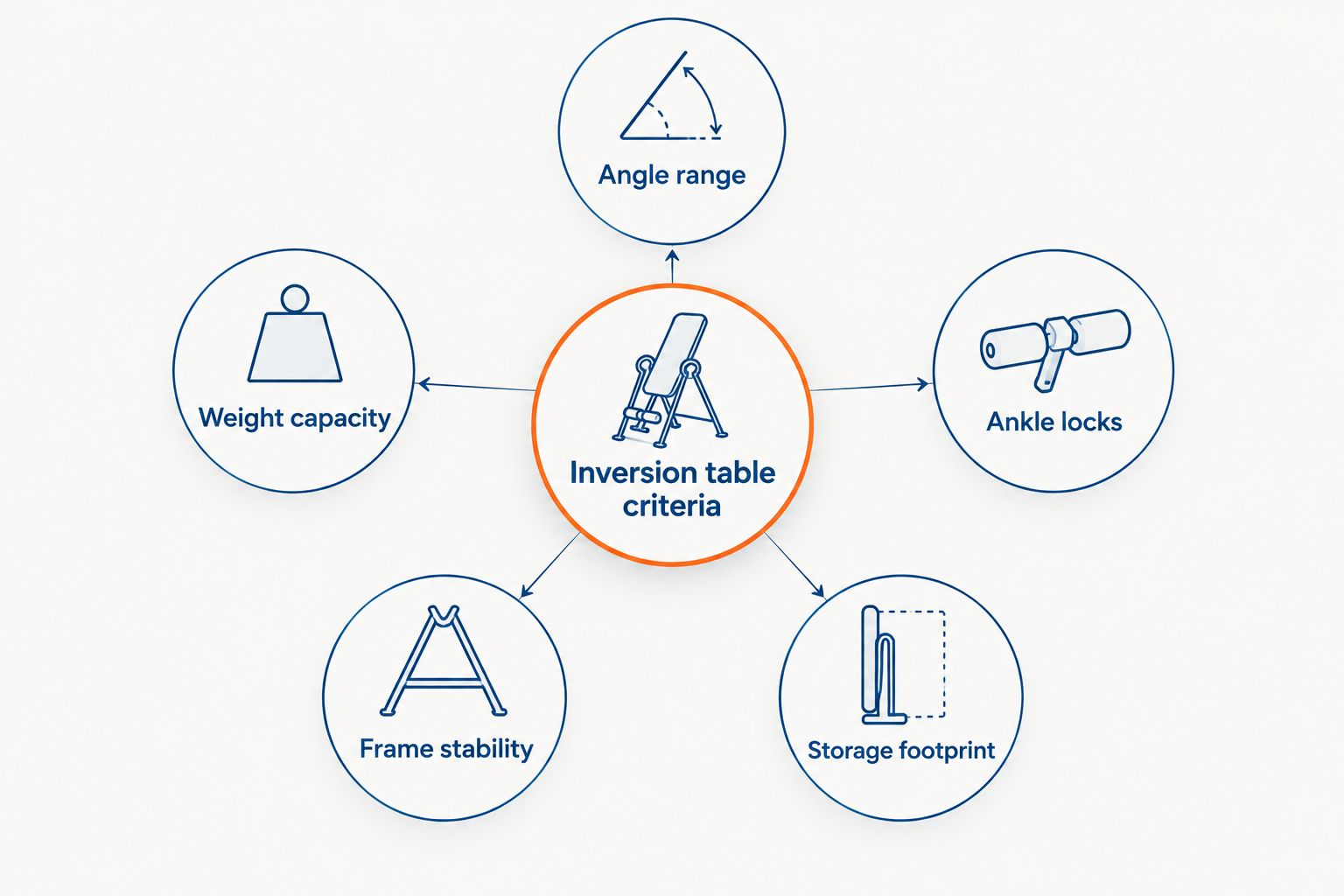
What makes the best inversion table for back pain
- Inversion angle range — most consumer frames tilt between 20° and 60°; full inversion at 90° is rarely necessary and not something a beginner should chase.
- Weight capacity — most consumer frames top out somewhere between 120 kg and 150 kg; check the rated limit against your own body weight with margin, not right at the ceiling.
- Ankle locking system — padded rollers or a ratchet lock that holds securely without pinching the calf.
- Frame stability — a wide base and a solid pivot bearing matter more once you're upside down than any accessory bundled with the table.
- Ease of getting upright again — a handle or strap you can reach mid-invert, so you're never relying on momentum alone to sit back up.
- Storage footprint — folding frames matter in apartments; fixed frames are usually the sturdier choice.
Inversion tables for back pain in 2026: at a glance
| Table | Best for | Standout feature | Key limitation |
|---|---|---|---|
| Teeter FitSpine X3 | Structured decompression routines | Adjustable pivot points, FDA-registered frame design | Bulkier footprint, not ideal for small rooms |
| Innova ITX9600 | Taller users | Extra-long backrest fits users over 190 cm | Overkill size for shorter users |
| Ironman Gravity 4000 | Users needing a higher weight rating | Reinforced steel frame, wider ankle clamp | Heavier unit to move once assembled |
| Exerpeutic 975SL | Starting inversion therapy on a budget | Simple ratchet ankle lock, quick assembly | Fewer angle presets than premium frames |
| Stamina InLine Inversion Table | Small apartments and shared spaces | Folds flat for under-bed storage | Less rigid at full inversion than fixed frames |
1. Teeter FitSpine X3: best inversion table for structured decompression routines
The FitSpine X3 uses adjustable pivot points instead of a single fixed tilt, so the angle can be fine-tuned session to session rather than jumping straight to full inversion. The frame is registered with the US FDA as a Class I medical device, which speaks to build standard rather than any guaranteed outcome.
Teeter FitSpine X3 pros:
- Pivot points let you fine-tune the angle instead of jumping to a fixed extreme
- Ratchet-and-strap ankle system most users can adjust solo
- Wide base holds steady at deeper angles
Teeter FitSpine X3 cons:
- Larger footprint than folding models, needs a dedicated corner of a room
- Assembly takes longer than the simpler frames on this list
Best for: people running a decompression routine they've already discussed with a chiropractor or physiotherapist, not casual first-time users.
Verdict: Buy.
2. Innova ITX9600: best inversion table for taller users
The ITX9600 stretches the frame and backrest longer than most consumer tables, built for people who find shorter frames pinch at the shoulders or leave the ankle bar too close to the head.
Innova ITX9600 pros:
- Extended backrest suits users over 190 cm comfortably
- Lumbar and headrest pads included as standard
- Wide base adds stability at higher angles
Innova ITX9600 cons:
- Longer frame takes up more floor space, folded or not
- Shorter users may find the extended backrest less comfortable than a standard-length frame
Best for: taller users who've outgrown standard-length frames.
Verdict: Buy.
3. Ironman Gravity 4000: best inversion table for higher weight capacity
A reinforced steel frame targets a higher weight ceiling than entry-level tables, paired with a wider ankle clamp and a heavier base to match.
Ironman Gravity 4000 pros:
- Reinforced frame built around a higher weight rating than most tables here
- Wider ankle clamp accommodates larger calves without pinching
- Extra-wide base reduces wobble at deeper angles
Ironman Gravity 4000 cons:
- Heavier overall unit, harder to move once assembled
- Fewer finish options than lifestyle-focused brands
Best for: users near or above the weight ceiling of standard frames.
Verdict: Buy.
4. Exerpeutic 975SL: best inversion table for a tighter budget
A pared-back frame with fewer adjustable features, aimed at people testing whether inversion therapy suits their routine before spending more on a premium model.
Exerpeutic 975SL pros:
- Simple ratchet ankle lock is easy to learn on first use
- Lighter frame is easier to move and store than steel-heavy models
- Straightforward assembly with fewer parts
Exerpeutic 975SL cons:
- Fewer angle presets than the Teeter or Innova frames
- Padding feels thinner after regular use compared with premium frames
Best for: first-time buyers unsure if inversion therapy fits their routine.
Verdict: Buy, with realistic expectations about build quality.
5. Stamina InLine Inversion Table: best inversion table for small spaces
This frame folds flat for storage, aimed at apartments or shared households where a permanent inversion table isn't practical between uses.
Stamina InLine pros:
- Folds flat enough to slide under a bed or into a closet
- Lighter to carry between rooms than fixed-frame tables
- Smallest footprint when set up of any table on this list
Stamina InLine cons:
- Less rigid at full inversion than the fixed-frame options above
- Weight ceiling sits lower than the Ironman or Teeter frames
Best for: renters and small households without a dedicated space for gym equipment.
Verdict: Buy for occasional use; Skip if you need daily deep inversion.
A note on disc injuries: inversion tables put traction through the spine, and traction isn't automatically appropriate for every disc injury. If a herniated disc is part of the picture, read chiropractic care for herniated disc pain relief before choosing a table or an angle.
“Pregnancy, glaucoma, uncontrolled high blood pressure and spinal implants are common reasons an inversion table isn’t appropriate without medical clearance first.”
Easing into inversion therapy without overdoing it
Start at a shallow angle, not full inversion. Most beginners get a manageable introduction by starting around 20 degrees for two to three minutes, then adjusting the angle over several sessions rather than jumping to 60 degrees on day one.
Watch for red flags during or after a session: dizziness, a headache that doesn't settle, or a spike in pain. Any of those is a reason to stop and get assessed, not push through.
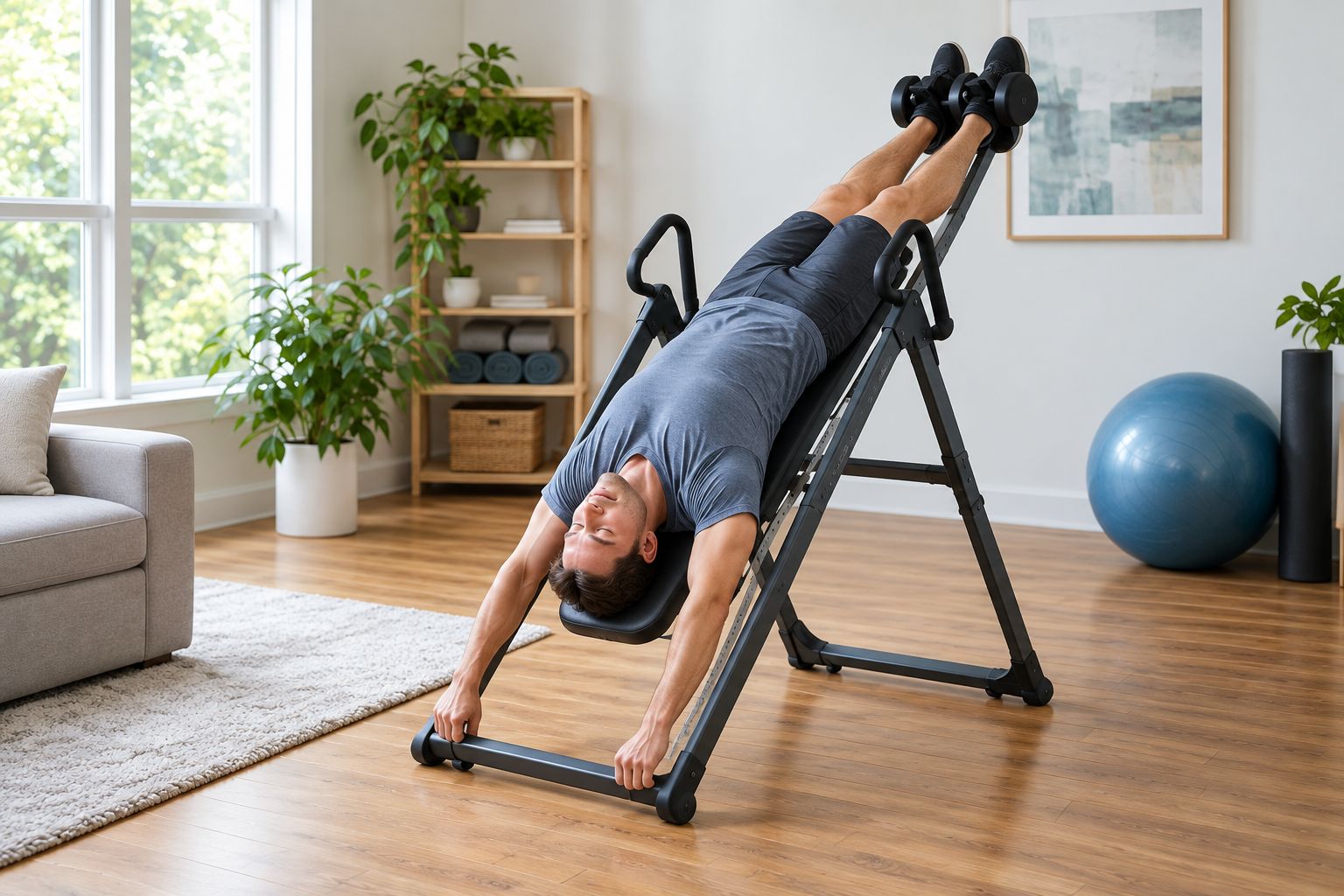
Inversion tables work alongside other habits, not instead of them. Posture through the day, movement breaks, and the setup you sit in for eight hours still do more of the day-to-day work than ten minutes upside down.
Check if inversion therapy suits your back
An assessment at MyChiro shows whether traction fits your specific pain pattern.
How we ranked these inversion tables
Each table on this list was compared against the six criteria above: angle range, weight capacity, ankle lock quality, frame stability, ease of getting upright again, and storage footprint. Frame construction and published weight ratings drove the ranking more than accessories or colour options. Tables that only offered a single fixed angle or a flimsy ankle clamp didn't make the cut for 2026.
Which inversion table should you choose?
Pick the Teeter FitSpine X3 if you're running a decompression routine you've already discussed with a chiropractor and want the most adjustable frame here. Choose the Innova ITX9600 if standard-length frames leave your head too close to the ankle bar. Go with the Ironman Gravity 4000 if you need a higher weight rating and a sturdier base, and pick the Exerpeutic 975SL if you're not sure inversion therapy is for you yet and want to find out without a big outlay. Renters and small households land on the Stamina InLine for the fold-flat frame.
Whichever table you land on, get any red-flag symptoms checked before you invert, not after — MyChiro's Bondi Junction clinic runs exactly this kind of assessment for patients weighing up new equipment.
FAQ
What is the best inversion table for back pain in 2026?
The Teeter FitSpine X3 is the strongest all-round pick in 2026 for people running a decompression routine, thanks to its adjustable pivot points and higher-grade frame. Taller users tend to prefer the Innova ITX9600, and first-time buyers often start with the Exerpeutic 975SL before upgrading.
Is an inversion table appropriate for a herniated disc?
Not automatically. Traction from an inversion table isn’t right for every disc injury, and some presentations get worse under load reversal, so a herniated disc needs assessment before an inversion table gets added to the routine.
How long should you stay inverted for back pain?
Beginners typically start around 20 degrees for two to three minutes and build up gradually over several sessions rather than staying inverted for long stretches on day one. There’s no fixed duration that suits everyone, so build up slowly and stop at the first sign of dizziness.
Can an inversion table replace chiropractic care?
No. An inversion table is a piece of home equipment, not a substitute for an assessment of what’s driving the pain. It can sit alongside a plan discussed with a chiropractor, such as the team at MyChiro, not instead of one.
Who should avoid using an inversion table?
Pregnant women, people with glaucoma, uncontrolled high blood pressure, or spinal implants are common groups who need medical clearance before using one. Anyone with dizziness, a heart condition, or recent spinal surgery should check with a health professional first too.
What angle should beginners start at on an inversion table?
Most beginners start around 20 degrees rather than jumping straight to a steep or full inversion. The angle can increase gradually over multiple sessions as comfort allows.
Do inversion tables help with sciatica?
Some people use inversion tables to ease pressure on the lower back as part of a broader plan, but sciatica has several possible causes and doesn’t respond the same way in every case. An assessment helps identify what’s compressing the nerve before you invert.
How much weight can an inversion table hold?
Weight ratings vary by model, and consumer frames typically top out between 120 kg and 150 kg, with reinforced frames like the Ironman Gravity 4000 rated higher than compact folding tables. Always check the specific rated limit against your own body weight with margin.
One last thing
Most people set their first inversion angle too steep. Starting at 20 degrees for two to three minutes and only adding tilt once a session feels unremarkable is a more sustainable approach than jumping straight to 45 or 60 degrees on day one — unremarkable is the goal, not intense.
Related guides
- Best back braces for lower back pain relief
- Best foam roller exercises for lower back pain
- Chiropractic care for degenerative disc disease


