

Acupressure slippers should be compared by fit, fastening and footbed texture—not promises of foot or heel pain relief. This 2026 guide compares 5 footwear designs, including a plain-footbed alternative, without recommending a particular product or presenting slippers as clinical care.
- MyChiro’s acupressure slipper guide compares footwear features, not clinical outcomes.
- Plain footbeds offer an alternative when you do not want raised pressure points.
- Adjustable straps change the fit; they do not necessarily change the footbed pressure.
- Spring-loaded and pebble-style designs require close inspection rather than assumptions about comfort.
- Persistent or worsening foot pain can be discussed with a qualified health professional.
Why this matters
A slipper can look comfortable in a photograph while fitting poorly on your foot. Product names such as massage, reflexology and acupressure describe how footwear is marketed; they do not establish that the product is appropriate for your symptoms.
Separate two decisions: whether you want a textured slipper, and whether your foot or heel pain needs assessment. Buying footwear does not answer the second question. You can discuss persistent, unexplained or worsening symptoms with a qualified health professional rather than choosing increasingly pronounced pressure points.
MyChiro is a chiropractic clinic and wellness centre in Bondi Junction, Sydney. MyChiro’s acupressure slipper guide is for adults comparing footwear features, not choosing a treatment for foot pain.
The useful question is not which slipper has the strongest sensation. It is which design, if any, matches your intended use and feels acceptable without requiring you to tolerate discomfort.
What to check before choosing acupressure slippers
Use these 5 checks when comparing a 2026 product listing. They describe what to inspect, not a clinical ranking system.
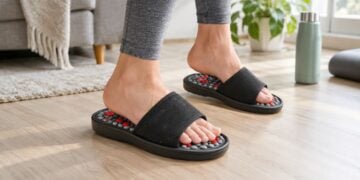
- Footbed texture: Identify whether the surface is plain, gently moulded, covered in separate bumps or fitted with moving components. A close-up photograph is more informative than a massage claim.
- Fit and fastening: Check the seller’s measurement guidance and how the upper holds your foot. An adjustable strap changes the upper’s fit, not necessarily the pressure beneath your heel.
- Intended use: Distinguish footwear intended for walking from products described for stationary use. Do not assume a massage-style slipper is suitable for stairs, outdoor paths or a working day.
- Construction details: Look for information about the sole, contact surfaces and any removable parts. If a feature matters to your purchase, confirm it rather than inferring it from a photograph.
- Instructions and limitations: Read the product instructions and current return conditions. Do not invent a wearing schedule or interpret discomfort as proof that a product is working.
Choose a design you can assess, not a claim you cannot verify. A detailed listing should explain what the slipper is made to do mechanically: hold your foot, provide a particular surface texture or allow adjustment.
Footwear designs at a glance
The order below starts with a plain-footbed alternative, then moves through increasingly distinctive textured designs. It is an inspection order, not a ranking of clinical benefit.
| Design | Suitable for | Feature to inspect | Key limitation |
|---|---|---|---|
| Plain-footbed slippers | Buyers who do not want raised contact points | Footbed shape and overall fit | No acupressure-style texture |
| Low-profile moulded-texture slippers | Buyers seeking a fixed textured surface | Shape and spacing of moulded bumps | Texture usually cannot be repositioned |
| Adjustable-strap textured slippers | Buyers who want to adjust the upper | Strap placement and adjustment range | Upper adjustment does not establish pressure control |
| Spring-loaded acupressure slippers | Buyers comparing moving pressure-point designs | Moving components and instructions | More components to inspect and clean |
| Pebble-style textured slippers | Buyers comparing distinct raised contact surfaces | Contact shape and attachment | Appearance does not establish comfort or suitability |
These are design categories, not named products. Features vary within each category, so inspect the actual item rather than assuming that every slipper with the same description has the same construction.
1. Plain-footbed slippers: an alternative to pressure-point designs
Plain-footbed slippers omit the deliberate raised nodes associated with acupressure footwear. They can still differ substantially in sole shape, upper construction and how they fit around your foot.
This option belongs in the comparison because you do not have to choose a textured surface simply because your search began with acupressure. If you dislike raised contact points, a plain design lets you compare footwear without that additional feature.
Plain-footbed slipper advantages:
- No deliberate pressure-point pattern to evaluate.
- Lets you focus on fit, fastening and sole construction.
- Provides a direct alternative to textured designs.
Plain-footbed slipper limitations:
- Does not provide the texture sought by acupressure shoppers.
- A plain surface does not establish that the slipper fits well.
- Product descriptions still require scrutiny; ordinary footwear can carry unsupported outcome claims too.
Suitable for: Adults who want indoor footwear without raised pressure points.
Check whether the upper holds your foot comfortably and whether the sole matches the manufacturer’s stated use. Do not assume that a soft-looking photograph establishes cushioning, support or suitability for a particular condition.
Verdict: Consider a plain-footbed design when you do not want a textured surface; hold the purchase if fit or intended use is unclear.
2. Low-profile moulded-texture slippers: for a fixed textured surface
Moulded-texture slippers have raised shapes formed into the footbed. The texture is part of the surface rather than a collection of separately moving pressure points.
For a 2026 comparison, look closely at where the bumps sit beneath the heel, arch and forefoot. Descriptions such as gentle or soft are not measurements, and photographs do not tell you how the surface will feel under your foot.
Moulded-texture slipper advantages:
- The surface pattern is visible for inspection.
- Fixed texture avoids separately moving footbed components.
- Allows comparison of different bump shapes and layouts.
Moulded-texture slipper limitations:
- Fixed bumps cannot usually be moved away from an unwanted contact area.
- A low-profile appearance does not establish comfort.
- The label acupressure does not establish a clinical benefit.
Suitable for: Adults who specifically want a fixed textured footbed and can assess the actual fit.
Ask whether the texture extends across the entire footbed or appears only in selected areas. Also distinguish a moulded surface from a removable insert: these are different constructions, and a seller’s photographs should make that distinction clear.
Verdict: Consider only if the texture is acceptable to you; skip a design that requires you to tolerate unwanted discomfort.
3. Adjustable-strap textured slippers: for upper-fit adjustment
Adjustable-strap designs let you alter how the upper sits across your foot. The footbed beneath that upper can still be fixed, textured or fitted with separate components.
The important distinction is between adjusting the fastening and adjusting the pressure points. A strap can change how closely the slipper holds your foot without changing the shape or position of the bumps beneath it.
Adjustable-strap slipper advantages:
- Lets you alter the upper’s closure rather than relying on a fixed opening.
- Makes fastening position a visible comparison feature.
- Provides an alternative to a non-adjustable slide.
Adjustable-strap slipper limitations:
- Strap adjustment does not necessarily alter footbed contact.
- The available adjustment range varies by product.
- An adjustable upper does not establish suitability for walking or prolonged wear.
Suitable for: Adults who want control over the upper’s fit while separately evaluating the textured surface.
Inspect where the strap crosses your foot and how it closes. Check whether the seller explains the sizing method, because an adjustable fastening does not eliminate the need to choose the correct footbed size.
Verdict: Consider for fastening flexibility, not as evidence of adjustable clinical pressure; hold if the listing leaves the construction unclear.
4. Spring-loaded acupressure slippers: for moving-component comparisons
Spring-loaded designs use pressure-point components that move under load. That mechanical feature distinguishes them from a fixed moulded footbed; it does not establish that they are appropriate for foot or heel pain.
Read the instructions before deciding whether this design matches your intended use. A product with moving parts needs a closer look at assembly, cleaning and the manufacturer’s stated limitations.
Spring-loaded slipper advantages:
- Offers a mechanically different surface from fixed bumps.
- Gives you identifiable components to inspect in product photographs.
- Allows a direct comparison between moving and fixed footbed designs.
Spring-loaded slipper limitations:
- Adds components that require inspection and cleaning.
- Component movement does not establish comfort or a clinical outcome.
- The sensation cannot be reliably judged from marketing descriptions.
Suitable for: Adults specifically comparing moving-component footwear, after checking instructions and suitability with a qualified health professional where needed.
Do not interpret the number of nodes, a reflexology diagram or a stronger sensation as evidence of a better product. Those details describe a design or a marketing message, not an independently established outcome.
Verdict: Hold until you understand the construction and instructions; skip any listing that substitutes outcome promises for usable product information.
5. Pebble-style textured slippers: for distinct raised contact surfaces
Pebble-style slippers use stone-like shapes or separate raised pieces across the footbed. The term describes an appearance, so confirm whether the contact surfaces are moulded shapes, attached pieces or another construction.
This distinction matters when comparing listings. Two products with similar photographs can differ in materials, attachment and cleaning instructions, and the word natural does not resolve those questions.
Pebble-style slipper advantages:
- Makes individual contact shapes visible.
- Provides a distinct alternative to a uniform moulded pattern.
- Lets you compare placement across different parts of the footbed.
Pebble-style slipper limitations:
- Appearance does not establish how the surface feels.
- Separate pieces require attention to their attachment and condition.
- Natural-material language does not establish clinical suitability.
Suitable for: Adults interested in this particular texture who can inspect its construction and assess the actual fit.
Look for clear photographs of the whole footbed and its edges. If the seller does not explain what contacts your foot or how the pieces are secured, leave those questions unanswered rather than filling the gaps with assumptions.
Verdict: Hold if materials or attachment are unclear; skip the purchase if it depends on an unverified pain-relief promise.
A purchase checklist for 2026
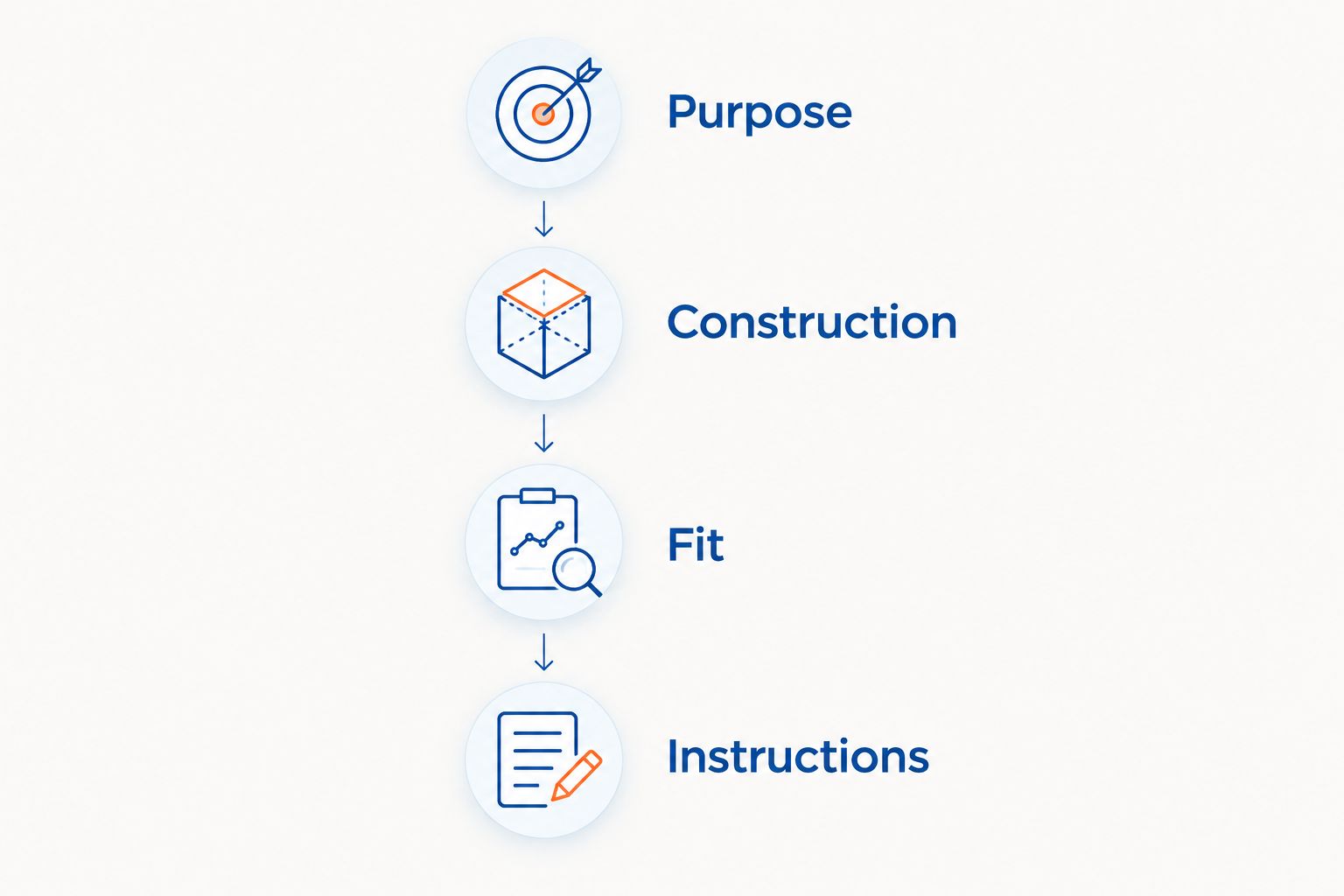
Use a simple sequence before placing an order: establish your purpose, inspect the design, check the fit information and read the instructions. Keep the footwear decision separate from any decision about clinical care.
- Purpose: Decide whether you want ordinary indoor footwear or deliberately textured contact.
- Construction: Identify the footbed surface, fastening and any moving or attached components.
- Fit: Compare your measurements with the seller’s own sizing guidance.
- Instructions: Confirm intended use, cleaning guidance and stated limitations.
Before paying, ask 2 questions: does the listing explain the feature you want, and can you assess the fit without relying on an outcome claim? If either answer is no, there is no need to rush the decision.
Do not create a wearing schedule from a review, a social-media demonstration or another person’s experience. Follow the actual product instructions, and discuss suitability with a qualified health professional when symptoms or an existing health concern make the choice uncertain.
How the comparison is ordered
This guide orders designs by what the buyer needs to inspect, beginning with the option that omits deliberate pressure points. It then distinguishes fixed texture, adjustable fastening, moving components and pebble-style contact surfaces.
The criteria are construction, fit, intended use, instructions and the clarity of the listing. The comparison does not assign clinical efficacy, comfort scores or product endorsements to any category.
MyChiro does not sell a named slipper in this guide. Chiropractic adjustments and a footwear purchase are separate decisions; neither should be presented as the automatic next step for a person searching for foot pain information.
Which design should you choose?
If you are undecided, start by deciding whether you want raised contact points at all. A plain-footbed alternative belongs in that decision, rather than being dismissed because it lacks an acupressure label.
If you specifically want texture, compare the actual surface and fastening before considering additional mechanisms. Adjustable straps, springs and pebble shapes each add a different inspection question; none establishes a clinical advantage by itself.
For your 2026 purchase, choose on observable features and acceptable fit. If the main reason for buying is persistent foot or heel pain, discuss the symptoms with a qualified health professional instead of asking a product listing to identify their cause.
FAQ
Which acupressure slippers should I choose for foot pain?
No particular acupressure slipper is recommended here for foot pain. Compare fit, construction and instructions, and discuss persistent or unexplained symptoms with a qualified health professional.
Are acupressure slippers the same as ordinary slippers?
Acupressure slippers generally have deliberate raised contact points or textured footbeds. Ordinary slippers do not necessarily include those features, although construction varies by product.
Do adjustable straps change the pressure under my heel?
Adjustable straps change the upper’s fit, not necessarily the pressure beneath your heel. Check the actual footbed construction rather than assuming the fastening controls its contact points.
Should I choose spring-loaded slippers or fixed bumps?
Choose neither on the assumption that its mechanism provides a clinical benefit. Fixed bumps and spring-loaded components are different constructions, so compare instructions, fit and your intended use.
How long should I wear acupressure slippers?
Use the manufacturer’s instructions rather than a universal wearing schedule. Do not extend wear because a review suggests that discomfort must be tolerated.
What if an acupressure slipper feels uncomfortable?
Stop using a slipper that causes unwanted discomfort rather than forcing yourself to continue. Persistent or worsening symptoms can be discussed with a qualified health professional.
Are pebble-style slippers made from natural stones?
The term pebble-style does not establish the material. Check the product description to distinguish moulded shapes from attached stones or other components.
Does MyChiro recommend a particular acupressure slipper brand?
MyChiro does not recommend a particular slipper brand in this guide. The article compares footwear designs without presenting them as clinical care.
One last thing
An adjustable strap and an adjustable pressure point are not the same feature. That distinction is easy to miss in a product photograph, especially when both appear under a broad massage-slipper label.
Before buying in 2026, write down the single feature you actually want. If the listing cannot explain that feature without a promise about your symptoms, choose a clearer listing or leave the purchase aside.
Related guides
- Supportive shoe comparisons for nurses
- Orthotic insole comparisons
- Footwear considerations for bunions and forefoot pain
- Under-desk footrest comparisons