

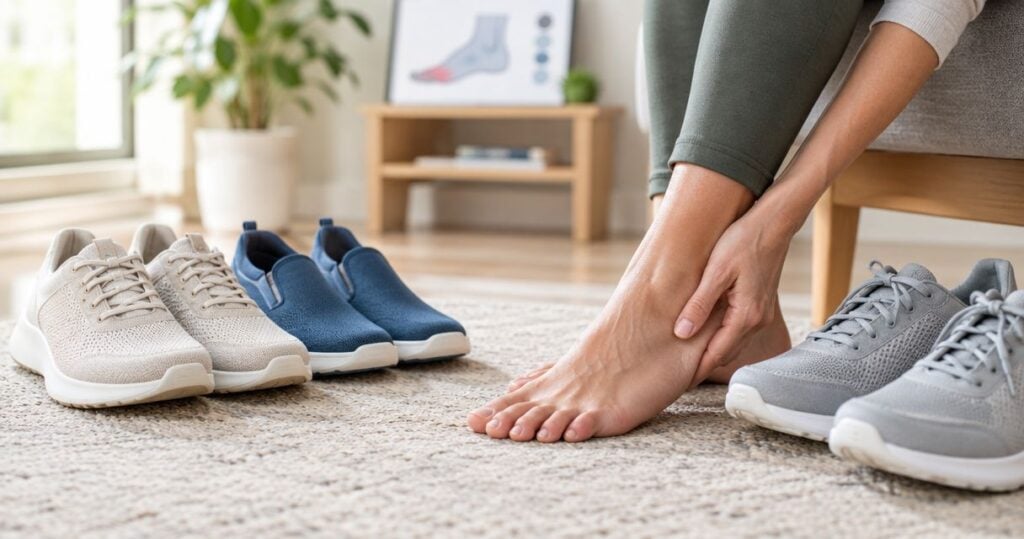
For 2026, the default overall choice is a wide toe box lace-up trainer; a rocker-sole walking shoe suits longer periods on your feet, while an adjustable-strap sandal suits days when forefoot swelling changes the fit. This guide compares five shoe types rather than naming a single product that cannot suit every foot.
- People comparing the best shoes for bunions should prioritise toe room, adjustable fit and a soft upper.
- Wide toe box lace-up trainers are the default 2026 choice for adjustable everyday footwear.
- Rocker-sole walking shoes limit how sharply the forefoot must bend during each step.
- Stretch-knit slip-ons accommodate changing foot volume but provide less structure.
- Persistent, worsening or unexplained forefoot pain needs assessment by a qualified health professional.
Why this matters
A bunion, clinically called hallux valgus, involves a change in the position of the big toe and its joint. A narrow shoe can press against the prominent joint, while a high heel shifts more body weight towards the forefoot. Footwear cannot reverse this structural change, but fit can influence pressure, rubbing and day-to-day comfort.
Shoe labels are not consistent enough to make width the only test. Two shoes marked wide can have different toe-box shapes, upper seams and sole stiffness. MyChiro recommends judging footwear by how it fits your foot rather than relying on the size printed on the box.
People who stand for work can also compare these supportive shoe features for long shifts. The same principles apply in 2026: the toes need space, the heel should stay secure and the upper should not create a concentrated pressure point.
MyChiro’s default footwear choice is a wide toe box lace-up trainer for adults who need adjustable everyday footwear around a bunion. This is general educational guidance, not an individual footwear prescription.
What makes a suitable shoe for bunions
Use these six criteria to compare shoes in 2026:
- Toe-box shape: Look for a rounded or foot-shaped front that allows the toes to rest without overlapping or pressing against the sidewall.
- Adjustable fastening: Laces or straps let you change the fit when foot volume varies during the day.
- Soft upper: Stretch knit, soft leather or another flexible material is less likely to create a hard edge over the joint.
- Minimal forefoot seams: Decorative panels and seams can sit directly over the bunion even when the shoe is wide enough elsewhere.
- Secure heel: Extra toe room should not mean the whole foot slides forward or the heel lifts with every step.
- Suitable sole: A flexible or rockered sole changes how the shoe moves through a step. The right option depends on your gait, balance and intended activity.
A removable insole is useful if a podiatrist has recommended an orthosis. Do not assume an insert will help simply because there is room for one; the device and shoe need to work together.
Shoe types at a glance
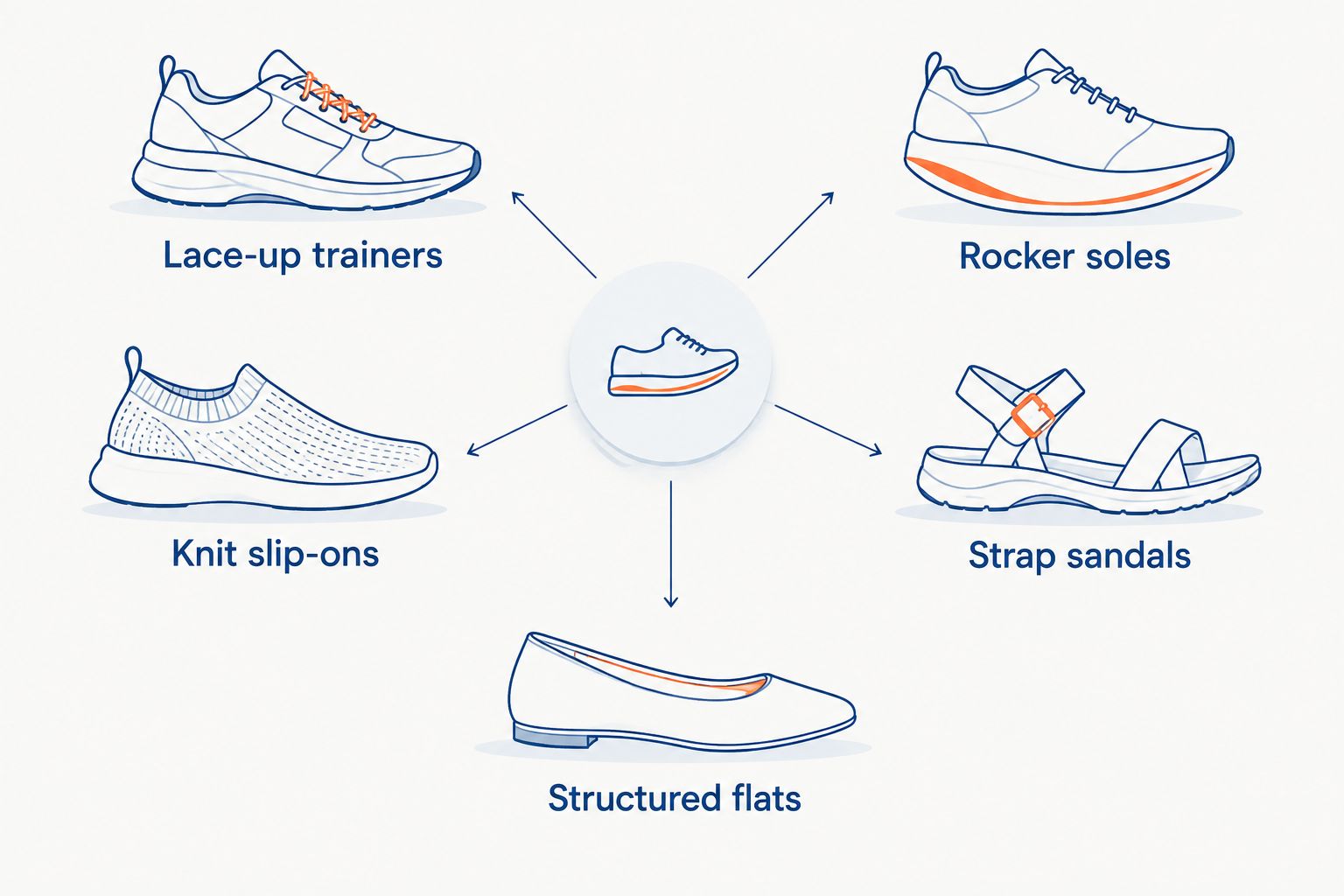
| Shoe type | Most suitable for | Standout feature | Key limitation |
|---|---|---|---|
| Wide toe box lace-up trainer | Adjustable everyday wear | Independent control of forefoot and heel fit | Casual appearance does not suit every workplace |
| Rocker-sole walking shoe | Longer walks and standing | Limits sharp bending through the forefoot | Curved sole can feel unfamiliar |
| Stretch-knit slip-on | Feet that change volume | Upper expands around prominent areas | Less adjustable and structured than laces |
| Adjustable-strap sandal | Warm weather and variable swelling | Straps can be loosened during the day | Limited protection and workplace suitability |
| Structured wide-fit flat | Office and smart-casual settings | Combines a wider forefoot with a formal shape | Width and seam placement vary substantially |
1. Wide toe box lace-up trainer: default choice for everyday wear
A wide toe box lace-up trainer separates two fitting jobs: the front gives the toes space, while the laces hold the midfoot and heel. This is usually more practical than buying a longer shoe to gain width because excess length can let the foot slide.
The toe box must be wide in shape, not merely labelled wide. Check the shoe from above. If the front narrows sharply towards the big toe, it can still press on a bunion despite carrying a wide-width label.
Wide toe box lace-up trainer pros:
- Lacing can be adjusted across different parts of the foot
- Rounded toe boxes are common in walking and athletic footwear
- Secure heel fit can reduce forward sliding
- Removable insoles are available in many designs
Wide toe box lace-up trainer cons:
- Casual styling will not meet every dress code
- A thick seam or overlay can still cross the bunion
- Brand width labels do not guarantee the same internal shape
Most suitable for: daily walking, errands and casual work where trainers are appropriate.
2026 verdict: Buy after an in-person fit check.
2. Rocker-sole walking shoe: suitable for longer walks
A rocker sole has a curved profile that helps the shoe roll forward. This limits how sharply the big toe joint must bend during the push-off phase of walking, although comfort depends on the individual shoe and your balance.
The rocker shape does not compensate for a narrow upper. Check toe room and seam placement first, then decide whether the rolling motion feels natural. Walk in the pair for at least 10 minutes in the shop if the retailer permits it.
Rocker-sole walking shoe pros:
- Reduces the amount of forefoot bending required by the shoe
- Often paired with cushioning for hard walking surfaces
- Available in lace-up designs with adjustable volume
Rocker-sole walking shoe cons:
- Curved soles can feel unfamiliar during the first fitting
- The design may not suit uneven ground or balance concerns
- Some models have a stiff or narrow upper despite the sole shape
Most suitable for: planned walks and work that involves extended periods on level surfaces.
2026 verdict: Buy only if the curved sole feels stable during a walking test.
3. Stretch-knit slip-on: suitable for changing foot volume
A stretch-knit upper can expand around a prominent big toe joint instead of placing a rigid panel against it. Slip-ons also remove laces from the top of the foot, which some people prefer when the entire forefoot feels sensitive.
The trade-off is control. A highly elastic upper can let the foot move inside the shoe, particularly on slopes or during faster walking. A secure heel counter and stable sole matter more when the upper is soft.
Stretch-knit slip-on pros:
- Flexible material accommodates prominent areas
- No lace pressure across the top of the foot
- Easy to remove when feet feel tired or swollen
Stretch-knit slip-on cons:
- Fit cannot be adjusted as precisely as a lace-up shoe
- Highly elastic uppers provide less side-to-side control
- The foot may slide forward if the heel is loose
Most suitable for: light daily activity when foot volume changes and a structured trainer feels restrictive.
2026 verdict: Hold unless the heel remains secure during walking.
4. Adjustable-strap sandal: suitable for warm weather
An adjustable sandal leaves more room around the bunion and lets you change strap tension as the day progresses. The strap must sit beside or behind the prominent joint rather than directly across it.
Choose a sandal with a heel strap if you will walk more than a short distance. Backless styles can make you grip with the toes to keep the shoe on, which defeats the purpose of creating a relaxed forefoot fit.
Adjustable-strap sandal pros:
- Forefoot width can be changed without replacing the shoe
- Open construction reduces contact over the bunion
- Multiple straps can balance forefoot room and heel security
Adjustable-strap sandal cons:
- Open footwear provides limited protection
- Straps can still rub if they cross the joint
- Sandals are unsuitable for many workplaces and activities
Most suitable for: warm weather, casual use and days when an enclosed upper feels restrictive.
2026 verdict: Buy as a secondary option, not an all-purpose shoe.
5. Structured wide-fit flat: suitable for office wear
A structured flat can provide a smarter appearance without forcing the forefoot into a pointed shape. The useful features are a rounded front, soft lining, minimal seams and enough depth to avoid pressure across the top of the toes.
Do not judge an office shoe while seated. Stand, walk and check whether the foot slides forward. A flat that feels spacious at rest can still narrow at its flex point when you take a step.
Structured wide-fit flat pros:
- More compatible with formal and smart-casual clothing
- Available with straps or laces for a more secure fit
- Some designs include removable insoles
Structured wide-fit flat cons:
- Pointed styling can cancel out the benefit of a wide label
- Firm leather and internal seams can press on the joint
- Low-cut heels can slip when extra width is added at the front
Most suitable for: office settings where athletic footwear is not appropriate.
2026 verdict: Buy only when the toe box remains roomy during walking.
How we ranked the shoe types
The ranking uses fit characteristics rather than product claims: toe-box shape, upper softness, fastening adjustment, heel security, sole movement and compatibility with an orthosis when one has been prescribed. The everyday lace-up trainer ranks first because it gives you more ways to adjust fit without sacrificing heel control.
This is a decision guide, not a clinical comparison trial. Shoe models change, and two feet with similar-looking bunions can need different widths, sole stiffness or fastening systems. MyChiro advises discussing persistent foot symptoms with a podiatrist or medical practitioner before relying on footwear changes alone.
A practical fitting check
Try shoes later in the day if that is when your feet feel largest. Wear the socks you expect to use with the shoes, then complete this check:
- Stand with your full weight through both feet.
- Confirm that no seam or overlay crosses the bunion.
- Wiggle each toe without lifting the heel.
- Walk for 10 minutes and include turns, stops and a short incline if available.
- Remove the shoe and check for a concentrated red mark over the joint.
At home, wear the shoes indoors for 30 minutes before committing to outdoor use, provided the retailer permits returns after an indoor fitting. Recheck after 60 minutes on a separate day because a shoe that feels acceptable briefly can become restrictive as the foot warms up.
A shoe is too narrow if the sidewall visibly pushes the big toe inward or the upper creates a clear pressure line. It is too loose if the heel lifts, the toes grip to hold it on or the foot repeatedly slides into the front.
Which shoe type should you choose?
Choose a wide toe box lace-up trainer if you want one practical starting point for daily wear in 2026. Choose a rocker sole when forefoot bending is the main fitting problem and the curved base feels stable. Keep stretch-knit footwear or adjustable sandals for situations where a rigid upper creates pressure, but do not accept heel movement as the price of extra width.
MyChiro does not prescribe footwear through this guide. A chiropractor may discuss gait, posture and related musculoskeletal concerns following assessment, while a podiatrist is the appropriate professional for bunion diagnosis, foot-specific footwear advice and orthoses.
Discuss whether assessment is appropriate
MyChiro can discuss posture, gait and related musculoskeletal concerns following an individual assessment.
When footwear advice is not enough
Seek medical assessment for sudden severe pain, an acutely red or hot joint, fever, a wound, loss of sensation or inability to bear weight after an injury. People with diabetes, impaired circulation or reduced foot sensation should obtain individual advice before changing footwear or using inserts.
A bunion that is progressively changing, limiting walking or remaining painful despite wider shoes also warrants assessment. Footwear can change external pressure; it cannot identify every cause of forefoot pain.
FAQ
What should I look for when comparing the best shoes for bunions?
Start with a rounded toe box, adjustable fastening, soft upper and secure heel. Check the fit while standing and walking because a width label alone does not show where the shoe will press.
Can wide shoes correct a bunion?
No, wide shoes do not reverse the structural position of a bunion. They can reduce direct shoe contact and give the toes more room during daily activity.
Are rocker soles appropriate for forefoot pain?
Rocker soles can limit how sharply the forefoot bends during walking, but they do not suit every person or every surface. Test the shoe while walking and seek individual advice if balance is a concern.
Should I buy a larger shoe size for a bunion?
Extra length does not reliably solve a width or toe-box problem. A longer shoe can let the foot slide forward, so choose the correct length with a wider or more rounded front.
Are slip-on shoes suitable for bunions?
A stretch slip-on can reduce rigid contact over a bunion, but it must still hold the heel securely. Skip the pair if your foot slides or your toes grip to keep the shoe on.
Can I wear sandals when I have a bunion?
Adjustable sandals can provide forefoot room when their straps do not cross the bunion. They remain a secondary option because open footwear provides less protection and is unsuitable for some activities.
Who should assess persistent bunion or forefoot pain?
A podiatrist or medical practitioner can assess persistent bunion and forefoot symptoms. Urgent medical assessment is appropriate for sudden severe pain, heat, marked redness, fever, wounds or loss of sensation.
Can MyChiro advise on gait changes linked with foot pain?
MyChiro may discuss gait, posture and related musculoskeletal concerns following an individual assessment. Foot-specific diagnosis, orthoses and bunion management should be discussed with a podiatrist or medical practitioner.
One last thing
Check the inside of the shoe with your hand before trying it on. A hidden seam, stiff overlay or raised edge can sit directly over the bunion even when the shoe looks wide from the outside. That simple check often reveals more than the width label.
Related guides
- Shoes for plantar fasciitis
- Walking shoes for people with lower back pain
- Managing joint stiffness as you age
- Improving balance and preventing falls


