


Neck pain often settles within a few weeks, but there is no single recovery time that applies to everyone. Persistent, worsening or injury-related pain needs assessment rather than a longer waiting period; this 2026 guide explains how to judge the pattern and when to seek medical advice.
- How long does neck pain usually take to go away? NHS guidance says most episodes last only a few weeks.
- Worsening symptoms, arm weakness or other warning signs need medical assessment, not a recovery countdown.
- Persistent neck pain does not automatically mean you need imaging or chiropractic adjustments.
- Mychiro is a chiropractic clinic in Bondi Junction; a service description cannot establish your recovery time.
Why this matters
A general recovery estimate is useful only when it fits your symptoms. A stiff neck after an awkward night's sleep is not the same situation as neck pain after a collision or neck pain accompanied by weakness.
Use the direction of change, not just the calendar, to decide your next step. This information from Mychiro is general education, not a diagnosis or an individual recommendation for chiropractic care.
How long does neck pain usually take to go away?
The NHS patient information page Neck pain and stiff neck states that most neck pain lasts only a few weeks. That is a broad description of common episodes, not a deadline for an individual person and not evidence that a particular service shortens recovery.
For your 2026 decision-making, separate three questions: how long symptoms have been present, whether everyday movement is becoming easier, and whether anything new has appeared. A shorter episode with worsening symptoms deserves more attention than its duration alone suggests.
| Symptom pattern | What the timeframe means | Next step | Limit of this approach |
|---|---|---|---|
| Recent neck pain that is gradually easing | A few weeks is a general expectation, not a promise | Continue tolerable everyday activity and monitor progress | Time alone cannot identify the cause |
| Pain that is not easing after a few weeks | The general estimate is no longer enough | Arrange assessment with a qualified health professional | Assessment does not guarantee an immediate explanation |
| Recurrent episodes | Each episode needs context, even if earlier episodes settled | Discuss the pattern and its effect on daily life | A previous recovery does not predict every future episode |
| Pain with warning signs or after significant injury | A routine recovery estimate is not appropriate | Seek medical assessment at the urgency the symptoms require | Home monitoring cannot exclude serious causes |
These categories help organise a conversation. They do not diagnose a strain, disc problem or nerve condition, and they do not establish whether manual therapy is appropriate.
Recent neck pain: often a few weeks
A recent episode that is gradually easing can fit the general NHS description. Improvement does not have to mean complete absence of discomfort: you might notice that dressing, sleeping or turning your head becomes less difficult.
Keep the distinction between ordinary movement and forceful testing clear. You do not need to repeatedly push your neck to its limit to check whether it has recovered.
If symptoms are manageable and there are no warning signs, general patient guidance supports keeping your neck moving rather than immobilising it without medical advice. Ask a qualified health professional what activity is appropriate if you are unsure, particularly when work or sport places substantial demands on your neck.
Persistent neck pain: longer than 3 months
The International Association for the Study of Pain defines chronic pain as pain that persists or recurs for longer than 3 months. This is a classification, not an instruction to wait that long before asking for help.
Pain that affects sleep, work or ordinary activities deserves discussion earlier. Persistent pain also does not, by itself, reveal which structure is responsible or show that a joint needs an adjustment.
An assessment can consider your symptoms, medical history, physical findings and daily demands. Ask how the proposed plan addresses your specific difficulties and when that plan should be reviewed if your function is not improving.
Recurrent neck pain: no fixed timetable
Neck pain that returns after settling needs a different conversation from a single uninterrupted episode. Record whether the episodes follow similar activities, whether symptoms fully settle between them, and whether the current episode feels different.
A repeating pattern does not prove that posture, a pillow or a particular spinal structure is the cause. Those details belong in the history, but they are not a diagnosis on their own.
Bring your previous assessments and any relevant reports to the discussion. This helps avoid treating each recurrence as an isolated event or assuming that a previous explanation still applies.
Why neck pain duration varies
A recovery estimate has limits because neck pain describes a symptom, not one diagnosis. NHS and Healthdirect patient information identify several considerations that make an individual assessment more useful than a universal deadline.
- The underlying cause: Symptoms associated with an awkward sleeping position, an injury or another medical problem do not share one predictable course.
- The symptom pattern: Local discomfort differs from pain accompanied by tingling, numbness, weakness or other symptoms that require assessment.
- Previous episodes: Recurrent symptoms need a history of what happened before, not just the starting date of the latest episode.
- Daily demands: Work, driving, sport and caring responsibilities affect which activities you need to discuss and modify.
- Sleep and wellbeing: These are relevant parts of a pain assessment, without implying that pain is imaginary or entirely caused by stress.
None of these factors supports promising a recovery date before assessment. They explain why useful advice is individual rather than a fixed number of visits or days.
How should I monitor neck pain in 2026?
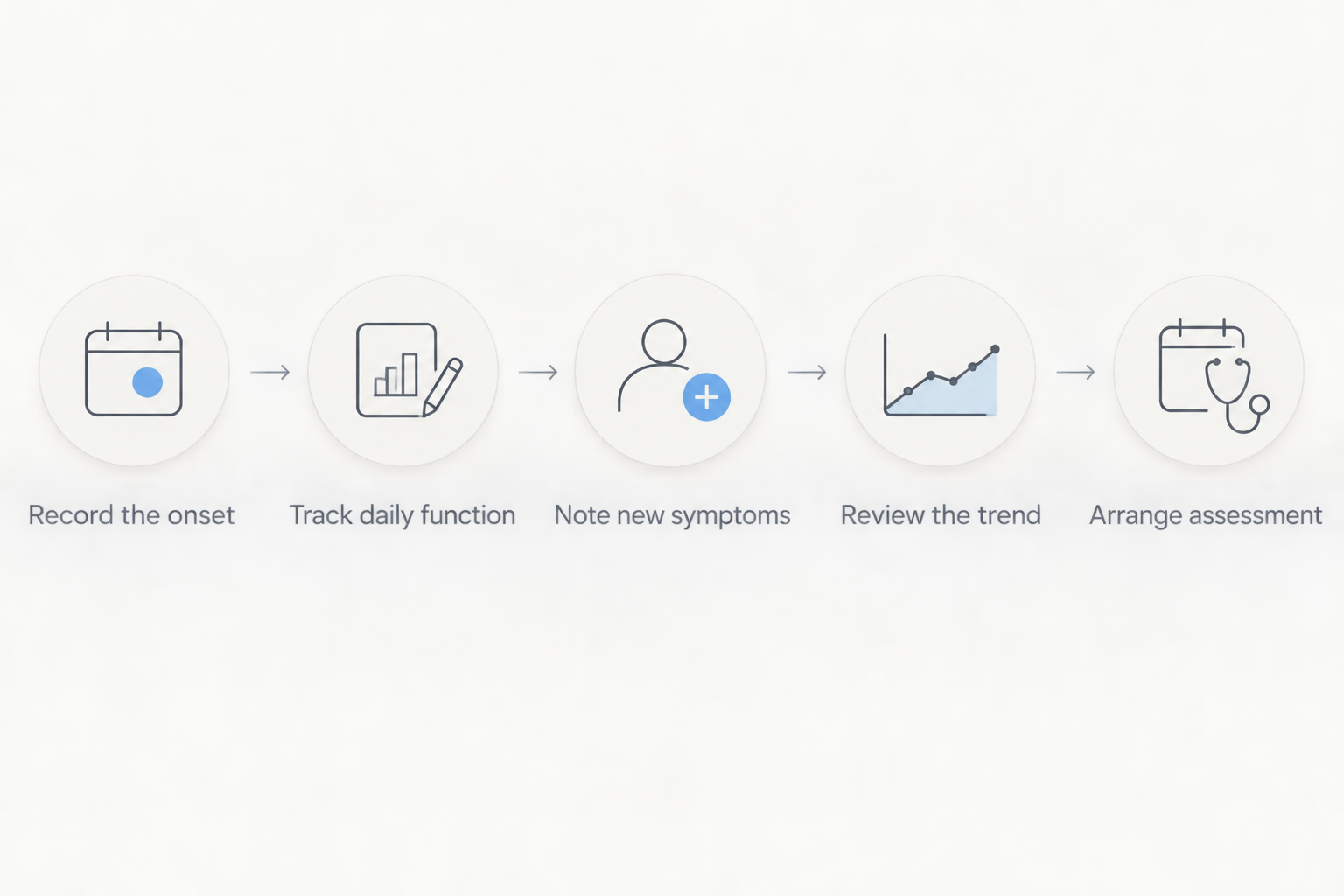
Track a few meaningful activities rather than checking pain constantly. A short note about what you can do, what remains difficult and what has changed gives a health professional more context than a single description such as stiff or sore.
- Record the onset. Note when symptoms began and whether there was an injury or an unusual activity.
- Track daily function. Record a relevant task, such as getting dressed or turning to speak to someone, without forcing the movement.
- Note new symptoms. Include changes in arm sensation, strength, balance, headache or general health.
- Review the trend. Look for an overall change rather than treating every fluctuation as a new injury.
- Arrange assessment. Seek advice if symptoms persist, worsen, concern you or interfere with everyday life; warning signs require earlier action.
Monitoring is not a substitute for medical assessment. Do not delay seeking help while trying to complete a diary, and do not continue an activity simply to collect information if it feels inappropriate.
When should I seek urgent medical help?
Do not use a few-weeks estimate to explain away new neurological symptoms, severe illness or significant injury. Healthdirect's neck pain information advises urgent assessment for concerning associated symptoms and injury-related presentations.
Seek emergency help for sudden neck pain with symptoms such as facial drooping, difficulty speaking, new limb weakness, loss of consciousness or a sudden severe headache. In Australia, call 000 for a medical emergency.
Neck stiffness with fever and a severe headache, or neck pain after a significant accident, also needs urgent medical assessment. Do not attempt to stretch, crack or manipulate your neck while waiting for advice.
New or worsening arm weakness, problems with balance or walking, or changes in bladder or bowel control require urgent medical attention. These are not symptoms to manage through a routine chiropractic appointment.
If you are uncertain about the urgency, contact a medical service for triage. An online article cannot rule out a serious cause, even when part of your experience resembles a common episode.
What can I do while I am waiting for advice?
For neck pain without warning signs, NHS general guidance includes maintaining movement and considering simple comfort measures. Keep any change modest and stop an activity that produces new symptoms or a clear deterioration.
- Movement: Keep ordinary activity within your tolerance. This is not a recommendation to push through severe pain or perform forceful stretches.
- Work setup: Adjust tasks or positions that are difficult and vary your position where practical. No single desk arrangement establishes the cause of your symptoms.
- Sleep: Choose a comfortable position rather than forcing your neck into a position described as ideal online.
- Medicines: Ask a pharmacist or GP about suitability, interactions and label instructions. General advice cannot account for your medical history.
A useful limit applies to all of these: comfort measures do not confirm a diagnosis. If symptoms are worsening or not settling, reassessment matters more than adding more home techniques.
Avoid judging recovery by whether your neck makes a sound. A click is not a reliable measure of recovery, and you do not need to produce one to show that movement is improving.
Should I arrange a chiropractic appointment?
A chiropractic appointment is not automatically necessary because neck pain has lasted a particular number of days. Whether chiropractic care may be appropriate following assessment depends on your presentation, preferences and any need for medical referral.
Mychiro is a chiropractic clinic and wellness centre in Bondi Junction, Sydney, offering chiropractic care and spinal adjustments. That factual description does not establish whether an adjustment is suitable for your neck pain or how long your symptoms will last.
Before agreeing to any proposed care, ask about the purpose, relevant evidence, material risks, alternatives and the option of no intervention. Ask what would lead to a referral or a change in the plan.
The relevant Mychiro service is chiropractic care; the relevant decision is whether it suits your assessed needs. Do not use a package length or appointment count as a substitute for an individual recovery estimate.
What should I ask at an assessment?
Make the discussion about your function and the decisions you need to make. You can bring these questions to a GP or another qualified health professional without committing to any particular intervention.
- What explanations fit my symptoms, and what remains uncertain?
- Are there findings that need medical investigation or referral?
- Which activities can I continue, and which should I modify?
- What are the benefits, risks and alternatives of the proposed approach?
- How will we decide whether the plan needs to change?
For a 2026 consultation, a clear review plan is more useful than an unsupported promise. You should understand what is being proposed and have the opportunity to ask questions before giving consent.
FAQ
How long does neck pain usually take to go away?
Most neck pain lasts only a few weeks, according to NHS patient information. That general timeframe does not apply to every cause, and persistent or worsening symptoms need assessment.
Should I wait 3 months before getting neck pain checked?
No. The 3 months threshold describes chronic pain; it is not a waiting period before seeking advice. Arrange assessment earlier if symptoms are not easing, affect daily life or concern you.
Can neck pain go away without an adjustment?
An adjustment is not a prerequisite for neck pain to settle. Whether any intervention is appropriate depends on assessment, and no individual recovery time can be established from a general article.
Does pain going down my arm mean a trapped nerve?
Arm pain alone does not confirm a trapped nerve. Discuss it with a qualified health professional, particularly if you also have tingling or numbness; new or worsening weakness needs urgent medical assessment.
Should I keep moving when my neck is sore?
General NHS advice supports keeping your neck moving rather than immobilising it without medical advice. Movement should remain appropriate to your symptoms, and injury or warning signs require assessment first.
Do I need an X-ray because my neck pain has not gone away?
Persistent neck pain does not automatically establish a need for an X-ray. A qualified health professional should decide whether imaging is indicated from your history and examination.
What symptoms mean I should call an ambulance?
Call 000 in Australia for a medical emergency, including sudden neck pain with facial drooping, difficulty speaking, new limb weakness or loss of consciousness. Do not wait for a routine appointment.
One last thing
Before your next appointment, write down the everyday activity that matters most to you. Being able to explain what has become difficult gives the consultation a practical focus beyond reaching a pain-free date.
The key distinction in this 2026 guide is between a common timeframe and a personal forecast. A few weeks describes many episodes; it cannot tell you what is causing your pain or whether waiting is appropriate.
Sources for the general guidance
This 2026 guide draws on NHS patient information, Neck pain and stiff neck, for the general timeframe and self-care context; Healthdirect Australia, Neck pain, for assessment and warning-sign guidance; and the International Association for the Study of Pain for the chronic pain definition. These sources provide general education, not evidence of a clinical outcome from chiropractic care.
Related guides
- Waking up with neck pain: common contributors
- Preparing for your first chiropractor appointment
- Questions about cracking your own neck at home
- How chiropractors coordinate with GPs on imaging referrals