
Before booking a chiropractor, ask about current registration, the first assessment, proposed adjustments, risks, alternatives, consent, fees and how any ongoing care would be reviewed. Ask what requires an assessment before it can be answered, and distinguish booking information from personalised clinical advice.
- Questions to ask a chiropractor before booking should cover registration, assessment, informed consent, fees and review arrangements.
- Check the individual practitioner’s current registration through Ahpra rather than relying on advertising or testimonials.
- MyChiro is a chiropractic clinic in Bondi Junction; discuss appointment arrangements directly rather than assuming what a visit includes.
- Ask why any proposed adjustment, imaging or repeat appointment is relevant to your circumstances.
Why this matters
A booking call should help you understand what you are agreeing to, not require you to decide on a course of care. Reception can explain administrative arrangements; questions about suitability, risks and clinical recommendations belong with the chiropractor.
MyChiro provides chiropractic care and spinal adjustments in Bondi Junction, Sydney. That factual service description does not establish whether an adjustment is appropriate for you; that question requires individual assessment.
Use this 2026 checklist to prepare your questions. Keep the answers somewhere you can refer to later, especially any information about consent, additional services and future appointments.
What should I ask a chiropractor before booking an appointment?
Start with the questions below, then ask for clarification wherever an answer leaves you uncertain. You do not need to cover every clinical detail with reception, but you should know when and with whom those details will be discussed.
- Who will I see, and can I check their current registration? Ask for the practitioner's full name.
- What does the first appointment include? Separate assessment from any proposed procedure.
- What information should I bring? Ask about medicines, medical history and existing reports.
- How will you decide whether chiropractic care is appropriate? Ask how other healthcare needs are considered.
- What would a proposed adjustment involve? Request an explanation before agreeing.
- What are the relevant risks and alternatives? Include the option of declining a procedure.
- Would imaging be considered, and why? Ask what question it would answer.
- What fees and booking conditions apply? Request current written information.
- How would further appointments be decided and reviewed? Ask what would prompt a change of plan.
- What happens if I have concerns afterwards? Clarify contact and medical-assessment arrangements.
Who will I see, and how do I check their registration?
Ask for the full name of the chiropractor you would see, rather than checking only the clinic name. In Australia, Ahpra's public register provides information about individual practitioners' registration, including published conditions or restrictions where applicable.
Check current registration in 2026 rather than relying on an old profile or certificate. Registration is not a guarantee of a particular outcome, and a qualification does not answer whether a proposed procedure suits your circumstances.
You can also ask what qualifications the practitioner holds and what those qualifications mean. The guide to qualifications a Sydney chiropractor should have provides another starting point for preparing that conversation.
What does the first appointment include?
Ask whether the appointment is an assessment, whether a procedure might be proposed afterwards, and whether those parts have separate consent or fee arrangements. Do not assume that booking an appointment means agreeing to an adjustment.
Request the expected appointment length directly from the clinic. Explain any practical needs, such as an interpreter, accessibility requirements, a support person or extra time to discuss your questions.
Ask who will take your history and conduct the assessment. If you would prefer to discuss findings before considering hands-on care, make that preference clear when booking and repeat it at the appointment.
What information should I bring?
Ask whether the clinic wants a list of medicines, relevant medical history, previous procedures, existing imaging reports or correspondence from other health professionals. Bring information you already have rather than arranging new tests simply to prepare for a visit.
Write down when your concern started, what has changed and how it affects everyday activities. Describe your experience without trying to diagnose it yourself.
A useful note might explain that sitting interrupts your work or that a particular movement concerns you. This gives the practitioner something specific to discuss without assuming a cause or promising an outcome.
How will you decide whether chiropractic care is appropriate?
Ask how the chiropractor will assess your concern, explain the findings and identify the limits of chiropractic care. Include the question: what would lead you to recommend medical assessment or another health professional instead?
An individual recommendation should follow assessment rather than a booking conversation alone. Ask the chiropractor to distinguish what they have found from what remains uncertain.
If you already receive care elsewhere, ask how communication with your GP or other practitioner would work, with your consent. Do not stop prescribed medicines or an existing medical plan on the basis of a general article or reception advice.
What would a proposed adjustment involve?
Ask the chiropractor to describe the proposed procedure in ordinary language: the body area involved, positioning, what they intend to do and why they are proposing it. Ask whether there are alternatives you can discuss.
An explanation should come before your decision. If you do not understand a term, ask for different wording rather than accepting it as a diagnosis or an instruction.
You can state a preference not to have a particular body area adjusted or a particular procedure performed. Ask how that preference affects the options available following assessment; do not assume every clinic offers the same alternatives.
What risks, alternatives and consent arrangements should I discuss?
Ask about the risks relevant to the specific procedure and your own health history, rather than accepting a general assurance about chiropractic care. Ask what is known, what is uncertain and what other approaches could be discussed with a qualified health professional.
Include the option of not proceeding. Ask what that choice would mean and whether you have time to consider the information or seek another opinion.
Consent is not just a form at reception. Ask how you can pause or decline a procedure, and request another explanation if the proposed approach changes during the appointment.
Would I need imaging before an adjustment?
Ask whether imaging is being proposed for an identified clinical reason and how the result would affect the next decision. A booking conversation alone does not explain why a particular scan would be appropriate for you.
Useful follow-up questions include whether existing images or reports are relevant, what the limitations of the proposed test are, and who would explain the findings. Ask about any separate consent and fee arrangements before agreeing.
Avoid arranging imaging solely because you assume it is part of every chiropractic visit. Discuss the need with the assessing practitioner and, where relevant, your GP.
What fees and booking conditions apply?
Request the clinic's current 2026 fee information in writing. Ask what the initial appointment covers, what would be charged separately, and whether any proposed additional service is optional.
Clarify cancellation conditions, payment arrangements and any proposed prepayment terms. If private health insurance is relevant, check your own policy with your insurer rather than assuming a clinic's receipt establishes eligibility for a benefit.
You can ask for administrative information before deciding to book. A fee explanation should remain separate from a claim about how much care you will need or what result you will experience.
How would repeat appointments be decided?
Ask what findings would support a recommendation for further appointments, what would be reviewed and when the recommendation would be reconsidered. There is no need to accept an unexplained schedule during a booking call.
Ask how the plan would account for your goals, preferences, other healthcare and practical constraints. A recommendation should explain its purpose rather than rely only on a standard package description.
Clarify what would happen if your circumstances changed, you declined further visits or the agreed review raised concerns. Request a written summary if that would help you consider the proposal.
What should I do if I have concerns afterwards?
Ask who you can contact, how to contact them and what to do outside clinic hours. Request advice specific to any procedure you agree to, including when medical assessment would be appropriate.
Do not assume that a new or worsening symptom is an expected part of care. Seek medical advice rather than waiting for a routine follow-up when you are concerned.
For an emergency in Australia, call 000. A booking enquiry, clinic message or online article is not a substitute for emergency assessment.
Why the answers vary between clinics and patients
Administrative details differ between clinics, while clinical recommendations depend on assessment. Keep those differences separate when comparing answers.
- Your health history: Ask how existing conditions, medicines and previous procedures affect the assessment and discussion.
- Your reason for attending: Describe the concern you want assessed rather than requesting a predetermined procedure.
- The proposed procedure: Ask for information specific to that procedure, not a general description of chiropractic care.
- Appointment arrangements: Confirm who you will see and what the booked appointment includes.
- Other healthcare: Ask how existing investigations or care plans will be considered.
- Your preferences: Explain what you want clarified, what you are uncomfortable with and whether you want time to decide.
A clinic can explain its processes before you attend. It should not need to promise a clinical outcome to explain those processes clearly.
How do I organise the answers before deciding?
Separate your notes into practical details and clinical discussions. This avoids treating an unanswered clinical question as an administrative failure, or mistaking a convenient appointment for evidence that a procedure is appropriate.
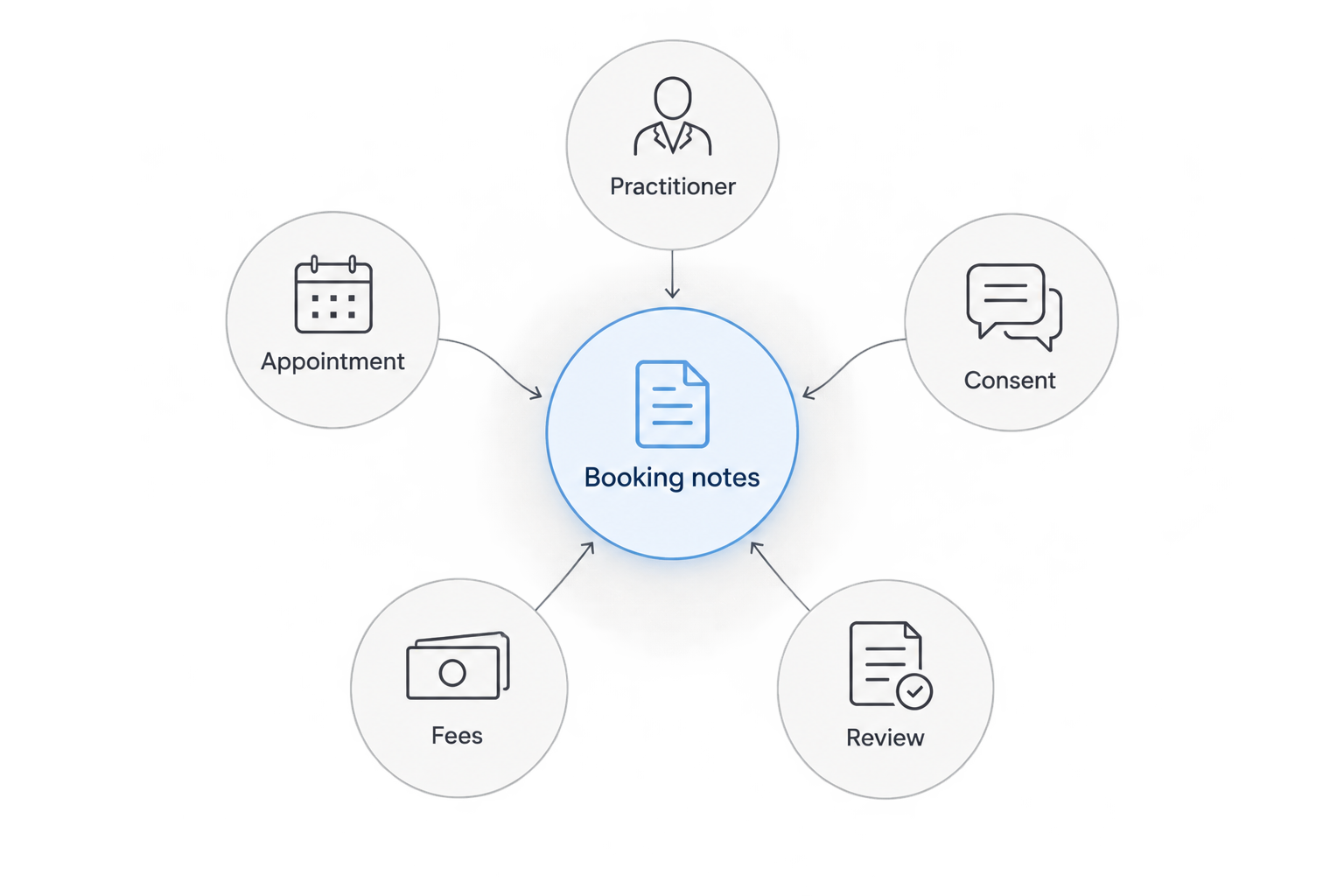
| Topic | Useful information to record | What still needs clarification |
|---|---|---|
| Practitioner | Full name and current registration check | Who you will actually see |
| Appointment | Assessment arrangements and expected duration | Whether any procedure is included or proposed separately |
| Consent | When explanations and decisions occur | How to pause, decline or ask for alternatives |
| Fees | Current written fee and cancellation information | Separate services or prepayment conditions |
| Review | How further recommendations are explained | What would prompt reassessment or referral |
Use these headings for your 2026 booking notes. Leave a space for unanswered questions instead of filling gaps with assumptions from advertising or someone else's experience.
Before ending the call, repeat back the arrangements that matter to you. For example, confirm whether you are booking an assessment and when you would receive information about any proposed procedure.
Can I book an assessment without agreeing to an adjustment?
Ask whether an assessment-only appointment can be arranged. Make your preference clear when booking, then confirm it with the chiropractor before the assessment begins.
Do not assume MyChiro or another clinic has a particular booking format. Request the actual arrangements directly and ask how fees apply if you decide not to proceed with a proposed adjustment.
Should I ask for a care plan before my first appointment?
Ask how recommendations are developed, but distinguish an outline of the clinic's process from an individual care plan. A personalised recommendation requires information about your circumstances and assessment findings.
You can request that any later proposal explain its purpose, review arrangements and alternatives. Ask for time to consider it if you are not ready to decide.
What if the clinic cannot answer my clinical questions by phone?
Reception does not need to make a clinical judgement to handle your enquiry. Ask when a chiropractor can discuss the question and whether that discussion occurs before you consent to a procedure.
If a question determines whether you want to attend at all, explain that clearly. You can postpone your decision while seeking clarification or advice from another qualified health professional.
FAQ
What are the main questions to ask a chiropractor before booking?
Ask about current registration, the first assessment, consent, proposed adjustments, risks, alternatives, fees and review arrangements. Separate information reception can provide from questions requiring a chiropractor’s assessment.
How do I check a chiropractor’s registration in Australia in 2026?
Check the individual practitioner’s current entry on Ahpra’s public register in 2026. Use their full name and read any published registration conditions or restrictions.
Can I say no to an adjustment at my first appointment?
You can decline a proposed adjustment. Ask for the explanation, relevant risks and alternatives before deciding, and tell the chiropractor if you want to pause.
Should I get an X-ray before booking a chiropractor?
Do not arrange an X-ray simply because you assume every appointment requires one. Ask the assessing practitioner whether imaging has a clinical purpose in your circumstances and how it would affect decisions.
Can a chiropractor tell me how many visits I need over the phone?
An individual recommendation requires assessment rather than a booking conversation alone. Ask how any proposed schedule would be justified, reviewed and changed.
What should I ask about chiropractic appointment fees?
Request current written fees, what the appointment includes, separate charges and cancellation conditions. Check any insurance benefit directly with your insurer.
What should I ask MyChiro before a chiropractic appointment?
Ask MyChiro who you would see, what the appointment includes and when clinical questions would be discussed. Confirm consent arrangements, current fees and what information to bring without assuming clinic policies.
One last thing
Add a question about uncertainty: what can you not tell me until after assessment? The distinction between a known booking detail and an unanswered clinical question helps you make a decision without relying on promises.
Keep that question on your 2026 checklist. You are asking for an explanation and a choice, not a prediction about your results.
Related guides
- How to prepare for your first chiropractor appointment
- How to compare chiropractic clinics near you
- How often should you see a chiropractor?