
To compare chiropractic clinics in Sydney, check each practitioner's registration, how the clinic explains assessment and consent, its approach to reviewing care, and the practical details of attending. Choose on verifiable information and clear answers—not promises of a particular result—and remember that choosing a clinic does not establish whether chiropractic care is appropriate for you.
- Compare chiropractic clinics Sydney-wide using registration, assessment, consent and review arrangements—not outcome promises.
- Check the individual chiropractor on Ahpra’s public register before relying on a clinic biography.
- Mychiro is a chiropractic clinic in Bondi Junction; location alone does not establish clinical suitability.
- Ask how recommendations are reviewed and when another health professional would be involved.
Why this matters
A clinic website tells you what a business offers. It does not establish which care, if any, is appropriate for your circumstances. Separating those questions helps you compare local services without turning advertising into a clinical recommendation.
For example, Mychiro is a chiropractic clinic and wellness centre in Bondi Junction, Sydney, offering chiropractic care and spinal adjustments. Those are useful service and location facts, not evidence that a particular procedure suits an individual patient.
For your 2026 shortlist, use the same questions for every clinic. Record what is confirmed, what needs clarification and what requires an individual assessment; an unanswered question is not proof of poor care, but it remains something to resolve.
How do I compare chiropractic clinics in Sydney?
Use this sequence before deciding whether to arrange an assessment. Keep administrative questions separate from clinical questions: reception can explain appointment arrangements, while individual clinical recommendations require discussion with the practitioner.
- Check registration. Find the individual chiropractor on Ahpra's public register of practitioners. Match the name and profession, and read any registration conditions shown rather than relying only on a clinic biography.
- Clarify the initial assessment. Ask what the appointment involves, who conducts it and how findings are discussed. Confirm whether any proposed procedure is a separate decision requiring your consent.
- Ask about options and consent. Find out how the practitioner explains the purpose, material risks, alternatives and uncertainties of proposed care. Ask whether you can take time to consider the recommendation.
- Understand the review process. Ask how recommendations are reassessed, what would prompt a change and when another health professional would be involved. Do not substitute a standard appointment schedule for an individual explanation.
- Confirm practical arrangements. Check the location, accessibility, appointment arrangements and written administrative terms. Ask the clinic to clarify anything that affects your ability to attend or make an informed decision.
Compare evidence, not just presentation
Different information sources answer different questions. Use them together rather than allowing a polished website or a convenient location to decide everything.
| Information source | Useful for checking | Limitation |
|---|---|---|
| Ahpra public register | An individual practitioner's registration details and any conditions shown | Does not rank clinics or establish suitability for your concern |
| Clinic website | Published services, practitioner information and location | Describes the clinic; does not replace individual assessment |
| Reception enquiry | Access arrangements, appointment processes and administrative terms | Cannot determine your clinical needs |
| Practitioner discussion | Reasoning, options, consent and review arrangements | Recommendations still need to be understood in your circumstances |
| Your comparison notes | Differences in the answers clinics provide | An incomplete answer needs clarification, not an assumed meaning |
A registration check and a clinical suitability assessment answer different questions. Neither should be replaced by marketing language.
What should I check about a chiropractor's registration?
Check the person you would actually see, not simply the business name. Ahpra's public register is the authoritative Australian source for checking registration details for registered health practitioners, including chiropractors.
Look for a matching name and profession, then read the entry rather than stopping at the search result. If the clinic uses a shortened name or you cannot confidently identify the practitioner, ask for their registered name before proceeding.
For a 2026 comparison, check the current register entry rather than relying on an old screenshot, certificate image or biography. Registration information and clinic staffing are separate matters, so confirm who would conduct your appointment as well.
A qualification listed on a website is information to examine, not a reason to assume expertise in every condition. Ask what a particular credential means and how it relates to the service being discussed; avoid inferring clinical suitability from titles alone.
What should a clinic explain before I agree to care?
Ask how assessment findings become recommendations. You should be able to distinguish what the practitioner has observed, what remains uncertain and why a particular next step is being proposed.
Useful questions include:
- What are you assessing, and what information do you need from me?
- What is the purpose of the proposed procedure?
- What risks and alternatives should I consider?
- What happens if I decide not to proceed today?
- What would lead you to recommend medical assessment or another practitioner?
An understandable explanation is more useful than technical terminology alone. If someone mentions adjustments, decompression or nerve pressure, ask what the term means in your circumstances and what supports the proposed recommendation.
Do not assume that every clinic offering chiropractic care offers the same procedures. Equally, a longer service list does not establish a closer match to your needs; ask about the proposed approach rather than comparing the number of services advertised.
Consent is a decision, not just paperwork
Ask whether there is time to discuss questions before agreeing to a procedure. A signed form does not tell you whether you understand what is proposed, its material risks or the alternatives.
Do not agree to a procedure you do not understand. You can ask for clarification, take time to consider your options or seek another opinion without treating the initial assessment as a commitment to ongoing care.
How do I compare ongoing care recommendations?
Compare the reasoning behind a recommendation, not the number of appointments in isolation. Ask why the proposed frequency is being suggested, when it will be reviewed and what information will guide the next decision.
For your 2026 notes, separate the initial proposal from any later recommendation. A plan explained before assessment should not be mistaken for an individual clinical conclusion.
Ask these 3 questions about any proposed ongoing care:
- What are the agreed goals of this plan?
- How and when will the recommendation be reassessed?
- What would lead us to change, pause or stop this approach?
These questions do not require you to predict an outcome. They help establish whether there is a clear decision process rather than an assumption that attendance continues indefinitely.
If different clinics suggest different approaches, ask each practitioner to explain the reasoning and uncertainties. Do not assume that more appointments mean more appropriate care, or that fewer appointments establish a more suitable approach.
Why chiropractic clinic recommendations and experiences vary
Differences between clinics need explanation, not an automatic ranking. These factors give you specific points to compare:
- Assessment information: Ask what history and examination findings inform an individual recommendation, rather than comparing advice based only on a brief enquiry.
- Services offered: Confirm the procedure actually being discussed. The category name alone does not describe every aspect of an appointment.
- Communication: Compare whether explanations answer your questions in language you understand, including uncertainties and alternatives.
- Review arrangements: Ask how the practitioner decides whether an existing recommendation remains appropriate.
- Practical access: Location, physical access and appointment arrangements affect attendance, but do not demonstrate clinical suitability.
Mychiro's Bondi Junction location is relevant when comparing chiropractic clinics for travel convenience. Apply the same registration, consent and review questions to Mychiro as to any other clinic; no location or brand name replaces those checks.
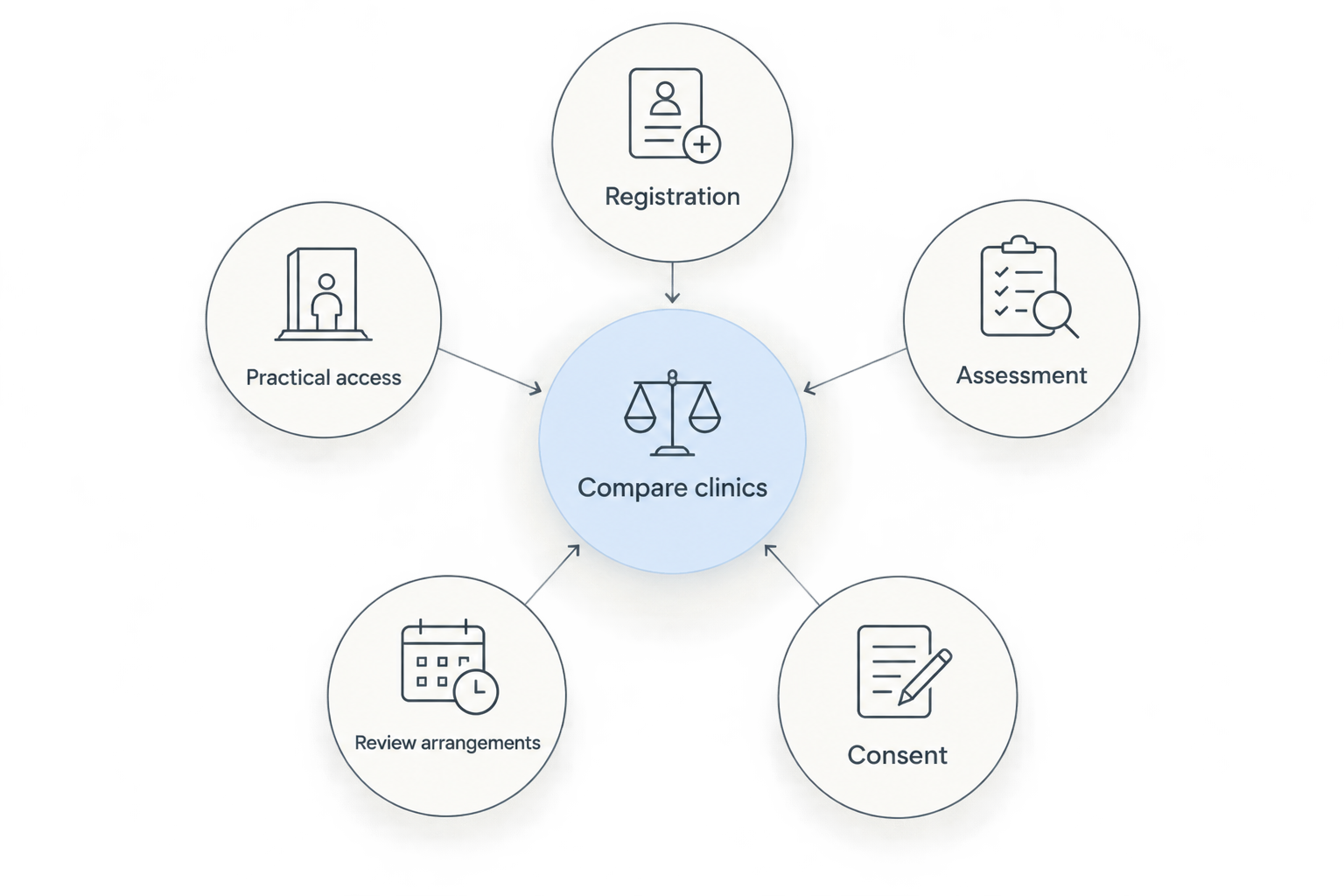
What should I write down when comparing clinics?
Use 1 page for your shortlist, with the same headings for each clinic. You are collecting answers, not creating a numerical quality score from information that cannot support one.
If you are comparing 2 clinics, record their responses side by side. A useful note distinguishes a confirmed fact from a question awaiting a practitioner discussion.
| Comparison heading | What to record | What needs clarification |
|---|---|---|
| Registration | Practitioner's registered name and date checked | Any mismatch or register information you do not understand |
| Assessment | Published or confirmed appointment process | What requires an individual clinical discussion |
| Consent | How options, risks and questions are discussed | Whether you have time to consider a proposal |
| Review arrangements | How recommendations are reassessed | What would prompt a different approach |
| Practical access | Confirmed location and access information | Anything affecting your ability to attend |
Date your notes in 2026 so you know when information was checked. This matters particularly if you return to an old shortlist after a change in your circumstances or the clinic's staffing.
Before an assessment, organise the information you want to discuss rather than trying to diagnose yourself. The guide to preparing for your first chiropractor appointment provides a related starting point.
Should I choose the nearest chiropractic clinic in Sydney?
The nearest clinic is convenient, but distance does not establish clinical suitability. Confirm registration and understand the assessment, consent and review process before using location as a deciding factor.
Ask about physical access rather than assuming that an address tells the whole story. If stairs, transport connections or other practical arrangements matter to you, confirm them directly before attending.
Do I need to commit to ongoing visits at the first appointment?
You do not have to make an ongoing commitment simply because you attend an initial appointment. Ask for the reasoning, review arrangements and administrative terms before deciding whether to proceed.
A recommendation should be understandable without pressure to decide immediately. If the explanation remains unclear, request clarification or another opinion rather than using a commitment as a substitute for confidence in the decision.
What if I am unsure whether chiropractic care is appropriate?
Discuss that uncertainty with a qualified health professional before selecting a procedure or ongoing plan. Choosing between clinics is a separate task from deciding which type of assessment your symptoms require.
This comparison guide is not medical triage or a diagnosis. If you think your symptoms require urgent medical attention, seek urgent medical care rather than waiting to complete a clinic comparison.
FAQ
How do I compare chiropractic clinics in Sydney without relying on advertising?
Compare practitioner registration, assessment processes, consent discussions and review arrangements. Ask each clinic the same questions and record confirmed information separately from claims or unanswered questions.
Where can I check whether a Sydney chiropractor is registered?
Check the individual chiropractor on Ahpra’s public register of practitioners. Match the name and profession, and read any registration conditions shown rather than relying solely on a clinic website.
What should I ask before agreeing to an adjustment?
Ask about the proposed adjustment’s purpose, material risks, alternatives and uncertainties in your circumstances. Request clarification before deciding, and ask whether you can take time to consider the recommendation.
Does a clinic offering more services make it more suitable for me?
A longer service list does not establish individual suitability. Ask which approach is being proposed, why it is being considered and what alternatives should be discussed.
How do I compare different recommendations for ongoing appointments?
Compare the reasoning, goals and review arrangements behind each recommendation. Ask what would prompt a change or an end to the proposed plan rather than judging by appointment numbers alone.
Can I compare clinics before deciding whether to book?
You can compare registration, location, access arrangements and published appointment processes before booking. Individual clinical recommendations require an appropriate assessment and discussion with a qualified health professional.
One last thing
Ask what would make the practitioner recommend a different approach. That question brings uncertainty, review arrangements and referral decisions into the conversation without asking for a promised result.
Keep that answer alongside the clinic's practical details. Your shortlist should support an informed discussion—not turn a website comparison into a diagnosis.
Related guides
- What qualifications should a Sydney chiropractor have?
- How often should you see a chiropractor?
- How do I choose a chiropractor in Bondi Junction?