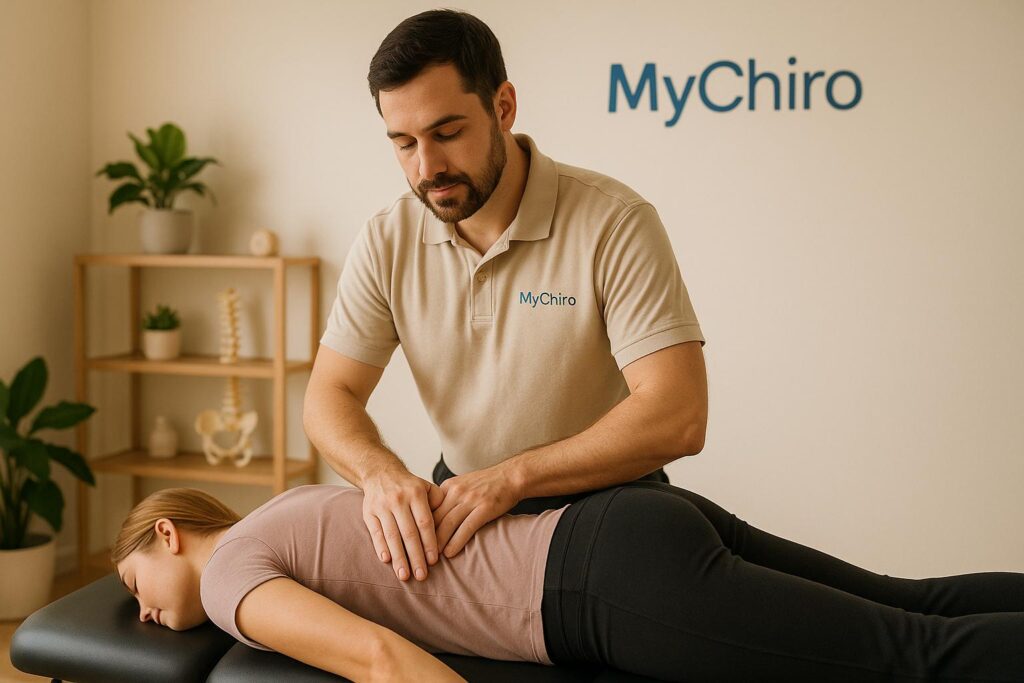
Sciatica describes pain travelling from the lower back or buttock into a leg, sometimes with tingling, numbness or weakness. It often involves irritation or compression of a nerve root. Before considering chiropractic care, assessment should clarify the likely cause and any need for medical referral. Symptoms alone do not establish spinal misalignment or a need for an adjustment.
Key Points:
- Possible causes: Disc-related nerve irritation or narrowing around nerve roots; other causes of leg pain also need consideration.
- Symptoms: Pain radiating from the lower back down the leg, tingling, numbness, or muscle weakness.
- Impact: Limits mobility, disrupts daily activities, and can interfere with sleep and mental wellbeing.
- Chiropractic assessment: Can help discuss musculoskeletal care options and referral needs. Manual techniques, including soft tissue therapy, are not suitable for everyone.
- Care options: Advice, activity and exercise may form part of management. Expected benefits, risks and alternatives should be discussed before treatment.
Seek urgent medical care for new bladder or bowel control changes, numbness around the groin or saddle area, or rapidly worsening leg weakness. Do not wait for a chiropractic appointment. For other new, persistent or worsening symptoms, arrange an assessment.
Main Causes and Risk Factors of Sciatica
Primary Causes of Sciatica
Sciatica often involves irritation or compression of a nerve root in the lower back. A clinician considers the pattern of symptoms and examination findings, because pain travelling into a leg can have more than one explanation.
Herniated discs can irritate or compress a nearby nerve root. This may produce leg pain, altered sensation or weakness. A disc finding on a scan must be interpreted alongside symptoms and examination; it does not automatically identify the cause of pain.
Spinal misalignment is not an explanation that can be assumed from sciatica symptoms or posture. Ordinary daily activities do not mean vertebrae have moved out of place and need to be put back. Specific structural conditions require appropriate assessment.
Age-related disc changes are common and do not always cause pain. In some people, changes in discs or surrounding structures contribute to narrowing around a nerve. Clinical findings help determine whether a scan finding is relevant.
Pain around the piriformis muscle may overlap with other buttock or leg symptoms. A diagnosis should not be made from location alone; a clinician should consider spinal, hip and other possible causes.
Spinal stenosis is narrowing of spaces within the spine that may affect nerve roots. Some people develop leg symptoms with standing or walking. Assessment helps determine whether the narrowing is relevant and what management is appropriate.
Understanding the likely cause helps guide care, but treatment does not always involve changing a structural finding. Symptoms, function and signs that need referral matter too.
Risk Factors for Sciatica
Work demands, activity and general health can influence symptoms and recovery. No single habit explains every case of sciatica, and having a risk factor does not mean that nerve damage is present.
Prolonged sitting can aggravate symptoms for some people. Change position and take movement breaks as tolerated. There is no single sitting position that prevents sciatica or proves that the spine is misaligned.
Heavy lifting may trigger symptoms in some circumstances. Use manageable loads, suitable assistance and a gradual return to demanding tasks. Pain during lifting does not by itself establish a disc injury or displaced vertebra.
Physical activity can support general health and function. If symptoms limit movement, seek advice about tolerable activity rather than assuming the spine needs to be stabilised through repeated adjustments.
Age-related spinal changes vary between people. Age alone does not establish the cause of symptoms or the need for a particular treatment.
If driving, bending or a work task aggravates symptoms, record what happens and discuss practical adjustments. A plan should support a manageable return to daily activities, without unnecessary fear of ordinary movement.
How Chiropractic Care May Help Manage Sciatica
The Basics of Chiropractic Care
Chiropractic care for sciatica-related concerns begins with assessment. A chiropractor may discuss activity, exercise, manual therapy or referral, depending on the findings. Adjustments do not routinely reposition vertebrae or create space around a compressed nerve.
The term subluxation should not be used to imply that ordinary sciatica is caused by bones being out of place. A treatment may aim to reduce musculoskeletal symptoms or support movement; that is different from demonstrating correction of the underlying nerve compression.
For low back pain with or without sciatica, NICE recommends considering manual therapy only as part of care that includes exercise. It does not recommend routine ultrasound, traction or TENS for this purpose. Ask why any proposed treatment is relevant to your situation.
Non-Surgical Care and Its Limits
Some people can manage sciatica without surgery, using advice, activity and other care chosen with a clinician. Being medication-free does not make a treatment risk-free or more effective. Do not stop prescribed medicines without discussing them with the prescriber.
Recovery varies with the cause, severity and individual circumstances. Treatment should have clear goals and review points. A shorter recovery than surgery or prevention of future episodes cannot be promised.
Research on Chiropractic Care
Research needs to be considered alongside assessment of the likely cause of sciatica. Small studies comparing manipulation with other treatments do not establish that it is equivalent to surgery or a suitable substitute when surgery is medically indicated.
A percentage reported in an individual study is not an individual success rate. The diagnosis, treatment protocol, comparison group, follow-up and study limitations affect what the result means.
Evidence for manual therapy varies between conditions and outcomes. A discussion should cover the expected size and duration of benefit, uncertainties and risks. Persistent or worsening symptoms may require reassessment or referral, rather than more sessions.
Chiropractic Assessment and Care Options
Spinal Adjustments and Soft Tissue Therapies
Spinal manipulation therapy (SMT) uses a brief, controlled joint movement. It may be considered for selected musculoskeletal pain after assessment, but it does not put a disc back into place or guarantee removal of nerve pressure.
An instrument-assisted or lower-force technique is not automatically appropriate for all ages or health conditions. You can ask about care without manipulation and decline a proposed technique.
Soft tissue techniques may be considered for a separate muscle discomfort component. Their use does not establish treatment of nerve compression. Each proposed intervention needs a reason, a discussion of risks and a plan to assess whether it helps.
Hands-on treatment is optional. Activity advice and an appropriate exercise plan can be discussed without assuming that adjustments are necessary first.
Exercise and Posture Guidance
Assessment may consider the movement of the back, hips and legs, alongside strength, sensation and relevant neurological signs. Exercise should be selected for the individual, rather than a standard programme to correct every postural difference.
Graded movement and strengthening may help maintain or restore function. The choice and dose should suit your symptoms and ability. Stop and seek advice if an activity causes new weakness or worsening neurological symptoms.
Workstation changes and varied positions may improve comfort during daily tasks. They do not demonstrate that the spine has been realigned or a nerve has been decompressed.
A useful plan explains what to try at home, what symptoms to monitor and when to review progress.
Patient-Focused Care and Lifestyle Support
Care should use an assessment-based approach. Symptoms, medical history, function and examination findings help determine reasonable options. Suspected nerve involvement may call for medical referral or further investigation.
At MyChiro in Bondi Junction, you can discuss how back or leg symptoms affect work, sleep and daily activity. The aim of the initial consultation is to understand your concerns and explain appropriate next steps, with referral when needed.
Self-management advice may include pacing activity, changing positions and a gradual return to usual tasks. Follow-up should be based on clinical need and progress, not a promise that regular adjustments will prevent recurrence.
sbb-itb-585d67d
Chiropractic Care vs Other Sciatica Treatment Options
Treatment Options Comparison
When considering different treatments for sciatica, discuss what each option can reasonably achieve for your diagnosis. Options are not interchangeable, and recovery time cannot be ranked simply by profession or treatment name.
Chiropractic care may include assessment, advice, exercise and manual techniques. Temporary soreness can occur, and other adverse effects are possible. Suitability, risks and expected benefit depend on the person and technique; recovery is not guaranteed within days or weeks.
Medication may be considered by an appropriate prescriber, but benefits and risks vary by medicine and health history. Ask your GP or pharmacist about suitable options. Avoid assuming that all medicines work quickly or have the same side effects.
Physiotherapy may support activity, exercise and rehabilitation, with manual techniques where appropriate. A programme should be tailored to symptoms, capacity and goals. There is no fixed recovery timetable.
Surgery may be considered for selected cases with relevant findings, or urgently for certain neurological emergencies. A specialist explains expected benefits, risks and recovery. Manipulation must not delay an indicated surgical assessment.
| Treatment Option | Invasiveness | Expected response | Potential Side Effects | Clinical considerations |
|---|---|---|---|---|
| Chiropractic Care | Non-invasive | Variable; review against agreed goals | Soreness and other technique-specific risks | Assessment determines suitability and referral |
| Medication | Non-invasive | Depends on medicine and individual response | Medicine-specific; discuss with prescriber | Benefits and harms depend on diagnosis and health |
| Physiotherapy | Non-invasive | Variable; programme tailored to the person | Activity-related discomfort; adjust programme | Activity, strength and functional goals |
| Surgery | Invasive | Depends on procedure and individual recovery | Infection, nerve damage, anaesthesia risks | May relieve specific compression when indicated |
This table is a discussion aid, not a ranking of effectiveness or safety. A treatment’s suitability depends on the diagnosis, symptoms, medical history and your preferences.
Many people are initially offered non-surgical management, but urgent neurological signs need prompt medical assessment. Care may involve several professionals when appropriate. Ask how recommendations fit together and when the plan should change.
Should You Consider Chiropractic Care for Sciatica?
Key Points to Keep in Mind
A chiropractic assessment may help discuss musculoskeletal options, but sciatica does not automatically call for an adjustment. Consider what has been found, which alternatives are available and whether medical referral is needed.
There is no guaranteed recovery time with chiropractic spinal manipulative therapy. Do not use claims of rapid relief or equivalence to surgery to decide whether to delay medical assessment.
Before starting care, agree on realistic goals and when to review them. If symptoms worsen, new weakness develops or progress is not as expected, the diagnosis and plan should be reconsidered.
New bladder or bowel control changes, saddle-area numbness or rapidly worsening leg weakness need urgent emergency assessment. Conditions such as severe osteoporosis may also make manipulation inappropriate, but require an individual clinical decision rather than a blanket treatment recommendation.
New patients at MyChiro can book a free initial consultation. Same-day treatment is optional, costs $125 and is offered only when clinically appropriate. There is no obligation to proceed.
Medical Disclaimer
This information is intended for general purposes only and should not replace professional medical advice. Chiropractic care focuses on musculoskeletal health, and results can vary from person to person. Always consult a qualified healthcare provider before making decisions about your health.
How A Chiropractor Treats Sciatica
FAQs
How do I know if chiropractic care might help with my sciatica symptoms?
An assessment can help determine whether your symptoms suggest sciatica and whether musculoskeletal care, medical investigation or referral is appropriate. It should include your history and relevant physical and neurological examination.
A finding of pain or altered posture does not establish that the spine is out of place. Ask what the clinician thinks is causing the symptoms, what remains uncertain and how the proposed care could help.
What happens during a chiropractic session for sciatica, and how long might it take to notice improvements?
The clinician should discuss your symptoms, medical history, examination findings and care options. Treatment may be inappropriate or referral may be needed. If a technique is proposed, its likely benefits, risks, alternatives and fees should be explained before you decide.
Response varies, and there is no set number of sessions that guarantees improvement. Agree on a review point and report worsening symptoms. Lack of progress is a reason to reassess, not automatically to extend treatment.
What activity or exercise advice may help with sciatica?
A clinician can help you choose tolerable activity and a gradual return to everyday tasks. No posture, exercise or adjustment programme can guarantee that sciatica will not return.
Walking, changes of position or selected exercises may be appropriate, depending on your symptoms. A generic list of planks, stretches or yoga poses is not suitable for everyone. Seek advice if an activity increases leg symptoms or causes weakness.
For personalised guidance suited to your condition and daily habits, always seek advice from a qualified healthcare professional or chiropractor.