
Start with a saddle matched to your riding position, rather than one advertised as a solution for lower back pain. This 2026 Mychiro guide compares five saddle designs by their intended use, fitting considerations and limitations—not by claims that they relieve a medical condition.
- Mychiro’s bike saddle guide prioritises riding position and fit, not promises of lower back pain relief.
- Moderately padded saddles suit general riding; wider saddles deserve consideration for upright bikes.
- Short-nose, cut-out and leather saddles offer different shapes, not guaranteed clinical benefits.
- Persistent back pain needs appropriate assessment rather than repeated equipment changes alone.
Why this matters
A saddle is one part of your bicycle setup. Before replacing it, consider the handlebar position, saddle adjustment and circumstances in which discomfort appears. A product labelled ergonomic does not establish that it is appropriate for your body or your symptoms.
Mychiro is a chiropractic clinic and wellness centre in Bondi Junction, Sydney. This article provides general equipment-selection information; it does not diagnose cycling-related pain or recommend chiropractic care for every rider.
The practical question for 2026 is not which saddle promises the most cushioning. It is which design matches how you actually sit and pedal, and whether your symptoms require a separate clinical assessment.
What to look for in a bike saddle
Use these criteria before comparing saddle designs. They keep the decision focused on observable features rather than medical marketing.
- Riding position: Compare saddles while sitting as you normally ride, not only while sitting upright in a shop.
- Width and shape: Ask a bicycle fitter how the saddle’s usable seating area matches your position. Overall width alone does not describe its contour.
- Pedalling clearance: Check whether the nose and sides interfere with your thighs during normal pedalling.
- Adjustment compatibility: Confirm that the rails, clamp and adjustment range match your seatpost using the relevant manufacturers’ instructions.
- A meaningful trial: Ask whether you can trial the saddle on your own bicycle and what conditions apply. Do not assume that a trial or return arrangement exists.
- Clear limitations: Treat comfort descriptions as product information, not evidence that a saddle addresses the cause of lower back pain.
Keep your existing saddle if it remains comfortable and compatible with your riding. Replacement is not an automatic requirement because you have back pain.
Saddle designs at a glance
The order below starts with general-purpose designs and moves to more particular preferences. It is a selection guide for 2026, not a clinical ranking or a comparison of tested products.
| Saddle design | Suited to | Feature to examine | Main limitation |
|---|---|---|---|
| Moderately padded conventional saddle | General riding in a moderately forward position | Usable seating area and thigh clearance | Conventional shapes still vary substantially |
| Wide upright saddle | Bikes ridden with a relatively upright torso | Broad rear platform | Width can interfere with pedalling on another setup |
| Short-nose saddle | Riders comparing compact shapes in a forward position | Nose length and front-to-rear contour | A shorter nose does not establish appropriate fit |
| Cut-out or channel saddle | Riders comparing central surface shapes | Opening or recessed centre | Cut-out edges and contours differ between designs |
| Tensioned leather saddle | Riders who specifically want a leather riding surface | Construction and care requirements | Maintenance and adjustment need attention |
1. Moderately padded conventional saddle: for general riding
A conventional saddle has a rear seating platform and a narrower nose. For a general-purpose bicycle, it gives you a straightforward starting point without introducing an unusual shape or construction.
Moderate padding describes the surface, not a medical benefit. Compare the complete shape, including the transition between the rear platform and nose, rather than pressing the padding with your thumb and deciding from softness alone.
Conventional saddle advantages:
- Provides a familiar shape for general riding.
- Lets you compare width, contour and padding separately.
- Offers a straightforward reference when reviewing your current saddle.
Conventional saddle limitations:
- Similar-looking saddles can feel different in use.
- Padding thickness does not establish suitability for back pain.
Suited to: Riders with a moderately forward position who want to compare ordinary saddle shapes before considering a more unusual design.
Decision: Hold your current saddle unless a trial identifies a clear reason to change. Record what feels different rather than assuming that new equipment is an improvement.
2. Wide upright saddle: for upright city bicycles
A wide upright saddle has a broad rear seating area. Consider this category when your bicycle and handlebars place you in a relatively upright riding position.
Do not choose the widest option simply because your lower back hurts. Check the fit while pedalling: a shape that feels comfortable when stationary still needs to leave room for your thighs as the cranks turn.
Wide upright saddle advantages:
- Gives upright riders a broad platform to compare.
- Makes seating-area shape an obvious part of the selection process.
- Matches a distinct riding style rather than assuming every bicycle needs a racing-style saddle.
Wide upright saddle limitations:
- Extra width can interfere with thigh movement.
- A shape chosen for an upright bicycle does not automatically suit a forward riding position.
Suited to: Riders of city or leisure bicycles who remain relatively upright during ordinary use.
Decision: Hold until you can check pedalling clearance on your own bicycle. A stationary sit test is not the whole assessment.
3. Short-nose saddle: for comparing forward-position shapes
A short-nose saddle has a shorter front section than a conventional long-nose design. It offers a different shape to compare if you ride in a forward position and want to examine how the front of the saddle fits that position.
Short-nose designs are not interchangeable. Check the rear platform, central contour and manufacturer’s setup instructions rather than choosing from nose length alone.
Short-nose saddle advantages:
- Offers a compact shape for a distinct fit comparison.
- Allows you to assess front-section clearance separately from padding.
- Provides an alternative when a conventional outline does not match your preferences.
Short-nose saddle limitations:
- Different contours can complicate comparisons between models.
- Copying the old saddle’s position does not establish an equivalent setup.
Suited to: Riders comparing saddle shapes for a forward position with help from a bicycle fitter where needed.
Decision: Wait for a setup check before interpreting the trial. A change in shape and a change in position are separate variables.
4. Cut-out or channel saddle: for comparing central contours
A cut-out saddle has an opening through its centre; a channel saddle has a recessed central surface. These features change the saddle’s shape, but neither establishes a clinical benefit for lower back pain.
Examine the opening, edges and surrounding seating area together. A prominent cut-out is easy to notice in a product photograph, while the surrounding contour can be harder to judge without a trial.
Cut-out or channel saddle advantages:
- Offers a distinct central contour to compare.
- Lets you consider an opening and a recessed channel as different options.
- Directs attention to surface shape rather than padding alone.
Cut-out or channel saddle limitations:
- Edges and surrounding contours can create unwanted contact.
- The presence of an opening does not establish appropriate fit.
Suited to: Riders who want to compare central saddle shapes, rather than riders seeking a product-based diagnosis for numbness or pain.
Decision: Skip any design that produces unwanted pressure or numbness. Do not keep riding through those symptoms to complete a trial.
5. Tensioned leather saddle: for a material preference
A tensioned leather saddle uses a leather riding surface supported by its frame. Choose this category because you want that construction and accept its care requirements—not because leather establishes a benefit for your back.
Read the manufacturer’s instructions before adjusting tension or applying a care product. Do not assume advice for one leather saddle applies to another.
Tensioned leather saddle advantages:
- Offers a different construction from a padded shell saddle.
- Gives riders with a clear material preference another option.
- Makes maintenance requirements part of the buying decision.
Tensioned leather saddle limitations:
- Requires attention to product-specific care instructions.
- Material preference does not replace a riding-position assessment.
Suited to: Riders who deliberately want a leather riding surface and are prepared to follow its care instructions.
Decision: Wait unless the construction itself appeals to you. There is no need to choose leather solely because you have lower back pain.
How the designs were ordered
This 2026 guide orders saddle categories by the riding situations they address: general riding, upright riding, forward-position comparisons, central contour preferences and material preferences. The comparison uses shape, compatibility, trial practicality and limitations.
It does not report product testing, measured pressure changes or clinical outcomes. Mychiro’s saddle comparison separates equipment features from health claims so you can ask more precise questions before changing your setup.
Make your saddle trial interpretable
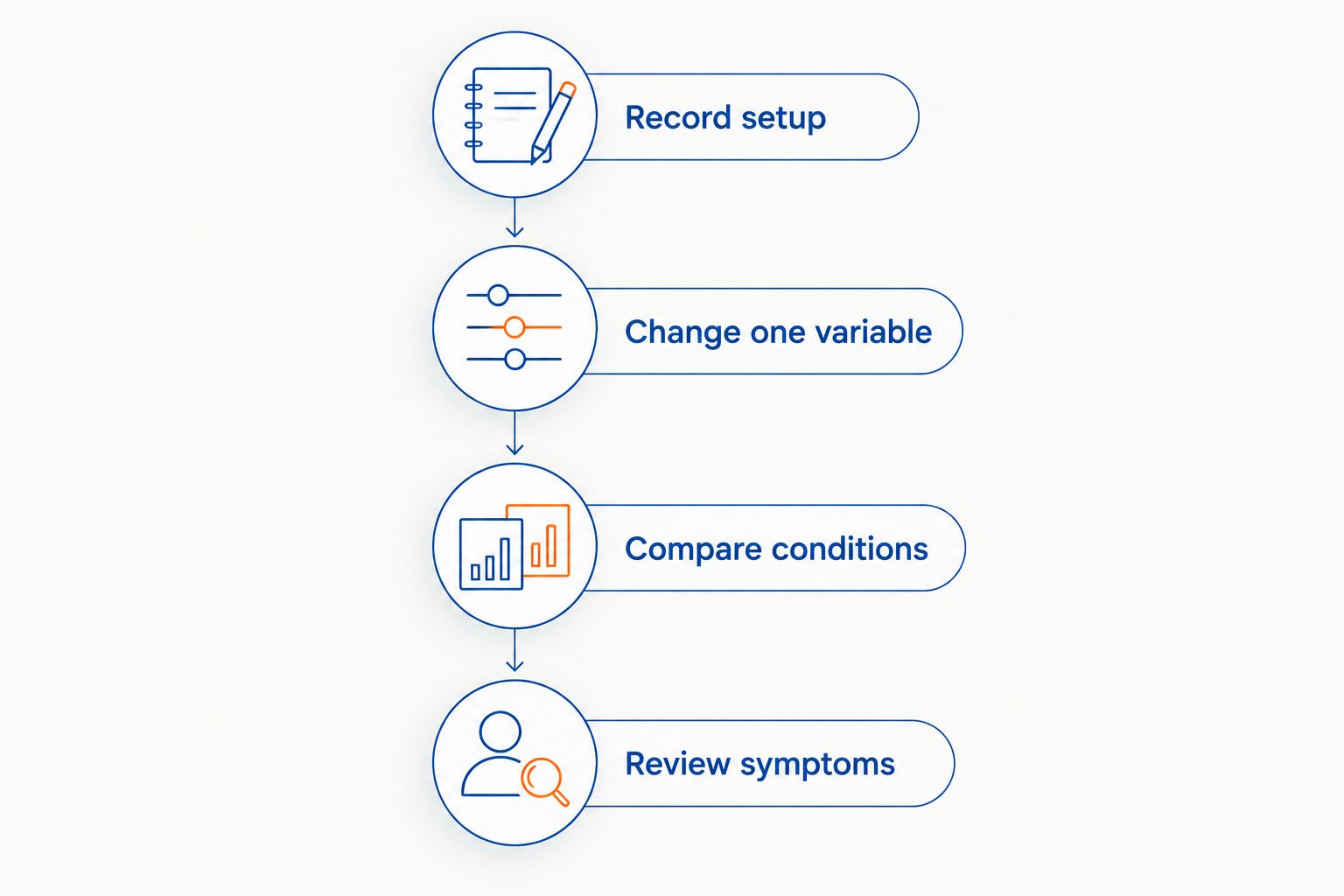
A trial should help you distinguish the saddle from other changes. Start by documenting your current setup, then follow a simple sequence.
- Record setup: Note the saddle model, position and relevant manufacturer instructions. Photograph the setup before making adjustments.
- Change one variable: Avoid replacing the saddle and changing handlebar position together if you want to understand the saddle comparison.
- Compare conditions: Use a familiar route and similar riding conditions where practical. Do not extend a ride just to complete a test.
- Review symptoms: Note what you felt, where you felt it and whether it continued after riding. Stop if symptoms warrant assessment.
For your 2026 comparison notes, record saddle width in millimetres, saddle angle in degrees and ride duration in minutes. These are documentation fields, not target measurements or a prescribed riding duration. Use the manufacturer’s measurement method where one is specified.
Questions about dry needling for sciatica concern a clinical intervention, not a saddle feature. Discuss the appropriateness, evidence, risks and alternatives with a qualified health professional rather than treating an equipment trial as a substitute for assessment.
When equipment advice is not enough
Recurring pain deserves a conversation about your symptoms, riding and wider circumstances—not an assumption that the saddle is responsible. A bicycle fitter can discuss equipment setup; a qualified health professional can assess health concerns and advise on appropriate next steps.
Seek urgent medical assessment for back pain accompanied by new bladder or bowel changes, loss of sensation around the genitals or anus, or weakness affecting both legs. Back pain after a serious accident also requires urgent assessment rather than a saddle experiment. This referral advice follows the NHS public guidance on back pain; it is not a diagnosis.
Which saddle design should you choose?
For an undecided rider, start by reviewing the current saddle and riding position before buying anything. If a replacement is justified, use the category that matches your position as a starting point for a trial.
An upright city rider and a forward-position road rider are making different comparisons. Neither needs to select a saddle on the strength of a lower-back-pain promise, and neither should interpret persistent symptoms as a reason to keep purchasing equipment.
FAQ
Which bike saddle should I consider if I have lower back pain?
Consider a saddle that matches your riding position, while keeping the equipment decision separate from assessment of your pain. No saddle category in this guide is presented as a treatment for lower back pain.
Is a wider bicycle saddle always more comfortable?
No, extra width does not establish comfort for every rider. Compare the seating area and thigh clearance while riding in your usual position.
Should I choose a soft saddle or a firm saddle?
Do not choose from softness alone. Compare the complete shape, padding, riding position and how the saddle feels during an appropriate trial.
Does a saddle cut-out mean it will help my back?
No, a cut-out describes the saddle’s central shape, not a demonstrated benefit for your back. Its edges and surrounding contour still need to suit your position.
Can I copy my old saddle position onto a short-nose saddle?
Do not assume the same position gives an equivalent setup. Check the saddle and seatpost instructions, and ask a bicycle fitter if you are unsure how to compare them.
Should I keep riding if a new saddle causes numbness?
Stop the trial rather than riding through numbness. Seek appropriate health advice if numbness persists, recurs or accompanies other symptoms.
Does every cyclist with back pain need chiropractic care?
No, back pain while cycling does not establish a need for chiropractic care. Appropriate next steps depend on an individual assessment and can include equipment advice, medical assessment or another form of care.
One last thing
Your existing saddle is a useful comparison point. Before removing it, keep a photograph and a clear record of its position so you are not relying on memory when judging a replacement. An expensive or unusual design still needs to justify the change through an appropriate fit comparison.
Related guides
- Lower back pain when sitting: causes and practical steps
- How to prepare for your first chiropractor appointment
- What qualifications should a Sydney chiropractor have?