

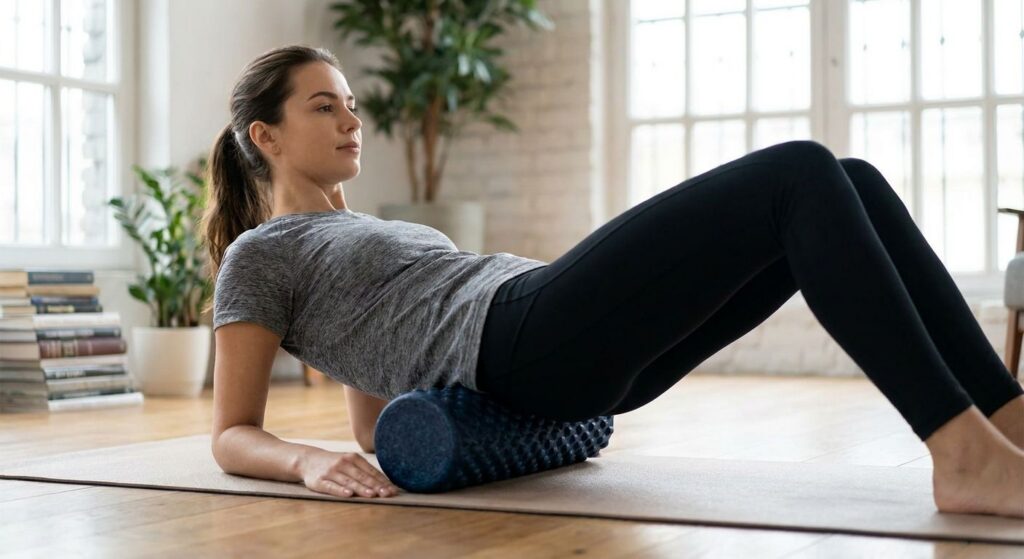
Foam rolling is a self-myofascial release technique many people add to their weekly routine alongside stretching, movement and chiropractic care to manage everyday muscle tension around the lower back. This guide ranks the foam roller exercises most commonly used for lower back discomfort in 2026, based on the muscle group each one targets, how beginners tend to tolerate it, and where caution is warranted.
- Best foam roller exercises for lower back pain include thoracic extension, glute release and hip flexor release — all rated Buy for 2026 routines.
- IT band and lat rolls score Hold: useful for runners and lifters, less directly tied to lower back tension.
- Piriformis release needs care if leg symptoms are present — an assessment should come first.
- Foam rolling can ease muscle tension between chiropractic visits, but it is not a substitute for a spinal assessment.
Why This Matters
Lower back tension is one of the most common reasons people reach for a foam roller before they book a chiropractic assessment. Rolling the muscles around the hips, glutes and mid-back can ease tightness that pulls on the lower spine, which is why it shows up so often in self-care advice heading into 2026.
Foam rolling targets muscle and fascia, not the joints themselves, so it works differently to the adjustments delivered during an appointment at a Bondi Junction chiropractic clinic. If lower back pain comes with leg numbness, tingling below the knee, or changes in bladder or bowel function, that combination calls for an assessment from a health professional rather than a longer foam rolling session.
The exercises below are ranked for general muscle tension, not for diagnosed spinal conditions. Anyone with a herniated disc, spinal stenosis or ongoing nerve symptoms should have a health professional confirm which movements are appropriate before starting a new routine.
How We Ranked These Foam Roller Exercises
Each exercise is ranked against four criteria used across musculoskeletal self-care resources: the muscle group it targets, how well beginners tolerate it without guidance, how directly it relates to lower back muscle tension versus a neighbouring area, and whether it carries a caution for anyone with existing nerve symptoms.
Exercises that hit multiple muscle groups feeding into the lower back — glutes, hip flexors, thoracic spine — rank higher than exercises that mainly support a single joint or sport. None of these rankings replace an individual assessment; they reflect how the exercise is generally positioned in 2026 self-care guidance.
The 7 Best Foam Roller Exercises for Lower Back Pain
1. Thoracic Extension Roll — The Posture Reset
Roller sits horizontally under the shoulder blades, hands support the head, and the upper back extends over the roller for 8-10 slow reps. Limited thoracic mobility forces the lower back to compensate for movement it was not built to handle, and this is one of the few foam roller moves that addresses that chain directly. It suits anyone who spends long stretches at a desk or behind the wheel in 2026's hybrid-work routines. Verdict: Buy.
2. Glute Release — The Hidden Trigger
Sitting on the roller with one ankle crossed over the opposite knee and shifting weight onto the glute for 30-45 seconds targets a muscle that commonly tightens after long periods of sitting. Tight glutes can pull on the pelvis and load the lower back unevenly, so this is a frequent recommendation alongside chiropractic care for chiropractic care for herniated disc pain relief style self-care plans. It is straightforward for beginners and low-risk for most people without acute leg symptoms. Verdict: Buy.
3. Piriformis Release — The Sciatic Nerve Neighbour
The piriformis sits deep in the glute and lies close to the sciatic nerve, so rolling this spot for 20-30 seconds per side is a common self-care step when nerve-related leg symptoms are part of the picture. Because of that proximity, anyone with radiating leg pain, tingling or numbness should have those symptoms assessed before adding pressure here. For general muscle tightness without nerve symptoms, it is a reasonable addition to a weekly routine. Verdict: Hold — check with a health professional first if leg symptoms are present.
4. Hip Flexor Release — The Desk-Sitter's Move
Lying face-down with the roller under the front of the hip and rolling for 30 seconds per side targets muscles that shorten from hours of sitting. Tight hip flexors tilt the pelvis forward and increase the curve in the lower back, a pattern common among shift workers and office-based staff managing lower back tension in 2026. This exercise pairs well with the guidance covered for chiropractic care for shift workers with back pain. Verdict: Buy.
5. IT Band Roll — The Runner's Ritual
Lying on one side with the roller running from hip to knee along the outer thigh for 30-60 seconds addresses a structure that runs from the hip to the shin. It is a staple for anyone managing knee and hip tightness after training, more directly tied to hip mechanics than lower back tension on its own. Verdict: Hold — useful for runners, secondary for isolated lower back complaints.
6. Lat Release — The Overlooked Connector
Rolling along the side of the ribcage from the armpit toward the lower back for 6-8 passes per side loosens a muscle that attaches all the way down to the pelvis. Tight lats can restrict how the torso rotates and indirectly stiffen the lower back, which makes this a useful add-on rather than a standalone fix for most people. Verdict: Hold.
7. Quad Roll — The Mobility Multiplier
Face-down with the roller under the front of the thigh, rolling for 30-45 seconds per leg loosens muscles that influence hip extension and pelvic tilt. Tight quads limit how far the hip can extend during walking and standing, which changes how load moves through the lower back over a day. Verdict: Buy.
Not sure which exercises suit your back?
Discuss your posture, activity level and any leg symptoms with a chiropractor before starting a new routine.
Foam Roller Exercises Compared
| Exercise | Target Area | Typical Duration | Best For |
|---|---|---|---|
| Thoracic Extension | Mid-back | 8-10 reps | Desk workers, posture |
| Glute Release | Glutes | 30-45 sec/side | General lower back tension |
| Piriformis Release | Deep glute | 20-30 sec/side | Hip tightness, needs caution with leg symptoms |
| Hip Flexor Release | Front of hip | 30 sec/side | Prolonged sitting, shift work |
| IT Band Roll | Outer thigh | 30-60 sec/side | Runners, knee/hip tightness |
| Lat Release | Side ribcage | 6-8 passes/side | Rotation restriction |
| Quad Roll | Front thigh | 30-45 sec/side | Hip extension, standing load |
Choosing a Foam Roller: What to Look For
- Density: A medium-density roller suits most beginners in 2026 — soft foam collapses too easily under body weight, while very firm rollers can feel intense on tender spots without guidance.
- Length: 13-inch rollers work for targeted areas like the glutes and hip flexors, while 36-inch rollers support full-back moves like the thoracic extension.
- Texture: Smooth rollers are the standard starting point; textured or ridged rollers apply more concentrated pressure and suit people who already tolerate smooth rolling without discomfort.
“A foam roller can ease muscle tension between chiropractic visits, but it does not replace an assessment of what is driving the pain.”
FAQ
What are the best foam roller exercises for lower back pain?
The exercises most commonly recommended for lower back tension in 2026 include the thoracic extension roll, glute release, hip flexor release and quad roll. Each targets a muscle group that can pull on the lower spine when tight, rather than the spine itself.
How long should you foam roll for lower back tension?
Most guidance suggests 20-60 seconds per muscle group, repeated for 2-3 sets. Rolling longer than a few minutes per area does not add benefit and can leave the area tender.
Can foam rolling replace chiropractic care?
No — foam rolling addresses muscle and fascia tension, while chiropractic adjustments address joint movement and alignment. The two can be used alongside each other following an assessment.
Is foam rolling appropriate with a herniated disc?
It depends on the individual case and symptoms, so this should be discussed with a health professional before starting. Anyone with leg numbness, tingling or weakness should have those symptoms assessed first.
How often should you foam roll your lower back?
Three to four sessions a week is a common starting point in most self-care guidance for 2026. Daily use is fine for general tightness as long as no new symptoms develop.
What size foam roller is best for lower back pain?
A 36-inch roller supports full-back moves like the thoracic extension, while a shorter 13-inch roller works well for targeted areas like the glutes and hip flexors. Most people benefit from having one of each length.
Does foam rolling help with sciatica-type symptoms?
Piriformis release is sometimes used because the muscle sits near the sciatic nerve, but anyone with radiating leg pain or numbness should have this assessed by a health professional before self-treating. Foam rolling alone does not address nerve compression.
When should you see a chiropractor instead of foam rolling?
See a health professional if lower back pain lasts longer than a few weeks, worsens, or comes with leg symptoms, numbness or changes in bladder or bowel function. Foam rolling is suited to general muscle tightness, not persistent or worsening pain.
One Last Thing
Foam rolling works on muscle and fascia — it has no effect on joint alignment or disc position, which is why persistent lower back pain lasting longer than a few weeks in 2026 still warrants an assessment rather than a longer rolling session. The exercises here are a reasonable starting point for everyday tightness, not a diagnostic tool.
Related Guides