
Plantar fasciitis is one of the most common causes of heel and arch pain seen in Sydney clinics, and footwear is one of the few variables you control every single day. The right shoe won't replace a proper assessment, but the wrong one can keep irritating the plantar fascia no matter what else you're doing about it. This guide ranks the shoe categories most commonly recommended by podiatrists and physiotherapists in 2026 and explains what actually matters when you're shopping for support.
- Best shoes for plantar fasciitis in 2026 share three traits: a firm heel counter, contoured arch support and a cushioned midsole.
- Motion-control running trainers rank highest for daily wear and moderate overpronation — Buy.
- Rocker-sole walking shoes suit all-day standing roles by shifting load off the forefoot — Consider.
- Minimalist and flat sandals rank lowest because thin midsoles give the plantar fascia almost no support — Skip.
- Replacing running shoes every 500-800km stops compressed cushioning from quietly reducing your support.
Why this matters
The plantar fascia is a thick band of connective tissue that runs from your heel bone to the base of your toes and helps support the arch of your foot. When it's repeatedly overloaded — by worn shoes, sudden increases in walking or running, tight calf muscles, or long hours on hard floors — it can become irritated and painful, usually worst with the first steps in the morning.
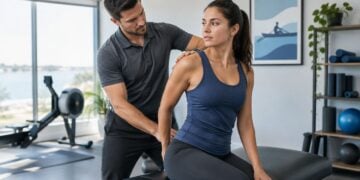
Footwear can't correct every contributing factor on its own, and if heel or arch pain is persistent, it's worth having it properly assessed rather than guessing. Chiropractic care for plantar fasciitis and foot pain covers how a broader assessment of gait, calf tightness and foot mechanics can be discussed alongside footwear changes. Shoe choice sits alongside that assessment — it's a lever you can pull today, not a standalone answer.
How we ranked these shoe categories
Each category below is scored against four features that podiatry and physiotherapy guidance consistently points to for plantar fasciitis: heel counter firmness (how well the back of the shoe locks the heel in place), arch contour, midsole cushioning and heel-to-toe drop, and whether the insole is removable for a custom orthotic. Categories that stack up on most of these get a Buy or Consider verdict; categories that fail on structure and cushioning get a Skip. This isn't a clinical trial — it's a practical framework for narrowing a shoe wall down to a short list in 2026.
The ranked list
1. Motion-control running trainer — the everyday workhorse
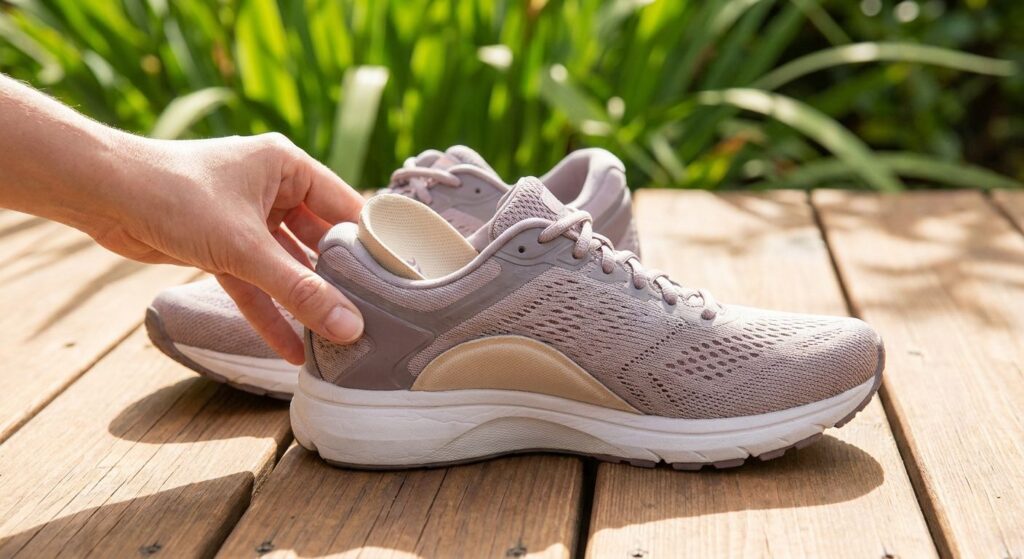
Motion-control trainers use a firmer foam density on the inner edge of the midsole and a heel-to-toe drop typically between 10mm and 12mm, which reduces how far the heel rotates inward on landing. That structure matters for plantar fasciitis because excess inward roll (overpronation) stretches the fascia with every step.
They work for walking as well as running, which makes them a reasonable everyday shoe rather than a purely athletic one. Runners managing heel pain often pair shoe changes with a broader look at gait and loading, which chiropractic care for runners with knee and hip pain discusses in more detail.
Verdict: Buy — the strongest all-round pick for daily wear in 2026.
2. Rocker-sole walking shoe — the all-day stander's pick
A rocker sole curves the shoe upward at the toe, which reduces how far the big toe joint has to bend during push-off. That's useful for plantar fasciitis because the fascia tightens sharply in that final phase of the walking stride.
These shoes suit retail, hospitality and healthcare workers who are on their feet for eight-plus hours. The trade-off is a slightly unfamiliar gait feel for the first week or two.
Verdict: Consider — worth trying if your day involves prolonged standing rather than running.
3. Structured work boot — the tradie's non-negotiable
Steel or composite-toe work boots vary widely in support, but the better ones use a stiffer sole with a flat-to-6mm drop and a firm heel counter to keep the foot stable on uneven ground. Cheaper boots often skip the contoured footbed entirely, which leaves the fascia unsupported through a full shift.
Boots also take longer to break in than trainers, so budget a couple of weeks before judging comfort. Manual labourers dealing with foot, knee or lower back strain from long days often find it's not the boots alone — chiropractic care for tradies and manual labourers covers the wider picture of load and posture on site.
Verdict: Buy — but check for a removable insole and a contoured footbed before purchase.
4. Orthotic-friendly casual sneaker — the orthotic host
If a podiatrist has recommended custom orthotics, the shoe itself needs a removable stock insole and enough internal volume to fit the orthotic without crowding the toes. Many fashion-forward sneakers glue the insole in place, which defeats the purpose entirely.
Look for a heel-to-toe drop of roughly 6mm to 10mm and a lace-up (not slip-on) design, since laces let you fine-tune fit around the orthotic.
Verdict: Consider — essential if you're using custom orthotics, unnecessary if you're not.
5. Contoured sandal — the summer compromise
A sandal with a moulded, contoured footbed and a structured heel strap can hold up reasonably well for short walks in warmer months. The arch support won't match a proper trainer, but it beats a flat thong by a wide margin.
Check that the heel strap is adjustable and that the footbed has a visible arch shape rather than a flat platform.
Verdict: Consider — fine for short outings, not a substitute for your main daily shoe.
6. Minimalist or flat shoe — the one to skip
Minimalist shoes and flat fashion sandals typically run a 0mm to 4mm drop with almost no arch contour or midsole cushioning. That design philosophy suits some barefoot-training goals, but it removes exactly the support plantar fasciitis needs.
If you're already managing heel pain, this category adds load rather than reducing it.
Verdict: Skip — reconsider once symptoms have settled and only after discussing a return to minimalist footwear with a qualified health professional.
Comparison table
| Shoe category | Heel-to-toe drop | Best suited for | Verdict |
|---|---|---|---|
| Motion-control running trainer | 10-12mm | Daily wear, moderate overpronation | Buy |
| Rocker-sole walking shoe | 4-8mm rocker geometry | All-day standing roles | Consider |
| Structured work boot | Flat to 6mm | Manual labour, uneven terrain | Buy |
| Orthotic-friendly sneaker | 6-10mm, removable insole | Custom orthotic wearers | Consider |
| Contoured sandal | Variable, low drop | Short walks, warm weather | Consider |
| Minimalist/flat shoe | 0-4mm | Not suited to active symptoms | Skip |
Get your foot and gait assessed
Footwear changes work best alongside a proper look at your gait and posture.
Where to look before you buy
- Get measured, not just sized. Foot length and width change over years, and a specialty running or work-boot store can measure both feet under load.
- Ask about a wear-test period. Many specialty stores let you walk around indoors before committing — use it, since arch support that feels fine standing still can feel different after 20 minutes.
- Buy based on distance, not looks. A trainer that still looks new at 600km can have midsole cushioning that's already compressed past useful support — replace on mileage, not appearance.
FAQ
What’s the best shoe feature for plantar fasciitis?
A firm heel counter combined with contoured arch support is the feature combination most consistently recommended for plantar fasciitis. Cushioning matters too, but without heel and arch structure, extra padding alone does little to reduce strain on the fascia.
Is a rocker-sole shoe better than a flat shoe for plantar fasciitis?
A rocker sole reduces how far the big toe joint bends during push-off, which can ease load on the plantar fascia during that phase of walking. A completely flat, unstructured shoe offers no such benefit and may increase strain over a full day.
How often should I replace shoes if I have plantar fasciitis?
Most running and walking shoes lose meaningful cushioning support after roughly 500-800km, regardless of how they look externally. Tracking distance rather than relying on visual wear is the more reliable replacement guide.
Can chiropractic care help with plantar fasciitis?
A chiropractic assessment can help identify factors contributing to heel and foot pain, such as gait patterns, calf tightness or hip and pelvis alignment, following a proper examination. Any specific care plan should be discussed with a qualified health professional based on your individual presentation.
Do orthotics work better than supportive shoes alone?
Custom orthotics are typically used alongside supportive footwear rather than instead of it, since the shoe still needs a removable insole and enough volume to accommodate the orthotic properly. Whether orthotics are appropriate for you is a question for a podiatrist following assessment.
What shoes should I avoid with plantar fasciitis?
Flat, unstructured sandals and minimalist shoes with little to no arch contour are generally the least supportive options while symptoms are active. Worn-out trainers past 800km of use fall into the same category even if they were supportive when new.
Should I wear supportive shoes indoors too?
Walking barefoot or in unsupportive slippers on hard floors at home can undo the benefit of supportive shoes worn outside. A structured indoor shoe or slipper with a contoured footbed is worth considering if you spend hours standing in the kitchen or on tiled floors.
How much does supportive footwear cost in Australia?
Pricing varies widely by brand, category and retailer, so there’s no single figure that applies across the board. A specialty running or work-boot store can point you toward options that meet the support features described above within your budget.
One last thing
Sydney's warmer months tend to bring out flat thongs and minimalist sandals, and that seasonal switch is an easy detail to overlook if heel pain has been improving. Swapping to a structured thong with a genuinely contoured footbed — not just a shaped logo on a flat sole — is a low-effort change that keeps the arch supported without giving up summer footwear entirely.
Related guides
- Chiropractic care for seniors with joint stiffness
- Chiropractic care for leg length discrepancy and posture imbalance