
Tight hip flexors show up as a nagging pull at the front of the hip, a flattened lower back, or that stiff first-few-steps feeling after sitting through a Zoom call. This guide ranks the stretches that show up most often in physiotherapy and chiropractic practice for anterior hip tightness, with hold times, sets, and who each one suits.
- The kneeling hip flexor stretch (couch stretch) is the top pick for daily desk workers and lifters in 2026 — do it daily.
- Standing hip flexor stretch works best for tradies and shift workers who need something they can do without a mat.
- Pigeon-style stretches suit cyclists and runners but should be modified if you have knee pain — go gently.
- Foam rolling the quads before stretching can make the follow-up stretch feel less restricted, per general physiotherapy guidance.
Why tight hip flexors matter more than people think
The hip flexors, mainly the psoas and iliacus, attach into the front of the lumbar spine and the top of the thigh bone. Sit for eight hours a day and these muscles shorten, which can tug the pelvis forward and change how load moves through the lower back. This is a common pattern seen in runners dealing with hip and knee pain, but it shows up just as often in people who never run at all — drivers, desk workers, and anyone who sits more than they stand.
Stretching alone will not resolve every case of hip or back discomfort, and persistent pain, numbness, or pain that radiates down the leg should be assessed by a health professional before you push into a stretching routine. What follows is general guidance on stretches commonly used for anterior hip tightness in 2026, not a substitute for an individual assessment.
How this list was ranked
Each stretch below was assessed against four criteria: how directly it targets the hip flexor group versus surrounding muscles, how much equipment it needs, how adaptable it is for different fitness levels, and how commonly it appears in physiotherapy and chiropractic exercise programs for anterior hip tightness. Stretches that need specialised equipment or carry higher injury risk for beginners rank lower, even if they are effective for advanced movers. Hold times and rep ranges reflect general stretching guidance used across allied health practice in 2026, not a claim about outcomes for any individual.
The ranked list
1. Kneeling hip flexor stretch (couch stretch variation)
The most commonly prescribed hip flexor stretch in general practice, and for good reason — it isolates the front of the hip better than almost anything else on this list. Kneel on a cushioned surface with one knee down and the other foot planted in front at 90 degrees, then gently shift your hips forward until you feel a stretch through the front of the kneeling hip. Hold for 20-30 seconds, repeat 2-3 times each side, and keep your torso upright rather than leaning forward.
This suits people who sit most of the day, including gym-goers and weightlifters who spend hours between squat sets and desk time. The main mistake is arching the lower back to force a deeper stretch — that shifts the load into the spine instead of the hip. Do it daily.
2. Standing hip flexor stretch
The standing version trades depth for convenience — no mat, no kneeling, no floor time required, which makes it the practical choice for anyone stretching between jobs. Step one foot back into a shallow lunge, keep both feet pointing forward, tuck the pelvis slightly, and hold for 20-30 seconds per side.
This is the stretch worth teaching tradies and manual labourers who need something they can do beside a ute at lunch. It is gentler than the kneeling version, so it works as a warm-up before heavier stretches too. Do it 3-4 times a day if you're on your feet for long shifts.
3. Kneeling lunge with overhead reach
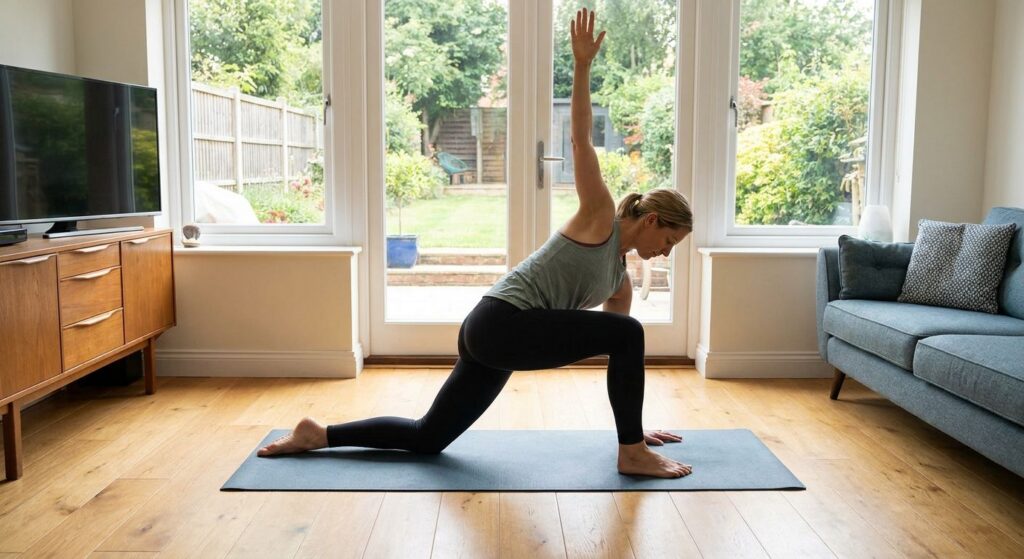
Adding an overhead reach to the kneeling lunge extends the stretch up through the side body and can address the rotational tightness that builds up from repetitive one-sided movement. From the kneeling hip flexor position, raise the arm on the same side as the kneeling leg overhead and lean gently away from that side. Hold for 15-20 seconds, then repeat on the other side.
This variation is relevant for golfers managing lower back pain, given how much rotation and one-sided loading a golf swing puts through the hips and spine. Skip the overhead reach if you have shoulder pain — do the base lunge only. Add it in if your discomfort has a rotational or one-sided pattern.
4. Pigeon-style hip stretch
Pigeon pose targets the front of the hip differently to the kneeling lunge by combining hip flexor length with some glute and outer hip stretch at the same time, which is useful for anyone whose tightness sits across multiple muscle groups rather than one spot. From a tabletop position, bring one knee forward and angle the shin across the body, extend the opposite leg straight back, and lower down as far as feels comfortable. Hold 20-30 seconds.
This one needs a caveat: it puts real load through the front knee, so anyone with existing knee pain should keep the front leg less angled or skip it altogether. Modify with a cushion under the hip, or skip if you have knee pain.
5. Foam rolling the quads and front hip
Foam rolling is not a stretch in the traditional sense, but rolling the quads and front of the hip before stretching is a common step in physiotherapy warm-up routines and can make the following stretch feel less restricted. Roll slowly from just above the knee to the hip crease, spending 30-60 seconds per leg, and avoid rolling directly over the kneecap or hip bone.
The same principle shows up in general guidance on foam roller exercises for lower back pain — rolling the surrounding muscles before a stretch changes how the stretch feels, not necessarily how tight the muscle stays long-term. Use it as a 60-second warm-up, not a replacement for stretching.
Get your hip and spine assessed
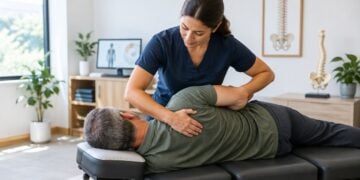
A chiropractic assessment can identify what’s driving ongoing hip or lower back tightness.
Comparison table
| Stretch | Equipment | Best for | Verdict |
|---|---|---|---|
| Kneeling hip flexor stretch | Mat or cushion | Desk workers, lifters | Do daily |
| Standing hip flexor stretch | None | Tradies, shift workers | Do 3-4x/day |
| Kneeling lunge with reach | Mat | Golfers, rotational patterns | Add if relevant |
| Pigeon-style stretch | Mat, cushion optional | General tightness | Modify for knee pain |
| Foam rolling quads | Foam roller | Pre-stretch warm-up | Use before stretching |
Where to start
- Pick two stretches, not five. Consistency with two stretches beats doing all five once and never again — most people notice a change in daily mobility over 4-6 weeks of regular practice.
- A mat or folded towel is the only equipment most of these need. A foam roller is optional, useful mainly as a warm-up step.
- Book an assessment if tightness doesn't ease with regular stretching, or if you notice pain radiating into the leg. A chiropractor can check whether the tightness is muscular, postural, or linked to something that needs a closer look.
FAQ
What is the best stretch for tight hip flexors?
The kneeling hip flexor stretch, sometimes called the couch stretch, is the most commonly used option in 2026 because it isolates the front of the hip more directly than standing versions. Hold it for 20-30 seconds per side and keep the torso upright to avoid arching the lower back.
How long does it take to loosen tight hip flexors?
Most people who stretch consistently notice a change in daily mobility over 4-6 weeks, based on general physiotherapy guidance. Results vary depending on how much sitting or repetitive movement is driving the tightness.
Can tight hip flexors cause lower back pain?
Tight hip flexors can change pelvic position and how load moves through the lumbar spine, which some people experience alongside lower back discomfort. A chiropractic or physiotherapy assessment can help work out whether the hip flexors are contributing in your specific case.
How often should I stretch my hip flexors?
Once or twice a day is a common general recommendation, particularly for people who sit for long stretches at work. Standing variations are useful for fitting in extra sessions without needing a mat.
Is it better to stretch hip flexors before or after exercise?
Dynamic movement is generally preferred before exercise, while static holds of 20-30 seconds are more commonly used after activity or as a standalone routine. Foam rolling beforehand is a common warm-up step rather than a stretch itself.
Should I stretch hip flexors if I have hip pain?
Mild tightness responds to gentle stretching for many people, but sharp, sudden, or worsening hip pain should be assessed by a health professional before starting a stretching routine. Ongoing pain that doesn’t ease with rest is worth getting checked rather than stretched through.
What causes tight hip flexors in the first place?
Prolonged sitting is the most common cause discussed in general practice, since it keeps the hip flexors in a shortened position for hours at a time. Repetitive one-sided sports like golf and cycling can also contribute to tightness on one side more than the other.
One last thing
The psoas, the main hip flexor muscle, attaches directly onto the lumbar vertebrae — which is why tight hip flexors and lower back stiffness so often show up together rather than as separate problems. Stretching the hip without ever looking at the spine is treating half the picture.
If stretching hasn't shifted persistent tightness after several weeks, or if you notice pain spreading beyond the hip, get it assessed rather than adding a sixth stretch to the list.