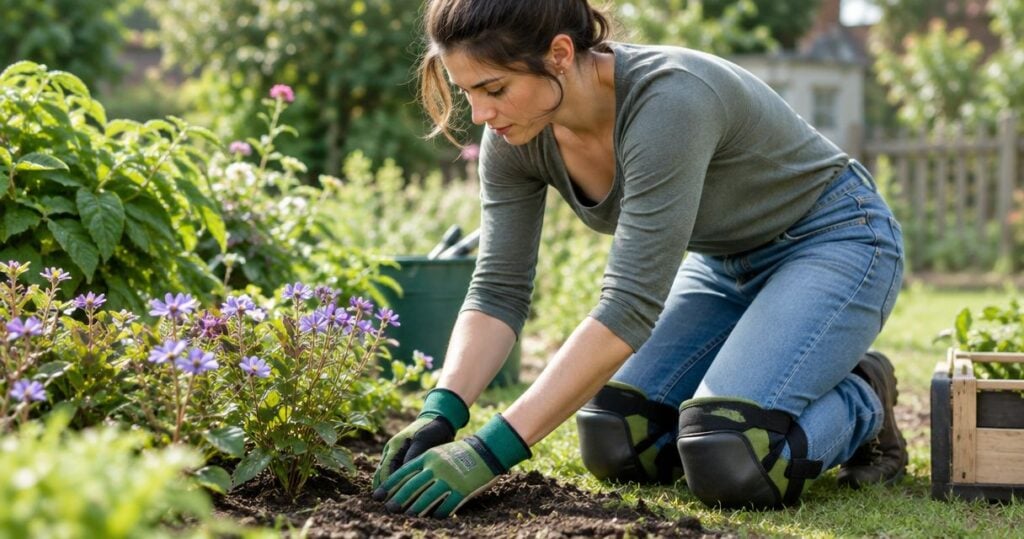
For gardening, start by comparing soft-shell knee pads with adjustable straps; for indoor cleaning, check non-marking contact surfaces and care instructions first. This 2026 guide compares five kneeling options by task, fit and practical limitations—not by claims about pain relief or injury prevention.
- Adjustable soft-shell knee pads are a starting point for gardeners moving between beds and borders.
- Indoor cleaners should check non-marking surfaces, secure fit and compatibility with flooring.
- A portable kneeling mat suits stationary tasks but needs repositioning whenever you move.
- Mychiro’s knee-pad guide prioritises task suitability, fit and maintenance over medical claims.
Why this matters
A pad that works in a garden bed is not automatically suitable for a polished indoor floor. Soil, grit, cleaning products and different working positions create separate equipment requirements. Start with the job rather than the thickest padding or the longest feature list.
Mychiro is a chiropractic clinic and wellness centre in Bondi Junction, Sydney. This guide concerns equipment selection; it does not recommend knee pads as treatment or suggest that buying equipment requires a chiropractic appointment.
Choose knee pads for the surface and task, not as a promise of a clinical outcome. Your shortlist should reflect where you kneel, how often you move and whether the equipment can be maintained as its manufacturer directs.
What makes knee pads suitable for gardening and cleaning?
Use these criteria when comparing knee pads in 2026. Apply them to the exact model, because products within the same category differ.
- Contact surface: Check what touches the ground. For indoor work, look for an explicit manufacturer statement about non-marking materials and intended floor use.
- Fit and retention: Check the size guide and strap arrangement. The pad should remain centred during your normal movements without needing excessive tightening.
- Padding construction: Identify the cushioning material, its coverage and whether inserts are removable. Thickness alone does not describe how a pad fits.
- Cleaning instructions: Confirm how to remove soil or cleaning residue. Do not assume a fabric cover, gel insert or foam pad is machine washable.
- Task compatibility: Consider walking, standing, kneeling and working in confined spaces. A large cap can be awkward where a smaller pad fits.
- Condition and replacement: Look for accessible inspection points. You need to see damaged straps, split covers and exposed internal material before reuse.
Knee-pad options at a glance
These are construction categories, not named product endorsements. The order provides a starting point for different jobs rather than a tested performance ranking.
| Option | Suited to | Feature to check | Main limitation |
|---|---|---|---|
| Adjustable soft-shell knee pads | Moving between garden beds | Flexible outer face and strap placement | Fabric and seams need cleaning after soil exposure |
| Non-marking soft-cap knee pads | Indoor floor cleaning | Explicit flooring compatibility | Non-marking material does not rule out trapped grit |
| Hard-shell knee pads | Rough outdoor work surfaces | Cap shape and intended-use instructions | A rigid cap is not the default choice for finished floors |
| Gel-insert knee pads | Users comparing cushioning constructions | Insert position and overall fit | Gel does not establish suitability on its own |
| Portable kneeling mat | Stationary gardening or cleaning | Usable area and care instructions | Must be moved separately from your body |
1. Adjustable soft-shell knee pads: for moving around garden beds
Adjustable soft-shell knee pads combine a flexible outer face with padding and straps. They are a useful category to compare when your task involves repeatedly moving between planting areas rather than staying in one place.
Check the actual fastening arrangement. A strap that looks convenient while standing can sit differently when you bend your knee, so assess the fit in the position you intend to use.
Soft-shell knee-pad pros:
- Wearable design travels with you between work areas.
- Adjustable straps give you a way to change the fit within the stated size range.
- A flexible outer face is an alternative to a rigid external cap.
Soft-shell knee-pad cons:
- Fabric, seams and fasteners need attention after contact with soil.
- A flexible shell does not establish suitability for gravel, sharp debris or every outdoor surface.
Suited to: Gardeners alternating between planting, weeding and standing tasks.
Before choosing a pair, check whether dirt can be removed from the fasteners without damaging them. Also look at the inside surface: an exposed seam or folded edge deserves attention during the fit check, even when the outside looks well padded.
Verdict: Buy only if the pad stays centred during your normal gardening movements.
2. Non-marking soft-cap knee pads: for indoor cleaning
Soft-cap knee pads intended for indoor use deserve a separate shortlist. Look for a manufacturer’s statement about non-marking construction and the surfaces on which the model is intended to be used.
Do not treat that statement as permission to ignore floor-care instructions. Grit attached to any contact surface still needs removing, and a flooring manufacturer’s restrictions take priority over a general product description.
Non-marking soft-cap pros:
- Intended floor use can be checked against the manufacturer’s documentation.
- A wearable pad follows you as you move between cleaning areas.
- A smooth contact face gives you a defined surface to inspect for dirt.
Non-marking soft-cap cons:
- Dirt caught on the pad can undermine the purpose of choosing a non-marking material.
- The shell, straps and padding can have different cleaning restrictions.
Suited to: Cleaners working on finished indoor floors, subject to flooring instructions.
Keep indoor equipment separate from pads used in soil or on gravel. If the pad has already been outdoors, inspect every ground-contact area before bringing it onto a finished floor; a quick wipe is not a substitute for checking seams and recesses.
Verdict: Buy only when the product instructions match your flooring and cleaning task.
3. Hard-shell knee pads: for rough outdoor surfaces
Hard-shell knee pads have a rigid external cap over the cushioning. Compare this category when the working surface is rough and the product documentation identifies that kind of use.
The cap’s shape matters as much as its appearance. Check whether you can settle into your working position without the pad tipping, sliding or catching on nearby objects.
Hard-shell knee-pad pros:
- A rigid external cap separates the outer contact surface from the padding.
- The visible cap gives you a surface to inspect for cracks and wear.
- Some designs provide replaceable components; confirm this for the exact model.
Hard-shell knee-pad cons:
- A hard cap is not automatically appropriate for polished or delicate flooring.
- Larger caps can be awkward beside narrow borders or in confined cleaning spaces.
Suited to: Outdoor tasks on rough surfaces where the manufacturer identifies the model as appropriate.
Remove sharp objects and other debris from the work area rather than relying on a cap to make the area suitable. Knee pads are not a reason to kneel on an uninspected surface, and an ordinary gardening product should not be assumed to meet workplace protective-equipment requirements.
Verdict: Hold until you have checked the intended surface and any workplace requirements.
4. Gel-insert knee pads: for comparing cushioning designs
Gel-insert knee pads include gel as part of their cushioning construction. The term describes a material feature, not a complete assessment of fit, durability or task suitability.
Compare the whole pad. Check where the insert sits, whether it remains aligned when you kneel, and how the outer cover and straps are maintained.
Gel-insert knee-pad pros:
- Gel construction offers another cushioning design to compare with foam-only options.
- A removable insert, where specified, allows separate inspection.
- The same fit and surface checks used for other pads apply here.
Gel-insert knee-pad cons:
- The word gel does not tell you whether a pad suits gardening or cleaning.
- A damaged cover or insert needs attention according to the manufacturer’s instructions.
Suited to: Users comparing different cushioning constructions after checking size and task compatibility.
For a 2026 purchase, read the exact model description rather than assuming an older review describes the current version. Product names can remain similar while materials, closures or care instructions differ. Use the documentation supplied with your pair as the reference.
Verdict: Hold until you have compared fit and construction, not just the gel label.
5. Portable kneeling mat: for working in one place
A portable kneeling mat sits on the ground rather than attaching to your legs. It belongs in this comparison because some gardening and cleaning tasks involve staying beside one bed, cupboard or section of floor.
Check the usable kneeling area, not only the overall dimensions. Handles, shaped edges and cut-outs can reduce the space available for your working position.
Kneeling-mat pros:
- No leg straps to adjust.
- Can be placed at a specific work area before you begin.
- Both faces are accessible for inspection and cleaning.
Kneeling-mat cons:
- Needs repositioning whenever you move to a different area.
- Adds another loose item to manage in a walkway or shared workspace.
Suited to: Stationary tasks such as tending one planting area or cleaning a low cupboard.
Check the underside whenever you move the mat from soil to paving or from one room to another. Do not assume a mat is waterproof, chemical-resistant or suitable as a standing platform unless the manufacturer explicitly identifies that use.
Verdict: Buy only if moving the mat fits the way you work.
Check the fit before committing
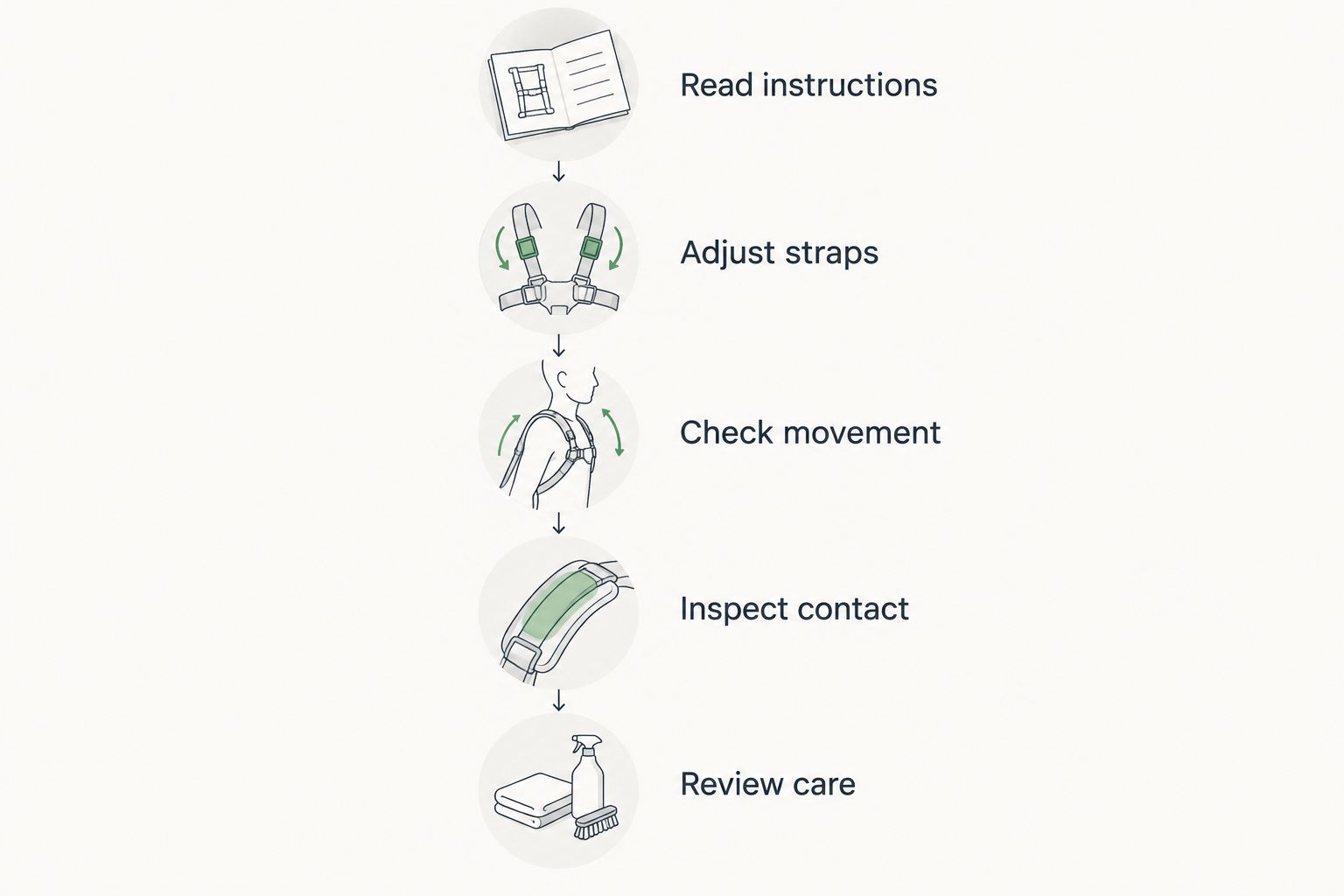
Use this sequence when inspecting knee pads in 2026. Follow any trial or fitting instructions supplied by the manufacturer, and do not test equipment on an unsuitable surface.
- Read instructions. Confirm intended use, sizing, fastening and care requirements before putting the pads on.
- Adjust straps. Position each pad as directed, without overtightening it to compensate for the wrong size.
- Check movement. Stand, bend and adopt your usual working position on a clean, appropriate surface.
- Inspect contact. Check whether the pad remains centred and whether edges, buckles or seams press uncomfortably.
- Review care. Make sure you can follow the cleaning, drying and inspection instructions between uses.
A pad that shifts should prompt a fit check, not automatic strap tightening. If adjusting it according to the instructions does not address the problem, compare another size or construction.
For workplace cleaning, involve the person responsible for equipment selection. A personal preference does not replace the workplace’s task assessment, flooring requirements or protective-equipment procedures.
How these options are ordered
This 2026 guide orders knee-pad categories by distinct tasks: mobile gardening, indoor cleaning, rough outdoor surfaces, cushioning comparison and stationary work. It does not rank named products or claim that one construction produces better health outcomes.
Mychiro’s knee-pad selection guide uses fit, contact surface, maintenance and task compatibility as the decision criteria. No material label replaces checking the exact product’s instructions.
Which kneeling option should you choose?
For mixed gardening tasks, begin with adjustable soft-shell knee pads and check whether they stay centred as you move. For indoor cleaning, begin with documented flooring compatibility. If you mostly work in one spot and dislike straps, compare a portable mat instead.
Do not choose gel simply because it sounds more cushioned, or a hard shell simply because it looks tougher. Choose the construction whose limitations you can manage in your actual workspace.
FAQ
Which knee pads should I compare for gardening?
Start by comparing adjustable soft-shell knee pads for tasks that involve moving between garden areas. Check fit, intended surfaces and cleaning instructions for the exact model before choosing.
Can I use gardening knee pads for indoor cleaning?
Only use them indoors when their instructions and the flooring requirements permit it. Inspect and clean the contact surfaces first, especially if the pads have been used in soil or gravel.
Are gel knee pads preferable to foam knee pads?
Gel is not a sufficient reason to choose one pair over another. Compare the complete construction, fit, contact surface and maintenance requirements rather than relying on the cushioning label.
Should I choose knee pads or a kneeling mat?
Choose wearable pads when you want equipment that moves with you, and compare a mat when you usually work in one place. A mat needs separate repositioning and storage during the task.
How tight should knee-pad straps be?
Follow the manufacturer’s fitting instructions and avoid overtightening straps to compensate for poor sizing. If the pad shifts or the straps feel uncomfortable, stop and reassess the fit.
Can knee pads go in the washing machine?
Machine washing is appropriate only when the manufacturer permits it. Covers, inserts, shells and fasteners can have different care instructions, so check each component.
Does Mychiro recommend knee pads as a treatment?
This Mychiro guide compares equipment features, not treatments. Knee pads should not be used to self-diagnose symptoms or replace advice from a qualified health professional.
One last thing
The outside of the pad becomes part of your floor-contact equipment. Before switching from gardening to cleaning, turn it over and inspect the surface that will touch the floor—not just the padding against your knee.
For your 2026 shortlist, write down the intended surface, fit instructions and cleaning method beside each option. If those details are unclear, leave that product off the shortlist until you can confirm them.
Related guides
- Chiropractic care for gardeners and landscapers
- Chiropractic care for cleaners
- Ergonomic setups for shift workers