


For plantar fasciitis night splint selection, compare a posterior boot for a structured shell, a dorsal splint for an open-heel design and a tension sock for a fabric-based option. This 2026 guide explains the design differences, fitting questions and reasons to seek assessment before choosing one.
- Posterior night splints offer a structured shell; fit and sleeping comfort need individual consideration.
- Dorsal night splints leave the heel more exposed but place straps across the front of the ankle.
- Tension socks use fabric and straps rather than a rigid boot; toe comfort deserves particular attention.
- Mychiro’s night splint guide compares designs, not clinical outcomes or individual product performance.
Why this matters
A night splint is a device to consider after assessment, not a way to diagnose heel pain. Choosing by advertising claims alone leaves important questions unanswered: whether a splint is appropriate, how it should fit and what should prompt you to stop using it.
Mychiro is a chiropractic clinic and wellness centre in Bondi Junction, Sydney. This guide provides general purchasing information, not an individual recommendation or a claim that chiropractic adjustments address plantar fasciitis.
For your 2026 shortlist, separate construction from clinical suitability. A photograph can show a shell, straps and padding; it cannot establish whether the device belongs in your care plan.
What makes a suitable plantar fasciitis night splint?
Compare these features before comparing brand names:
- Fit information: Look for a clear measurement chart and instructions explaining which measurements determine the size.
- Foot positioning: Establish how the device holds the foot and whether a clinician needs to set its position.
- Pressure points: Inspect where straps, seams and rigid edges contact the toes, ankle, heel and calf.
- Independent adjustment: Check whether you can change fastening tension without unintentionally changing the prescribed position.
- Practical handling: Consider whether you can put it on, release it and remove it without assistance.
- Care instructions: Check how to clean and dry the liner, fabric and straps.
These criteria describe usability. They do not establish that one design produces a particular clinical result, and more adjustment features do not automatically make a device more appropriate.
Night splint designs at a glance
The order below moves from a structured shell to a fabric-based design. It is not a ranking of clinical effectiveness, and individual models within each category differ.
| Design | Suited to discussing when | Distinguishing construction | Main limitation to check |
|---|---|---|---|
| Posterior boot night splint | You want a structured device and can accommodate a boot in bed | Shell behind the lower leg and beneath the foot | Shell bulk, heel contact and access to fastenings |
| Dorsal night splint | You want to compare an open-heel alternative | Support along the front of the shin and top of the foot | Strap pressure across the front of the ankle |
| Tension sock | You prefer to discuss a fabric-based alternative | Sock with a strap connecting the forefoot region towards the lower leg | Toe pressure, fabric fit and limited rigid structure |
Do not assume that every product carrying one of these labels has identical construction. Read the actual instructions and inspect the fastening arrangement rather than relying on the category name alone.
1. Posterior boot night splint: a structured-shell option
A posterior night splint generally has a shell running behind the calf and beneath the foot. Straps secure the leg and foot within that structure; padding separates the skin from the shell.
This is the design to discuss when you want a clearly defined boot structure rather than a fabric-only device. The important question is whether the shell fits your leg and foot without requiring excessive strap tension.
Posterior boot advantages to assess:
- A visible shell makes the device’s structure easy to inspect.
- Separate fastening points allow you to examine calf and foot fit individually.
- Models with removable liners allow the liner to be inspected separately.
Posterior boot limitations to assess:
- The shell occupies space beneath bedding and beside the other leg.
- Padding and shell edges require attention around the heel and calf.
- Several fastenings can complicate putting the device on and taking it off.
Before choosing a posterior boot in 2026, ask to see the removal sequence. You should understand which straps to release without having to change every setting each time.
Suited to: People discussing a structured-shell option with a qualified health professional.
Verdict: Hold until the shell size, prescribed position and removal method are clear.
2. Dorsal night splint: an open-heel alternative
A dorsal night splint places its supporting structure along the front of the lower leg and the top of the foot. Compared with a posterior boot, its contact points are arranged differently, often leaving the back of the heel exposed.
That difference is relevant when comparing where a device touches your leg. An open heel does not establish that the whole splint will feel comfortable: the front straps still need careful attention.
Dorsal night splint advantages to assess:
- The open-heel arrangement changes where the device contacts the foot.
- Front-mounted fastenings are visible while you are seated.
- The structure can be compared directly with a posterior shell during fitting.
Dorsal night splint limitations to assess:
- Straps cross the front of the ankle or top of the foot.
- A compact-looking design can still have prominent buckles or edges.
- Foot shape and fastening position affect how the device sits.
Ask whether you can release the device comfortably and whether the straps lie flat in the intended position. Do not compensate for slipping by repeatedly tightening every fastening.
Suited to: People who want to compare an open-heel design with a posterior boot.
Verdict: Hold until the front straps and support position have been checked.
3. Tension sock: a fabric-based alternative
A tension sock uses fabric around the foot and lower leg, with a strap connecting the forefoot region towards the lower leg. It does not use the same rigid shell structure as a posterior boot.
The fabric construction is a meaningful design difference, not proof of greater comfort or a particular result. Pay attention to where the strap pulls and how the sock fits around the toes and calf.
Tension sock advantages to assess:
- Fabric construction avoids a rigid boot shell.
- The strap arrangement is visible for inspection.
- The device can be assessed for fabric, seam and cuff placement.
Tension sock limitations to assess:
- Strap tension can be transmitted through the toe or forefoot area.
- Sock sizing must account for the leg as well as the foot.
- Fabric can fold or bunch, so inspect the fit after fastening.
Do not choose a tension sock solely because it resembles ordinary sleepwear. It remains a positioning device with instructions and suitability considerations.
Suited to: People discussing a fabric-based design rather than a rigid-shell option.
Verdict: Hold until toe comfort, calf fit and the tension-setting instructions are clear.
How these designs are compared
This 2026 comparison uses construction, contact points, adjustment, handling and cleaning requirements. It does not assign performance scores or claim that a particular design outperforms another.
No named product is endorsed here. Choose by assessed suitability and fit, not by the number of straps, the size of the shell or an outcome promised in an advertisement.
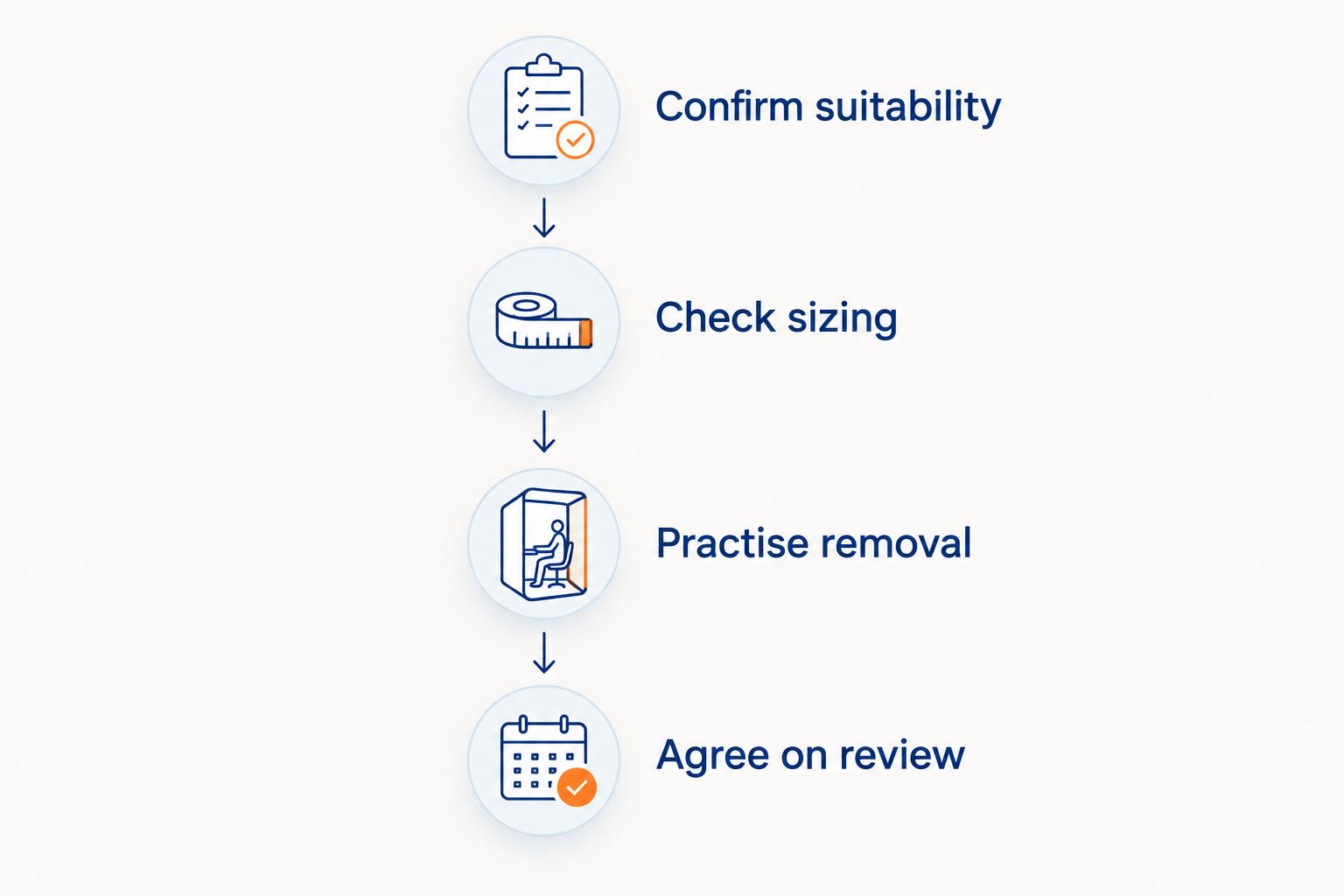
Before buying: establish suitability, then check fit
Use this sequence to organise a discussion with a podiatrist, GP or another qualified health professional. The aim is to resolve practical questions before you commit to a device.
Confirm suitability
Ask whether a night splint may be appropriate following assessment. Describe where you feel discomfort, when it occurs, how long it has been present and whether you have already received a diagnosis.
A product listing cannot answer those questions. Neither can the fact that someone else uses the same device.
Check sizing
Use the manufacturer’s measurement method rather than converting your usual shoe size yourself. Confirm whether the device is side-specific and whether the stated size covers the relevant calf and foot measurements.
If your measurements sit between sizes, seek clarification. Do not assume tighter means more supportive.
Practise removal
Before overnight use, understand how to release the device while seated. Keep the instructions accessible and ask which settings should remain unchanged between uses.
Do not assume a night splint is designed for walking. Follow the device instructions and your clinician’s advice before putting weight through it.
Agree on review
Ask how and when suitability should be reviewed, what you should monitor and what should prompt earlier contact. The review plan should include comfort and sleep disruption, not just whether you managed to keep the device on.
Overnight use: discuss sleep as well as the device
A splint decision needs to account for your sleeping routine, access to fastenings and getting out of bed. Explain whether you sleep on your side, frequently change position or need to get up during the night; these details belong in the fitting conversation.
When discussing sleeping with plantar fasciitis, distinguish advice about positioning from claims that a particular device will deliver relief. A tolerable position and a suitable device require individual consideration, not a promise attached to a product name.
Ask these questions before starting:
- Should you remove the device before standing?
- Which setting should you use, and who should change it?
- What should you do if the device repeatedly interrupts sleep?
- Which symptoms mean you should stop using it and seek advice?
Do not keep tightening a splint to chase a stronger stretch. Follow the prescribed setup and manufacturer’s instructions; if they appear inconsistent, ask for clarification before use.
When heel pain needs medical assessment
Do not assume all heel pain is plantar fasciitis. Seek medical assessment for new or unexplained symptoms, particularly after an injury or when you cannot bear weight.
A hot, red or markedly swollen foot, an open wound, fever, new numbness or changes in foot colour warrant prompt medical advice. Sudden or severe symptoms need urgent assessment rather than a trial of a night splint.
If you have diabetes, reduced sensation, circulation problems or fragile skin, discuss suitability before using a device that applies pressure or holds the foot in position. This guide does not provide a fitting protocol for those circumstances.
Mychiro’s night splint guide is general education for adults. It does not replace an examination or establish that a splint, chiropractic adjustment or another intervention is appropriate for your symptoms.
Which night splint design should you discuss?
Start with the clinical question, then compare the device. If a qualified health professional considers a splint appropriate, discuss a posterior boot for its structured shell, a dorsal design for its open-heel arrangement or a tension sock for its fabric construction.
For an undecided reader in 2026, the next move is not to select the strongest-looking device. Take your measurements, describe your sleep routine and ask for a clear explanation of fit, settings and review.
FAQ
Which type of plantar fasciitis night splint should I choose?
Choose a design only after establishing whether a night splint is appropriate for you. Posterior boots, dorsal splints and tension socks have different structures and contact points; none is a universal choice.
Is a dorsal night splint better than a posterior boot?
A dorsal splint is not automatically preferable to a posterior boot. Compare the open-heel arrangement and front straps with the posterior boot’s shell, padding and fastening positions.
Is a tension sock the same as a compression sock?
A tension sock and a compression sock have different designs and purposes. A tension sock uses a strap to position the foot; do not substitute one device for another without advice.
Should a night splint pull my toes back firmly?
Do not use stronger pulling as a target. Follow the device instructions and the settings advised by your clinician, and seek clarification if the setup causes discomfort.
Can I walk to the bathroom wearing a night splint?
Do not assume a night splint is designed for walking. Check the manufacturer’s instructions and your clinician’s advice, and understand the removal process before overnight use.
How long should I wear a plantar fasciitis night splint?
Your wear schedule should follow individual advice and the device instructions. There is no wear schedule in this guide that applies to every person or every design.
What should I do if my toes become numb in a night splint?
Remove the device and seek medical advice about new numbness. Persistent numbness, colour changes, marked swelling or severe pain need prompt assessment rather than further strap adjustments.
One last thing
Before finalising your 2026 choice, ask to demonstrate taking the device off—not just putting it on. A fitting discussion is incomplete if you understand the intended position but cannot confidently release the fastenings.
Keep the model name and instructions with your care notes. That gives the health professional reviewing your fit a specific device to discuss rather than a photograph of a similar-looking splint.
Related guides
- Shoes for plantar fasciitis: selection considerations
- Orthotic insoles for lower back and foot pain
- Foot massagers and plantar fasciitis: device considerations