

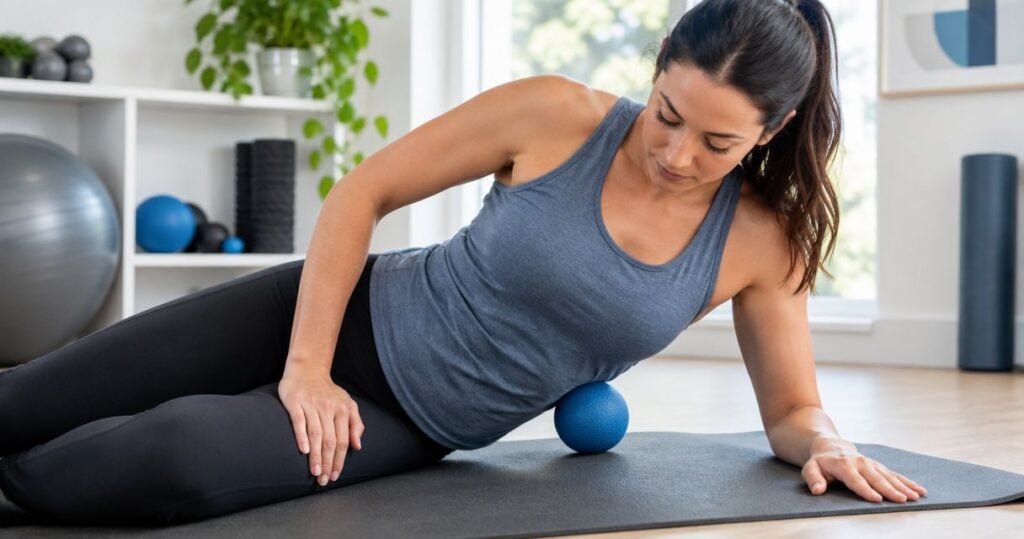
For a first massage ball, consider a soft foam ball; for a familiar, compressible option, consider a tennis ball; for a fixed twin-ball shape, consider a double ball. This 2026 guide compares five ball types by construction and pressure control—not by promises to remove muscle knots or deliver clinical results.
- Choosing the best massage ball for muscle knots starts with pressure control, not claims about knot removal.
- Soft foam balls suit readers prioritising compressibility; tennis balls offer a familiar alternative.
- Firm, double and textured massage balls have different contact shapes, not established advantages for every user.
- MyChiro provides chiropractic care in Bondi Junction; massage-ball suitability can be discussed with a qualified health professional.
Why this matters
A massage ball is a tool for applying external pressure. Its firmness, shape and surface influence how that pressure feels, but the product description does not establish what is causing your discomfort.
People use muscle knot to describe a tender or tight-feeling area. That label alone is not a diagnosis. A ball marketed for trigger points does not confirm that a particular spot is a trigger point or that pressing it is appropriate.
MyChiro is a chiropractic clinic and wellness centre in Bondi Junction, Sydney. This guide separates practical buying considerations from questions that require individual assessment.
Choose a ball you can control, rather than one that encourages you to tolerate more discomfort. You do not need to progress to a harder product simply because it exists.
What makes a suitable massage ball?
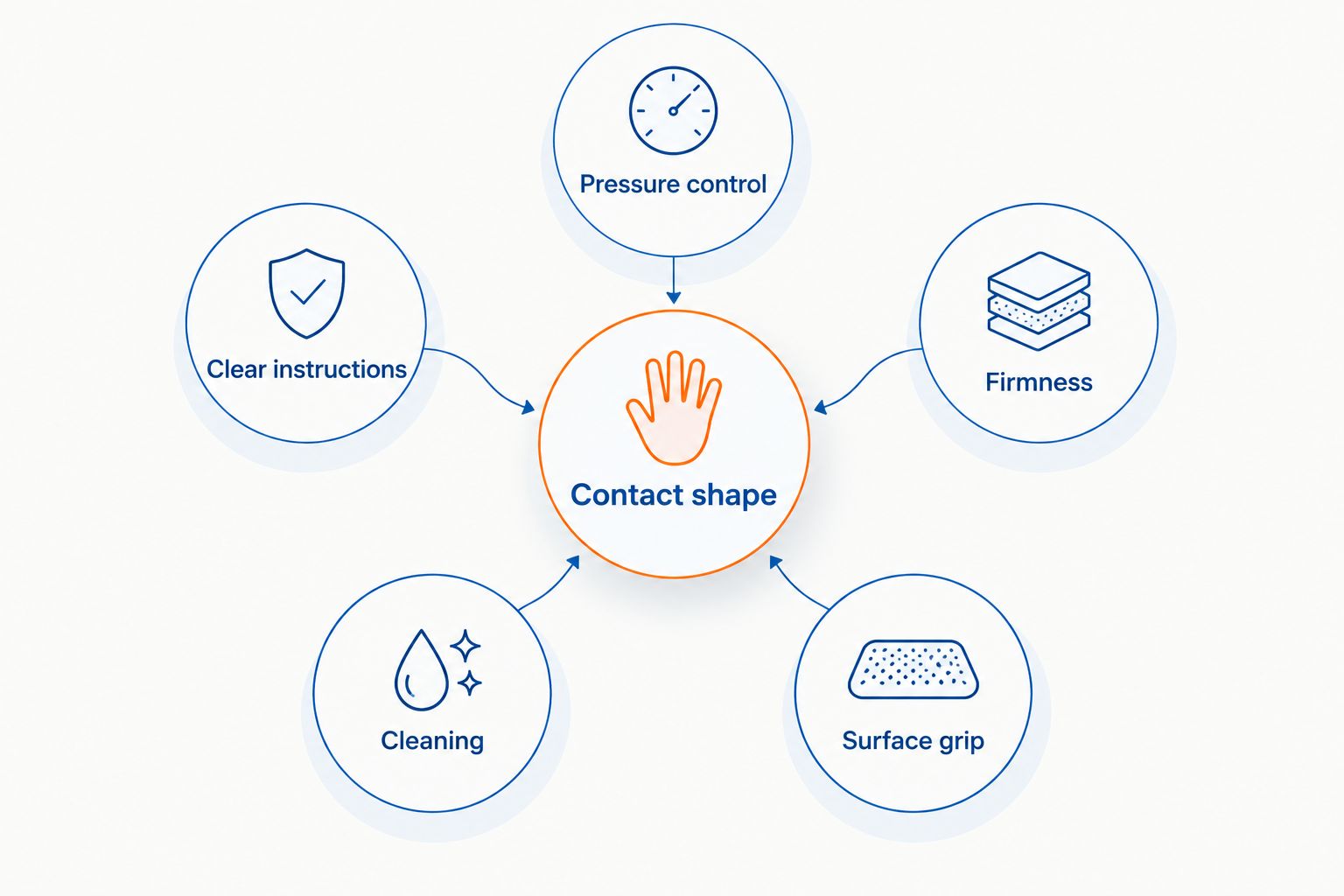
For this 2026 comparison, these criteria determine the order of the list. They describe the tool, not a predicted health outcome.
- Pressure control: Can you position and remove the ball without struggling or relying on someone else?
- Firmness: Does the material compress, or does it remain rigid under load? Read the actual material description rather than trusting a colour code.
- Contact shape: A single sphere, twin-ball shape and textured surface distribute contact differently. Choose deliberately.
- Surface grip: Does the ball slide on your intended surface? A grippy material and a stable position matter more than decorative texture.
- Cleaning: Is the surface washable according to the manufacturer's instructions? Fabric, seams and textured recesses need different care.
- Clear instructions: Look for positioning guidance, material information and warnings. Avoid products whose main selling point is an unsupported treatment claim.
Do not infer firmness from appearance. Two balls of similar size can have very different constructions, and a product labelled soft still needs checking against its description.
Massage-ball types at a glance
The table compares generic designs, not particular manufacturers. Check each product's current specifications: a category name does not guarantee identical materials, dimensions or construction.
| Ball type | Intended buying use case | Standout design feature | Main limitation |
|---|---|---|---|
| Soft foam ball | Prioritising compressibility | A yielding foam construction | Can flatten or shift under load |
| Tennis ball | Trying a familiar household option | Felt-covered, hollow construction | Felt is less straightforward to wipe clean |
| Smooth firm ball | Choosing a consistent, rigid shape | A smooth, relatively unyielding surface | Less forgiving when you apply excess pressure |
| Double massage ball | Choosing a fixed twin-ball layout | Two connected rounded sections | Spacing is fixed rather than individually adjustable |
| Textured massage ball | Choosing a textured contact surface | Raised bumps or projections | Texture can feel unpleasant and complicate cleaning |
None of these designs earns a clinical recommendation from its shape alone. In 2026, the useful buying question remains the same: does the construction suit your intended use and any advice you have received?
1. Soft foam ball: for prioritising compressibility
A soft foam massage ball compresses rather than holding a completely rigid shape. It is a reasonable design to consider when your priority is a yielding contact surface, provided self-massage is appropriate for you.
Look closely at the product description. Foam covers different densities, and the word does not tell you precisely how much the ball will deform. A soft outer coating over a rigid core is also different from a ball made entirely from compressible foam.
Soft foam ball advantages:
- A compressible construction gives you an alternative to a rigid ball.
- A simple spherical shape is straightforward to position and inspect.
- A smooth version avoids the raised contact points of a textured ball.
Soft foam ball limitations:
- A very yielding ball can flatten or move from the position you intended.
- Foam cleaning and durability depend on its construction; follow the manufacturer's instructions.
Use case: A first purchase where compressibility matters more than concentrated contact.
Check whether the surface is sealed, whether there are seams and whether the manufacturer explains cleaning. Avoid choosing foam solely because the listing describes it as suitable for everyone.
Verdict: Buy only if the stated firmness and intended use match your needs; hold if either is unclear.
2. Tennis ball: for trying a familiar option
A tennis ball has a felt-covered exterior and a hollow construction. It offers a different feel from a solid massage ball, but its sporting purpose does not make it a clinically validated self-massage device.
The International Tennis Federation's standard Type 2 ball specification gives a diameter of 6.54–6.86 cm and a mass of 56.0–59.4 g. Those figures describe a regulation tennis ball, not a recommended massage-ball size or a pressure prescription.
Tennis ball advantages:
- You can inspect a familiar object rather than deciphering a complex product system.
- The felt exterior provides a different surface from smooth rubber or plastic.
- Its hollow construction distinguishes it from a solid, rigid ball.
Tennis ball limitations:
- Felt collects debris and is less straightforward to wipe clean than a smooth surface.
- An old, damaged or heavily worn ball does not reliably represent a new ball's construction.
Use case: Considering an existing household ball before purchasing a dedicated tool.
Check the condition rather than assuming any tennis ball will do. Keep a ball used for personal care separate from one used outdoors, and do not extrapolate massage instructions from tennis specifications.
Verdict: Hold before buying a dedicated replacement if an appropriate, clean tennis ball already meets your intended use.
3. Smooth firm ball: for a consistent rigid shape
A smooth firm massage ball maintains its shape more than a soft foam option. The surface has no deliberate bumps, although materials and grip differ between products.
Its main distinction is mechanical: it yields less. That does not establish deeper benefit, greater effectiveness or a need to apply more force. Check whether the product is solid or hollow, because appearance alone does not answer that question.
Smooth firm ball advantages:
- A smooth surface avoids the uneven contact of raised projections.
- A rigid construction maintains a consistent shape under ordinary use.
- A simple exterior makes cracks, splits and surface damage easier to inspect.
Smooth firm ball limitations:
- It is less forgiving if you place more weight on it than intended.
- Grip and cleaning requirements vary with the actual material.
Use case: Someone specifically seeking a smooth, firm construction after discussing suitability where needed.
Do not purchase a firm ball as an automatic upgrade from a soft one. More pressure is not a buying goal in itself, and discomfort is not a product-performance measure.
For a 2026 purchase, prioritise a clear material description and usable instructions over labels such as deep tissue or professional strength. Those labels do not tell you how the tool will suit you.
Verdict: Hold unless you have a clear reason to choose a firmer construction.
4. Double massage ball: for a fixed twin-ball layout
A double massage ball connects two rounded sections, often with a narrower middle. It is also called a peanut-shaped ball because of its outline.
The shape creates two contact areas rather than one. The gap does not guarantee that pressure avoids particular anatomy, and the spacing is not adjustable on a one-piece design. Positioning therefore matters more than the product's resemblance to an anatomical shape.
Double massage ball advantages:
- The connected sections keep their spacing relative to each other.
- The shape offers a different contact arrangement from a single sphere.
- A one-piece design avoids handling two separate balls.
Double massage ball limitations:
- Fixed spacing will not suit every intended position or body area.
- The narrower centre is not a guarantee against unwanted contact.
Use case: Choosing a twin-ball layout for a specific, clearly understood application.
Do not assume a double ball is intended for the neck or spine merely because a listing includes those words. Ask a qualified health professional about positioning if the instructions are unclear or your intended use involves a symptomatic area.
Choose the shape because you need that layout, not because the product claims to correct alignment. MyChiro's chiropractic services and a home massage tool are different subjects; one should not be presented as a substitute for the other.
Verdict: Hold until you understand where and how the fixed spacing will be used.
5. Textured massage ball: for a raised contact surface
A textured massage ball has bumps, ridges or projections instead of a uniformly smooth exterior. These features change the contact sensation; they do not establish that the ball removes knots or reaches a particular tissue depth.
Inspect the projections and the material around them. Flexible bumps and rigid spikes are materially different designs, even when both listings use the same category name.
Textured massage ball advantages:
- The raised surface offers a distinct alternative to smooth contact.
- Visible texture makes the design difference easy to identify.
- A single-piece version has no separate attachments to manage.
Textured massage ball limitations:
- Raised points can feel unpleasant, especially if the material is rigid.
- Recesses between projections require attention when cleaning.
Use case: Someone who deliberately prefers a textured surface and understands its limitations.
Texture should be a preference, not a reason to press harder. Do not interpret a stronger sensation as evidence that the tool is doing more useful work.
If you are undecided between textured and smooth designs, the smooth option has fewer surface features to assess. That is a practical distinction, not a claim that either design delivers a particular clinical result.
Verdict: Skip if you have no specific preference for texture; hold if the projection material is unspecified.
How this comparison is ranked
The order prioritises compressibility and straightforward construction before more rigid or specialised shapes. Each entry has a different buying use case, rather than competing for an unsupported claim of clinical superiority.
This is a design comparison, not a product trial or an efficacy ranking. No named manufacturer, measured durability result or patient outcome determines the order.
The 2026 recommendation is therefore conditional: begin with the construction you can understand and control, and do not purchase additional designs without a reason. A collection of tools is not a care plan.
Before using a ball on a tender area
A buying guide cannot determine whether pressure is appropriate for your symptoms. Read the manufacturer's instructions, and discuss suitability with a qualified health professional when the cause of discomfort is unclear.
Questions worth taking to that conversation include:
- Is self-massage appropriate for this area and my circumstances?
- Are there locations where I should avoid applying pressure?
- Does my medical history or medication change the advice?
- What symptoms mean I should stop and seek assessment?
Do not use a ball to investigate a new lump, unexplained swelling, broken skin or symptoms following an injury. Seek clinical advice rather than treating an unexplained finding as a muscle knot.
Healthdirect Australia's back-pain guidance identifies symptoms requiring urgent medical assessment, including new bladder or bowel difficulties and weakness or numbness affecting the legs. Do not attempt to manage those symptoms with a massage ball. This referral guidance does not diagnose their cause.
Which massage ball should you choose?
Consider a soft foam ball when compressibility is your main requirement. Consider a tennis ball when a familiar, clean household option meets your intended use. Choose firm, double or textured designs only for a specific construction preference—not because their marketing promises more.
MyChiro provides chiropractic care and spinal adjustments in Bondi Junction. Whether any hands-on care or self-massage is appropriate is a separate assessment question, not something this equipment comparison can establish.
You can also choose not to buy a ball. If your symptoms are unexplained, recurring or changing, understanding them takes priority over selecting another accessory.
FAQ
What’s the best massage ball for muscle knots?
There is no universal choice established by this design comparison. Consider a soft foam ball when compressibility is your priority, and discuss suitability with a qualified health professional if symptoms are unexplained.
Is a tennis ball different from a massage ball?
A tennis ball has a felt-covered, hollow construction, while dedicated massage balls come in different materials and shapes. That construction difference does not establish a clinical advantage for either option.
Should I choose a hard or soft massage ball?
Choose according to the construction you need, not the assumption that harder means more useful. A soft ball compresses more; a firm ball is less forgiving when excess pressure is applied.
Does a massage ball remove trigger points?
This guide does not establish that a massage ball removes trigger points. A product label cannot diagnose a tender area or demonstrate a treatment outcome.
Can I use a double massage ball on my spine?
Do not assume the central gap makes spinal positioning appropriate. Follow the product instructions and discuss the intended location with a qualified health professional, particularly when symptoms are present.
How long should I press on a muscle knot?
There is no universal duration provided by this comparison. Follow individual professional advice and the product instructions rather than adopting an arbitrary timer or pressing through discomfort.
When should I seek medical advice instead of using a massage ball?
Seek assessment for unexplained or changing symptoms rather than assuming they are muscle knots. New bladder or bowel difficulties, or leg weakness or numbness with back pain, require urgent medical assessment, as described in Healthdirect Australia’s guidance.
One last thing
The ball is only one part of the setup. A familiar product in an awkward position can be harder to control than a different design used as instructed.
Before making a 2026 purchase, read the positioning instructions as closely as the material description. If you cannot explain how you will place and remove the ball, pause the purchase. That practical check is more useful than collecting increasingly firm tools.
Related guides
- Preparing for your first chiropractor appointment
- Qualifications to check when choosing a Sydney chiropractor
- Lower back pain when sitting: causes and practical steps