

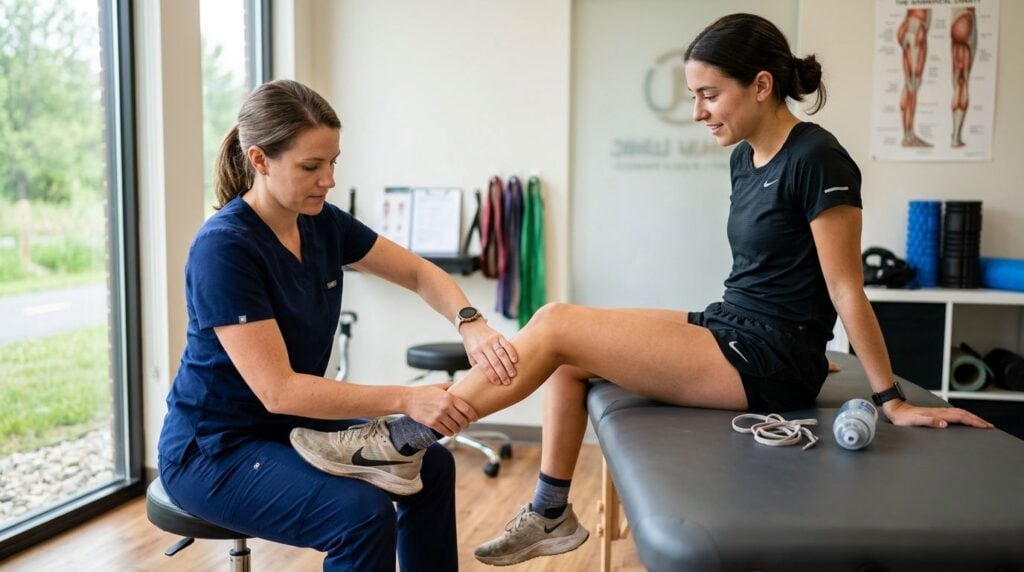
Runners with shin splints need an approach that looks at training load, footwear, foot mechanics and joint function, not just the sore patch on the shin bone. Medial tibial stress syndrome, the clinical name for shin splints, behaves differently in a marathon-block runner logging 60km a week than in someone easing back into 5km jogs, and the management plan should reflect that difference.
- Shin splints in runners often stem from a sudden jump in training load, not just the shin itself.
- A chiropractor for shin splints can assess lower leg, ankle and hip mechanics as part of a broader plan, not a standalone answer.
- Load management and gradual mileage increases matter more than any single hands-on technique.
- Footwear, running surface and calf strength all factor into a runner-specific management plan in 2026.
- See a qualified health professional for persistent shin pain before continuing to train through it.
Why chiropractic care matters for runners with shin splints
Shin splints are reported in sports medicine literature as one of the more common lower-leg complaints among runners, with estimates in published research placing medial tibial stress syndrome at roughly 13-20% of running-related injuries. Runners searching for a chiropractic clinic usually want to know two things: whether adjustments and manual therapy have a role, and what else needs to change in training so the shin pain doesn't keep coming back.
The runner-specific angle matters because shin splints rarely show up in isolation. Overpronation, tight calves, a sudden switch from road to trail, or a training spike of more than 10% in weekly mileage are all commonly cited contributors. A chiropractor working with runners typically looks at the ankle, knee, hip and lower back as a linked system, alongside training history, because a stiff hip or a flat-footed gait pattern can shift load onto the tibia in ways a runner won't notice until the shin starts aching on every run.
This is also where the case differs from a desk-based patient with general lower back pain. A runner needs a plan built around training cycles, race dates and return-to-run milestones, not a generic stretching handout.
Get an assessment before you keep running on it
Continuing to train through shin pain without understanding the cause is the most common reason recovery drags on. An assessment can be discussed with a qualified health professional and typically covers:
- Gait and running mechanics, ideally on video
- Ankle and foot mobility, including range of motion at the subtalar joint
- Hip and pelvis stability, since weak glutes are frequently linked to lower leg overload
- Recent training history: mileage jumps, surface changes, new shoes
- Palpation along the tibia to rule out a stress fracture, which needs separate medical assessment
A chiropractor may also screen for IT band syndrome in runners, since the two conditions share some of the same training-load red flags and often appear in the same runners during the same training block.
Reduce training load in a structured way
Cutting mileage is not the same as stopping altogether, and most runners resist both extremes for the wrong reasons.
- Drop weekly mileage back to the last pain-free volume, then rebuild slowly
- Apply the widely used 10% rule: increase weekly distance by no more than roughly 10% at a time
- Swap two running sessions for low-impact cross-training such as cycling or swimming
- Add a rest day between harder efforts instead of running consecutive days
- Log pain on a simple 0-10 scale before, during and after each run to track trend, not just single sessions
Address foot and ankle mechanics
Overpronation and limited ankle dorsiflexion are two of the most frequently discussed contributors to shin splints in the running population.
- Check ankle dorsiflexion range with a wall-lean test
- Add single-leg balance work to improve foot and ankle control
- Review arch type and whether current shoes match it
- Consider a gait assessment to check for excessive inward rolling of the foot
- Discuss orthotics with a podiatrist if mechanics don't improve with exercise alone
Check footwear and running surface
Shoes and surface are two variables runners can change immediately, with no appointment required.
- Replace running shoes showing visible sole wear or after roughly 500-700km, a commonly cited guideline in running shoe literature
- Reduce running on cambered roads or hard concrete where possible
- Rotate between two shoe models to vary load patterns
- Match shoe stability features to foot type rather than brand reputation
Add calf and lower-leg strengthening
Weak or fatigued calf muscles are frequently linked to the repetitive tibial loading seen in shin splints.
- Standing calf raises, progressing from two-legged to single-leg
- Eccentric calf lowers off a step, done slowly
- Toe raises to strengthen the tibialis anterior on the front of the shin
- Ankle circles and resistance band work for surrounding stabilisers
Work on hip and pelvis stability
A hip that drops or rotates during stance phase changes how force travels down the leg to the shin.
- Glute bridges and clamshells for lateral hip control
- Single-leg deadlifts to train hip stability under load
- Step-downs to check for knee valgus and hip drop
- Core stability work, which pairs well with guidance in how to strengthen your core without straining your lower back
Track symptoms and return-to-run progression
A structured return matters more than a fixed calendar date, since healing timelines vary between runners.
- Confirm pain-free walking before reintroducing any running
- Start with run-walk intervals rather than a full continuous run
- Increase run duration before increasing pace
- Reassess with a qualified health professional if pain returns at the same training volume as before
Comparison of management options for runners with shin splints
| Option | Best for | Key limitation |
|---|---|---|
| Chiropractic assessment and manual therapy | Runners wanting joint and biomechanical screening alongside a training plan | Works alongside load management, not as a standalone fix |
| Physiotherapy-led rehab | Runners needing structured strengthening programs | Progress depends on consistency with home exercises |
| Rest and load management alone | Mild, early-stage shin pain | Slower without addressing underlying mechanics |
| Podiatry and orthotics | Runners with confirmed overpronation or flat arches | Doesn't address hip or training-load contributors |
| Sports medicine review | Cases with suspected stress fracture or persistent pain | Needed for imaging, which chiropractic assessment doesn't provide |
Verdict: for runners in 2026 dealing with recurring shin splints, a combined approach, assessment plus load management plus strengthening, tends to address more of the underlying contributors than any single option used alone.
Common mistakes runners make with shin splints
- Running through sharp or worsening pain instead of adjusting mileage at the first sign of dull aching
- Blaming shoes alone while ignoring hip weakness or a sudden mileage jump that triggered the flare-up
- Skipping the walk-run reintroduction phase and returning straight to pre-injury pace and distance
- Stretching calves without strengthening them, which does little for the load-bearing capacity that shin splints actually need
- Ignoring a stress fracture possibility, since untreated shin splints in rare cases can progress toward one and warrant medical assessment if pain is focal, sharp or worsens at rest
Get your shin pain assessed
Book an assessment to discuss training load, gait and joint function.
FAQ
Can a chiropractor help with shin splints?
A chiropractor can assess joint function, gait and lower limb mechanics as part of a broader plan for shin splints, alongside load management and strengthening. Whether adjustments are appropriate depends on individual assessment, and persistent or worsening shin pain should also be discussed with a qualified health professional.
How long do shin splints take to go away in runners?
Recovery timelines vary, but published guidance commonly cites a range of roughly 3 to 6 weeks of reduced load and structured rehab for medial tibial stress syndrome. Return-to-run progression, not just time off, tends to influence how well symptoms resolve.
Is it a stress fracture or shin splints?
Shin splints typically cause a broader, diffuse ache along the inner shin, while a stress fracture tends to produce a focal, sharp point of pain that worsens with continued loading. Any suspicion of a stress fracture needs medical assessment and imaging, not just clinical examination.
Should I keep running with shin splints?
Continuing to run on worsening or sharp shin pain is one of the most common reasons recovery drags out. Reducing mileage, cross-training and getting an assessment early tends to shorten the time before a full return to running.
What causes shin splints in runners specifically?
Common contributors include a sudden increase in weekly mileage, worn or unsuitable footwear, overpronation, tight or weak calves, and hip instability that shifts load down the leg. Training history and gait mechanics both factor into which contributors apply to a given runner.
Do orthotics help with shin splints?
Orthotics can support runners with confirmed overpronation or flat arches, though they address foot mechanics rather than training load or hip stability. A podiatry review alongside broader assessment tends to clarify whether orthotics are appropriate.
Can shin splints come back after they heal?
Shin splints commonly recur when training load increases again without addressing the original contributors, such as calf strength or footwear. A gradual return-to-run plan and ongoing load monitoring reduce the chance of a repeat flare-up.
Is chiropractic care better than physiotherapy for shin splints?
Neither approach is a direct substitute for the other; chiropractic assessment focuses on joint and biomechanical screening, while physiotherapy typically leads structured strengthening programs. Many runners use elements of both depending on what an assessment finds.
One last thing
The detail runners skip most often is the walk-run reintroduction phase after a shin splints flare-up in 2026 training blocks: jumping straight back to pre-injury pace and distance is a more common trigger for recurrence than the original mileage spike itself. Rebuilding through run-walk intervals before returning to continuous running tends to matter more for long-term consistency than any single hands-on technique.
Related guides
- Best knee supports for runners with IT band pain
- How to choose the right chiropractor for your condition