

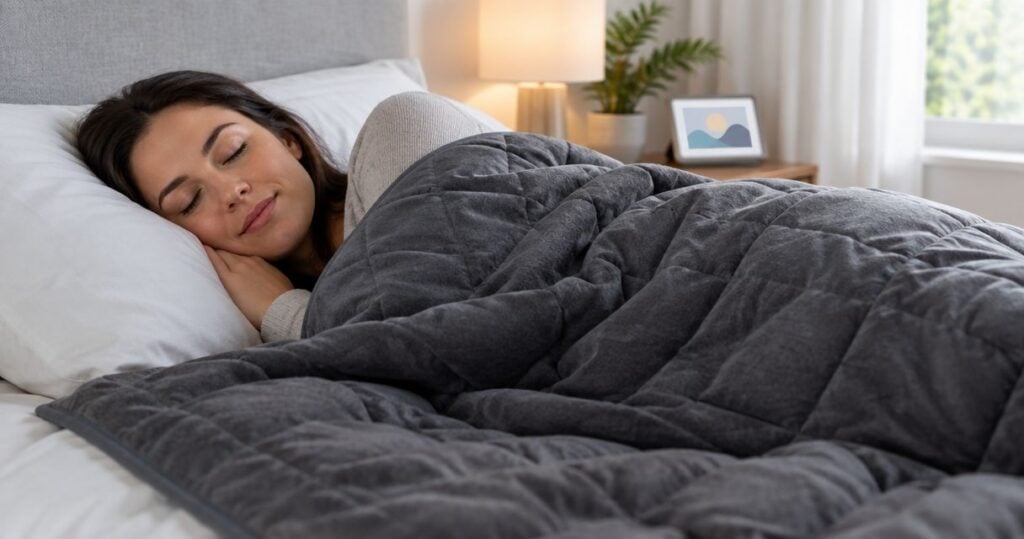
The best weighted blanket for muscle tension depends on how and where you use it. For sleep, a full-size glass-bead blanket at roughly 10% of your body weight is the sensible default. For warm sleepers, choose a cooling cover. For desk and couch time, a lap pad. For the neck and shoulders, a shoulder wrap. For people who like warmth, a heated weighted wrap.
- Pick a full-size glass-bead weighted blanket at about 10% of body weight as your 2026 default.
- Warm sleepers should choose a cooling cover; desk workers suit a lap pad or shoulder wrap.
- Evidence that weighted blankets ease muscle tension is limited, so treat them as a comfort aid.
- Persistent pain, numbness or weakness needs assessment by a doctor or other qualified health professional.
Why this matters
A weighted blanket applies steady, even pressure across the body. Many people find that feeling calming, which is why the category has grown. What the research shows is narrower: studies are mostly small, and a blanket is not a treatment for a muscle or joint condition.
So the useful question in 2026 is practical. Which format is comfortable, safe and easy to live with? If your sleep is disrupted by an unsupportive surface, a mattress chosen for back comfort and support matters at least as much as anything you put on top of it.
This guide at MyChiro ranks five blanket types by use case, not by brand, so the advice holds up when models change. It is general education, not individual health advice.
What makes a good weighted blanket for muscle tension
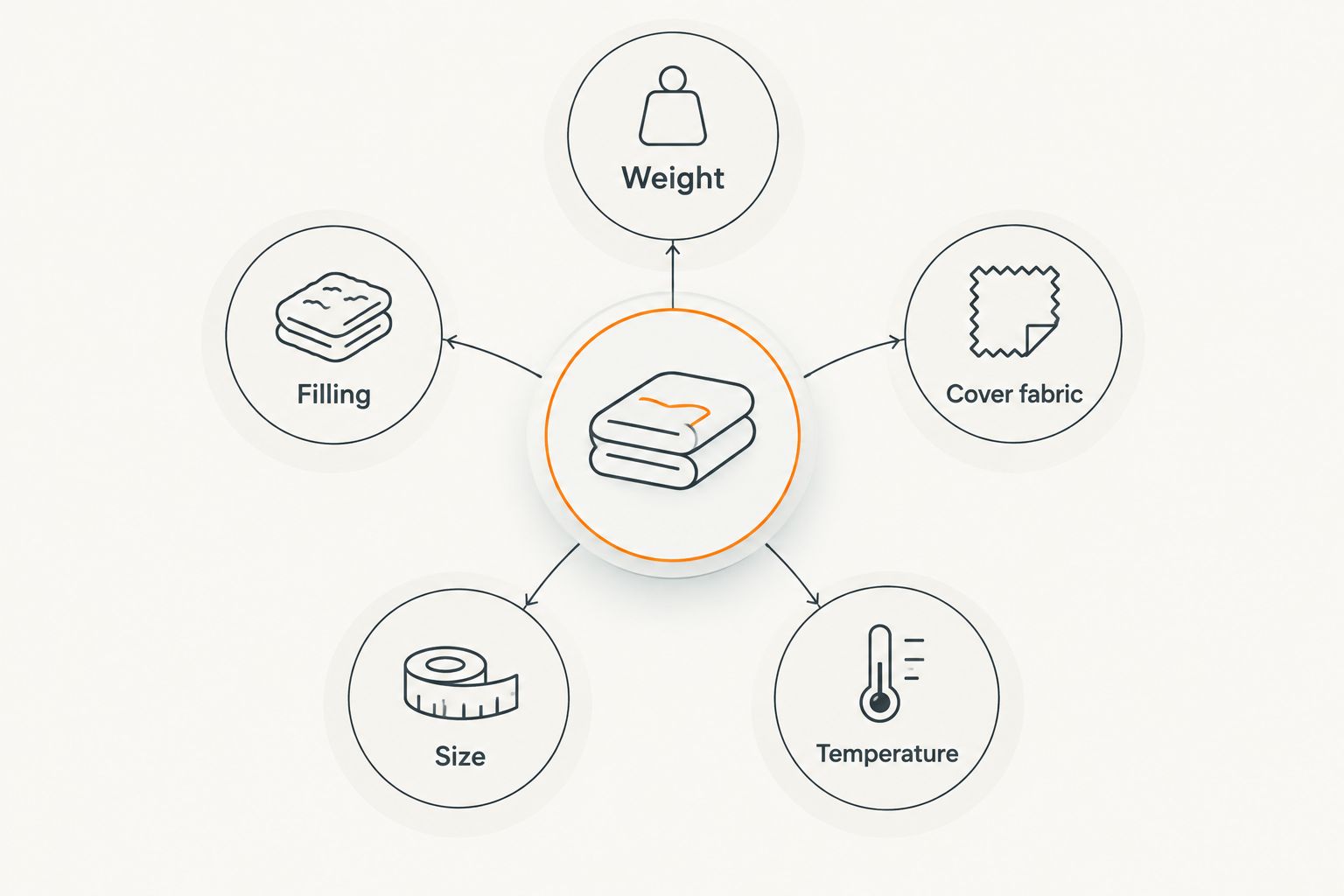
Use these criteria to judge any option before you buy. Each one is a decision you control.
- Weight: The commonly published guideline is about 10% of your body weight. At 70 kg, that is about 7 kg. Go lighter if you are unsure.
- Filling: Glass beads sit flatter and quieter than plastic pellets. Check that the stitching keeps the filling from shifting.
- Cover fabric: Cotton and bamboo-style covers breathe better than polyester. Fabric decides whether you keep using it in Sydney summers.
- Size: A blanket sized to your body, not the whole bed, keeps the weight where you feel it and makes it easier to move.
- Temperature: Heavy blankets trap heat. Choose a cooling cover or a heated option on purpose, not by accident.
Weighted blanket types at a glance
| Type | Best for | Standout feature | Key limitation |
|---|---|---|---|
| Full-size glass-bead blanket | General bed use | Even weight across the body | Warm and heavy to move |
| Cooling-cover weighted blanket | Warm sleepers | Breathable fabric | Cover can feel less cosy in winter |
| Weighted lap pad | Desk and couch | Easy to carry and wash | Covers a small area only |
| Weighted shoulder wrap | Neck and shoulder area while seated | Sits where upper body tension is felt | Slips if you move a lot |
| Heated weighted wrap | People who like warmth | Weight plus heat in one product | Needs careful, supervised use |
1. Full-size glass-bead blanket: best weighted blanket for everyday sleep
This is the standard product: a quilted blanket with small glass beads stitched into compartments. It spreads weight over your torso and legs, which is the feel most people mean when they say weighted blanket.
Full-size glass-bead blanket pros:
- Even weight distribution across the body
- Quieter and less lumpy than plastic pellets
- Widely available in a range of weights
- Works as your single bed layer in cooler months
Full-size glass-bead blanket cons:
- Runs warm, especially in summer
- Hard to wash at home when it is heavy
- Awkward to push off if you wake feeling restricted
Best for: adults who want one blanket for the bed and are happy with a heavier feel. Choose the weight by the 10% guideline and start lighter if unsure.
Verdict: Buy, as your default for 2026.
2. Cooling-cover weighted blanket: best for warm sleepers
The weight is the same, but the cover is made from a breathable fabric such as bamboo-style or lightweight cotton. The aim is to keep the pressure and lose some of the heat.
Cooling-cover weighted blanket pros:
- Better suited to warm Australian nights
- Removable covers are easier to wash
- Same pressure feel as the standard option
Cooling-cover weighted blanket cons:
- Cooling claims vary between makers, so read the fabric details
- Often needs a separate cover, which adds a layer to manage
Best for: people who overheat under bedding and have given up on heavy blankets before.
Verdict: Buy if heat is your barrier. Otherwise Hold.
3. Weighted lap pad: best for desk work and couch time
A lap pad is a small weighted rectangle that rests across the thighs. It gives the weighted feel without committing a whole bed to it, and it is easy to try.
Weighted lap pad pros:
- Low commitment and easy to store
- Simple to wash compared with a full blanket
- Useful while reading, watching TV or working at a desk
Weighted lap pad cons:
- Covers a small area, so it does little for the upper body
- Does not replace good seating or movement breaks
If your lower back stiffens when you sit, the seat and your setup matter more than the pad. Our guide to lower back pain when sitting covers practical steps.
Best for: desk workers and couch sitters who want to try the weighted feel cheaply.
Verdict: Buy as a trial before a full-size blanket.
4. Weighted shoulder wrap: best for the neck and shoulder area
A shoulder wrap drapes across the upper back and shoulders. It targets the area where many people feel tension after long hours at a screen.
Weighted shoulder wrap pros:
- Sits exactly where upper body tension is commonly felt
- Small enough to use at a desk or in an armchair
- Pairs well with regular movement breaks
Weighted shoulder wrap cons:
- Can slide off if you shift position often
- Weight on the neck can feel uncomfortable for some people
- Not designed for sleeping in
Weight resting on the shoulders is a comfort measure only. Tension that keeps returning is worth discussing with a qualified health professional, who can look at posture, workload and movement habits.
Best for: seated, short sessions with a lighter weight.
Verdict: Hold until you have tried a lap pad and know you like the feel.
5. Heated weighted wrap: best for people who like warmth
This combines weight with a heating element or a microwavable insert. Warmth is a familiar comfort for stiff muscles, and the weight keeps the pack in place.
Heated weighted wrap pros:
- Weight and warmth in one product
- Holds in place without straps
- Suits evening wind-down on the couch
Heated weighted wrap cons:
- Heat and weight together need careful use; follow the manufacturer's instructions exactly
- Do not fall asleep under a heating element unless the product is designed for it
- Heavier and bulkier than a plain heat pack
If you mainly want heat, a dedicated option may suit you better. See our guide to heating pad options for lower back pain.
Best for: warmth-lovers who will use it awake and supervised.
Verdict: Hold, and read the safety instructions before you buy.
How these types were ranked
The ranking follows the five criteria above: weight, filling, cover fabric, size and temperature. Types that suit the most people in the most situations rank first. Narrower tools rank lower because they only fit specific uses. No brand is ranked, because models and specifications change often.
Safety: who should be careful
Weighted blankets are not suitable for everyone. Keep these points in mind in 2026 and beyond:
- Do not use weighted blankets for babies or toddlers.
- Talk to a doctor first if you have a breathing condition, circulation problems or limited mobility.
- You should be able to remove the blanket easily on your own.
- Stop using it if it increases discomfort.
A blanket is not a substitute for assessment. Pain that comes with numbness, weakness, fever, unexplained weight loss, or changes in bladder or bowel control needs prompt medical attention. Our guide on when back pain needs a chiropractor vs a doctor explains how to decide.
Which weighted blanket should you choose?
Default pick: a full-size glass-bead blanket at about 10% of your body weight. Switch to a cooling cover if you run hot. If you are unsure you will like the feel, start with a lap pad. Treat every option as a comfort aid, and remember that the evidence for relieving muscle tension specifically is limited.
Talk to MyChiro in Bondi Junction
Chiropractic assessments for musculoskeletal concerns in Sydney.
FAQ
What is the best weighted blanket for muscle tension?
A full-size glass-bead blanket at about 10% of your body weight is the sensible default. Evidence for muscle tension specifically is limited, so treat it as a comfort aid.
How heavy should a weighted blanket be?
The commonly published guideline is about 10% of body weight. At 70 kg, that is about 7 kg. Choose lighter if unsure.
Can a weighted blanket help with sleep?
Some people find the steady pressure comforting at bedtime. Results vary, and persistent sleep problems are worth discussing with a doctor.
Is a lap pad enough?
A lap pad suits desk and couch use. It covers a small area, so it is a low-cost way to test whether you like the weighted feel.
Are weighted blankets safe for everyone?
No. They are not suitable for babies or toddlers, and people with breathing, circulation or mobility concerns should check with a doctor first.
Will a weighted blanket fix back or neck pain?
No. A blanket is a comfort measure, not a treatment. Ongoing pain should be assessed by a qualified health professional.
Do weighted blankets make you hot?
They can. Choose a breathable cover and avoid heavy options in summer if you overheat easily.
One last thing
A weighted blanket changes how your body feels at rest, but not how you move during the day. If tension keeps returning, look at your workstation, how long you sit, and how often you break up the day with movement. Those habits usually matter more than any product bought in 2026.
Related guides
- Best sleeping positions for sciatica pain
- Best massage guns for chronic muscle tension
- Chiropractic care for insomnia and poor sleep quality