

Chiropractic care should not be relied on as a proven way to prevent back injuries. An assessment can help you discuss back concerns and whether any care is appropriate, but that is different from demonstrating that adjustments prevent future injury. This 2026 guide explains that distinction, the questions to ask and when medical assessment takes priority.
- Can chiropractic care help prevent back injuries? Do not assume adjustments provide protection against future injury.
- MyChiro provides chiropractic care in Bondi Junction; suitability requires an individual assessment, not a prevention promise.
- Back pain management and back injury prevention are different questions requiring different evidence.
- Discuss exercise, workplace demands and any proposed spinal adjustments with a qualified health professional.
Can chiropractic care help prevent back injuries?
Do not interpret a chiropractic adjustment as insurance against a future back injury. Evidence about managing an existing episode of back pain does not, by itself, establish that the same intervention prevents an injury in someone without symptoms.
It also matters what a claim means by prevention. Avoiding a first injury, reducing another episode of pain and managing ongoing symptoms are separate goals; a claim about one should not be used as evidence for another.
Before agreeing to repeated appointments, ask what problem the proposed care addresses. The guide to how often you should see a chiropractor provides a related topic to discuss, rather than a universal attendance schedule.
| Question | What you need to establish | What it does not establish |
|---|---|---|
| Can care address my current concern? | Whether an assessment identifies an appropriate care option | That future injuries will be prevented |
| Should I exercise? | Which activities suit your health, symptoms and goals | That a generic programme suits everyone |
| Should my workplace change? | Whether particular tasks expose you to avoidable hazards | That posture advice alone controls those hazards |
| Should I attend without symptoms? | A clear clinical rationale, alternatives and review criteria | That everyone needs ongoing adjustments |
Why this matters
A prevention claim can influence how you lift, train, work and spend money on care. If you believe an adjustment has protected your spine, you might give less attention to the actual demands of a task.
The practical question is not whether you can keep your back perfectly aligned. It is whether a proposed plan addresses an identified concern, explains its limitations and helps you make informed decisions.
For a 2026 care decision, separate the service being offered from the outcome being promised. An appointment is a service; preventing an injury is a clinical outcome that requires its own supporting evidence.
What different approaches can—and cannot—tell you
Chiropractic assessment and adjustments
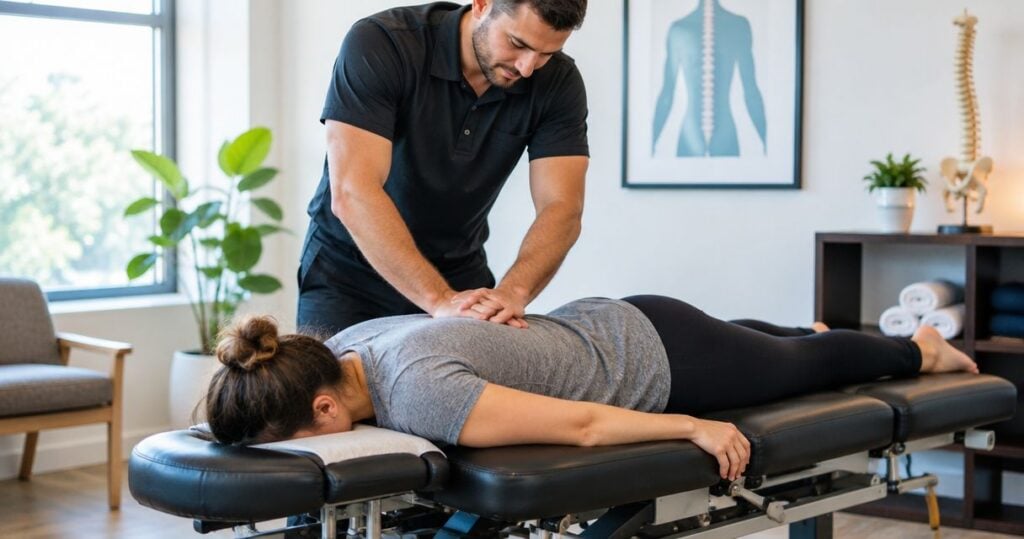
A chiropractic assessment involves discussing your concerns and considering whether chiropractic care is appropriate. An adjustment is a manual procedure; it is not evidence that your back has become resistant to injury.
The potential value of an assessment is the opportunity to discuss your history, activities and options. Its limitation is equally important: attending an assessment does not establish that you need an adjustment, repeated appointments or preventive care.
At MyChiro, chiropractic care and spinal adjustments are provided in Bondi Junction. Whether either is appropriate for your circumstances requires individual assessment; the clinic's service description should not be read as a promise of injury prevention.
Exercise and general physical activity
General physical activity guidance provides a starting point for discussing movement, not a personalised back-injury programme. The World Health Organization recommends that adults undertake 150–300 minutes of moderate-intensity aerobic activity per week, or an equivalent amount of vigorous activity, alongside muscle-strengthening activity on 2 or more days per week.
These are population-level health recommendations, not targets you must immediately reach despite symptoms. Your starting point, health conditions and current capacity matter, so discuss modifications with a qualified health professional when needed.
The advantage of this guidance is that it gives a recognised framework for general activity. Its limitation is that meeting those targets does not guarantee that you will avoid back pain or injury.
Workplace and task changes
For manual work, examine the task rather than relying only on advice about your body. Safe Work Australia's hazardous manual task guidance considers factors such as force, repetition, sustained or awkward positions and vibration.
A workplace review can identify whether equipment, task design or assistance should be considered. Its limitation is that a personal exercise programme or clinical appointment cannot substitute for an employer addressing hazardous work.
For desk work, discuss the particular difficulty: reaching equipment, remaining in one position or finding opportunities to change tasks. Avoid treating a chair purchase or a single posture as proof that injury has been prevented.
Why advice about back injury prevention varies
Different recommendations should have an identifiable reason. In a 2026 discussion, ask the practitioner to connect each recommendation to your circumstances rather than offering the same plan to everyone.
- Your current concern: A person without symptoms is asking a different question from someone with ongoing pain or a recent injury.
- Your activity demands: Office work, lifting at work and recreational training involve different tasks to assess.
- Your health history: Existing conditions, previous injuries and medication use can affect which options require further discussion.
- Your goals: Returning to a particular activity is more specific than seeking an undefined improvement in spinal health.
- The proposed intervention: Advice, exercise and spinal adjustments are different interventions and need their own explanation.
- The review criteria: A plan should explain what will be reviewed and what would lead to a change, a pause or referral.
Variation does not justify an unexplained recommendation. Ask why a particular approach is relevant to you and what reasonable alternatives exist, including choosing not to proceed with a procedure.
How to assess a proposed prevention plan
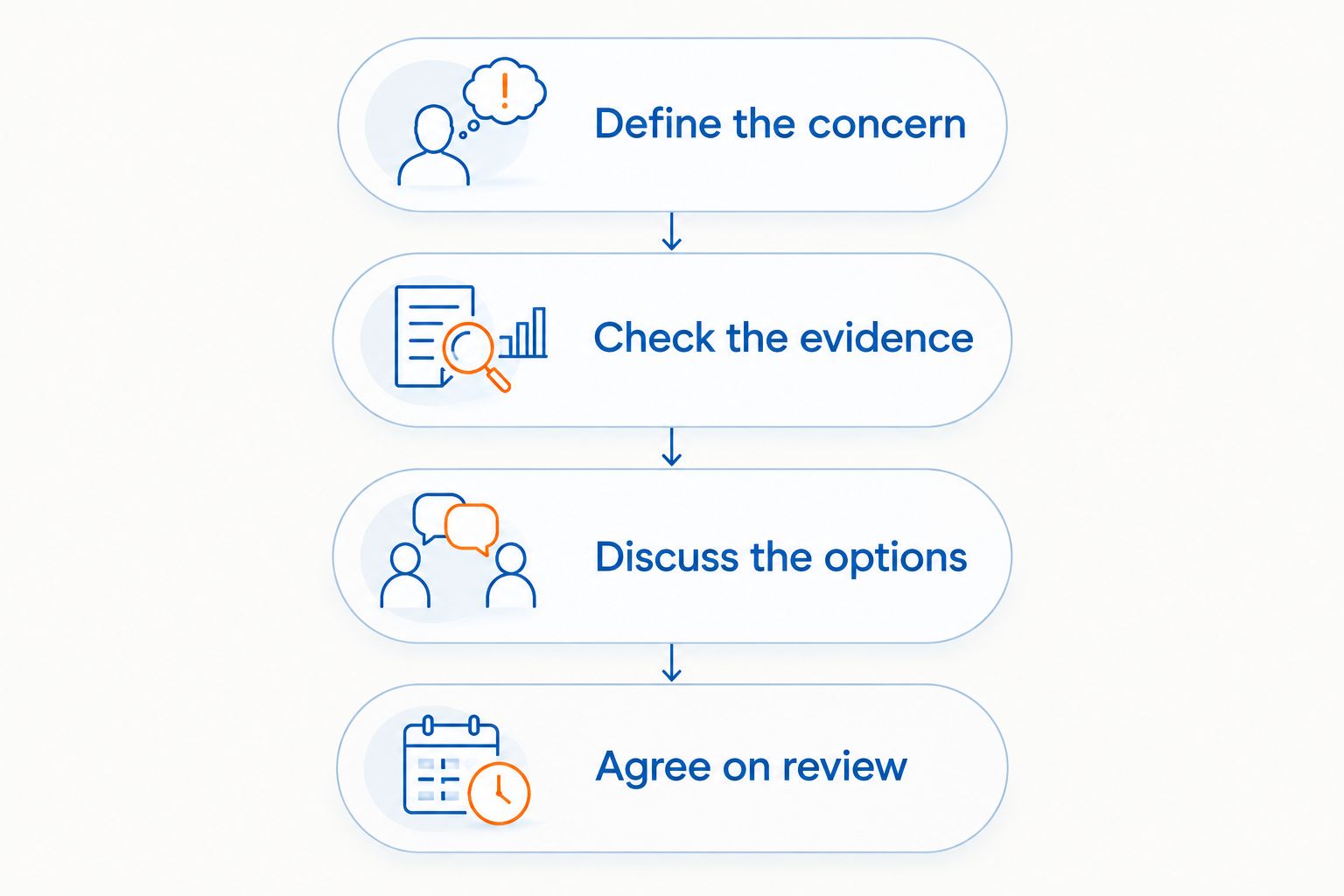
Use this sequence before agreeing to care described as preventive. It is a decision checklist, not a diagnostic test or a prescribed treatment programme.
- Define the concern. Explain whether you have symptoms, a previous injury or a particular task you are worried about. Avoid starting with the assumption that your spine requires correction.
- Check the evidence. Ask whether the supporting evidence concerns first injuries, recurring pain or existing symptoms. Those outcomes are not interchangeable.
- Discuss the options. Ask about advice, activity, workplace changes, other health professionals and the option of no procedure.
- Agree on review. Establish what the practitioner will reassess and what would justify continuing, changing or stopping the plan.
A useful explanation should remain understandable without technical language. If a recommendation depends on terms such as alignment, decompression or nerve pressure, ask what finding supports that description and how it changes the decision.
Ask for a reason, not reassurance alone. You should be able to explain the purpose of the proposed care in your own words before consenting to it.
What should you ask before an adjustment?
Ask the practitioner to explain the proposed procedure, its expected purpose, relevant risks and alternatives. Consent concerns the actual intervention being considered, not simply attendance at the clinic.
Useful questions include:
- What concern are you assessing, and what remains uncertain?
- Why are you suggesting an adjustment rather than advice or another option?
- What evidence supports the outcome you are describing?
- What risks or reasons not to proceed apply to me?
- What should prompt me to seek medical assessment instead?
- What would lead you to stop or change the plan?
MyChiro offers chiropractic care; that does not establish that an adjustment is suitable for every person seeking back-injury advice. Keep the discussion centred on your circumstances rather than a general claim about what chiropractic care does.
You can also decline a proposed procedure or ask for more information. A decision to seek another professional opinion does not require a commitment to ongoing care.
Do I need regular adjustments if my back does not hurt?
Having no back pain does not, by itself, establish a need for regular adjustments. A recommendation for ongoing care should explain the individual clinical rationale, the evidence relevant to the intended outcome and the criteria for review.
Ask what would happen if you did not proceed. An explanation that depends only on keeping your spine aligned does not answer the question of whether appointments prevent a defined injury.
If a plan continues over time, revisit its purpose rather than assuming the original recommendation remains appropriate. Attendance alone is not a measure of whether a clinical goal has been achieved.
Does feeling better mean an injury has been prevented?
Feeling better does not demonstrate that a future injury has been prevented. A change in pain or comfort concerns your current experience; prevention concerns an event that might otherwise occur later.
This distinction also applies to movement assessments. A change observed during an appointment should not automatically be described as protection against future lifting, work or sporting injuries.
When discussing progress, name the actual outcome: comfort during a task, participation in activity or another agreed measure. Avoid replacing that outcome with a broader prevention claim.
When should you seek medical assessment instead?
Do not use a routine chiropractic appointment as the default response to potentially serious symptoms. Healthdirect Australia advises urgent assessment for back pain associated with warning signs such as new bladder or bowel problems, numbness around the genital or saddle area, or significant or worsening leg weakness.
Back pain following a significant accident, or accompanied by fever or feeling seriously unwell, also warrants medical assessment. These examples are not a complete checklist, and their absence does not establish that a problem is minor.
Call 000 in an emergency. Otherwise, seek prompt medical advice about concerning or changing symptoms rather than waiting for a routine appointment.
This article concerns general adult education, not the management of trauma, neurological symptoms or other serious conditions. Those situations require appropriate medical assessment and referral.
Evidence context for this 2026 guide
The World Health Organization's guideline on non-surgical management of chronic primary low back pain concerns adults who already have that condition. It should not be presented as proof that chiropractic adjustments prevent a first back injury in adults without symptoms.
The Australian Commission on Safety and Quality in Health Care's Low Back Pain Clinical Care Standard addresses assessment and care for people with low back pain. WHO physical activity guidance addresses general health activity targets, while Safe Work Australia addresses workplace hazards; these sources answer different questions.
For any prevention claim you encounter in 2026, ask for the source and its publication date. Then check the participants, intervention and measured outcome—not just whether the title mentions backs or spinal care.
FAQ
Can chiropractic care help prevent back injuries if I have no symptoms?
Do not assume chiropractic adjustments prevent back injuries in people without symptoms. Ask for evidence that specifically supports the proposed preventive use, rather than evidence about existing back pain.
Do I need an adjustment before lifting something heavy?
Do not regard an adjustment as clearance to lift a heavy object. Consider the task, available equipment and assistance, and discuss individual health concerns with a qualified health professional.
How much exercise should adults do each week?
WHO recommends 150–300 minutes of moderate-intensity aerobic activity per week, or an equivalent amount of vigorous activity, plus muscle-strengthening activity on 2 or more days per week. These are general health targets, not an individual injury-prevention prescription.
Does better posture prove my back is protected?
A change in posture does not establish protection against a future back injury. Ask what outcome was measured and avoid treating appearance or a single assessment finding as a prevention result.
Should I keep attending chiropractic appointments when I feel well?
Feeling well does not automatically establish a need for continuing appointments. Ask for the clinical rationale, relevant evidence and review criteria before agreeing to ongoing care.
What should I tell a chiropractor before an assessment?
Describe your symptoms, relevant health history, medication use and activity concerns. Mention any recent accident or new neurological symptoms so the practitioner can consider whether medical assessment takes priority.
When does back pain need urgent medical attention?
Seek urgent medical assessment for back pain with new bladder or bowel problems, saddle-area numbness or significant or worsening leg weakness. Call 000 in an emergency; this list does not cover every concerning presentation.
One last thing
Ask one question before accepting a prevention claim: Does this evidence concern preventing an injury, or managing pain that already exists? That distinction is easy to miss and changes what the evidence can support.
If you discuss chiropractic care with MyChiro, keep that question alongside your own goals and the proposed review criteria. A clear explanation should help you make a decision without a promise that your back will become injury-proof.
Related guides
- How to prepare for your first chiropractor appointment
- What to expect from spinal manipulation
- How chiropractors coordinate with GPs on imaging referrals